
Email marketing remains one of the most powerful tools in a marketer’s arsenal. It’s personal, cost‑effective and, when executed thoughtfully, incredibly profitable. Studies show that email campaigns generate between $36 and $40 in revenue for every dollar spent and that the average return on investment (ROI) exceeds 3,600% [demandsage.com] Some companies achieve even greater success: nearly one in five email marketers report returns above 7,000%, meaning $70 earned for every $1 invested [emailmonday.com] To unlock this potential, however, brands must look beyond isolated blasts and build coherent journeys that guide subscribers from first contact to lifelong advocacy. This article explains what the email marketing journey is, why it matters, and how to design a high‑converting series that nurtures relationships at every stage.
An email marketing journey refers to the sequence of communications a subscriber receives as they move from awareness to purchase and beyond. Each interaction builds on the last, ensuring that messages always match the recipient’s needs and level of engagement. According to specialists at Salesmate, every customer’s email journey is unique—shaped by their behaviours and interests—and therefore requires personalized interactions at every touchpoint [salesmate.io] Mapping that journey helps marketers visualize these touchpoints and tailor content for specific stages. Without a clear plan, brands risk sending generic blasts that feel irrelevant or intrusive. A journey‑based approach instead structures messages to educate, nurture and convert in a way that feels natural to the subscriber.
Email remains indispensable because people use it constantly. There are more than 4.48 billion email users worldwide, and 99% of them check their inboxes daily. With billions of messages sent and received each day, competing for attention is difficult—relevancy is critical. Research shared by Braze reveals that 76% of consumers feel frustrated when they don’t receive personalized experiences [braze.com] By aligning content to a subscriber’s journey stage—rather than bombarding them with generic promotions—marketers deliver more timely, helpful communications. This journey‑based strategy also drives measurable business impact: over half of consumers say marketing emails influence their buying decisions [marketerhire.com] Thoughtfully sequenced emails can nurture prospects toward purchase, loyalty and advocacy, transforming a single contact into a long‑term relationship.
While every brand’s journey map will vary, most email programs follow a progression through five core stages: awareness, consideration, decision/purchase, retention and advocacy. Understanding each phase allows marketers to tailor messages that resonate and compel action. [mailtrap.io]
At the start, prospects have just discovered your brand and may be unfamiliar with your offerings. The goal is to capture their attention and encourage signup. Effective tactics include offering a valuable lead magnet—such as a free guide or discount—in exchange for an email address. A warm welcome email sets expectations and invites new subscribers to explore. It’s essential to keep these first communications friendly and low‑pressure, building trust before pushing products.
Once someone subscribes, they enter the consideration phase. Here, their mindset is, “I’m interested, but I’m still exploring.” Your role is to educate and nurture—sharing helpful resources, testimonials, usage tips and guides that show why your solution is worth their time. MarketerHire notes that journey‑based approaches match messages to where the subscriber is in the buying cycle, ensuring they receive relevant content instead of random promotions. Educational content, product comparisons and case studies build credibility and move readers closer to a decision without overwhelming them.
When subscribers demonstrate strong interest—such as visiting pricing pages or adding items to a cart—it’s time to encourage a conversion. Well‑timed promotional offers, limited‑time discounts, cart abandonment reminders and social proof can help convert intent into action. Transactional emails, such as order confirmations and shipping updates, also play a role by reassuring customers and suggesting complementary purchases.
The work doesn’t stop after the first sale. Retention is about delivering ongoing value so customers feel appreciated and continue buying. Post‑purchase email sequences might include onboarding tips, product tutorials, usage reminders and loyalty rewards. Personalization is essential here: tailored recommendations based on purchase history or user behaviour keep subscribers engaged. Retention campaigns foster brand loyalty and encourage repeat purchases, increasing the lifetime value of every customer.
In the advocacy stage, satisfied customers become promoters. Requesting reviews and referrals, highlighting community stories and inviting customers to share feedback can turn loyal buyers into brand ambassadors. For example, Mailtrap advises using advocacy emails to ask for reviews, offer referral incentives and celebrate milestones. Even small gestures—like a birthday message or a thank‑you note—reinforce the customer relationship and inspire word‑of‑mouth marketing.
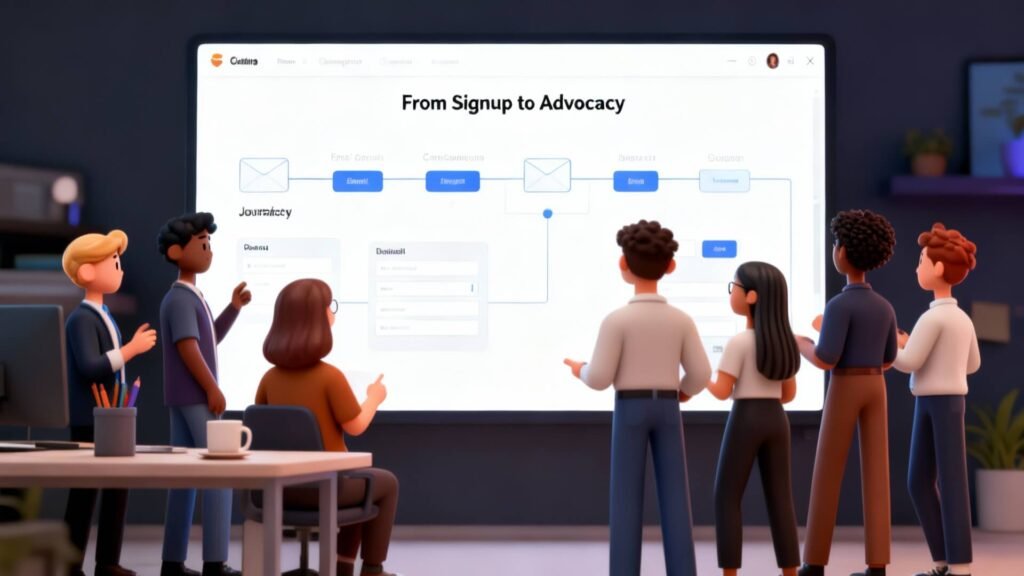
Designing an effective journey requires more than just defining stages. It demands thoughtful strategy, segmentation, personalization, automation and ongoing optimization. Below are the steps to build a journey that converts.
Start by identifying your target personas and their goals. For each persona, outline key motivations, pain points and desired outcomes. Then map these insights to your journey stages, defining the purpose of each email. What do you want subscribers to think, feel and do after reading? Align content topics, tone and calls‑to‑action to these objectives. Clarity at this stage ensures every email has a clear purpose and supports the journey progression.
Segmentation divides your list into groups based on attributes like demographics, past purchases, behaviour or journey stage. Personalization then tailors content to each segment. Demandsage reports that 78% of marketers cite segmentation as their most effective strategy and 72% rely on personalization. Personalized subject lines increase open rates by around 26%, and dynamic content can raise click‑through rates even further. At a minimum, address subscribers by name and mention relevant topics; advanced personalization might include product recommendations or localized offers.
Automation ensures emails arrive precisely when they’re needed. Automated workflows generate much higher returns than one‑off campaigns—research compiled by EmailMonday notes that sophisticated automation can produce returns up to 30 times greater than manual campaigns [emailmonday.com]. Examples include welcome sequences sent immediately after signup, abandoned cart reminders triggered by inaction, reactivation campaigns for lapsed customers and loyalty messages based on purchase milestones. Automation platforms can branch workflows based on subscriber actions, creating personalized paths without manual intervention.
Compelling content keeps readers engaged. Use clear, concise language and focus on value. Storytelling works well: share customer success stories, showcase behind‑the‑scenes insights or explain how your product solves real problems. Break up text with headings, bullet points and images to improve readability. Always design for mobile—over half of emails are opened on mobile devices, so responsive templates are essential. Test subject lines, visuals and calls‑to‑action regularly; small tweaks can have outsized effects on open and click rates.
Timing matters. Industry research suggests that the best time to send marketing emails is between 9 AM and 3 PM on weekdays, with Tuesday, Wednesday and Thursday often yielding higher open rates. However, optimal timing varies by audience. Test different send times and monitor engagement metrics. Avoid excessive frequency; too many emails can lead to fatigue and unsubscribes. Focus on delivering high‑value content when recipients are most receptive.
Continuous improvement separates successful email programs from average ones. Monitor key metrics—open rate, click‑through rate, conversion rate, bounce rate and unsubscribe rate—for each journey stage. According to MailerLite’s 2025 benchmarks, the global average open rate is 42.35%, the average click rate is 2%, and the average click‑to‑open rate (CTOR) is 5.63%. Use these benchmarks as a guide; if your numbers lag, experiment with new subject lines, content formats or segmentation criteria. EmailMonday also reports that A/B testing can increase email ROI by more than 80%, highlighting the importance of experimentation.
Email marketing is evolving alongside consumer behaviour and technology. Artificial intelligence (AI) and machine learning enable predictive segmentation and dynamic content creation, automating personalization at scale. Generative AI tools can craft subject lines and messages optimized for engagement, freeing marketers to focus on strategy. Meanwhile, privacy changes—such as Apple’s Mail Privacy Protection—require marketers to rely less on open rates and more on click‑through and conversion metrics. Interactive emails (with embedded surveys, carousels or forms) offer new ways to engage subscribers without leaving the inbox. To future‑proof your journey, stay informed about emerging tools, focus on delivering value and continually test new approaches.
A high‑converting email marketing journey isn’t a one‑size‑fits‑all sequence. It’s a dynamic roadmap that reflects your audience’s needs, adapts to their behaviour and builds trust over time. By mapping the customer lifecycle, segmenting your list, personalizing content, automating triggers, optimizing design and measuring results, you can transform email from a simple broadcast tool into a relationship‑building engine. As research shows, email still delivers unmatched ROI and influences purchase decisions across B2B and B2C markets. When you invest in creating relevant, timely and thoughtful journeys, you turn subscribers into customers—and customers into advocates.
B2B email marketing remains one of the most reliable channels for generating leads and nurturing relationships. Yet many organisations still treat email as a stand‑alone tactic, disconnected from the conversations and insights of their sales teams. Recent research shows that email marketing delivers a staggering return on investment of $36–$40 for every dollar spent and that over 4.48 billion people use email worldwide [demandsage.com]. Despite its ubiquity, misaligned messaging and timing can erode trust, lengthen sales cycles and leave money on the table.
This guide explains why aligning B2B email marketing with your sales process is essential for turning engagement into revenue. You’ll learn the fundamentals of modern email marketing, see how emerging technologies like AI and answer‑engine optimisation are changing the game, and get practical tips for integrating your campaigns with sales outreach. A summary table highlights key benchmarks and statistics to set realistic expectations, and prompts for visuals help you bring these concepts to life.
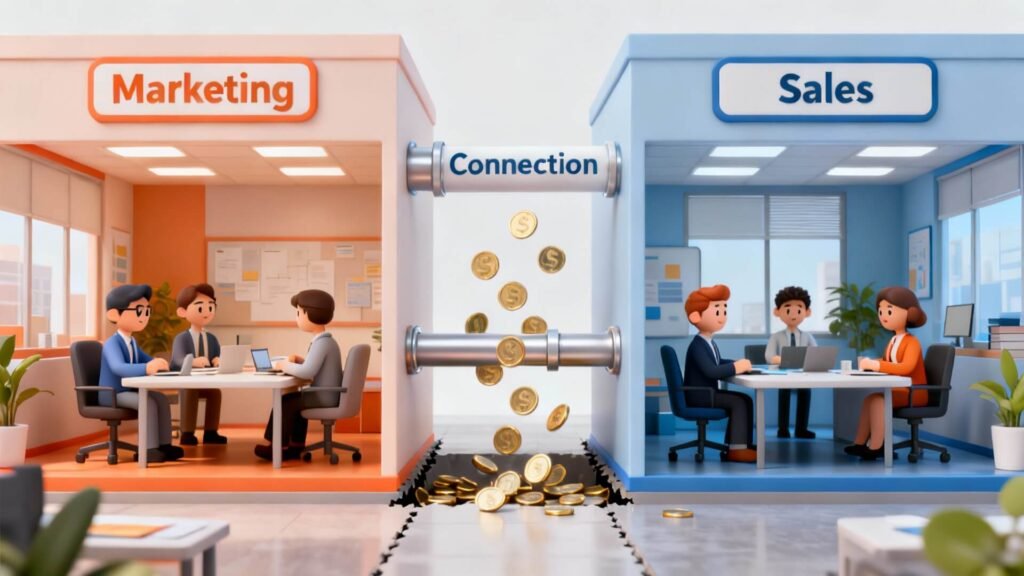
When marketing and sales operate in silos, opportunities slip through the cracks. Marketing may nurture prospects who aren’t sales ready, while sales may approach leads without context about their interests. Aligning email campaigns with sales activities produces tangible benefits:
Before exploring alignment tactics, it’s important to understand the state of B2B email marketing in 2025. Key statistics provide context for your strategy:
These numbers underscore the importance of delivering value—through segmentation, timely messages and clear calls‑to‑action—rather than simply increasing volume.
Beyond improved metrics, synchronising email marketing with sales processes yields strategic benefits that directly impact revenue:
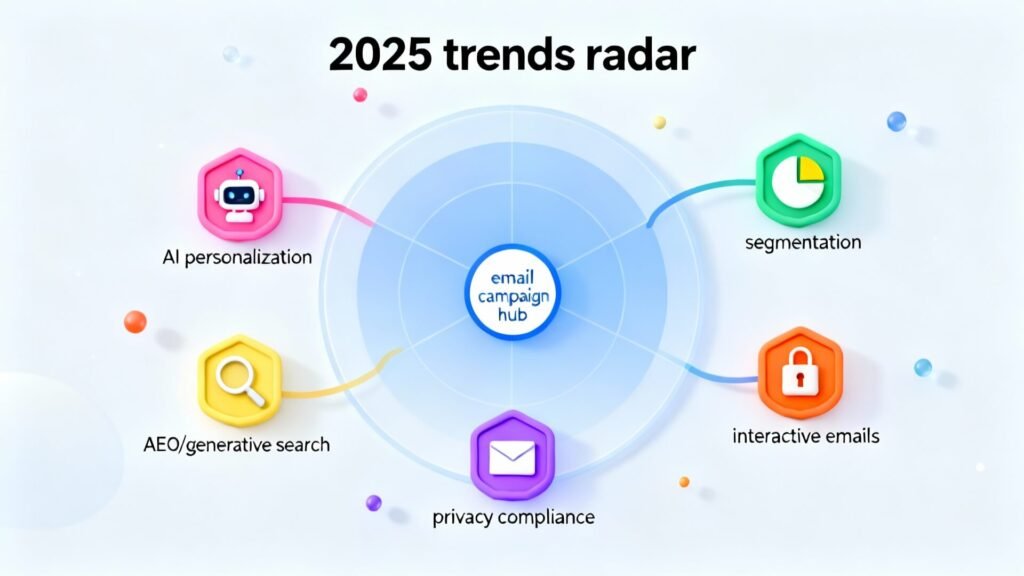
B2B email marketing is evolving alongside technology and buyer behaviour. Staying ahead requires understanding these trends and incorporating them into your alignment strategy:
Artificial intelligence continues to transform email marketing. Tools equipped with machine learning analyse data at scale, generate long‑tail keywords and personalise subject lines and copy for individual recipients. 63% of marketers now use AI tools for email marketing, and those who use AI to personalise messages report a 41% increase in revenue and 13.44% higher click‑through rates. AI also optimises send times and suggests next best actions, making it easier to align campaigns with sales cadences.
Segmentation isn’t new, but its impact is growing. According to Campaign Monitor, segmented campaigns can increase revenue by 760%, and 39% of marketers practising list segmentation see better open rates, while 24% see increased sales leads. Dynamic content blocks automatically switch sections of an email based on a recipient’s segment, ensuring that every message feels personalised without creating countless versions.
AI‑powered search engines and answer engines like ChatGPT and Google’s AI Overviews summarise and cite authoritative sources in response to queries. Email content that addresses common questions and is well structured can appear in these summaries. Aligning topics and keywords with buyer search behaviour helps your brand surface in generative results, providing extra exposure and credibility.
Interactive elements—videos, polls, accordions—boost engagement. Emails with video have been shown to increase open rates by 20% and reduce unsubscribes by 26%. Consider embedding a short explainer video or including a one‑click poll to gather data for sales follow‑up. Multimedia also helps break up long copy and keeps readers engaged.
With heightened privacy regulations like GDPR and CCPA, compliance matters more than ever. Ensure your unsubscribe links are visible, manage consent for data use and clearly explain how subscriber data will be used. Transparent policies build trust—something your sales team depends on.
Aligning B2B email marketing with sales requires collaboration, shared data and an agreed‑upon framework. Here’s how to build a unified approach:
Start by mapping the stages of your buyer journey—from awareness to decision—and list the touchpoints where both marketing and sales interact with prospects. Determine which types of emails correspond to each stage (e.g., educational newsletters at the top of the funnel, case studies and product comparison guides in the middle, and demo invitations or pricing updates for the bottom). This ensures that marketing and sales deliver complementary messages rather than duplicating efforts.
Agree on what constitutes a marketing‑qualified lead (MQL) and a sales‑qualified lead (SQL). Establish a scoring model that weights email engagement (opens, clicks, time spent), intent signals (webinar attendance, pricing page visits) and firmographic data (company size, industry). Regularly review scoring criteria to ensure alignment with real sales outcomes.
Use marketing automation and CRM platforms that synchronise data in real time. When a prospect clicks a link in an email or fills out a form, their activity should appear in your CRM, triggering tasks for the sales team. Conversely, notes and outcomes from sales calls should feed back into the marketing system to refine segmentation and content.
Plan your email schedule in tandem with sales outreach. For example, if sales are planning a call or meeting, avoid sending a generic marketing email on the same day. Use sequences that alternate between educational and promotional messages, gradually building trust and urgency. Align calls‑to‑action with sales goals—whether it’s booking a demo, signing up for a trial or scheduling a discovery call.
Set up notifications for sales reps when high‑value prospects take meaningful actions (opening a particular email, clicking on a case study link, registering for a webinar). This allows timely follow‑up that acknowledges the prospect’s interest and offers additional value.
Evaluate performance using metrics that matter to both teams. In addition to opens and clicks, track conversion rates, pipeline velocity, deal size and revenue attributed to email campaigns. Use this data to iterate on subject lines, content formats and timing.
Aligning marketing and sales can be difficult. Here are common challenges and how to address them:
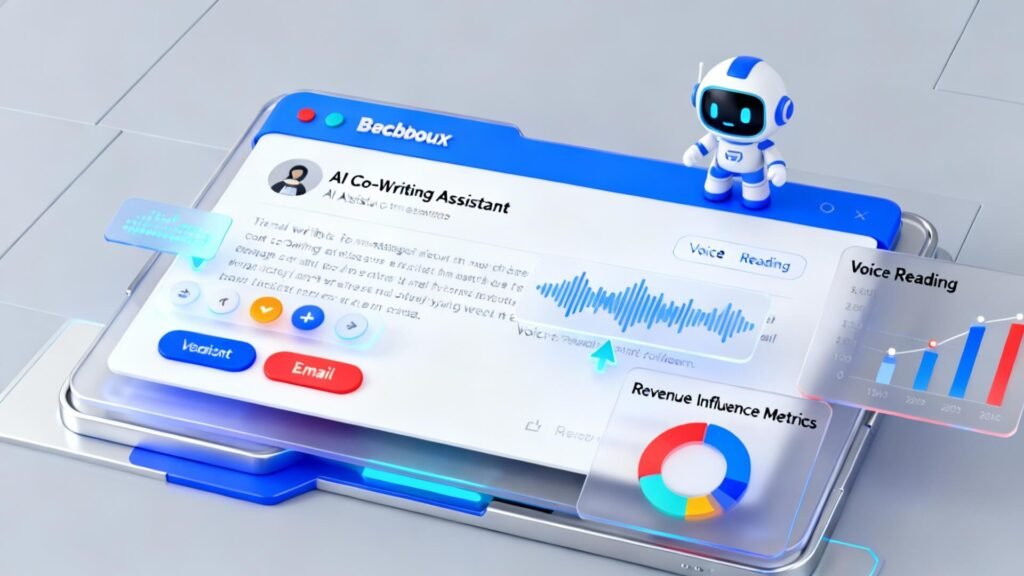
The future of B2B email marketing will be shaped by technological innovation and evolving buyer expectations:
Email remains a powerhouse for B2B marketers, but its true potential is realised only when it works seamlessly with sales. By understanding current benchmarks, embracing AI‑powered personalisation and segmentation, and building shared processes and goals with your sales counterparts, you can deliver messages that resonate and drive conversions. The statistics and strategies in this guide show that when marketing and sales align, you create a cohesive buyer experience that shortens sales cycles, increases revenue and builds lasting relationships.
Begin by mapping your buyer journey and establishing shared metrics. Experiment with segmentation, automation and AI to tailor every message. Coordinate cadences so prospects never feel bombarded. And always close the loop with sales feedback to refine your content strategy. In the ever‑evolving landscape of B2B marketing, a unified email‑sales strategy is not just beneficial—it’s essential.