
Email & Affiliate Marketing

How to Align B2B Email Marketing with Sales for Higher Conversions

October 20, 2025
11 min read
Gregory Nathaniel
b2b email marketing 3

B2B email marketing remains one of the most reliable channels for generating leads and nurturing relationships. Yet many organisations still treat email as a stand‑alone tactic, disconnected from the conversations and insights of their sales teams. Recent research shows that email marketing delivers a staggering return on investment of $36–$40 for every dollar spent and that over 4.48 billion people use email worldwide [demandsage.com]. Despite its ubiquity, misaligned messaging and timing can erode trust, lengthen sales cycles and leave money on the table.

This guide explains why aligning B2B email marketing with your sales process is essential for turning engagement into revenue. You’ll learn the fundamentals of modern email marketing, see how emerging technologies like AI and answer‑engine optimisation are changing the game, and get practical tips for integrating your campaigns with sales outreach. A summary table highlights key benchmarks and statistics to set realistic expectations, and prompts for visuals help you bring these concepts to life.
Why Align B2B Email Marketing With Sales?

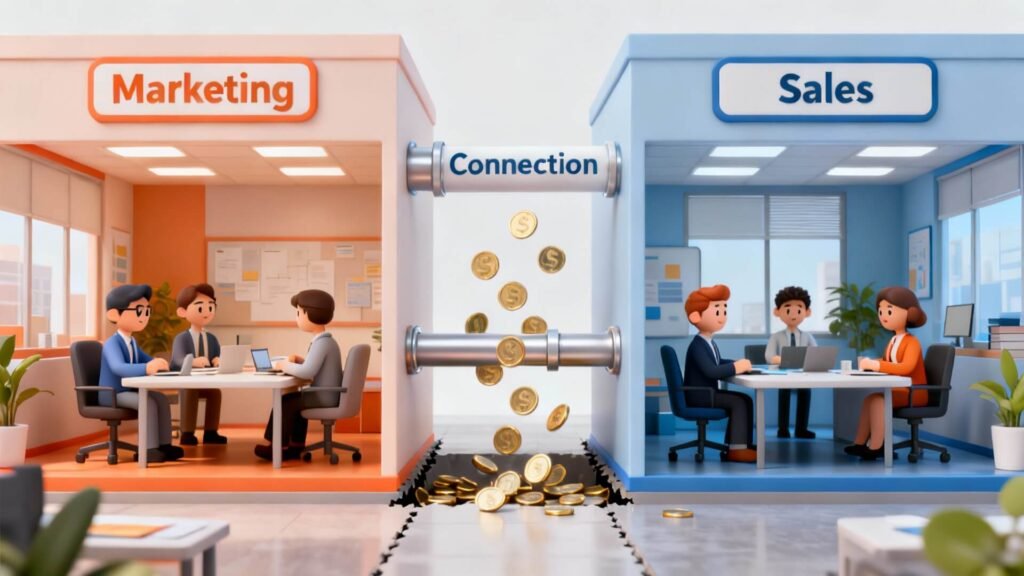
When marketing and sales operate in silos, opportunities slip through the cracks. Marketing may nurture prospects who aren’t sales ready, while sales may approach leads without context about their interests. Aligning email campaigns with sales activities produces tangible benefits:

  • Higher engagement and trust. A study of B2B email performance found that personalisation and segmentation can increase revenue by up to 760% because messages resonate with specific pain points and roles [campaignmonitor.com]. When marketing and sales coordinate their messaging, recipients feel understood rather than spammed.
  • Improved pipeline quality. Cold outreach can be discouraging: one report shows that 95% of cold emails fail to generate a reply and typical response rates hover around 1–5% [martal.ca]. Nurturing leads with relevant email content before handing them to sales ensures that reps focus on interested prospects.
  • Better forecasting and revenue growth. Shared definitions of qualified leads and stages allow marketing to deliver opportunities that convert. Sales can supply feedback on which emails spur conversations, creating a virtuous cycle of learning and improvement.
  • Higher retention and loyalty. Email remains the channel business professionals prefer; 86% of professionals choose email for business communications [industryselect.com]. When messages are consistent from first touch to post‑sale, customers trust the brand and remain engaged.

b2b email marketing 2

Understanding B2B Email Marketing Fundamentals

Before exploring alignment tactics, it’s important to understand the state of B2B email marketing in 2025. Key statistics provide context for your strategy:

  • Mass adoption and ROI. Email remains the top channel for B2B communication; 79% of B2B marketers cite email as their most successful content distribution channel. With average ROIs of 3600–3800% and some organisations achieving up to a 7000% return, email consistently outperforms other digital channels [emailmonday.com].
  • Engagement benchmarks. Across industries, the average email open rate is 42.35%, the average click‑to‑open rate (CTOR) is 5.63% and the average click rate is 2.00% [mailerlite.com]. Unsubscribe rates remain low at 0.08%. These benchmarks provide a baseline for evaluating your own campaigns.
  • Buyer preferences. A survey by Omnisend found that 73% of B2B buyers prefer to be contacted by sellers via email, while 71% of marketers use newsletters to nurture leads and 81% rely on newsletters as their primary content marketing vehicle [omnisend.com]. These statistics highlight email’s continued role in building relationships.
  • Frequency and cadence. Research from IndustrySelect indicates that the average B2B company sends just one email campaign every 25 days, yet two‑thirds of customers want to hear from brands at least once a week. Aligning frequency with audience expectations can improve engagement.
  • Email length and design. According to Cognism, only 6% of recipients prefer lengthy emails, whereas 67% prefer concise content. Yet 28% are indifferent to length when the message is personalised [cognism.com]. Keep copy focused and relevant to maintain attention.
See also  Affiliate Marketing Clarity: What Makes a Program Legit?

These numbers underscore the importance of delivering value—through segmentation, timely messages and clear calls‑to‑action—rather than simply increasing volume.

The Benefits of Aligning Email Marketing and Sales

Beyond improved metrics, synchronising email marketing with sales processes yields strategic benefits that directly impact revenue:
  • Accelerated sales cycles. When marketing warms prospects with educational and problem‑solving content, sales conversations become more consultative. With access to engagement data—such as which emails a prospect opened or which whitepapers they downloaded—sales reps can tailor their outreach and close deals faster.
  • Consistent messaging. Prospects receive a unified story across email, calls and meetings. G2 reports that 50% of B2B marketers identify email as the most effective channel in their multi‑channel approach [learn.g2.com]. This consistency builds credibility and reduces confusion.
  • Data‑driven feedback loops. Sales teams provide qualitative feedback on email content, while marketing delivers quantitative insights on open, click and conversion rates. Together, they refine subject lines, offers and call‑to‑action timing.
  • Higher customer lifetime value. Email isn’t just about acquisition; it also drives retention and upselling. IndustrySelect notes that 86% of business professionals prefer email for communication, and autoresponder series boast 98% open rates with 37% click‑through rates. Coordinated post‑sale emails—such as onboarding guides, product updates and renewal reminders—keep customers engaged and more likely to renew.

b2b email marketing 5

Current Trends Shaping B2B Email Marketing

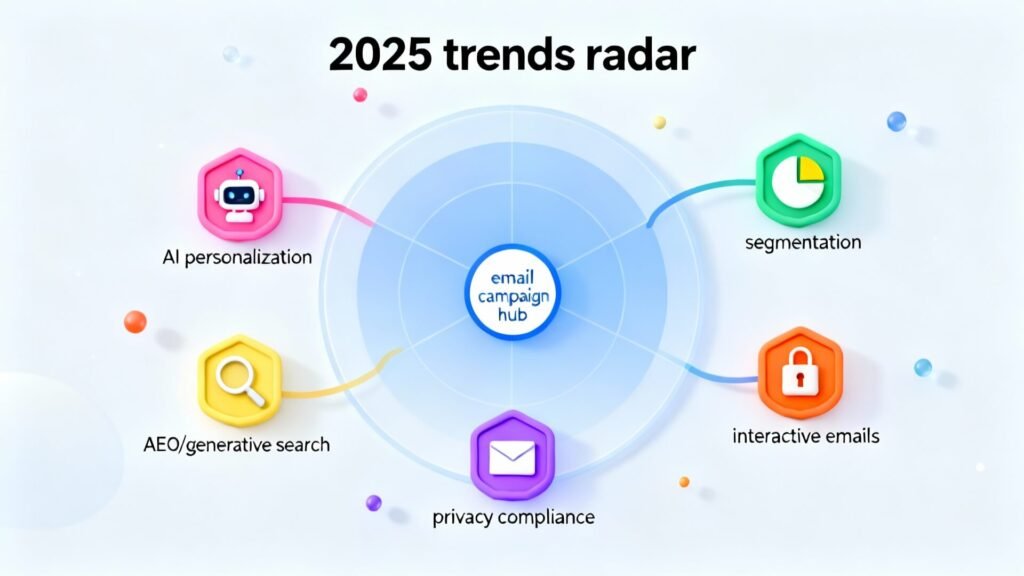
B2B email marketing is evolving alongside technology and buyer behaviour. Staying ahead requires understanding these trends and incorporating them into your alignment strategy:

AI‑Powered Personalisation and Automation

Artificial intelligence continues to transform email marketing. Tools equipped with machine learning analyse data at scale, generate long‑tail keywords and personalise subject lines and copy for individual recipients. 63% of marketers now use AI tools for email marketing, and those who use AI to personalise messages report a 41% increase in revenue and 13.44% higher click‑through rates. AI also optimises send times and suggests next best actions, making it easier to align campaigns with sales cadences.

Segmentation and Dynamic Content

Segmentation isn’t new, but its impact is growing. According to Campaign Monitor, segmented campaigns can increase revenue by 760%, and 39% of marketers practising list segmentation see better open rates, while 24% see increased sales leads. Dynamic content blocks automatically switch sections of an email based on a recipient’s segment, ensuring that every message feels personalised without creating countless versions.

Answer‑Engine Optimisation (AEO) and Generative Search

AI‑powered search engines and answer engines like ChatGPT and Google’s AI Overviews summarise and cite authoritative sources in response to queries. Email content that addresses common questions and is well structured can appear in these summaries. Aligning topics and keywords with buyer search behaviour helps your brand surface in generative results, providing extra exposure and credibility.

Interactive and Multimedia Emails

Interactive elements—videos, polls, accordions—boost engagement. Emails with video have been shown to increase open rates by 20% and reduce unsubscribes by 26%. Consider embedding a short explainer video or including a one‑click poll to gather data for sales follow‑up. Multimedia also helps break up long copy and keeps readers engaged.

Compliance and Privacy Enhancements

With heightened privacy regulations like GDPR and CCPA, compliance matters more than ever. Ensure your unsubscribe links are visible, manage consent for data use and clearly explain how subscriber data will be used. Transparent policies build trust—something your sales team depends on.

b2b email marketing 4

Building a Unified Email–Sales Strategy

Aligning B2B email marketing with sales requires collaboration, shared data and an agreed‑upon framework. Here’s how to build a unified approach:

1. Map the Buyer Journey Together

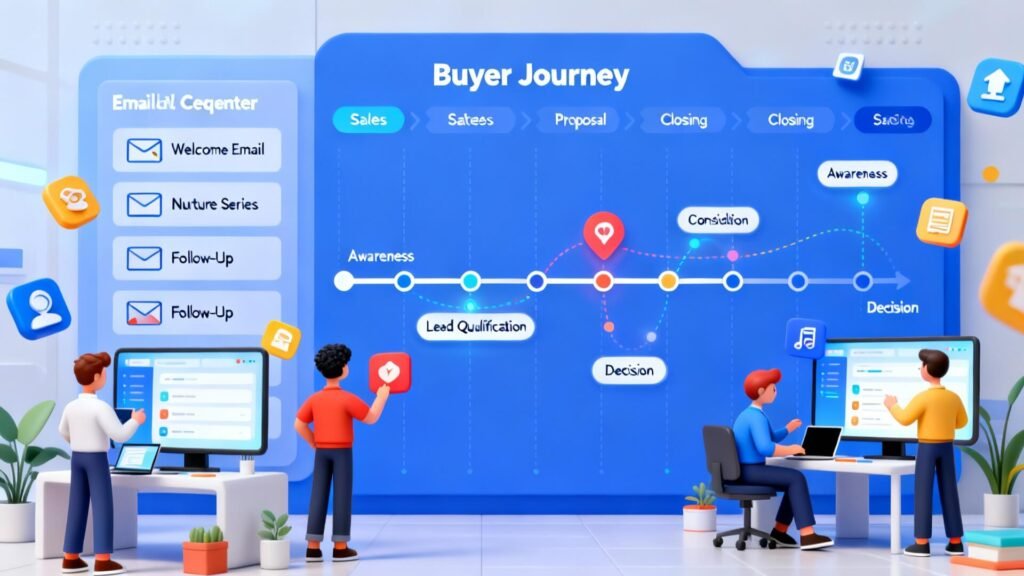
Start by mapping the stages of your buyer journey—from awareness to decision—and list the touchpoints where both marketing and sales interact with prospects. Determine which types of emails correspond to each stage (e.g., educational newsletters at the top of the funnel, case studies and product comparison guides in the middle, and demo invitations or pricing updates for the bottom). This ensures that marketing and sales deliver complementary messages rather than duplicating efforts.

See also  From Startup to Powerhouse: How White Label SEO Services Transforms Small Agencies

2. Develop Shared Lead Scoring and Definitions

Agree on what constitutes a marketing‑qualified lead (MQL) and a sales‑qualified lead (SQL). Establish a scoring model that weights email engagement (opens, clicks, time spent), intent signals (webinar attendance, pricing page visits) and firmographic data (company size, industry). Regularly review scoring criteria to ensure alignment with real sales outcomes.

3. Implement Integrated Technology

Use marketing automation and CRM platforms that synchronise data in real time. When a prospect clicks a link in an email or fills out a form, their activity should appear in your CRM, triggering tasks for the sales team. Conversely, notes and outcomes from sales calls should feed back into the marketing system to refine segmentation and content.

4. Coordinate Cadence and Content

Plan your email schedule in tandem with sales outreach. For example, if sales are planning a call or meeting, avoid sending a generic marketing email on the same day. Use sequences that alternate between educational and promotional messages, gradually building trust and urgency. Align calls‑to‑action with sales goals—whether it’s booking a demo, signing up for a trial or scheduling a discovery call.

5. Enable Real‑Time Notifications

Set up notifications for sales reps when high‑value prospects take meaningful actions (opening a particular email, clicking on a case study link, registering for a webinar). This allows timely follow‑up that acknowledges the prospect’s interest and offers additional value.

6. Measure and Optimise Together

Evaluate performance using metrics that matter to both teams. In addition to opens and clicks, track conversion rates, pipeline velocity, deal size and revenue attributed to email campaigns. Use this data to iterate on subject lines, content formats and timing.

Overcoming Challenges and Misconceptions

Aligning marketing and sales can be difficult. Here are common challenges and how to address them:
  • Deliverability issues. G2 notes that 16.9% of all emails go missing or are caught in spam filters. Improve deliverability by authenticating domains (SPF, DKIM, DMARC), regularly cleaning lists, and asking leads to whitelist your domain.
  • Content overload. With millions of emails sent every minute, standing out is hard. Use concise subject lines and preview text, include value early, and design mobile‑friendly templates (over half of all emails are opened on mobile devices).
  • Balancing personalisation and privacy. First‑party data collection must follow privacy laws. Transparency builds trust; ask permission to collect data, explain how it will be used, and provide clear opt‑outs.
  • Resistance to change. Sales and marketing teams may be entrenched in their processes. Foster alignment through regular meetings, joint KPIs and shared dashboards. Celebrate wins together to reinforce collaboration.
  • Underestimating testing. A/B testing subject lines, copy and calls‑to‑action can yield big gains. Research shows that companies that frequently A/B test emails see ROI improvements of up to 83% compared to those that never test. Commit to ongoing experimentation and share results with sales.

b2b email marketing

Future Outlook: What’s Next for B2B Email Marketing

The future of B2B email marketing will be shaped by technological innovation and evolving buyer expectations:

  • Generative content at scale. AI models will draft personalized emails, subject lines and even entire campaigns. Marketers and sales teams must fine‑tune these outputs to maintain authenticity and brand voice.
  • Voice and multimodal emails. As voice assistants and multimodal interfaces grow, emails may be consumed via audio or interactive elements. Optimising content for voice summarisation (clear, conversational language) will matter.
  • Real‑time collaboration tools. Integrated platforms will provide shared workspaces where marketing and sales co‑author sequences, comment on drafts and update lead statuses in real time. AI will surface next best actions for each prospect.
  • Deeper measurement. Beyond open and click metrics, businesses will track revenue influenced by each email, pipeline velocity and buyer engagement across channels. Answer‑engine optimisation will become a new metric, measuring how often your content surfaces in AI responses.

Conclusion: Turning Engagement into Revenue

Email remains a powerhouse for B2B marketers, but its true potential is realised only when it works seamlessly with sales. By understanding current benchmarks, embracing AI‑powered personalisation and segmentation, and building shared processes and goals with your sales counterparts, you can deliver messages that resonate and drive conversions. The statistics and strategies in this guide show that when marketing and sales align, you create a cohesive buyer experience that shortens sales cycles, increases revenue and builds lasting relationships.

Begin by mapping your buyer journey and establishing shared metrics. Experiment with segmentation, automation and AI to tailor every message. Coordinate cadences so prospects never feel bombarded. And always close the loop with sales feedback to refine your content strategy. In the ever‑evolving landscape of B2B marketing, a unified email‑sales strategy is not just beneficial—it’s essential.

Tags:

AI in marketing B2B email marketing content strategy email benchmarks Email personalization Lead nurturing Marketing automation Sales alignment Segmentation thought leadership
Share: