
In the crowded digital landscape, capturing a prospect’s attention is only half the battle; the real challenge is engaging them in a meaningful dialogue that builds trust and captures their intent. This is where the strategic power of an interactive quiz for lead generation becomes undeniable. Unlike passive content, a well-crafted quiz demands participation, creating a dynamic two-way exchange. It transforms anonymous visitors into known entities by offering personalized value in exchange for crucial contact information. This article will serve as your comprehensive guide to leveraging interactive quiz lead generation, moving beyond basic theory to deliver actionable strategies for building high-converting quizzes that segment audiences, deliver genuine insights, and consistently fill your pipeline with qualified leads. We’ll dissect the psychology behind their effectiveness, provide a step-by-step framework for creation, and explore advanced tactics for optimization and integration.

To harness the full potential of an interactive quiz, you must first understand why it works so profoundly. At its core, a quiz taps into fundamental human drivers: the desire for self-discovery, the appeal of personalized results, and the satisfaction of game-like interaction. When a user invests mental energy in answering questions, they experience a sense of ownership over the outcome. This investment, known as the IKEA Effect, makes the subsequent personalized result—their “reveal”—far more valuable to them than a generic ebook or whitepaper they simply downloaded. This perceived value dramatically lowers the resistance to submitting an email address.
Furthermore, quizzes are exceptional at qualifying leads in real-time. Each answer choice can be tagged to indicate a user’s specific pain point, stage in the buyer’s journey, or product interest. By the time they reach the lead capture form, you’re not just asking for an email; you’re offering a tailored solution based on the data they’ve already voluntarily provided. This creates a seamless and logical value exchange, making your interactive quiz lead generation efforts feel less like a transaction and more like the next step in a helpful conversation. The interactive format also generates significantly higher engagement metrics—time on page, scroll depth—which are positive signals to search engines, creating a virtuous cycle of visibility and conversion.
Launching a successful quiz requires more than just a random question generator. It demands a strategic blueprint aligned with your business objectives. The first, and most critical, step is defining a clear goal. Are you aiming for top-of-funnel awareness, mid-funnel nurturing, or bottom-funnel product qualification? Your goal dictates every subsequent choice, from quiz topic to question design.
Next, identify your target audience’s burning question. The quiz should be positioned as the definitive tool to answer it. For a B2B software company, this might be “What’s Your Ideal Project Management Workflow?” For a wellness coach, it could be “What’s Your Primary Stress Type?” This topic must be intrinsically linked to your expertise and service offering. The quiz itself is the hook, but the results and follow-up sequence are where the real marketing magic happens, directly fueling your interactive quiz lead generation engine.
A potent quiz has four key components: an irresistible title, a logical question flow, a personalized results page, and a strategic opt-in. The title should promise a specific, desirable outcome. Questions should progress from broad to specific, feeling conversational rather than interrogative. Use a mix of question types (multiple choice, image selection, sliders) to maintain engagement. Crucially, the opt-in for the results should come after the user has completed the questions, leveraging their anticipation. The results page is your final pitch—it should provide genuine insight while naturally presenting your service or product as the logical next step to act on those results.
The questions are the engine of your interactive quiz. Each one serves a dual purpose: to engage the user and to gather segmentation data. Start with 7-10 questions to balance depth with completion rates. Early questions can be broader to build momentum, while later questions should drill down into specific challenges or preferences that map directly to your offerings.
For effective lead segmentation, design answer choices that correlate to different customer profiles or pain points. For instance, in a quiz about marketing readiness, answer choices like “I’m just starting to build a plan” and “I have a plan but need better tools” will route users into distinct nurturing pathways. This data is gold for your lead scoring and email automation systems. By integrating your quiz platform with your CRM, you can automatically tag and score leads based on their answers, ensuring sales teams follow up with context and marketing delivers hyper-relevant content. This precision transforms a simple lead generation tool into a sophisticated sales intelligence asset.
A brilliant quiz is useless without an audience. A multi-channel promotion strategy is essential. Start by embedding the quiz prominently on relevant blog posts and resource pages. Promote it via your email newsletter and social media channels, using eye-catching visuals or short video teasers of the results. Consider a dedicated landing page with strong SEO elements, targeting long-tail keywords related to your quiz topic. Paid social ads can be highly effective for quiz promotion, as the interactive format often earns lower cost-per-lead than traditional lead magnets.
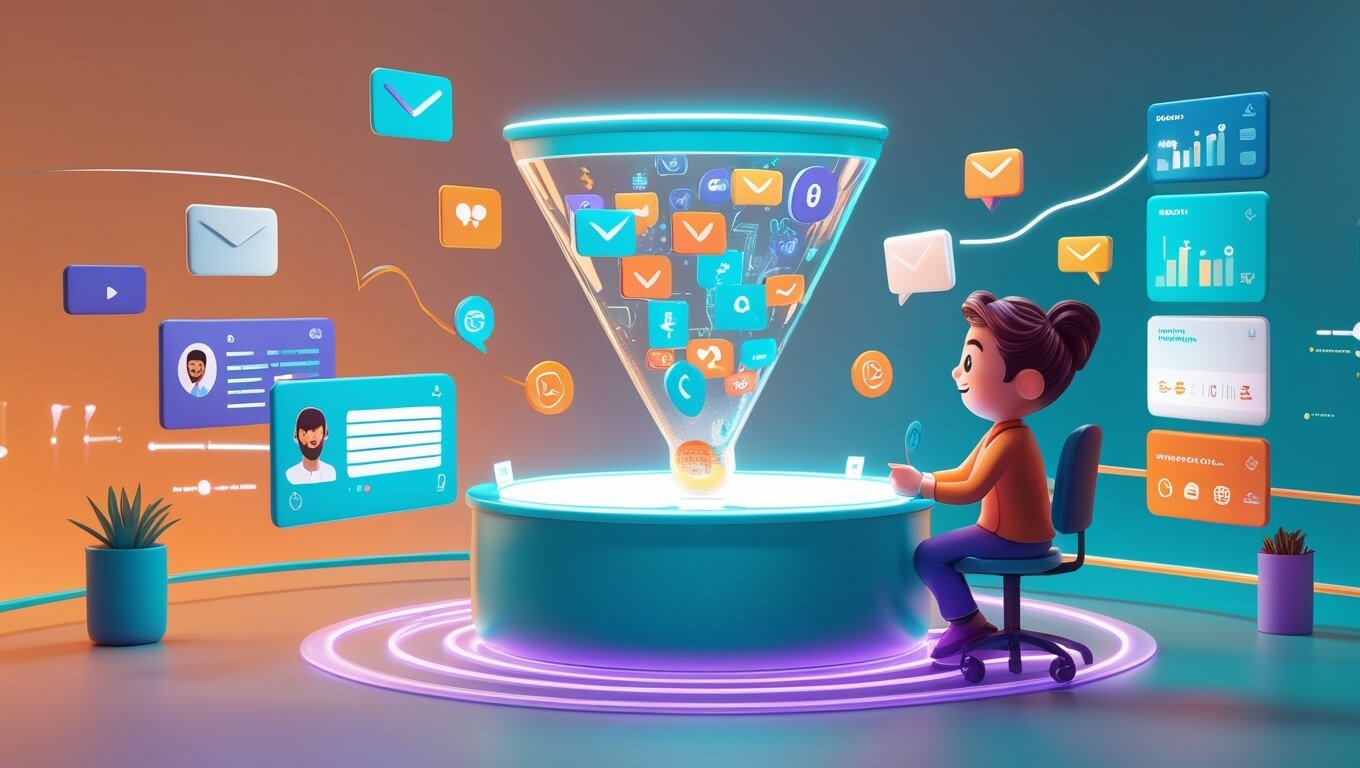
Optimization is an ongoing process. Use A/B testing to experiment with different titles, cover images, and question phrasing. Analyze the drop-off rates at each question to identify friction points. Test the placement and copy of your email opt-in gate. Tools like Hotjar can provide session recordings to see how users interact with your quiz. Furthermore, ensure your quiz is fully mobile-responsive; a significant portion of users will engage on smartphones. By continuously refining these elements, you systematically increase the efficiency of your interactive quiz lead generation funnel.
A high-converting interactive quiz operates as a five-stage funnel: 1) Attract with targeted promotion. 2) Engage with compelling questions and a smooth user experience. 3) Convert by gating personalized results behind an email opt-in. 4) Segment leads automatically based on quiz answers. 5) Nurture with automated email sequences tailored to each segment’s revealed needs.
The moment a user submits their email is when your real work begins. The integration between your quiz platform and your marketing stack is critical. Use a platform like Interact or Outgrow that seamlessly connects with email service providers like Mailchimp or ActiveCampaign. This allows for the automatic triggering of personalized email sequences based on the user’s quiz outcome.
The first email, delivering the quiz results, is your most important. It must deliver on the promised value with clear, visually appealing, and actionable insights. Immediately after, launch a tailored nurture sequence. For a user who quizzed as a “Beginner,” send educational content and case studies. For the “Advanced” user, offer a product demo or a consultation. This relevance dramatically increases open rates, click-through rates, and sales conversions. According to a Evergage study, 88% of marketers report measurable improvement from personalization. Your quiz provides the foundational data to execute this at scale, making it a cornerstone of a sophisticated content marketing strategy.
To prove and improve the ROI of your interactive quiz lead generation, you must track the right key performance indicators (KPIs). Vanity metrics like total quiz takes are less important than conversion-centric data. Focus on:
Use Google Analytics to set up goals tracking the quiz completion and opt-in events. Monitor these metrics monthly to identify trends and opportunities for optimization. A successful quiz should consistently deliver a lower CPL and a higher SQL rate than many traditional content offers, solidifying its role in your marketing portfolio.
Once you’ve mastered the basics, explore advanced applications. Use quizzes for product recommendations, like a skincare brand guiding users to their perfect regimen. In B2B, create a “ROI Calculator” quiz that functions as an interactive qualification tool. You can also repurpose quiz data for content creation; aggregate results to publish compelling “State of” reports or infographics, which can then drive more traffic back to the quiz. A Content Marketing Institute case study highlighted how a simple style quiz generated thousands of leads for a retail brand by making product discovery fun and personal.
Consider the following table comparing a traditional ebook lead magnet to an interactive quiz:

| Aspect | Traditional Ebook/Whitepaper | Interactive Quiz |
|---|---|---|
| User Engagement | Passive consumption | Active participation |
| Data Collection | Basic (email only) | Rich, behavioral & demographic |
| Perceived Value | Static, one-size-fits-all | High, due to personalization |
| Lead Qualification | Occurs after download via nurture | Occurs during interaction |
| Shareability | Low | High (users share results) |
Furthermore, ensure your quiz strategy adheres to data privacy regulations like GDPR. Be transparent about data usage, provide easy opt-outs, and choose quiz platforms that are compliant. Resources from FTC guidelines on lead generation can provide valuable legal context.
An interactive quiz is far more than a fleeting marketing trend; it is a sophisticated engine for demand generation and customer insight. By strategically combining engagement psychology with data-driven automation, you create a self-perpetuating system that attracts, qualifies, and nurtures leads with remarkable efficiency. The journey from a vague audience to a segmented, known prospect happens not over weeks of content consumption, but in the few minutes it takes to complete a well-designed quiz. This powerful mechanism for interactive quiz lead generation delivers qualified contacts directly into tailored nurturing pathways, dramatically shortening sales cycles and increasing marketing ROI. The initial investment in crafting a resonant quiz, building intelligent email sequences, and integrating your tech stack pays compounding dividends in lead quality and sales alignment. Stop relying solely on passive content and start building dynamic conversations. Audit your current lead generation offers today, identify one core audience question, and commit to building your first strategic quiz. The data, engagement, and pipeline growth you unlock will redefine your perception of what content marketing can truly achieve.
Creating a compelling digital product isn’t just about making it look pretty. It’s about crafting experiences that feel natural to users and amplify a brand’s story while delivering measurable business outcomes. UI UX design services bridge strategy and creativity to meet these goals. They blend research, psychology, aesthetics and technology to produce digital interfaces that are not only beautiful but also intuitive, accessible and aligned with the client’s brand identity. This article digs deep into how professional UI UX design services work, why investing in them pays off, and what trends are shaping the industry in the coming years.
UI, or User Interface, refers to the visual and interactive elements a person uses to interact with a digital product — think buttons, menus, typography, colors, spacing, animations and responsive behaviours. UX, or User Experience, encompasses the overall journey a user takes while interacting with the product. It looks at how easy it is to accomplish tasks, how intuitive the navigation feels, and how satisfied users feel when they complete an action. In practice, UI and UX are inseparable: a beautiful interface will fail if it’s confusing to navigate, and a logical flow can be hindered by poor visuals or inaccessible color contrasts.
Professional UI UX design services bring these disciplines together with a strategic lens. They typically start with extensive research, learning about user personas, market positioning and business goals. From there, designers craft information architectures and wireframes that map the user journey from start to finish. Visual designers then translate these flows into pixel‑perfect interfaces while adhering to brand guidelines. Throughout the process, usability testing and iterations ensure that the design isn’t just aesthetically pleasing but also solves real user pain points.
Investing in professional UI/UX services is not a cosmetic choice; it’s a strategic business decision. Research highlights that a well‑designed user interface can boost conversion rates by up to 200 percent, and a comprehensive user experience strategy can increase them by up to 400 percent. That means a simple sign‑up flow that previously converted one customer for every 100 visitors could attract three or four customers after a redesign. The return on investment can be dramatic — studies show that every dollar invested in UX design can yield around $100 in return, making the financial uplift significant. Integrating design thinking early also saves costs down the line by avoiding expensive rework and development waste [www.wearetenet.com].
Besides boosting conversion rates, good UI/UX design reduces churn. A one‑second delay in page load can reduce conversions significantly, and poor mobile optimisation can cause a majority of users to abandon a website. Mobile and cross‑device optimisation are no longer optional. A 10 second increase in mobile page load time can result in a 123 percent higher bounce probability [www.designrush.com]. When users find an interface slow or confusing, they leave, harming revenue and brand perception; a single negative experience can drive away large portions of your audience. Professional services mitigate these risks through performance optimisation, responsive design and accessible layouts.
Strategically designed products also strengthen brand loyalty. Consistency across digital touchpoints builds trust and recognition, ensuring that visitors immediately recognise a brand’s voice, tone and visual identity. Research shows that customer experience plays a decisive role in most B2B purchase decisions. In an era where trust and usability drive engagement, investing in a cohesive and delightful user journey is no longer optional — it’s essential.
Great UI/UX design services don’t simply design screens; they translate business objectives into intuitive journeys. That’s why integration with strategy is crucial. Designers begin by aligning with the client’s mission, target audience and competitive landscape. Stakeholder interviews, workshops and market analysis help uncover pain points and opportunities. This strategic phase ensures the design solves real problems rather than providing superficial aesthetics.
Personas and user journey maps play a central role. Personas represent archetypal users, capturing demographics, motivations, behaviours and goals. Journey maps illustrate the steps a user takes while interacting with a product, from awareness through conversion and post‑purchase. By visualising these journeys, designers identify friction points and moments of delight. The goal is to streamline tasks, minimise cognitive load and create a seamless narrative that aligns with business metrics.
Brand identity is equally important. UI/UX services translate a brand’s personality into typography choices, color palettes, iconography and micro‑interactions. According to branding experts, aligning design with brand values increases customer loyalty and revenue [digitaldefynd.com]. A consistent, well‑structured design system ensures that every screen communicates the same story and emotion, whether users are on a landing page, a mobile app or an email newsletter. This coherence improves recognition and trust.
Discovery and research: The first step involves deep discovery. Designers and strategists study the target audience, competitors and industry trends. They examine analytics data, conduct surveys, and run stakeholder interviews. By understanding user behaviour and pain points, the team can set KPIs and prioritize features. This phase often includes a content audit to evaluate existing pages for clarity, accessibility and SEO alignment.
Information architecture & wireframing: Based on research, designers create an information architecture that organises content into logical structures. Wireframes, which are low‑fidelity sketches of page layouts, focus on hierarchy and flow rather than aesthetics. Wireframes allow for quick testing and feedback before investing time in high‑fidelity visuals.
Visual design & prototyping: Once the structure is validated, designers develop a style guide and UI elements consistent with the brand identity. High‑fidelity mockups show colors, typography, images, icons and animations. Prototypes simulate user interactions; they can be interactive Figma files or clickable HTML builds. Stakeholders and users can test and provide feedback.
Usability testing & iteration: Good designs aren’t shipped without testing. Usability sessions reveal friction points and opportunities for improvement. Research suggests that testing with just five users can uncover the majority of usability issues. After testing, teams iterate on designs, refining micro‑copy, layout and interactions until metrics are met. This iterative loop may continue through multiple rounds of feedback.
Implementation & support: Collaboration with developers ensures that the design vision comes to life as intended. Developers build the front end using responsive frameworks, optimize images and implement accessibility features like ARIA labels and keyboard navigation. After launch, designers monitor analytics and user feedback to identify new improvements and support ongoing product evolution.
Higher conversion and revenue: A well‑designed UI/UX doesn’t just look good — it drives business outcomes. Services align the interface with conversion funnels, guiding users effortlessly toward purchase or sign‑up. Studies indicate that companies investing in UX can see return ratios approaching 9 900 percent, meaning each dollar invested may return around $100 in revenue [bricxlabs.com]. This financial uplift often outweighs the upfront cost of hiring a design agency or in‑house team.
Reduced development waste and maintenance costs: Early research and testing save both time and money. Industry analyses show that targeted UI/UX efforts can reduce development waste by as much as 50 percent. By validating assumptions and prototypes before coding, teams avoid costly rewrites. Well‑structured design systems also streamline maintenance: components are reusable and consistent, making updates more efficient.
Improved customer retention and loyalty: Customer loyalty hinges on trust, value and comfort. A small increase in customer retention — even just five percentage points — can significantly boost profits, sometimes by 25 percent or more. By removing friction and adding delightful interactions, UI/UX design services create experiences that users love to return to. Micro‑interactions, helpful onboarding flows and personalized recommendations all contribute to increased satisfaction [www.cisin.com].
Enhanced accessibility and inclusivity: Professional design firms prioritise accessibility from the outset. They ensure sufficient color contrast, alt tags for images, resizable text and keyboard navigation, making the product usable for people with disabilities. Accessibility is not just ethically important; it’s also a ranking factor in search results and expands your user base.
Better decision‑making through data: Modern design is data‑driven. Heatmaps, session recordings and analytics reveal how users navigate the product. By combining quantitative data with qualitative insights (like user interviews), design services make informed decisions. After launch, A/B tests and user surveys help refine experiences, ensuring designs evolve with changing user needs.
Choosing the right design partner can be daunting. Here are key factors to consider:

The UI/UX landscape is evolving rapidly. Here are some trends influencing design services in 2025 and beyond:
AI‑driven personalization: Artificial intelligence and machine learning personalise user experiences by predicting preferences and behaviours. Designers incorporate algorithms that adjust content, product recommendations and layouts in real time. AI‑generated design suggestions also accelerate iteration, while human designers ensure the final output aligns with brand values and ethical guidelines.
Voice and multimodal interfaces: Smart speakers and voice assistants have changed how users interact with technology. Designing intuitive voice user interfaces (VUI) requires understanding conversational flows, error handling and context awareness. Multimodal interactions combine voice, touch, gesture and even eye tracking to create seamless experiences across devices.
Augmented reality (AR) and virtual reality (VR): AR and VR experiences demand unique UI considerations, such as 3D positioning, depth cues and field‑of‑view limitations. Retailers use AR for virtual try‑ons, while educators employ VR for immersive learning. UI/UX services with AR/VR expertise will become increasingly valuable as these technologies mainstream.
Micro‑interactions and motion design: Thoughtful animations and micro‑interactions communicate state changes, provide feedback and delight users. For example, a subtle hover effect can indicate interactivity, while a smooth progress bar reduces anxiety during loading. Motion design reinforces hierarchy and guides attention when used intentionally.
Dark mode and energy efficiency: Dark mode has become a standard feature across apps and websites. Beyond aesthetics, dark mode can reduce eye strain and save battery life on OLED screens. Designing effective dark modes means adjusting color contrast, shadow layers and ensuring readability.
Sustainability and ethical design: Eco‑conscious users are demanding sustainable digital products. Design services can reduce energy consumption by optimizing asset sizes, minimising requests and promoting longevity in design systems. Ethical considerations also include data privacy and avoiding manipulative dark patterns.
Inclusive design and accessibility: Regulations and ethical standards have increased the focus on accessibility. Designers are adopting inclusive practices from the beginning, considering screen readers, keyboard navigation, color blindness and neurodivergent needs. Inclusive design not only expands your audience but also demonstrates social responsibility.
To complement the concepts discussed in this article, consider creating the following illustration‑style images using AI image generators. These prompts are designed to enhance engagement and visual appeal:

Integrating strategy and design through professional UI/UX services is no longer a luxury — it’s a strategic imperative. In an increasingly competitive and user‑centric marketplace, experiences that delight, guide and convert users are the ones that stand out. By understanding users, aligning design with business goals, and adopting a holistic, iterative process, you can unlock exceptional returns on investment and strengthen your brand. Modern UI/UX design services offer the tools and expertise to make that vision a reality, ensuring your digital product is not only beautiful but purposeful, accessible and future‑ready.
When you choose a UI/UX design partner, look for those who prioritise research, collaboration and transparency. Embrace emerging trends like AI personalisation, voice interfaces and inclusive design to stay ahead. And always remember: the true measure of success is not how impressive your interface looks on a designer’s screen but how easily real people can accomplish their goals and connect with your brand.