
Choosing a mobile app partner is one of those decisions that looks deceptively simple on a spreadsheet—until a single weak architectural call multiplies your timeline, your budget, and your risk. The problem is not a lack of options; it’s the opposite. When you search for a “top rated mobile app development company,” you’ll find endless directories, badges, and listicles that blur the difference between marketing polish and delivery excellence.
This guide cuts through that noise with a practical objective: give you a vetted, high-signal shortlist of ten firms and the due-diligence framework to select the right one for your product. You’ll get a realistic definition of “top rated,” the exact criteria that actually predict outcomes, and a ranked list from 10 to 1 based on a consistent public benchmark (so you can compare like with like). Most importantly, you’ll learn how to interview and scope these teams so the contract you sign produces a shippable product—not a never-ending rescue mission.
“Top rated” should never mean “popular.” In mobile app development, popularity can be bought with advertising, inflated with shallow projects, or misunderstood through vanity metrics. A truly top-rated partner earns trust the hard way: by delivering working software, repeatedly, across multiple clients and environments, while keeping stakeholders informed and trade-offs explicit.
Real “top rated” performance shows up in a few consistent places. First, the team demonstrates repeatable delivery discipline—clear planning, sprint hygiene, transparent reporting, and the ability to ship increments without destabilizing the codebase. Second, their product thinking is mature enough to protect you from expensive mistakes, especially in the earliest phases when requirements are still forming. Third, their engineering practices are strong enough to withstand real-world conditions: unreliable networks, varying device capabilities, OS updates, security threats, and the inevitable feature expansion after launch.
In practice, that translates into a partner who can defend decisions with evidence. They can explain why a given feature belongs in V1 vs V2, why native vs cross-platform is the right call for your constraints, how they’re managing technical debt, and how they’ll instrument analytics so post-launch iteration is guided by data rather than opinion.
Finally, “top rated” should include operational honesty. The best firms are rarely the ones who promise the fastest timeline; they’re the ones who can tell you what will break if you compress the schedule, what assumptions must be validated early, and what a realistic definition of done looks like for design, QA, security, performance, and app store readiness.

Selection gets easier when you stop evaluating vendors and start evaluating outcomes. The question is not “Who has the best portfolio?” The question is “Who can reliably produce the outcome my business needs—under my constraints—without creating hidden liabilities that explode later?” A top rated mobile app development company earns that confidence by proving process clarity, engineering maturity, and stakeholder alignment.
Before you look at any ranking, lock down your non-negotiables. Define your success metrics (retention, conversion, activation, operational efficiency, revenue per user), your must-have compliance needs (privacy, payments, healthcare, finance), and your post-launch reality (who owns maintenance, how quickly you need releases, how you’ll capture feedback). Without those anchors, you can be persuaded by talent that is real but misapplied.
When you interview firms, push beyond “What tech do you use?” and “How many developers do you have?” Ask how they think when things get messy—because they always do. The best partners can describe how they handle scope uncertainty, stakeholder disagreements, shifting priorities, and the trade-off between speed and stability. They don’t just build apps; they build decision systems around apps.
The following criteria tend to separate high-performing teams from attractive-but-risky ones. Use these as your screening lens; they are also the areas where a strong firm will gladly go deep, because depth is where they win.
Once you apply these filters, rankings become useful for what they should be: a shortlist accelerator, not a decision-maker. With that context in place, you’re ready for the list itself.
This ranking is based on the top ten “Leaders” shown in Clutch’s Leaders Matrix for Mobile App Development (ratings updated December 15, 2025). That benchmark evaluates providers using focus and “ability to deliver,” incorporating verified client feedback, experience, and market presence. The list below is presented from 10 down to 1 (as requested), while maintaining the same underlying top-ten set.
Use each entry as a practical decision profile: what the firm is best suited for, what questions you should ask them, and what signals to look for in proposals. Budget minimums and hourly ranges can vary by scope and region, so treat any public rate guidance as directional rather than absolute.
Positioning: A nearshore design-and-engineering partner known for product execution, cross-platform delivery options, and collaboration models that can either run the entire build or augment an internal team. Their public messaging emphasizes a proven process and flexibility without compromising quality, which often matters when product priorities evolve mid-build.
Why they make the top-rated conversation: Cheesecake Labs presents itself as a long-term partner for building and scaling digital products, with a nearshore advantage in Latin America and an operational emphasis on agile best practices across product, design, development, and project management. For teams that need both UI/UX strength and dependable engineering, that combination can reduce handoff failures and the “design looks great but the app feels clunky” problem that often shows up in rushed builds.
What to validate in due diligence: Ask how they staff discovery, how they decide between Flutter/React Native versus native, and how they instrument analytics and crash monitoring from day one. If your roadmap includes wearables, IoT, or device connectivity, probe their experience with Bluetooth, background processing, and OS constraints—those are the details that distinguish an app that demos well from one that survives real users.
Good fit when: You want a partner comfortable with end-to-end delivery, you value nearshore collaboration, and you need a team that can maintain quality while moving quickly.
Positioning: A global development provider with strong emphasis on practical delivery across mobile, web, and eCommerce ecosystems. Emizen Tech’s profile signals versatility—useful when your “app” is not just a standalone product, but part of a broader workflow that includes back-office systems, integrations, and customer-facing web experiences.
Why they make the top-rated conversation: Their public footprint highlights multi-industry work and the ability to build mobile experiences that connect to operational realities, such as logistics, appointments, and transactional workflows. For many businesses, the hardest part is not building screens—it’s building a system that reliably synchronizes data, supports third-party services, and stays maintainable as features expand.
What to validate in due diligence: Ask for concrete examples of complex integrations (payments, identity, CRMs, ERPs, or domain-specific APIs) and how they test those integrations under failure conditions. If you’re considering an MVP, request clarity on what they consider “MVP complete” and how they prevent the common trap where MVP becomes a fragile prototype that must be rewritten before scaling.
Good fit when: Your app is tied to commerce or operational workflows, you need strong integration capability, and you want a team that can handle both mobile and supporting web systems without fragmentation.
Positioning: A custom software and mobile app development provider that emphasizes tailored solutions and access to specialized engineering talent. Empat’s messaging leans toward adaptable team composition—useful if you need to scale up quickly or add specific expertise (mobile, backend, DevOps, or QA) without rebuilding your vendor relationship from scratch.
Why they make the top-rated conversation: Their service pages explicitly reference modern mobile stacks (including iOS, Android, Flutter, and React Native) and a delivery structure that includes QA and testing. For businesses balancing time-to-market with quality, the operational rigor around testing and maintainability often matters more than any single technology choice.
What to validate in due diligence: Ask how they structure cross-platform codebases for long-term maintainability and how they handle platform-specific edge cases without turning the project into a patchwork of exceptions. Also push on communication cadence: top performance is often less about raw talent and more about how quickly a team can surface risks, negotiate trade-offs, and keep stakeholders aligned.
Good fit when: You want flexible resourcing, modern cross-platform capability, and a partner that can cover full-stack needs while keeping mobile quality high.
Positioning: A product-team model designed specifically for founder trust and delivery transparency, particularly for non-technical founders or teams recovering from previous development disappointments. Designli’s positioning is unusually explicit about the pain points that derail projects—ghosting, slipping roadmaps, and unclear ownership—and the operational structure they use to prevent them.
Why they make the top-rated conversation: Their approach emphasizes dedicated, multidisciplinary teams assigned full-time, aiming to eliminate the “shared-resources” problem where your project competes with multiple clients for attention. They also highlight cross-platform development (including React Native) as a way to deliver iOS and Android efficiently while maintaining a cohesive user experience—an advantage when you need to launch both platforms without doubling cost.
What to validate in due diligence: Ask how their product owner function works in practice: who writes requirements, how decisions are documented, and how scope changes are handled without chaos. Also investigate their QA approach and release management; for founder-led products, the first few releases often define reputation, and a smooth release process is an underrated retention lever.
Good fit when: You value transparency, you want a dedicated “cofounding-style” delivery team without giving up equity, and you need a process that keeps non-technical stakeholders confidently informed.
Positioning: A long-running agency offering mobile app development across iOS, Android, and cross-platform solutions, with additional capability in wearables and prototyping. Their public narrative emphasizes breadth across web technologies and mobile platforms, which can be useful when your product roadmap spans multiple surfaces (mobile app, web portal, admin dashboard, or companion wearable experiences).
Why they make the top-rated conversation: Two practical advantages stand out in their messaging: sustained longevity (a signal of operational stability) and the explicit inclusion of prototyping and strategy services. When a firm can help you visualize and validate workflows early—before engineering commits to a structure—you reduce the risk of building the wrong thing efficiently.
What to validate in due diligence: Ask for examples where they built wearable or device-adjacent experiences (if relevant), and how they approached performance and battery constraints. Also request a walkthrough of their handoff from prototype to production build; the transition between “what we designed” and “what we built” is where weak process creates rework.
Good fit when: You need a partner with broad platform coverage, you want a clear prototype-to-build pathway, and your roadmap may include wearable or multi-surface experiences.
Positioning: A digital product and application development provider that explicitly frames itself around innovation and enterprise-grade delivery, including AI/ML, cloud platforms, and mobile apps with advanced features. For products that must integrate with larger ecosystems—data pipelines, enterprise systems, security constraints—this breadth can be a meaningful differentiator.
Why they make the top-rated conversation: TechAhead positions its work around scalable platforms and award-winning mobile execution, highlighting a mix of technical depth (AI, cloud, analytics) and mobile delivery. If you are building more than a UI layer—especially if you require personalization, recommendations, automation, or complex data handling—an AI-capable partner can reduce the friction of coordinating multiple vendors.
What to validate in due diligence: Ask for architecture examples that show how they separate concerns between mobile client, backend services, and analytics. Also dig into their approach for privacy and compliance if you deal with sensitive data; top-rated outcomes are often defined by what doesn’t happen (breaches, downtime, rework), not just what does.
Good fit when: You’re building an app tied to cloud infrastructure, AI-driven functionality, or enterprise integrations, and you need a partner comfortable delivering across that full scope.
Positioning: A startup-focused MVP and app development provider that emphasizes moving from idea to launch with structured stages. Their public content leans heavily into startup realities—validation, MVP scope discipline, and iterative scaling—which can be valuable when speed matters but you cannot afford to build the wrong product.
Why they make the top-rated conversation: Their service framework explicitly breaks work into phases such as idea validation, prototyping/UI-UX, MVP development, and scaling. This stage-based approach is particularly useful if your product is still crystallizing; it makes scope discussions more grounded, because each phase has a purpose beyond “just build.” They also publicly detail a technology stack across iOS, Android, web, and backend, signaling an ability to support a full product rather than a single app artifact.
What to validate in due diligence: Ask how they define MVP in measurable terms: what user behaviors the MVP must prove, what metrics matter, and what would cause them to recommend cutting or postponing features. Also ask how they plan A/B testing and post-launch iteration; a true MVP partner should think about learning velocity, not simply first release velocity.
Good fit when: You’re a startup or innovation team seeking a structured path from concept to MVP to scale, with a partner who understands validation and iterative delivery as core—not optional.
Positioning: A custom software development firm with strong emphasis on high-quality engineering, including mobile apps, cross-platform delivery, and connected device experiences. Atomic Object’s public content highlights security, polish, and robustness—traits that matter most when your app is part of a mission-critical workflow or a connected product ecosystem.
Why they make the top-rated conversation: Atomic explicitly addresses the real-world constraints of mobile: Android device diversity, iOS/Android release parity, and the strategic trade-offs of cross-platform frameworks like React Native. They also speak directly to device connectivity and IoT patterns, including protocols and real integration realities. That is an important signal: teams that have lived through connected-product complexity tend to plan better, test deeper, and document decisions more rigorously.
What to validate in due diligence: Ask how they handle performance profiling, security considerations, and long-term maintainability, especially if your app must integrate with hardware or sensitive data. Also request a clear explanation of their collaboration model with internal teams; high-maturity firms are often excellent at enabling in-house developers after launch, which can be a major strategic advantage.
Good fit when: Your app must be secure, resilient, and engineered for complex real-world conditions (connected devices, IoT, or operationally critical workflows), and you’re willing to invest for craftsmanship and technical rigor.
Positioning: A mobile app solutions provider that emphasizes ideation-to-launch support across platforms, with notable focus on AI app development and blockchain/Web3 capabilities. This kind of focus matters when your differentiator is not the UI alone, but an underlying capability such as AI automation, intelligent workflows, or decentralized infrastructure components.
Why they make the top-rated conversation: Their public content frames mobile delivery as part of an advanced-technology portfolio that includes AI solutions and blockchain development. For products where AI features must be built responsibly—clear data pathways, model monitoring, privacy safeguards—working with a team that already understands these layers can prevent expensive rework and reduce the “bolt-on AI” trap that often disappoints users.
What to validate in due diligence: Ask for clear case examples where AI or blockchain was not just mentioned, but meaningfully integrated into a mobile product. Probe how they handle data quality, security, and scalability, and insist on measurable acceptance criteria for AI features (accuracy thresholds, latency expectations, failure states). A top-rated partner will welcome this precision because it protects outcomes.
Good fit when: Your roadmap includes AI-enabled features, Web3/blockchain components, or advanced automation, and you want a team that can deliver mobile experience and the technical engine behind it as one coherent system.
Positioning: An app development and software agency that prominently positions itself as a leader in mobile app development in Australia, with a track record measured in years and shipped products. Their messaging emphasizes broad industry experience and the ability to turn app ideas into reality with professional design and evidence-based engineering solutions.
Why they make the top-rated conversation: EB Pearls highlights over 15 years of mobile app development experience and a portfolio volume that signals operational repetition—an important predictor of reliability. They also communicate a multi-location footprint and a quality-driven orientation, which can matter when you need both strategic product thinking and dependable execution across design and engineering.
What to validate in due diligence: Ask how they structure discovery and how they manage cross-functional alignment between product, design, and engineering. If you’re building a multi-release roadmap, request examples of apps they’ve maintained through several iterations and OS cycles; the ability to stay stable over time is a core trait of a top rated mobile app development company, and it’s often visible in how they handle post-launch support and technical debt management.
Good fit when: You want a seasoned partner with a strong mobile track record, a structured approach to moving from idea to build, and a delivery model that supports long-term iteration rather than one-off launches.
A ranking gives you names; a scoping process gives you certainty. If you want to identify the best match among top-rated firms, structure your evaluation so vendors must show their thinking, not just their sales language. The simplest way to do that is to ask each team to explain decisions—architecture, UX trade-offs, timeline logic, and risk management—using your project context.
Start by preparing a short “product brief” that is specific enough to anchor proposals but not so detailed it turns into a premature specification. Include your target users, primary workflows, success metrics, known constraints (integrations, compliance, existing systems), and a realistic first-release scope. The goal is not to define every screen; it is to define what success looks like and what must be true for the product to work in the real world.
Then, force clarity in proposals by asking for the same deliverables from each firm: a discovery plan, a high-level technical approach, a timeline with assumptions, a testing strategy, and a post-launch plan. When vendors respond to the same prompts, differences become obvious. The strongest teams will ask hard questions, challenge weak assumptions, and propose trade-offs that improve outcomes—even if it means telling you “no” in a way that protects your business.
Finally, treat the first working sessions as a sample of the relationship, not a formality. If communication is vague, if ownership is fuzzy, or if timelines are promised without assumptions, you are seeing the future. Top-rated teams are not perfect, but they are predictable—and predictability is the foundation of delivery trust.
 w to Compare Apples to Apples
Cost comparison fails when the scope is ambiguous, and scope is almost always ambiguous early. That is why the best development partners tend to recommend a phased approach: discovery first, then build, then iterate. Discovery makes cost conversations honest because it turns assumptions into validated decisions—what features matter, what workflows are required, what integrations are truly necessary, and what performance or compliance constraints change engineering effort.
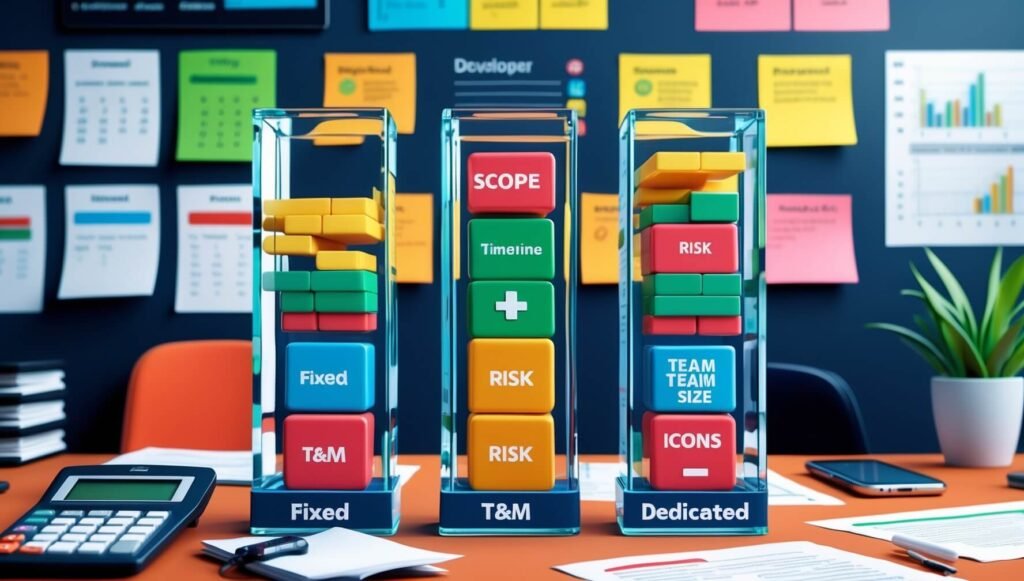
Fixed-price projects can work when scope is stable and acceptance criteria are clear, but they can become adversarial if your product evolves while the contract punishes change. Time-and-materials (or dedicated team) models often provide better flexibility for products that must adapt based on user feedback, stakeholder learning, or market changes. The key is not which model you choose; it’s whether the model matches the reality of your product stage.
When reviewing budgets, look for transparency. Strong proposals show how effort is distributed across discovery, design, engineering, QA, DevOps, and project management. Weak proposals lump everything into “development,” which hides risk until it shows up as missed deadlines, quality compromises, or surprise change orders. If you want a top rated mobile app development company experience, demand a budget narrative that explains what you’re buying—not just a number.
Strong firms can still be the wrong fit, and weak firms can look convincing for a few meetings. The fastest way to protect yourself is to know which signals predict pain. Watch closely for promises that ignore constraints, especially timelines that appear aggressive without acknowledging integrations, testing complexity, compliance requirements, or app store review realities.
Equally concerning is vague ownership. If you can’t identify who owns product decisions, who owns architecture, who owns QA, and who owns release management, you are likely to discover those gaps during your first crisis—which is the most expensive time to learn. A credible team can show you the operating model: how decisions are made, how changes are approved, and how quality is measured.
Finally, distrust any process that treats launch as the finish line. Mature partners plan for life after V1: monitoring, analytics, crash resolution, OS updates, performance tuning, and iterative releases. If post-launch is framed as “optional,” your product may ship, but your business will pay for that shortcut repeatedly.
When you use the list above as a shortlist—and the evaluation framework as your filter—you move from “finding a vendor” to building a delivery partnership. That’s where top-rated outcomes are created: in clear expectations, disciplined execution, and continuous learning from real users.