
E‑commerce is booming. By 2025 there will be an estimated 2.77 billion online shoppers worldwide and global e‑commerce sales are projected to reach $7.4 trillion. In the United States alone, retail e‑commerce sales hit $289.2 billion in the first quarter of 2024 (an 8.6% year‑over‑year increase) [goftx.com]. The opportunity is enormous—but so is the competition. More than 30.7 million e‑commerce stores vie for customer attention, and modern shoppers expect flawless experiences across devices. Mobile commerce now accounts for 44.2 % of U.S. e‑commerce sales; 73 % of shoppers use smartphones to make purchases and 65 % compare prices on their phones while shopping in stores. Poor mobile experiences erode trust—52 % of customers lose confidence in brands with inadequate mobile sites.
The way people discover products is also changing. AI‑powered search platforms like Google’s Search Generative Experience and ChatGPT deliver summarized answers instead of lists of links. Already, 39 % of shoppers report using an AI chatbot during their buying journey, and AI‑driven recommendations are projected to influence $260 billion in global sales. Generative search draws information from your product feeds, reviews, and third‑party signals to generate direct answers [www.salesforce.com]. Voice and visual search are exploding—by 2025 more than 50 % of all online searches are expected to be voice‑based, while visual search could drive 30 % of all e‑commerce revenue. AI now handles 80 % of B2C e‑commerce interactions [www.enfuse-solutions.com]. To remain visible and competitive, retailers must adapt their SEO strategies to these new paradigms.
This article explains what enterprise SEO for e‑commerce entails, why it matters, and how to implement it. We’ll cover technical optimisation at scale, answer engine optimisation (AEO), voice and visual search, international SEO, and AI‑driven analytics. We’ll also explore real‑world case studies of enterprise SEO success and provide actionable tips you can apply today.
Enterprise SEO refers to search‑engine optimisation strategies designed for large and complex websites, often with thousands or millions of pages, multiple subdomains or brands, and international audiences. E‑commerce enterprises face unique challenges: dynamic product catalogues, faceted navigation, stock changes, user‑generated content, and the need to optimise thousands of product and category pages across languages and regions. Managing crawl budget, avoiding duplicate content, and ensuring every page is indexable and optimised requires sophisticated processes and tools. Unlike small‑business SEO, enterprise e‑commerce SEO involves collaboration among marketing, engineering, merchandising, legal, and customer‑experience teams. It also demands robust analytics, automation, and governance to maintain quality at scale.
Organic search remains a primary acquisition channel for e‑commerce. With 99 % of American shoppers reading reviews before making a purchase and more than 34 % of U.S. consumers aged 18–34 making purchases through social media each week, brands need to be discoverable across search engines and emerging shopping platforms. Paid advertising costs continue to rise and can’t sustain profitability alone. Meanwhile AI overviews and answer engines are reducing click‑through rates on traditional search results—studies show that AI overviews cause a 34.5 % drop in position‑1 click‑through rate, with a 37–40 % reduction overall [www.omnius.so]. For e‑commerce brands, the key to sustaining organic traffic is to ensure products are included in AI‑generated answers and remain visible on search engine results pages (SERPs) for high‑intent queries.
Enterprise SEO also drives conversion and customer loyalty. AI tools like personalised recommendations and predictive search rely on clean data and semantic structure. According to an EnFuse Solutions report, global e‑commerce sales will reach $4.3 trillion in 2025 and mobile commerce will contribute over 80 % of that volume. With the rise of voice search, visual discovery and AI‑driven experiences, enterprise SEO helps retailers adapt content to conversational, visual and contextual queries, creating seamless experiences that drive conversions across channels.

Generative engine optimisation (GEO) is the practice of optimising content for AI‑powered search results. As BigCommerce notes, generative AI shifts traffic away from traditional links towards in‑search content; businesses must optimise product data and metadata for inclusion in these AI‑driven summaries [www.bigcommerce.com]. AI systems now synthesise facts from product feeds, reviews, and community sentiment to present condensed buying guides. To be cited, retailers need structured product data, fresh inventory feeds and consistent signals across marketplaces, reviews, forums and answer‑style content.AI overviews are growing quickly—triggered for 6.49 % of queries in January 2025, rising to 13.14 % by March (a 72 % monthly increase). Brands that optimise early will capture new visibility channels as generative search becomes mainstream.
Voice search usage is skyrocketing: by 2025 more than 50 % of all online searches are expected to be voice‑based. Smart speakers, mobile assistants and wearables drive this trend, and brands must adapt. Key voice‑search strategies include focusing on long‑tail conversational keywords, creating FAQ content that answers common questions, leveraging schema markup for rich results, and ensuring pages load quickly and are mobile‑responsive. Voice search queries often signal high intent—customers ask “Where can I buy eco‑friendly yoga mats under ₹1000?”—so answering these questions clearly can lead directly to conversions.
Visual search is transforming how consumers discover products. Google Lens processes over 20 billion searches each month and Pinterest Lens usage has grown 140 % year‑over‑year. Reports predict visual search will drive 30 % of all e‑commerce revenue by 2025. To capitalise on this trend, retailers must provide high‑quality, descriptive images, implement image SEO (alt text, captions and structured data), tag products with recognisable metadata and create image sitemaps. Visual search is especially important for fashion, home décor and beauty categories, where aesthetics drive purchase decisions.
Mobile commerce is now a major force in U.S. e‑commerce. It accounts for 44.2 % of online sales, and 73 % of shoppers use smartphones to shop. Consumers compare prices on their smartphones while in stores (65 %) and expect fast shipping and personalised experiences. Poor mobile UX drives cart abandonment; 25 % of customers abandon carts when forced to create an account or when confronted with slow or confusing pages. To compete, enterprise e‑commerce sites must prioritise mobile-first design, fast load times, frictionless checkout and consistent experiences across apps, marketplaces and social platforms.
Social commerce is exploding. More than 34 % of U.S. consumers aged 18–34 purchase through social media weekly. Platforms like Instagram, TikTok and Pinterest now integrate shopping tabs, live streams, and micro‑influencer campaigns. Brands must integrate SEO with social strategies—ensuring that product data (titles, prices, reviews) is consistent across social feeds and landing pages. Conversational AI, from chatbots on product pages to customer service agents, also influences discovery and conversion. With 39 % of shoppers using AI chatbots during their buying journey, retailers should ensure chatbots deliver accurate product information and direct users to relevant pages.
As AI answer engines rely on structured data, retailers must treat product feeds as a core marketing asset. The Salesforce article on AI search emphasises that AI‑generated recommendations assemble answers from structured product data, merchant feeds, reviews and third‑party sources. The article recommends including schema.org markup for product attributes (brand, model, GTIN, price, availability), offers, aggregate ratings and FAQ pages. Without clean markup and consistent data across channels, products may be invisible to AI engines. Retailers should automate inventory updates and review data to ensure accuracy and avoid being excluded from AI-driven recommendations.
The rise of AI overviews on search engines presents both opportunities and challenges. Studies aggregated by Omnius show that AI overviews reduce click‑through rates (CTR) for top results by 34.5 %, with a 37–40 % drop when AI snippets appear. However, impressions have increased as AI features drive more queries. AI overviews are being triggered for a growing share of queries (from 6.49 % in January 2025 to 13.14 % by March). To adapt, brands must optimise for answer engine inclusion—providing concise, authoritative content, structured data, and clear answers to common queries. Appearing in AI citations can offset declines in CTR by capturing new visibility channels.
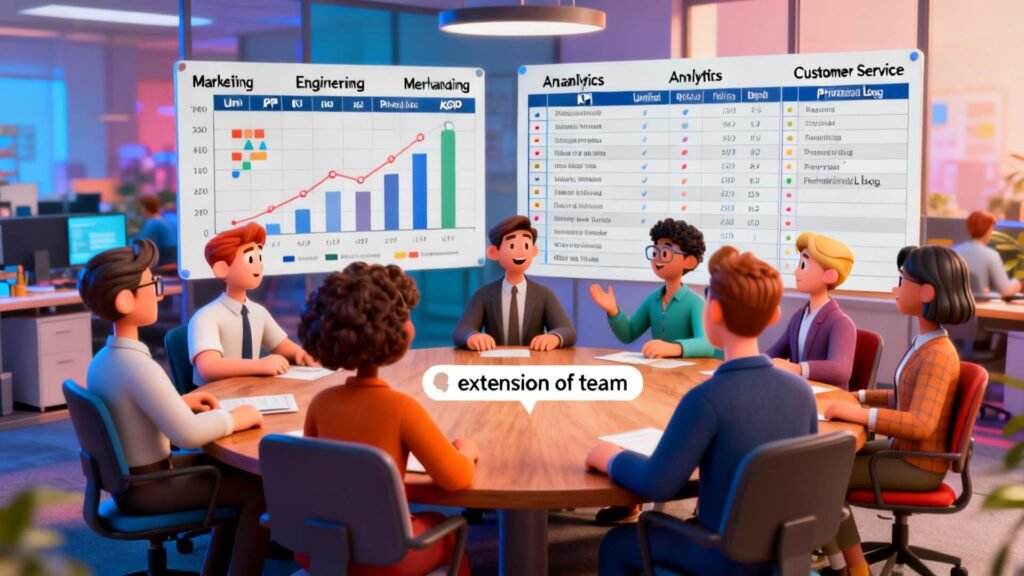
Large e‑commerce sites often have complex architectures with numerous categories, product pages, filters and pagination. Optimising crawl efficiency and indexation is paramount. Key strategies include:
noindex and canonical tags to consolidate duplicate content.Each product page should be optimised for relevant keywords and user intent. Important tactics include:
Faceted navigation allows users to filter products by color, size, price and other attributes. However, these filters can create thousands of URL combinations that waste crawl budget and generate duplicate content. To manage this:
rel="canonical" tags pointing faceted pages back to the main category page.Answer engines like Google’s AI Overview, Microsoft Copilot and ChatGPT rely on structured data to compile product recommendations. To increase inclusion:
Optimising for voice search means understanding conversational language and user intent. Recommended actions:
<h3> headings and structured data to identify question and answer pairs.With visual search driving up to 30 % of revenue, retailers must prepare their assets:
Scaling into new markets requires localisation and international SEO strategy. Consider the following:
hreflang annotations to specify language and regional versions of each page. This prevents search engines from serving the wrong language in different markets.example.com/es/) maintain domain authority, while ccTLDs (example.es) send strong geo signals.Enterprise e‑commerce brands must build authority across the web. Off‑page tactics include:
Measuring success at enterprise scale requires sophisticated analytics. AI SEO tools analyse billions of data points to identify ranking factors, predict trends and automate reporting. According to Single Grain’s analysis, the SEO software market reached $84.94 billion in 2025 and 82 % of enterprise SEO specialists plan to invest more in AI‑driven tools. These tools can improve on‑page performance (52 % of professionals reported improved results with AI) and help brands monitor AI visibility metrics, SERP features, and answer engine placements. When a boutique retail chain adopted an AI rank‑tracking platform, it saw a 450 % increase in organic search traffic; Levi’s used an AI technical SEO suite to increase the number of URLs crawled by 36 % and drive a 16 % revenue increase [www.singlegrain.com]. These results highlight the ROI potential of AI‑powered enterprise SEO.
Key measurement strategies include:
Enterprise SEO succeeds only when teams work together. Marketing, product, engineering, merchandising, analytics and customer service must share ownership of SEO outcomes. Establish a cross‑functional steering committee to prioritise initiatives, align KPIs and share insights. Encourage regular communication between SEO specialists and developers to address technical issues quickly. Provide training for copywriters and merchandisers on keyword research, structured data and on‑page best practices. Empower customer service teams to gather feedback and surface user queries that can inform new content.
Many organisations partner with specialised agencies or platforms to supplement internal capabilities. When evaluating providers:
Boutique retail chain: A regional apparel retailer faced declining organic traffic due to product stockouts and duplicate content. After implementing an AI rank‑tracking platform and restructuring its site architecture, the chain achieved a 450 % increase in organic search traffic, improved product indexation and regained top rankings for head terms. The retailer also integrated schema markup for products and FAQs, earning rich snippets and answer‑set inclusion.
Levi’s: The iconic apparel brand used Botify’s AI technical SEO suite to optimise its e‑commerce site. By improving crawl efficiency and resolving technical issues, Levi’s increased the number of URLs crawled by 36 % and generated a 16 % revenue uplift. The company adopted structured data at scale, enabling AI engines to cite product information in generative answers.
Global consumer electronics retailer: A multinational electronics brand needed to expand into Latin America and Asia. It partnered with an enterprise SEO agency to implement localized keywords, hreflang annotations and transcreation of product descriptions. Within a year, organic traffic from Latin America grew 180 % and conversion rates improved by 25 %. The project also included voice‑search optimisation for local dialects, resulting in increased visibility on smart speakers and voice assistants.
Home goods marketplace: A marketplace with millions of SKUs struggled with crawl inefficiency and duplicate content from filters. The team used dynamic rendering and canonical tags to consolidate faceted URLs, updated sitemaps to prioritise high‑value pages, and implemented a robust internal linking strategy. As a result, crawl budget was reallocated to critical pages, and organic revenue grew by 40 % year‑over‑year.
Ready to put these insights into practice? Use the following steps as a roadmap:
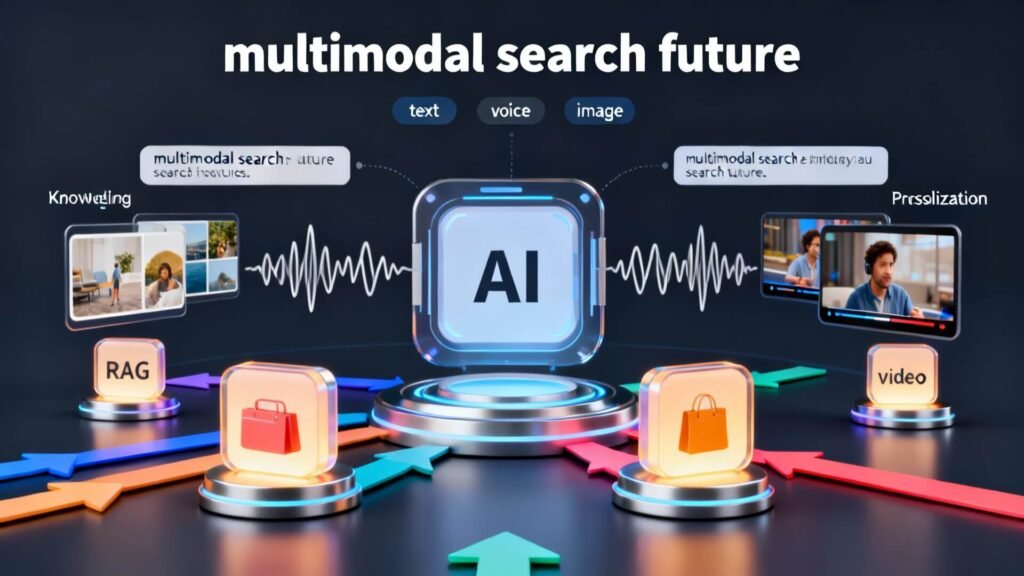
The search landscape will continue to evolve rapidly. Generative and multimodal search will become the norm, combining text, voice, image and video queries. AI overviews will expand across more query types, forcing brands to optimise for answer inclusion or risk traffic loss. Voice assistants and smart devices will integrate shopping functions, turning conversational queries into transactions. Retrieval‑augmented generation (RAG) will power enterprise search platforms, enabling internal knowledge bases and on‑device assistants. Personalisation will deepen, with AI predicting user needs and serving products proactively.
In this future, enterprise SEO will converge with broader digital strategy. Success will require collaboration across marketing, data science, engineering and customer experience. Brands will need to invest in AI‑driven tools, structured data, content that answers questions comprehensively, and experiences that delight users across devices and channels. Privacy regulations and ethical AI considerations will become more important. Ultimately, enterprise SEO services is not just about ranking on SERPs—it’s about being present and trusted wherever and whenever consumers search.
The e‑commerce landscape is more competitive and complex than ever. With billions of shoppers and trillions of dollars at stake, brands must embrace enterprise SEO to stand out. The rise of AI search, voice and visual queries, and global commerce demands sophisticated strategies that integrate technical excellence, content quality, structured data and user experience. By implementing the tactics outlined in this article—from optimizing technical architecture to embracing answer engine optimisation and AI analytics—retailers can boost visibility, increase conversions and expand internationally.
Remember: enterprise SEO is not a one‑time project but an ongoing commitment. Keep testing, learning and adapting as search behaviours and technologies evolve. Invest in cross‑functional collaboration and partnerships that bring specialised skills and tools to your team. When executed correctly, enterprise SEO will become a powerful growth engine, driving sustainable revenue and customer loyalty in an AI‑driven world.