
There’s a quiet moment in almost every hiring process for social roles when the conversation stops being about “posting” and starts being about proof. A hiring manager leans back, scans your work, and asks some version of: “How did this move the business?” That question is not a trap—it’s an invitation. It’s the doorway to better roles, bigger budgets, and the kind of career momentum that doesn’t depend on trends.
The good news is that you do not need to be a data scientist to answer it. You need a clean strategy, a reliable workflow, and a measurement story you can repeat with confidence. Social media can absolutely drive awareness, trust, leads, and sales. But in social media marketing jobs, the people who rise fastest are the ones who can translate content into outcomes that executives recognize: demand, pipeline, revenue efficiency, customer retention, and brand strength that reduces acquisition friction.
This article shows you how to build that translation layer. You’ll learn what measurable business results really look like in social media, how to connect creative to KPIs without killing creativity, how to present your work in a way that gets funded and hired, and how to build systems that keep performance steady even when algorithms shift. If you want your next role to pay you for impact instead of output, this is your playbook.
Social media used to be evaluated like a brand bulletin board: consistency, aesthetics, and a steady stream of updates. Today, social is evaluated more like a growth channel and a customer experience layer at the same time. That’s why the job market has shifted. Employers still care about strong creative and brand voice, but they increasingly prioritize people who can answer three operational questions:
First, can you create content that earns attention without paying for every impression? Second, can you turn that attention into a next step—email signups, site visits, leads, trials, purchases, or qualified conversations? Third, can you learn from performance and iterate quickly without losing brand integrity?
This shift isn’t happening because companies suddenly became “analytics obsessed.” It’s happening because social platforms have matured and competition has intensified. In crowded feeds, content must be designed to compete. And because budgets are scrutinized, teams need clarity on whether social is contributing meaningfully or simply consuming time.
In practical terms, this means the modern social role is closer to a hybrid: strategist + creative producer + performance analyst + community operator. You don’t have to master everything on day one, but you do need to understand how each piece connects. The strongest candidates aren’t the ones who can do every task; they’re the ones who can explain what matters most, why it matters, and how to prove it with evidence.
If you’re early in your career, this is encouraging, not intimidating. It means you can differentiate quickly. Many applicants can write captions. Fewer can set a measurable objective, design content that supports it, and report outcomes in a way that leadership trusts. That gap is where opportunity lives.

“Measurable business results” does not mean every post must be a direct-sale machine. Social works across the buyer journey, and the right measurement approach respects that reality. The goal is to connect the type of content you publish to the stage of decision-making it influences—and to select metrics that credibly reflect that influence.
Start by thinking in outcomes rather than vanity metrics. Likes and views can be helpful signals, but they are rarely sufficient as the “business result.” A business result is a change that improves the company’s position: more qualified demand, more revenue efficiency, stronger conversion rates, higher retention, lower support cost, or greater brand trust that reduces friction elsewhere.
Here are the most common categories of social-driven results—each with a measurement mindset that makes the result defendable in a meeting:
Awareness becomes a business result when it increases the size of the qualified audience that can be converted later. In practice, this looks like reach and video views that are concentrated among the right people, plus evidence that people are remembering you: profile visits, brand-search lift, direct traffic increases, and rising follower quality (not just follower count). The strongest social marketers don’t just “get views”—they build a predictable stream of discovery that feeds retargeting pools and nurtures future buyers.
Engagement becomes meaningful when it indicates belief and intent. Saves, shares, thoughtful comments, and DMs often signal deeper value than surface reactions. For service businesses and high-consideration products, these signals are especially important because they show people are using the content as a reference. That’s a form of trust—an early indicator that social is shaping decisions.
Clicks and visits can be business results when they represent the right type of visitor arriving on the right page. If social traffic bounces instantly, it’s not “bad traffic,” it’s misaligned messaging or weak landing experience. High-quality social traffic tends to land on pages that match the promise of the post: a resource, a product page, a case study, a lead magnet, or a clear consultation pathway. When social content and landing pages align, conversion rates rise and social becomes a reliable funnel input.
Direct conversions can absolutely happen through social—especially when content is designed around objections, proof, and a clear offer. The key is attribution discipline. If you want social to be funded like a growth channel, you need tracking that leadership can trust: consistent UTMs, dedicated landing pages where appropriate, and a reporting narrative that connects content themes to conversion outcomes. Even when last-click attribution understates social’s influence, credible direct attribution strengthens your case and helps you argue for more budget.
Social doesn’t stop at acquisition. Educational content reduces churn by helping customers use the product better. Community content increases stickiness by making customers feel seen. Support content reduces tickets by answering common questions publicly. When you measure this, you start to show leadership that social reduces costs and increases lifetime value—two outcomes that matter deeply to mature businesses.
The practical takeaway is simple: social media marketing jobs increasingly reward people who can match the content type to the outcome type. Not every post needs to sell. Every post does need a purpose you can explain—and a metric you can defend.

When social performance feels unpredictable, it’s usually because the system is missing. The easiest way to become “measurable” is not to obsess over individual posts—it’s to run campaigns as structured sequences where each piece of content has a job. The framework below is designed to help you plan, execute, and report in a way that leadership understands, without turning your work into spreadsheets-only marketing.
This framework is encouraging because it’s controllable. You can’t control algorithms. You can control objectives, audience clarity, persuasion angle, sequencing, instrumentation, and reporting. Those controls are enough to build a measurable social program—and enough to stand out in interviews and performance reviews.

One of the biggest confidence blockers in social media marketing jobs is the feeling that you can’t “prove ROI” unless you own the full funnel. In reality, hiring managers don’t expect you to control everything. They do expect you to demonstrate that you understand how social contributes—and that you can measure what you can control responsibly.
Think of your portfolio as a set of case stories, not a gallery of posts. A case story is persuasive when it shows: the objective, the audience context, the creative strategy, the execution, the measurable outcomes, and what you learned. This structure works whether you’re applying for an entry-level role or a leadership role. The difference is the complexity of the system, not the logic.
Start with one or two campaigns where you can tell a clean “before and after.” For example: “We had high reach but low clicks; we redesigned our hooks and aligned landing pages; click-through improved and leads increased.” Or: “Our content was scattered; we implemented a weekly content system with consistent themes; engagement quality improved and DM inquiries became more frequent.” The numbers don’t need to be massive. They need to be credible and connected to a decision you made.
Also include evidence of process. In social roles, process is often the hidden differentiator. Show a content calendar snapshot, a creative brief, a community response framework, and a simple reporting dashboard. When hiring managers see process, they see reliability. Reliability is what gets you trusted with budgets.
If you’re missing direct conversion tracking, you can still provide powerful proof by focusing on measurable signals that correlate with business outcomes: high-intent DMs, link clicks to a specific offer, saves and shares on educational content, profile actions, and repeat engagement from the same users over time. Combine those with qualitative evidence: screenshots of comments that reveal intent, anonymized DM excerpts that show buying questions, and examples of users quoting your content language back to you. These are trust signals. They’re not “soft” when they clearly show purchase intent or decision progress.
Finally, include one “learning story.” Hiring managers respect candidates who can admit what didn’t work and explain how they adapted. Social media is dynamic. A professional social marketer is not someone who never fails—it’s someone who learns faster than the feed changes.
Measurable results require consistency, and consistency requires a workflow that protects your time and your creative energy. Burnout is common in social roles because the work can feel endless: content, community, trends, reporting, stakeholder requests, and last-minute promos. The way out is not working harder; it’s building a system that makes output predictable and learning continuous.
A strong workflow begins with a content operating model. That means you decide in advance how content gets requested, created, reviewed, and published. You establish who approves what, what the turnaround times are, and what “good” looks like. Without this model, social becomes a service desk for the entire company, and your ability to run strategic campaigns collapses.
Tooling should serve the workflow, not replace it. Scheduling tools help you execute consistently, but they don’t solve unclear strategy. Analytics tools help you report, but they don’t solve weak creative. The most valuable tools are the ones that reduce friction: templates for briefs, repeatable captions structures, asset libraries, and a standardized dashboard that turns performance into decisions.
Community management deserves special attention because it’s often underestimated. Community is where social becomes a customer experience channel. If your response system is slow or inconsistent, you lose trust and opportunities. Build response guidelines: tone, escalation paths, FAQ responses, and how to handle negativity. This creates speed and protects the brand voice, while also protecting you from emotional fatigue.
And don’t ignore alignment with other teams. Social performs better when it’s connected to offers, landing pages, and email follow-ups. Even small alignment—like ensuring the landing page matches the post’s promise—can dramatically improve conversion rates. When you build these connections, your content starts producing measurable outcomes more consistently, and your job becomes less reactive and more strategic.
Here is the encouraging truth: you do not need a perfect background to build a strong social career. You need a clear story of how you think, how you execute, and how you learn. Most hiring decisions are driven by confidence—confidence that you can produce reliable work, adapt when performance shifts, and communicate results without drama.
In interviews, aim to speak in “outcome language.” Instead of describing tasks (“I posted daily”), describe intent and impact (“I ran a weekly sequence focused on demonstration and objection handling, and it increased qualified inquiries”). Outcome language signals maturity. It tells the hiring manager you’re not just a poster; you’re a marketer.
Be ready to explain your measurement philosophy. You don’t need to pretend social is purely last-click. You do need to show that you can track what you can track, and that you understand how social supports conversion across the funnel. A simple explanation—primary KPI, supporting KPI, and how you learn—can instantly set you apart from candidates who only talk about aesthetics.
Also, protect your long-term career by protecting your energy. The best social marketers stay curious, not exhausted. Systems, boundaries, and clear priorities are not “nice to have”—they’re what allow you to keep improving. Social rewards people who show up consistently, learn continuously, and keep their creative confidence intact.
If you want a practical next step after reading this: choose one campaign idea, apply the Content-to-Results Framework for two weeks, and document everything. Even a small experiment can become a portfolio case study. Those case studies, stacked over time, turn into a career. Measurable results aren’t reserved for big brands—they’re built by people who run disciplined experiments and learn like professionals.
Affiliate marketing has graduated from an obscure fringe tactic to a core driver of e‑commerce revenues. While its performance‑based model has generated billions for advertisers and publishers, sceptics still ask whether it’s a legitimate business opportunity or a clever pyramid scheme. This article cuts through the hype by examining the industry’s evolution, economics and ethical standards. We’ll explore how it works, why it’s proven to be a lawful and profitable marketing channel, and the red flags that separate a legitimate program from a scam.
At its core, affiliate marketing is a performance‑based partnership in which a company pays third parties (affiliates) a commission for driving traffic or sales. [investopedia.com] explains that digital tracking technologies like cookies and analytics have transformed this model into a multibillion‑dollar industry, spawning a variety of arrangements. Affiliates may be unattached promoters who simply advertise products on high‑traffic websites, related affiliates who blog about topics in their niche, or involved affiliates who use and endorse the products they sell. In each case, the advertiser only pays when a desired action – a sale or lead – occurs.
This structure creates a clear incentive alignment between companies and publishers. Rather than spending huge budgets on untargeted advertising, brands can reward the partners who actually deliver results. Affiliates benefit from flexible working conditions – they choose the products they promote and the content formats they use – while merchants enjoy incremental revenue and broadened reach. Performance‑driven models can encompass pay‑per‑sale, pay‑per‑lead or pay‑per‑click arrangements, each measured via sophisticated tracking software. Cookies record which affiliate referred a customer, and attribution windows ensure commissions are honoured even if the buyer returns days later. The interplay of technology and analytics is what allows a decentralised network of independent promoters to function like an extension of a brand’s sales force.
Because advertisers only pay for results, affiliate programs are attractive to both start‑ups and enterprise brands. Major companies such as Amazon, eBay and Shopify have built massive networks of independent publishers who drive incremental revenue [getresponse.com]. This wide adoption underscores the model’s legitimacy: household brands wouldn’t risk their reputations on a scam.
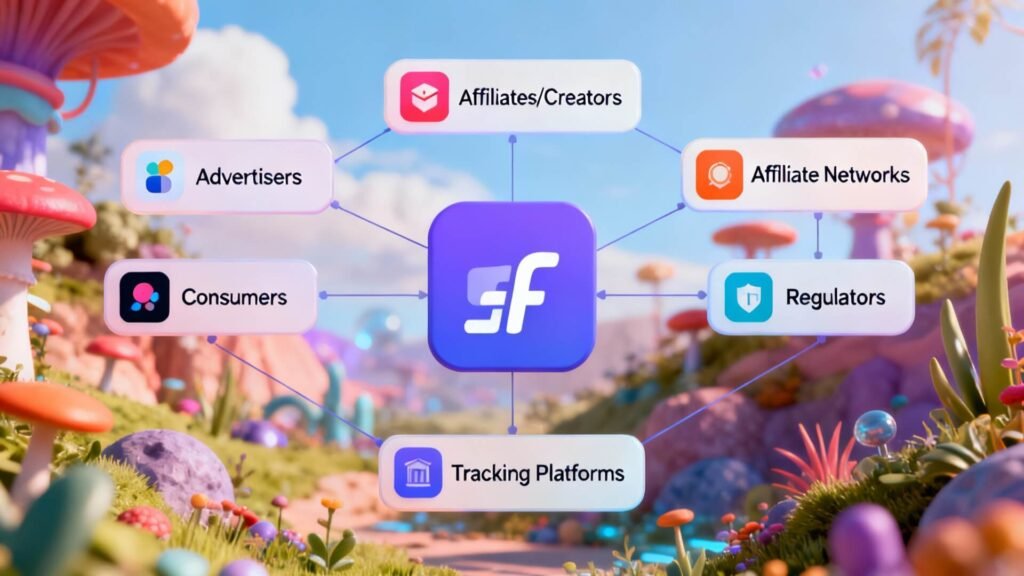
The affiliate universe includes more than just merchants and publishers. A thriving ecosystem of networks, tracking platforms, regulators and consumers forms the backbone of the business. Advertisers (often called merchants or brands) create the products, set commission rates and provide creatives such as banners and landing pages. Affiliates (publishers, creators or influencers) choose which products to promote and develop content that persuades readers to click. Affiliate networks act as marketplaces, connecting merchants with thousands of potential partners, managing tracking technology and handling payments. Networks vet programmes for quality and supply affiliates with dashboards to monitor earnings. There are also sub‑networks and aggregators that specialise in certain verticals, such as finance or gaming, offering curated offers.
Consumers form the fourth pillar: they click links and purchase products. Their trust in affiliates’ recommendations is what ultimately drives conversions. Regulators and watchdog groups – from the U.S. FTC to the UK’s Advertising Standards Authority (ASA) – play a vital role in protecting consumers. By issuing guidelines on disclosure and truth‑in‑advertising, they ensure that affiliates don’t mislead their audiences. Finally, technology vendors provide the infrastructure that makes everything work: tracking software, API integrations with e‑commerce platforms, fraud‑prevention tools and analytics dashboards. Understanding these stakeholders is essential, because legitimate programmes address the needs of all parties while shady schemes exploit the gaps.
The first modern affiliate program, Amazon Associates, launched in July 1996 and offered commissions of less than 1 % up to 20 % depending on the product [referralfactory.com]. Early schemes were plagued by fraud – cookie stuffing and unethical “get rich quick” pitches gave the industry a bad reputation. Regulation and professionalisation followed. The U.S. Federal Trade Commission (FTC) introduced disclosure rules requiring affiliates to reveal their financial relationships, and today most networks implement strict compliance standards to prevent fraud. Over time the industry matured, gaining trust from advertisers and publishers alike.
The growth figures tell a compelling story. Analysts predict global affiliate marketing spend will exceed $37.3 billion in 2025, up from about $20 billion a few years earlier [trafficguard.ai]. U.S. expenditure is forecast to reach roughly $11 billion by 2025. Independent estimates suggest compound annual growth rates of 8–15 %, with global revenues poised to surpass $48 billion by 2027 [thunderbit.com]. Such sustained expansion reflects advertisers’ confidence in the channel and the shift toward accountable marketing spend.
Several macro trends have fuelled this surge. The explosive growth of e‑commerce means more transactions happen online, providing fertile ground for referral‑driven sales. The rise of content creation – blogs, podcasts, newsletters and video channels – has given individuals inexpensive platforms to reach global audiences. Meanwhile, consumers increasingly discover products through peers and creators rather than direct ads, making affiliate recommendations more persuasive. Mobile internet access has untethered shopping from desktop computers, and social media has enabled products to go viral within minutes. Technological advances in tracking, such as server‑side tagging and cookieless solutions, have sustained accuracy despite privacy regulations. These forces, combined with the economic uncertainty of recent years, have made performance‑based partnerships attractive: brands can scale budgets up or down quickly and only pay for measurable results.
Legitimacy starts with economics. Because affiliates are only paid when they deliver conversions, most businesses earn impressive returns on investment. A study highlighted by trafficguard.ai notes that brands typically earn between $12 and $15 for every dollar spent on affiliate marketing. This ROI is comparable to or better than many paid advertising channels. Another survey summarised by thunderbit.com found that 65 % of retailers reported affiliate marketing lifts revenue by up to 20 % and that the top 10 % of affiliates generate 90 % of programme revenue. Such concentration of earnings reflects the competitive nature of the field: successful affiliates invest heavily in content and SEO to build authority.
Adoption rates underscore how deeply embedded the model has become. According to the Misstechy data roundup, 81 % of brands and 84 % of publishers now run affiliate programmes, while affiliate links drive about 16 % of online orders in the United States. The same report notes that affiliate marketing accounts for 5–25 % of revenue for many retailers and that mobile devices generate over 60 % of affiliate clicks. Top affiliates rely on search engine optimisation for roughly 70 % of their traffic. The sheer scale of participation makes it clear that this isn’t a niche hustle but a mainstream marketing channel [misstechy.com].
Beyond hard numbers, affiliate marketing strengthens brand equity and consumer trust. A well‑executed programme turns loyal customers into brand advocates: when an enthusiast shares their favourite software or kitchen gadget with friends, that recommendation carries more weight than an ad. Affiliates often create content – tutorials, comparisons, unboxing videos – that educates potential buyers and reduces pre‑purchase anxiety. This content lives on long after an ad campaign ends, generating evergreen traffic and reinforcing a brand’s authority in its niche. From a global perspective, affiliates can introduce brands into markets where they lack distribution or local marketing expertise. A French blog about eco‑friendly fashion can expose an American brand to European consumers, while a tech reviewer in India can help a SaaS company reach new geographies without opening an office. These intangible benefits are harder to quantify but contribute to the legitimacy and durability of the model.
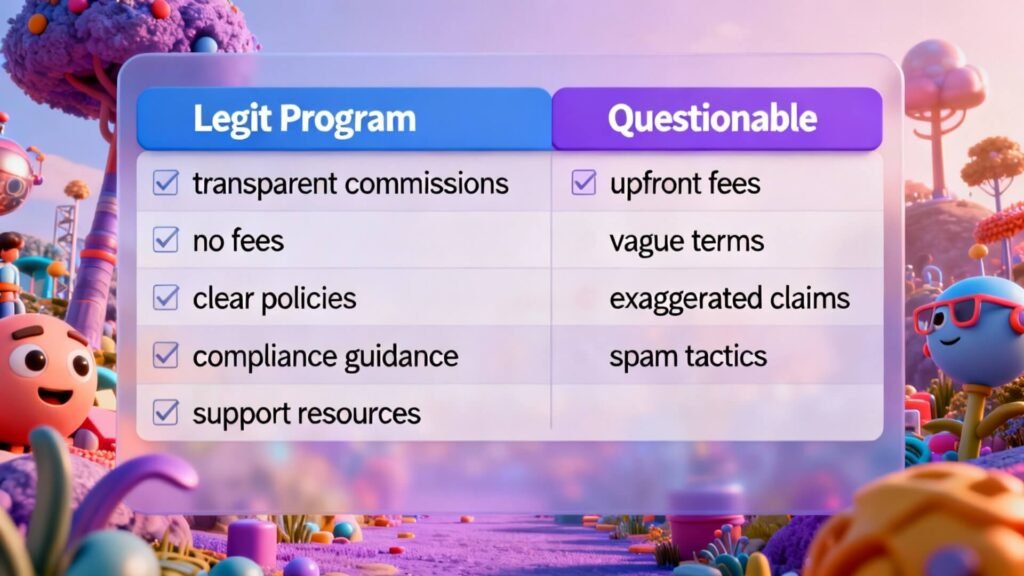
Legitimate affiliate marketing offers benefits that extend beyond raw revenue. First, it’s cost‑effective: advertisers pay for performance instead of impressions, making budget allocation predictable. Commissions range widely depending on sector, from a few per cent for commodity products to 70 % for high-ticket software subscriptions. Second, it’s scalable. There are more than 100,000 companies providing affiliate marketing services, and the barrier to entry for new publishers is low. Third, it diversifies traffic: affiliates with specialised blogs or social media followings can reach niche audiences that a company’s own marketing might miss.
Another advantage is the democratisation of marketing. Affiliate programmes enable individual creators – from stay‑at‑home parents to YouTube personalities – to monetise their content. However, success isn’t guaranteed: only about 35 % of affiliates earn more than $20,000 per year and less than 10 % exceed $50,000. This income distribution highlights the importance of skill, persistence and choosing reputable programmes.How to Spot a Legit Programme
With thousands of programmes available, due diligence is essential. Here are criteria to separate legitimate opportunities from potential scams:
By following these guidelines, aspiring affiliates can filter out questionable schemes and align with brands that value long‑term partnerships over quick gains.
Due diligence means going beyond a glossy landing page. Before signing up, research the advertiser: does it have a physical address, clear contact details and an established reputation? Read the programme’s terms and conditions to understand cookie durations, payment thresholds and prohibited marketing methods. Check independent reviews on affiliate forums or Facebook groups to see what other publishers say about the network’s reliability and support. Examine the product or service itself – is it something you would genuinely recommend to friends? Legitimate programmes encourage affiliates to experience the product first. If you’re promoting a supplement or financial product, verify that it complies with local regulations and avoids unsupported claims. Also consider diversification: rely on multiple partners rather than a single programme so that you aren’t vulnerable if one network changes its rules or reduces commissions.
No discussion of affiliate marketing legitimacy is complete without acknowledging the scams. During the industry’s early days, unscrupulous operators inflated traffic with cookie stuffing and bot clicks. Similar tactics persist. Trafficguard.ai reports that global ad fraud cost marketers over $84 billion in 2023, equating to roughly 22 % of total digital ad spend. Fraudsters generate fake clicks or sign‑ups to claim commissions without creating real sales. Postback abuse – sending false conversion events to networks – is also on the rise.
Another common scam involves pay‑to‑join schemes. These programmes require affiliates to pay for “training” or membership before they can earn commissions. Legit programmes never charge fees. Similarly, multi‑level marketing (MLM) schemes sometimes masquerade as affiliate programmes but rely on recruiting more members rather than selling actual products. [hostinger.com] warns that digital ad fraud losses could climb from $35 billion to $100 billion between 2018 and 2023, stressing the need to scrutinise offers.
Finally, be wary of products that make medical or financial claims without evidence. These offers may be illegal. Affiliates can face penalties if they promote unapproved or deceptive products.
Scammers also exploit technical loopholes. Cookie stuffing places affiliate cookies on users’ devices without their knowledge, crediting the fraudster when the user later makes a legitimate purchase. Click hijacking reroutes traffic through another affiliate’s link at the last second, stealing commissions from the rightful promoter. Some black‑hat marketers deploy bots or farms of low‑quality traffic to mimic human activity. If a programme lacks anti‑fraud measures – such as IP address monitoring, conversion validation and manual audits – legitimate partners may find their earnings diluted. Newcomers should avoid programmes that encourage cloaking techniques, hidden iframes or other deceptive tactics; these may temporarily inflate earnings but inevitably result in bans and reputational damage.
The affiliate industry’s legitimacy rests on transparent practices. Since 2009, the U.S. FTC has required affiliates and influencers to disclose any financial relationships. According to [impact.com], clear disclosures protect consumers and promote trust; 57 % of shoppers say transparency is important when evaluating influencer recommendations. Failing to disclose can lead to fines for both the affiliate and the brand.
Disclosure statements should be conspicuous, written in plain language and placed near affiliate links. For example, a blog post might include a sentence such as “I may earn a commission at no additional cost to you if you purchase through my links.” On social media, hashtags like #ad or #affiliate can suffice. Different jurisdictions have similar rules, so affiliates should familiarise themselves with regional regulations.
Transparency doesn’t stop at disclosure. Affiliates should maintain honest reviews and accurate depictions of products; embellishing performance claims or cherry‑picking positive testimonials can mislead audiences and lead to complaints. Outside the United States, other regulators enforce similar standards: the UK’s Advertising Standards Authority (ASA) requires that affiliate ads be clearly labelled and prohibits misleading health or financial claims. Canada’s Competition Bureau issues guidance on influencer marketing and endorses disclosure similar to FTC requirements. In Europe, the Unfair Commercial Practices Directive and ePrivacy rules govern online endorsements. The common thread across these regimes is clarity and honesty: affiliates must never disguise commercial intent.
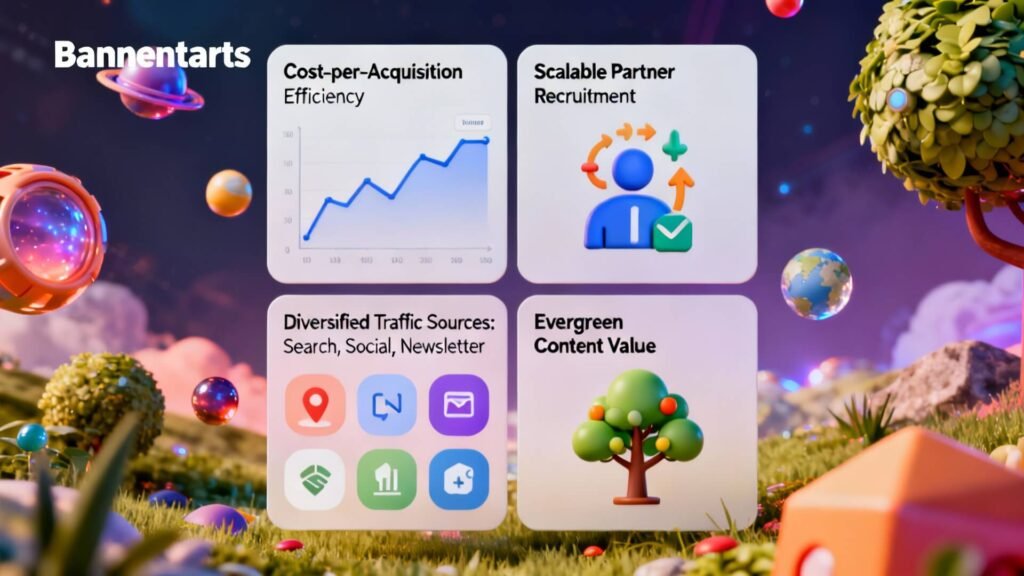
It helps to know the hallmarks of a reputable programme. Legitimate affiliate offers pay commission only on verified sales or leads; they don’t charge membership or training fees. They make realistic earnings claims and emphasise that success requires effort and marketing skill. Reputable programmes are transparent about commission rates, cookie durations and payment schedules, and they encourage affiliates to follow disclosure guidelines. They invest in support and compliance, providing training and enforcing FTC rules. And they promote products with genuine demand and verifiable reviews. In contrast, questionable schemes demand upfront fees, make exaggerated income promises, obscure payment terms, provide little support and often push dubious or unproven products.
Example 1 – A Niche Blog: Jane runs a blog about specialty tea. She partners with a reputable tea retailer through an affiliate network and writes detailed reviews comparing flavours. Her honest reviews and disclosure statements build reader trust. Within a year she earns a steady income that covers hosting costs and more. Jane’s success illustrates the power of targeting a niche audience and providing valuable content.
Example 2 – YouTube Channel: Roberto operates a tech review channel on YouTube. He joins programs offered by major electronics retailers and includes affiliate links in his video descriptions. Because he tests each product and clearly labels sponsored links, his audience appreciates his transparency. Affiliate commissions now fund new devices for review. Roberto’s story shows that affiliate marketing can be an ethical revenue stream when paired with authenticity.
Lesson Learned: Both cases demonstrate that authenticity and long‑term engagement are key. Success isn’t about spamming links; it’s about educating and helping your audience. Once trust is established, affiliate revenue follows.
Other success stories highlight different approaches. A well‑known travel blogger built a seven‑figure business promoting credit cards and hotel loyalty programmes by producing comprehensive guides to reward points. His secret was a deep understanding of readers’ pain points – he explained how to maximise perks without excessive fees – and he disclosed his affiliate relationships prominently. Likewise, a software comparison site grew from a side project into a 20‑person company by creating detailed, unbiased reviews of SaaS tools and monetising through affiliate partnerships. The site invests in editorial research, tests each product extensively and updates articles as features change. These examples show that legitimate affiliate marketing can evolve into a full‑fledged media business when executed professionally.
The affiliate landscape is evolving rapidly. Several trends will shape its future:
Other developments are already reshaping the channel. As search engines roll out answer‑engine snippets and AI overviews, affiliates need to optimise for conversational queries and structured data so that their content surfaces in voice and visual search. Shifts toward first‑party data and privacy‑preserving tracking mean that server‑side analytics and clean data collection are becoming critical. The rise of retail media networks – e‑commerce platforms offering internal ad programmes – creates hybrid roles for affiliates who manage both marketplace ads and off‑site content. Globally, emerging markets in Asia, Latin America and Africa are seeing rapid adoption of smartphones and e‑commerce, opening new audiences for affiliates who localise their content and adapt to different cultural contexts. Finally, collaborations between affiliates, influencers and brands are becoming more sophisticated, with joint product launches, co‑branded content and shared analytics to optimise customer journeys.
Affiliate marketing has come a long way since the Wild West days of the 1990s. Today, it’s a mainstream, performance‑driven channel that delivers impressive returns and opportunities for both businesses and individual creators. The industry’s legitimacy is underscored by its massive adoption, strong ROI and regulatory oversight. Scams and fraud certainly exist, but they can be avoided with due diligence and adherence to FTC guidelines. By choosing reputable programmes, disclosing relationships and focusing on value‑driven content, affiliates can build sustainable businesses, and advertisers can harness a cost‑efficient source of revenue.
Ready to explore affiliate marketing? Approach it as a long‑term partnership rather than a quick fix, and you’ll be well on your way to transforming a side hustle into a viable business.