
Visual advertising isn’t new, yet it’s continually reinvented by technology. In today’s crowded digital landscape, people encounter thousands of visual cues daily across websites, apps, social media and connected TV. To stand out, brands rely on strategic, data-driven approaches rather than random banner placements. This is where display advertising services become indispensable. These services blend creativity, advanced targeting and programmatic technology to deliver ads that capture attention, drive engagement and support broader marketing goals. This article explains why professional display advertising services are crucial for modern marketers, explores the ecosystem and formats, outlines the benefits and best practices, and highlights emerging trends and challenges.
Display advertising refers to visual ads placed on websites, mobile apps, social media platforms and other digital properties. At a basic level, the ecosystem consists of three key players: advertisers who create ads, publishers who provide real estate for ads, and intermediaries (ad networks and supply-side platforms) that connect the two. Modern display advertising relies heavily on programmatic technology—automated buying and selling of ad inventory using real-time bidding (RTB). In milliseconds, algorithms evaluate available impressions, user data and advertiser bids to determine which ad appears on a specific page or app. This process makes display advertising scalable and efficient, allowing brands to reach massive audiences while targeting specific demographics, interests or behaviors.
To appreciate the power of display advertising services, it’s helpful to understand the range of ad formats and technologies available. The most familiar format is the banner ad: static or animated images in standard sizes such as 300×250 pixels (medium rectangle) or 728×90 pixels (leaderboard). Though simple, banners can be effective when paired with compelling copy and targeted placements. Rich media ads go further by including interactivity—expandable panels, video players or mini-games. These ads invite users to engage directly without leaving the page. Video ads have exploded in popularity thanks to high-speed internet and streaming platforms; they appear before, during or after video content (in-stream) or within content feeds (out-stream). Native ads blend seamlessly with the surrounding content, matching the platform’s look and feel to reduce ad fatigue. Finally, responsive ads automatically adjust size and format across devices, ensuring consistent user experiences on desktops, tablets and smartphones.
Display advertising services help brands navigate this complexity. Professionals advise on the best mix of formats based on campaign objectives, audience demographics and budget. For example, a consumer goods brand seeking widespread awareness might use a combination of large-format banners, video ads and rich media across premium news sites and lifestyle blogs. A B2B brand targeting decision-makers could focus on native ads in industry publications and retargeting banners to nurture leads. Agencies also manage the technical aspects of programmatic buying, from setting bid strategies and frequency caps to controlling brand safety and fraud prevention.

Display ads deliver unique advantages that complement other digital marketing channels. First, they build brand awareness at scale. Unlike search ads that rely on user intent, display ads can introduce your brand to potential customers while they read articles or check email. This top-of-funnel exposure is critical for new product launches or brand repositioning. High-impact formats like rich media and video capture attention and convey brand personality through visuals, sound and interactivity. Human brains process images faster than text, so visual storytelling leaves a lasting impression.
Second, display advertising allows for precise targeting. Through programmatic platforms, advertisers can target audiences based on demographics (age, gender, location), interests (sports, fashion, technology), behaviors (online shopping, travel booking, job searching) and contextual signals (content topics, website categories). Retargeting lets you show ads to people who visited your site or used your app, reminding them of products they viewed or left in their cart. Combining first-party data (collected through your own website) with third-party segments amplifies reach while maintaining relevance.
Third, display ads are cost-effective, especially compared to TV or print. Cost-per-thousand (CPM) pricing allows advertisers to control spend by setting maximum bids and daily budgets. You can also pay for performance (cost-per-click or cost-per-action) when campaigns aim to drive conversions. Programmatic technology continually optimizes bids, targeting and creative rotation to maximize results within your budget. Because inventory is auctioned in real time, marketers avoid overpaying for impressions that may not convert.
Fourth, display advertising supports the entire funnel, not just awareness. With careful segmentation and messaging, ads nurture prospects through consideration and conversion stages. For example, educational whitepaper ads may target mid-funnel leads, while discount banners and time-limited offers prompt final purchase decisions. Display ads also drive traffic to webinars, product demos and in-store events, fostering engagement beyond the click.
Fifth, display advertising complements other channels, enhancing cross-channel performance. When users see ads across multiple touchpoints—web, mobile, social media and email—the brand stays top-of-mind. Studies show that multi-channel campaigns can boost engagement significantly compared to single-channel efforts. Display ads can amplify search and social campaigns by generating new intent; for instance, a user who sees your banner may later search for your brand or click an organic social post.
Finally, professional services provide measurability and transparency. Advanced analytics tools track impressions, clicks, conversions, viewability (how many users actually saw the ad), and time spent interacting. Attribution models help you understand how display ads contribute to outcomes like sales or leads, even when users convert through other channels. Clear reporting is essential for optimizing creative, placements and bidding strategies. Agencies help interpret these metrics and provide actionable insights to refine campaigns over time.
A well-structured display campaign begins with clear objectives. Are you aiming to increase brand awareness, drive website traffic, generate leads or boost sales? Next, identify your target audience using demographic and behavioral data. Develop customer personas that capture motivations, pain points and media consumption habits. These personas help refine targeting and creative messaging.
Professional display advertising services excel at selecting the right platforms and ad networks for your goals. They evaluate inventory quality, audience reach, targeting capabilities and cost efficiencies across supply-side platforms (SSPs) and demand-side platforms (DSPs). Some campaigns may focus on premium publishers like news sites and niche blogs; others may prioritize broad networks that maximize reach at low CPMs. Social platforms (Facebook Audience Network, Instagram, LinkedIn) offer powerful targeting based on interests and professional roles, while Google Display Network provides access to millions of websites and apps.
Creative development is the next critical stage. Design ads that align with your brand identity and speak directly to your audience. Use strong headlines, clear value propositions and compelling calls to action. High-resolution images or video snippets convey your message quickly and evoke emotion. At the same time, ensure the design adapts to multiple screen sizes and meets platform specifications. Interactive elements (swipe, click, expand) can increase time spent with the ad, but they should not distract from the core message.
Setting budgets and bidding strategies requires balancing exposure with efficiency. Display advertising often runs on CPM, but you can also bid on clicks or conversions. Professional services analyze historical data, forecast performance and recommend budget allocations across platforms and formats. They set frequency caps to avoid overexposing users and causing ad fatigue. Geographic, device and daypart targeting refine delivery further: for example, serving ads to urban millennial women on mobile devices after work hours.
Once campaigns launch, continuous monitoring and optimization are essential. Agencies track real-time performance and adjust bids, creative rotation and targeting based on what works best. A/B testing compares different versions of headlines, images, CTAs and landing pages to determine which combinations drive higher engagement and conversions. Viewability metrics ensure ads are seen (not hidden below the fold), and brand safety filters protect your brand from appearing on inappropriate websites.
Integrating display ads into broader marketing efforts multiplies their impact. Retargeting sequences can follow email campaigns or search ads to reinforce messaging. Display ads can also build lookalike audiences for social media campaigns, attracting new prospects who resemble your best customers. When combined with CRM data, display ads can deliver personalized offers to existing customers, fostering loyalty and repeat purchases.
Effective display advertising strikes a balance between creative flair and contextual relevance. The most beautiful design won’t perform if it appears to the wrong audience or at the wrong time. Likewise, perfectly targeted ads need fresh creative to avoid blending into the digital noise. Professional services ensure your creative resonates with the environment in which it appears. For example, a humorous, colorful ad might thrive on an entertainment website but feel out of place on a serious news site. Native ads require subtlety; they must match the publisher’s tone and layout while still conveying your message.
Storytelling remains crucial across formats. Display ads are often the first encounter someone has with your brand, so they should hint at a broader story and invite users to learn more. A simple headline—“Ready for Your Next Adventure?”—paired with an image of a hiker evokes curiosity and aligns with an outdoor retailer’s narrative. Rich media and video ads allow you to tell more complex stories: a 15-second clip can introduce characters, set a mood and highlight key benefits. Sequential messaging, where ads reveal different parts of a story over multiple interactions, keeps audiences engaged and moves them along the funnel.
Accessibility and inclusivity are increasingly important. Ensure colors, fonts and contrast meet accessibility standards so that all users can read and interact with your ads. Provide alt text for images and transcripts for video to accommodate users with visual or hearing impairments. Thoughtful design choices not only broaden reach but also reflect brand values and social responsibility.
Another aspect of context is device optimization. Users consume content differently on desktops, tablets and smartphones. A large-format leaderboard may look striking on a desktop but become tiny and illegible on a phone. Responsive ads adjust layout, text size and image cropping to ensure legibility across devices. Mobile-first design prioritizes short copy, vertical videos and easy-to-tap buttons. Meanwhile, interactive mobile formats such as swipe cards or haptic feedback can enhance engagement if implemented tastefully.
Finally, creative burnout is real. Even the best ads lose effectiveness when shown repeatedly. Rotate fresh creative, adapt to seasonal themes and incorporate user-generated content to keep campaigns vibrant. Services monitor performance metrics to detect declining click-through rates or rising costs, signaling when it’s time to refresh assets.

The display landscape is evolving rapidly. Here are key trends to watch:
Despite its benefits, display advertising faces several challenges:
Each challenge also presents an opportunity to innovate. Instead of fighting ad blockers, some brands experiment with ad-light experiences—subscriptions or loyalty programs where users voluntarily allow ads in exchange for exclusive content or discounts. For measurement, new technologies like incrementality testing measure the lift attributed to display campaigns by comparing audiences exposed to ads with control groups who are not. Moreover, new data partnerships enable privacy-preserving cross-channel attribution, giving marketers a holistic view of the customer journey.

Display advertising doesn’t exist in a silo. Its value multiplies when integrated with other channels. Here are strategies to harmonize display with your broader marketing efforts:
Professional services facilitate these integrations by sharing data across platforms, coordinating creative and ensuring compliance with privacy regulations. They often recommend full-funnel attribution models that allocate credit across top-, mid- and bottom-of-funnel activities. This approach highlights how display ads contribute to brand awareness, lead nurturing and conversions, helping you justify investment and optimize budgets.
Display advertising remains one of the most versatile and impactful tools in digital marketing. When executed thoughtfully—using data-driven targeting, compelling creative and cross-channel integration—it provides unmatched opportunities to build awareness, nurture relationships and drive sales. However, the complexity of the ecosystem, the rise of privacy regulations and the proliferation of ad formats call for professional expertise. Display advertising services offer guidance on platform selection, bid strategies, creative design, fraud prevention, measurement and optimization. They help brands stay ahead of emerging trends such as AI personalization, cookieless targeting, immersive formats and programmatic TV.
Investing in display advertising services is not just about buying media; it’s about creating meaningful connections with your audience. By balancing art and science, your brand can cut through the noise, deliver personalized experiences and build loyalty in an ever-changing digital environment. As marketing continues to evolve, display ads will remain a vital piece of the puzzle—especially when supported by experts who understand the nuances of modern media and consumer behavior.
The dream of many boutique marketing and web‑design agencies is to grow into full‑service powerhouses. Yet the reality of scaling is far less glamorous. Hiring experienced SEO specialists can cost tens of thousands of dollars annually, and keeping up with ever‑changing algorithms and tools demands continuous training [www.elsner.com]. At the same time, visibility on Google is non‑negotiable: a study by Ahrefs found that 91 % of web pages get zero organic traffic from Google [www.ahrefs.com], while almost 62 % of consumers will disregard a business they can’t find online [www.sagapixel.com]. Digital marketing remains one of the most effective channels—three‑quarters of marketers believe SEO is the most effective digital marketing strategy [www.newsworthy.ai].
Without in‑house SEO expertise, agencies risk letting valuable leads slip away or losing clients to competitors who can deliver search‑visibility. Enter white‑label SEO services, an outsourcing model that lets you offer professional SEO under your own brand. As we’ll explore, partnering with an experienced provider gives your agency immediate access to expert talent, scalable resources and branded reporting, allowing you to focus on client relationships and sales. This article will guide you through the what, why and how of white‑label SEO, provide actionable tips and dispel myths, so your agency can transform from startup to powerhouse.
White‑label SEO—also called private‑label SEO—allows agencies to offer SEO services to their clients while outsourcing the actual fulfilment to another company [www.livechat.com]. You remain the face of the operation: your clients receive reports and deliverables branded with your logo, while a team of SEO specialists performs keyword research, link‑building, on‑page optimisation and analytics behind the scenes.This model means you can deliver comprehensive search‑engine services without investing in expensive tools or building an internal SEO department.
In practice, the workflow looks like this:
A professional white‑label SEO provider usually offers multiple service tiers to meet different client needs.Typical components include:
Using a provider who offers all of these services means your agency can become a one‑stop shop for digital marketing.
SEO is multifaceted—technical SEO, content strategy, link building and analytics each require specialised knowledge. Many small agencies lack dedicated staff who can handle these tasks at an expert level. Building an in‑house team is costly: according to Elsner’s 2025 guide, hiring a full‑time SEO team often costs $50,000 or more per year, whereas white‑label agencies provide access to specialists for an affordable monthly fee. These costs don’t include software subscriptions, training and employee benefits.
Every time you decline SEO work because you don’t have the capacity, you leave recurring revenue on the table. With 46 % of all Google searches having local intent and 50 % of smartphone users visiting a store within a day of performing a local search [www.forbes.com], demand for SEO—especially local search—has never been higher. Without outsourcing, your existing team may be stretched thin trying to keep up with both web design and SEO campaigns, leading to missed deadlines and inconsistent results. This time pressure can cause burnout and jeopardise client relationships.
A staggering 91 % of web pages get zero organic traffic from Google, primarily because they lack backlinks and proper optimisation. If your clients’ websites fall into this category, they won’t appear in search results and your agency will struggle to demonstrate value. Meanwhile, a news report notes that 75 % of marketers consider SEO the most effective digital marketing approach for driving traffic and visibility. Without SEO expertise, agencies risk becoming obsolete in the digital landscape.
Consider a three‑person web design agency in Bekasi, Indonesia. Their clients start requesting SEO to improve local search presence. The founders attempt to learn SEO through online courses but quickly realise that staying current with Google’s algorithm updates and performing effective link outreach demands full‑time effort. They decide to partner with a white‑label provider. Within six months, the agency is offering comprehensive SEO packages, retaining existing clients and attracting new ones. Their story underscores how outsourcing can transform capacity and revenue while allowing the team to focus on design and customer service.
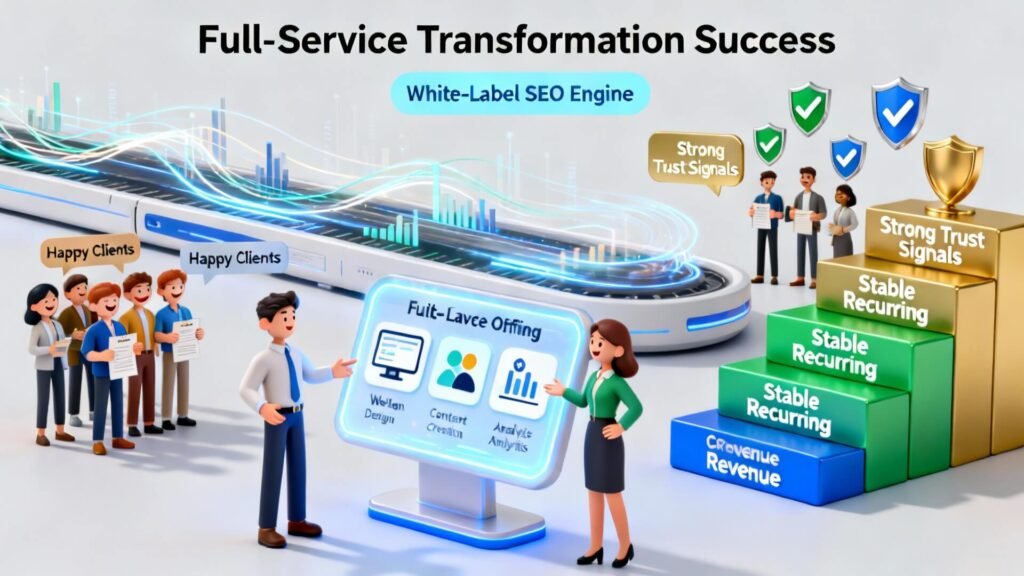
One of the greatest advantages of white‑label SEO is the ability to scale services instantly. Instead of recruiting, training and paying an in‑house team, you can leverage the resources of a partner agency. Elsner notes that white‑label SEO agencies enable you to expand your services up or down based on demand, ensuring you don’t have to scramble to hire experts when client requests surge. This scalability is crucial for small agencies that experience fluctuations in workload.
Clients rarely care about who does the work; they care about results. White‑label SEO providers supply branded reports and dashboards, meaning your agency appears to deliver in‑house expertise. This seamless client experience builds trust, increases satisfaction and enhances your reputation. In fact, agencies that add SEO to their services see a 32 % increase in client retention, because offering a full suite of digital marketing solutions makes it less likely for clients to seek another provider.
White‑label SEO packages are usually offered at wholesale rates, which you can mark up to create healthy margins. Combined with monthly retainers, this leads to predictable recurring income. A study of local SEO campaigns found that they deliver an average ROI of more than 500 % over three years [www.rankomedia.com]—a compelling argument for agencies to include SEO in their portfolio. This level of return far exceeds many other marketing investments, demonstrating why SEO remains a core driver of profitable growth.
Not all providers offer the same breadth of services. Before partnering, ensure they include the following core elements:
On‑page SEO ensures each page is optimised for target keywords and user experience. Providers should manage keyword research, title and meta description optimisation, header tags, internal linking and image alt text. They should also deliver technical SEO tasks such as creating and submitting XML sitemaps, improving site speed, ensuring mobile responsiveness and implementing schema markup.
Acquiring high‑quality backlinks remains a major ranking factor. Your partner should conduct outreach to secure guest posts, niche edits and directory citations. They may use manual outreach, press releases or relationships with bloggers to gain editorial links. Because 66 % of web pages have no backlinks, building a robust link profile is essential for climbing the search results.
SEO is incomplete without compelling content. Many white‑label providers offer copywriting and blogging services, crafting articles that answer user intent and incorporate targeted keywords. They might develop content clusters around core topics (such as “local SEO” or “white‑label marketing”) to build topical authority and interlink posts for better rankings.
For agencies serving small businesses, local SEO is critical. With 46 % of searches on Google having local intent, your partner should optimise Google Business Profiles, manage local citations across directories and help clients earn reviews. They may also implement location‑based content strategies to target “near me” searches.
White‑label SEO providers should offer comprehensive, customisable reporting. Monthly or biweekly reports should highlight keyword rankings, traffic, conversions and backlinks. Real‑time dashboards let you and your clients monitor progress [www.dashclicks.com]. Without transparent reporting, it’s impossible to demonstrate ROI or adjust strategies effectively.
Some providers expand into related areas such as pay‑per‑click (PPC) management, social media marketing or web design. Others offer AI‑driven SEO tools that automate keyword research and content optimisation [www.salesforce.com], or integrate with CRMs and project management platforms. Evaluate whether these extras align with your agency’s long‑term goals.
Selecting a provider is a critical decision that affects your reputation and client outcomes. Consider the following factors:
A reliable partner will share details about their methodologies—how they conduct keyword research, build links and handle algorithm updates. Look for case studies or references that prove they can deliver results in industries similar to your clients. Make sure they follow ethical, white‑hat SEO practices and don’t guarantee unrealistic results (such as first‑page rankings within a week).
Robust reporting is non‑negotiable. You should have access to customisable reports and dashboards that you can rebrand. High‑level summaries help clients understand progress at a glance, while detailed metrics allow you to refine strategies. Ask potential partners to provide sample reports before signing any contract.
Ensure the provider can handle multiple projects simultaneously and adapt to fluctuating workloads. They should offer different service tiers—pay‑as‑you‑go, monthly retainers or performance‑based pricing—so you can match packages to client budgets. Confirm that they have enough staff and resources to maintain quality as your client base grows.
White‑label SEO pricing structures vary:
Review contracts for minimum terms, cancellation policies and refund guarantees. Transparency about pricing helps prevent surprises and ensures profitability.
You’ll need a dedicated account manager or point of contact who can answer questions and relay information promptly. Evaluate their responsiveness during the sales process. Consider time‑zone compatibility—being in Bekasi (UTC+7), you may prefer a partner whose work hours overlap with yours.
Check reviews on third‑party sites like Clutch or G2. Look for providers with a history of successful partnerships and ethical business practices. Avoid agencies that outsource again to third parties without disclosure.
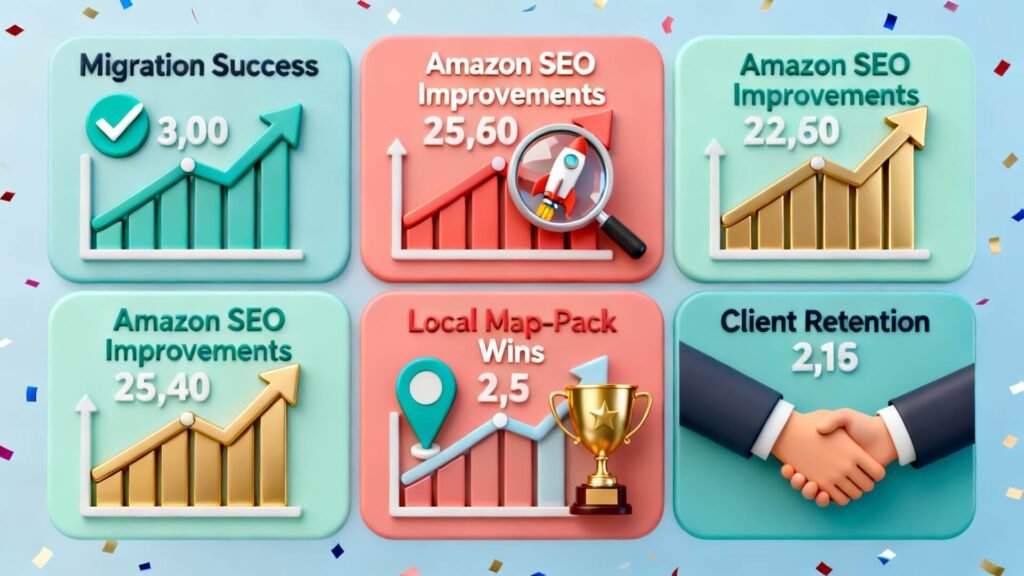
An eCommerce design and development agency in South Carolina partnered with Galileo Tech Media to deliver SEO services on a white‑label basis. The agency sought help with website migrations, keyword research and technical SEO. Galileo’s team identified technical errors that were blocking website indexing and SEO growth and planned a migration strategy. Thanks to this partnership, the agency was able to fully service its clients’ SEO and content needs without adding headcount and met complex, deadline‑specific requests due to Galileo’s ability to scale [www.galileotechmedia.com].
Several marketing agencies also partnered with Galileo to handle Amazon SEO tasks for clients’ product pages. Galileo performed Amazon audits, keyword research and SEO copywriting. The results included streamlined content creation workflows and improved product page rankings and sales. The agencies were able to focus on other projects while Galileo managed the technical aspects of Amazon optimisation.
Another case involves a small Indonesian restaurant chain that outsourced local SEO to a white‑label provider (name withheld for privacy). Within six months, the chain’s Google Business Profiles were fully optimised, resulting in the restaurant appearing in the top three map pack positions for “best nasi goreng Bekasi.” Phone calls and walk‑in traffic increased by 40 %. The agency, previously focused solely on social media management, now offers recurring SEO packages to other local businesses.
These examples highlight several key points:
Artificial intelligence is transforming SEO. According to Salesforce’s guide, AI‑powered tools can automate time‑consuming tasks such as keyword research, content optimisation and link building. Machine‑learning algorithms also provide real‑time analytics and performance metrics, enabling data‑driven decisions. As AI models like GPT‑4o and generative search features become integrated into search engines, white‑label providers that harness AI will deliver faster insights and more scalable solutions.
Some trends to watch:
A 2025 study ranking 400 white‑label SEO agencies found that white‑label SEO has become a critical growth lever for digital agencies, allowing them to deliver high‑quality SEO without expanding internal teams [www.onelittleweb.com]. As more providers enter the market, competition will drive innovation in reporting, transparency and AI integration. Agencies should evaluate partners not only on price but also on their ability to adapt to new technologies and algorithm updates.
White‑label providers are expanding beyond core SEO. Many now offer digital PR, content marketing, PPC management and AI tools. This diversification allows agencies to deliver fully integrated marketing solutions under one umbrella, increasing customer lifetime value and reducing client churn.
Scaling a small agency doesn’t have to mean endless hiring or learning every discipline under the digital sun. White‑label SEO services provide an agile, cost‑effective path to growth, empowering you to deliver expert results while focusing on what you do best—building client relationships and creative strategies. By leveraging specialised partners for on‑page optimisation, technical fixes, content, link building and analytics, agencies can offer comprehensive digital marketing packages that increase client retention and profitability.
As statistics reveal, local search intent is high, ROI on SEO can exceed 500 % and the majority of web pages currently receive no organic traffic. With demand surging and competition fierce, now is the time to harness white‑label SEO to transform your startup into a powerhouse agency. Embrace the future of AI‑driven optimisation, choose partners wisely, and don’t let limited resources hold you back. Implement these strategies, share your success stories, and engage with peers—your agency’s growth potential is unlimited.