
A marketing automation consultant looks beyond a single channel to orchestrate a seamless experience across email, SMS, social media, push notifications, websites and even physical stores. By uniting these interactions around the customer, consultants unlock higher engagement and revenue while saving teams time and budget.
This article explores how marketing automation consultants help businesses move beyond email to build cohesive omnichannel strategies. We’ll define the consultant’s role, explain why omnichannel engagement matters in 2025, examine core responsibilities and competencies, outline strategies for delivering cross‑channel engagement and provide guidance on choosing the right consultant. You’ll leave with a deeper understanding of how a consultant can align data, technology and creativity to create customer journeys that feel personal, consistent and persuasive.
A marketing automation consultant is a specialist who helps organizations streamline and enhance their marketing processes by implementing automation tools, aligning campaigns with customer journeys and enabling personalized experiences. According to marketing advisory firm Vendasta, consultants guide businesses through strategy formulation—defining goals, selecting tools and mapping customer journeys—and then handle execution, including setting up landing pages, email templates, nurture workflows and training internal teams. They also provide ongoing support by optimizing automation sequences, incorporating advanced features such as personalization and A/B testing, and analyzing performance data to refine campaigns.
Consultants must possess a blend of technical and strategic expertise. They need to understand various marketing platforms (CRM systems, email automation, SMS gateways, social schedulers) and know how to integrate them using tools like integration platform as a service (iPaaS) solutions. They must be conversant with digital marketing fundamentals—audience segmentation, content marketing, search optimization—and have strong analytical skills to interpret customer data and campaign metrics. Equally important are project management abilities and communication skills; consultants work with multiple stakeholders to align marketing automation with business objectives, train teams, and ensure adoption.
The value proposition is clear: by leveraging expert knowledge, businesses can implement sophisticated automation faster, avoid common mistakes and free internal teams to focus on strategy rather than technical setup. Consultants also stay up‑to‑date on evolving trends such as AI‑driven personalization and data privacy regulations, helping organizations remain competitive.

Email remains a powerful marketing channel, but consumers interact with brands across many digital and physical touchpoints. An omnichannel strategy seeks to provide a seamless, hassle‑free experience across all channels relevant to the customer. Mailjet’s omnichannel marketing guide defines this approach as meeting your audience wherever they are—across devices, platforms and in‑store experiences—and ensuring interactions advance the customer journey instead of starting over each time. The article explains that omnichannel marketing is a customer‑centric approach rather than company‑centric; it requires businesses to view through their audience’s eyes and stand in their shoes.
Omnichannel engagement unlocks several benefits:
In 2025, consumers expect brands to remember their preferences and provide relevant offers wherever they interact. If you limit automation to email, you miss opportunities to engage customers on their preferred channels and risk losing them to competitors with more cohesive experiences.
What does it take to drive omnichannel engagement? A competent marketing automation consultant addresses three fundamental dimensions: strategy, execution and optimization.
Consultants begin by understanding your business goals, target audience and customer journey stages. They help define key performance indicators (KPIs) and select marketing automation platforms that fit your budget and needs. During this discovery phase, consultants also identify the channels most relevant to your audience. Belkins, an omnichannel marketing agency, stresses that successful omnichannel strategies do not attempt to use every available channel; instead, they focus on the handful of channels that matter most to your audience and industry. For example, LinkedIn might be crucial for B2B lead generation, while SMS and push notifications resonate more with younger consumers. Consultants conduct user research to understand channel preferences and craft messaging that aligns with the purpose of each touchpoint.
Once the strategy is in place, the consultant configures and integrates marketing tools. Integration is critical for omnichannel success because customer data must flow seamlessly across systems. Cazoomi’s forecast of marketing automation trends notes that integration via iPaaS platforms will become indispensable by 2025, connecting CRM systems, social media and marketing channels to unify data and deliver insights efficiently. Consultants set up data synchronization between your CRM, e‑commerce platform, social media ads manager, email service provider and SMS gateway so that all teams share the same customer profiles.
After integration, consultants implement the automation workflows—building landing pages, designing email templates, scripting SMS messages and setting up triggers based on user behaviors. They ensure that each channel plays its part in the overall sequence. For example, if a user abandons a cart, the journey might start with a reminder email, followed by a push notification or SMS if the email is ignored, and finally a retargeting ad on social media. Insider’s marketing automation guide illustrates how cross‑channel orchestration works: their journey builder, Architect, automates messages across websites, mobile apps, email, SMS, push notifications, WhatsApp and voice channels, sending reminders and follow‑ups until the desired action occurs. Consultants replicate such orchestrations using the tools you already own, ensuring timing and messaging are contextually relevant.
Automation isn’t set‑and‑forget. Consultants monitor engagement metrics, conversion rates and customer behavior to refine flows and content. They test different sequences, subject lines, call‑to‑action placements and channel mixes. AI is increasingly important here. Cazoomi predicts that AI‑powered personalization will analyze customer behavior across multiple channels to deliver hyper‑personalized experiences, making generic emails obsolete. Consultants can integrate AI features such as predictive lead scoring or product recommendation engines to deliver targeted content. They also ensure compliance with data privacy laws and maintain ethical standards when leveraging customer data.
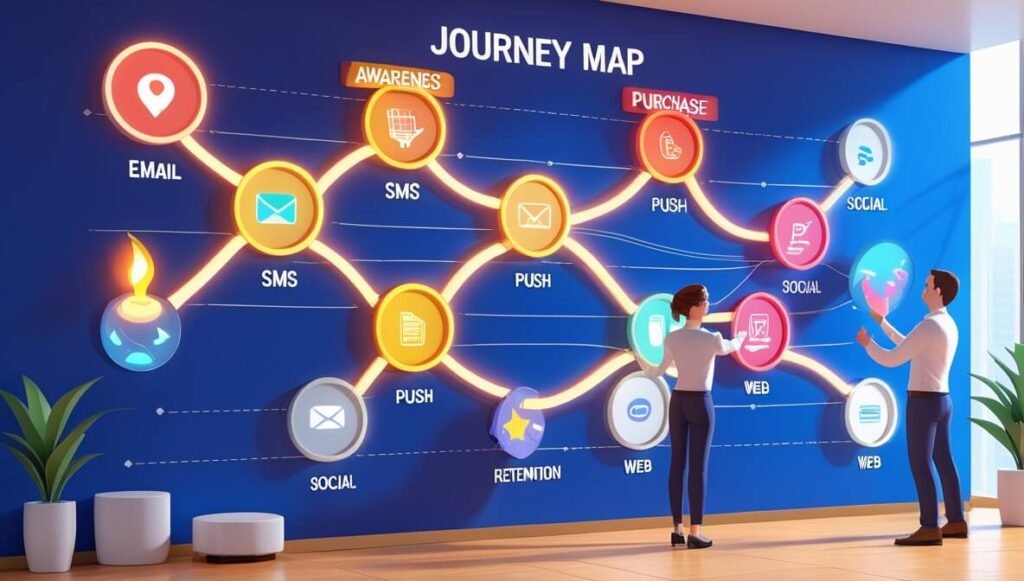
A marketing automation consultant doesn’t just set up tools; they design holistic strategies that weave together diverse channels. Here are key tactics they employ:
Omnichannel marketing requires a single source of truth for customer data. Consultants start by auditing existing data sources and establishing data hygiene practices. They use integrations to merge behavioral data (web visits, email clicks, purchase history) with demographic and transactional data from your CRM. Valtech, a digital transformation firm, explains that connected experiences arise when offline and online touchpoints are combined to enrich client profiles and drive interactions before, during and after physical experiences. In their Dolby SoHo case study, Valtech integrated offline event data with online activity to unify profiles and personalize automated communications, enabling granular segmentation and tailored messaging across the customer journey. Consultants replicate such approaches by connecting point‑of‑sale systems, loyalty programs and CRM databases.
Not every channel suits every stage of the customer journey. Consultants map the journey from awareness to retention and decide which channel best supports each step. For example:
Mapping these journeys helps consultants deliver the right content at the right time on the right channel.
Personalization increases relevance and conversion, but it requires granular segmentation based on behavior, interests and lifecycle stage. Marketing automation platforms can generate dynamic content or offers automatically. Consultants configure these features to tailor subject lines, body copy, product recommendations and send times. They also implement predictive analytics to determine which leads are most likely to convert and which channels they prefer. As Comosoft’s overview notes, integrated analytics and customer journey mapping tools allow you to track behavior, identify pain points and adapt messaging quickly.
Another dimension is regional or demographic personalization. Not all channels or content types resonate across cultures or age groups. Belkins highlights that regional preferences shape channel effectiveness—for example, email may be more popular in North America, while WhatsApp and Facebook Messenger dominate in parts of Asia. Consultants research your audience to ensure cultural relevance and compliance with local regulations.
Omnichannel strategies aren’t only digital. Many customer journeys include physical interactions—events, call centers, retail stores. Consultants incorporate these into automation flows. Valtech describes how combining offline and online touchpoints enriches the client profile and drives deeper engagement. For instance, after someone attends an event, an automated sequence might send a personalized recap email, followed by an SMS coupon valid in‑store. When the customer visits, the sales associate can access their profile to recommend relevant products. Consultants also ensure that phone calls and customer service interactions are logged in the CRM and trigger follow‑ups, closing the loop between marketing and customer service.
Data is the foundation of omnichannel marketing. Consultants set up dashboards and reporting to monitor key metrics—open and click rates, SMS response, social engagement, revenue attribution and customer lifetime value. They watch for drop‑off points in the journey and adjust channel mix or messaging accordingly. Comosoft advises prioritizing features like real‑time data synchronization and comprehensive analytics when choosing a platform; these enable quick adaptations and evidence‑based decisions. Consultants also conduct A/B tests across channels, test send times and frequency, and evaluate the incremental impact of each channel. The ultimate goal is to refine the orchestration so that customers receive just the right number of touchpoints to encourage action without fatigue.

Not all consultants are created equal. When evaluating candidates or agencies, consider the following criteria:
In a world where customers glide between devices and channels, relying on email alone is no longer sufficient. A marketing automation consultant helps organizations architect journeys that span email, SMS, social media, push notifications, voice, web and offline interactions. By understanding customer behavior, integrating data across platforms and orchestrating cross‑channel workflows, consultants deliver consistent experiences that improve engagement and conversions.
Adopting an omnichannel approach also means rethinking metrics—from open rates to lifetime value—and aligning departments around shared customer insights. With the right consultant, brands can move beyond ad‑hoc campaigns to build automated journeys that make customers feel recognized and valued at every step. This investment pays off in higher ROI, stronger loyalty and a marketing machine that continues to learn and improve.
Content is everywhere – blog posts, short‑form videos, podcasts, infographics, live streams and interactive experiences flood our feeds. For a growing brand, standing out requires more than occasional posts and a few social updates. It demands a long‑term, data‑driven approach that aligns every piece of communication with your brand’s values and business objectives. Yet many organisations struggle to build and maintain such a cohesive program. Research shows that 82 % of companies use content marketing as part of their growth strategy and 67 % of small business owners and marketers already leverage AI for content and SEO [www.demandsage.com]. At the same time, 57 % of content creators cite creating the right content as a major challenge. These numbers illustrate a paradox: brands recognise content’s value but often lack the internal resources, expertise and bandwidth to implement a comprehensive strategy. This article explores why partnering with a full‑service content strategy agency is the solution, how such agencies operate and what trends will shape content strategies in 2025 and beyond.
Through eight sections, you’ll learn what services a full‑service content strategy agency provides, the measurable benefits of outsourcing content strategy, emerging trends such as AI‑powered content and answer‑engine optimisation, tips for selecting the right partner, and real‑world case studies. Each section includes actionable insights and prompts for visual assets to enrich your blog or landing page. At the end, you’ll find a concise summary and a set of tags ready to paste into WordPress.
A full‑service content strategy agency is more than a writing shop. It acts as an extension of your marketing team, combining strategic planning, creative production and performance analysis under one roof. Unlike narrow content studios that only write blog posts, a comprehensive agency:
Think of a full‑service content strategy agency as a hub that orchestrates every aspect of your brand’s narrative. Agencies often employ strategists, SEO specialists, data analysts, copywriters, designers, videographers and channel experts who collaborate to deliver integrated campaigns. According to Omnius, partnering with a content marketing agency can improve your search engine ranking, establish your business as an industry authority and boost conversion rates by guiding customers through each stage of the funnel [www.omnius.so]. This holistic approach ensures that content is not created in a vacuum but anchored in data and aligned with revenue goals.
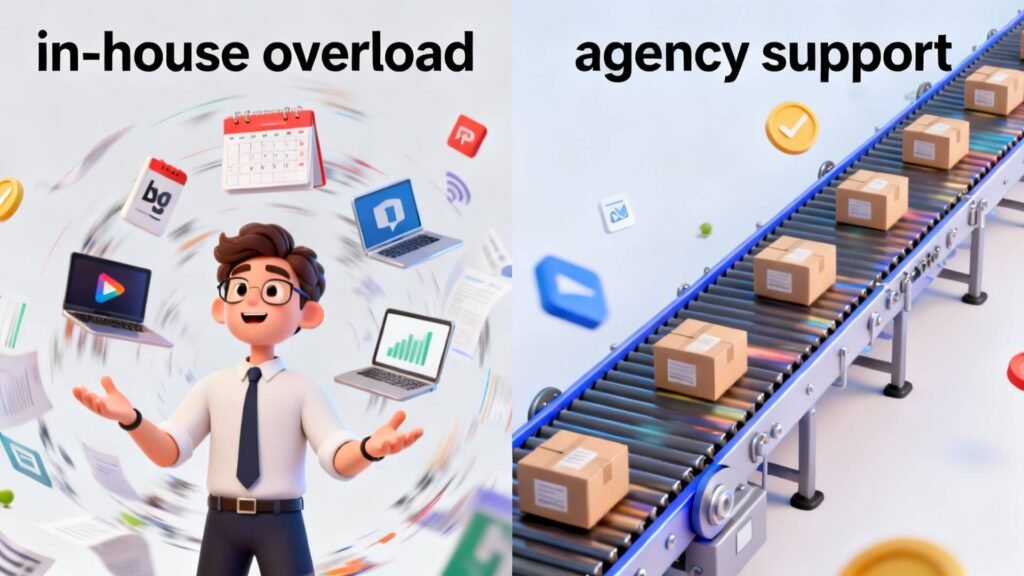
Why can’t most brands simply build a content team in‑house? The answer lies in the scale and complexity of modern content programs. A single blog writer cannot conduct audience research, plan an editorial calendar, produce multi‑format content and track analytics while staying on top of algorithm updates. Hiring specialists for each function is expensive and time‑consuming. A full‑service agency offers immediate access to seasoned experts and proven processes at a predictable cost.
Cost efficiency and ROI: Content marketing generates more leads at lower cost than traditional advertising. Websites with blogs have 434 % more indexed pages than those without, increasing visibility and organic traffic. Moreover, 81 % of marketers report that content marketing helps build brand awareness, 63 % say it nurtures leads and 50 % say it builds loyalty. When you invest in content, you own a compounding asset that continues to attract customers. A full‑service agency ensures that investment pays off through professional execution and measurement.
Expertise and specialisation: Content strategy agencies employ specialists in SEO, UX writing, visual design, video production, audio editing, distribution and analytics. For example, Omnius notes that many businesses partner with agencies for tasks like writing blog posts, creating content calendars and curating articles. This collaboration frees internal teams to focus on product development or sales while the agency manages content creation, distribution and optimisation. Because agencies work across industries, they bring cross‑sector insights and a library of best practices.
Keeping pace with AI and new search paradigms: Technology is reshaping how content is created, discovered and consumed. DemandSage reports that 67 % of small business owners and marketers use AI for content marketing and SEO and 68 % of businesses see higher ROI due to AI adoption. As generative search engines like Google’s AI overviews and Microsoft’s Copilot summarise information directly on the results page, traditional click‑through metrics decline. An AI search industry report found that AI overviews reduce click‑through rates by roughly 34.5 % and are appearing in a growing share of queries [www.omnius.so]. Full‑service agencies stay ahead of these shifts by optimising content for answer engines and implementing strategies such as retrieval‑augmented generation (RAG) that help brands remain visible even when users don’t click through to the source page.
Consistency across channels: A cohesive brand voice builds trust. With more than 90 % of marketers using social media and 79 % running blogs, disjointed messaging can confuse audiences. Agencies centralise messaging and ensure that each blog post, Instagram reel, newsletter and podcast episode reinforces the same narrative. They also tailor content to platform norms and audience behaviour, so your voice resonates whether a prospect reads a white paper or scrolls TikTok.
Scalability and flexibility: Full‑service agencies provide resources on demand, scaling up during product launches or campaigns and scaling down when priorities shift. This flexibility is critical in volatile markets where trends and algorithms change quickly. Rather than hiring and training staff whose skills may become obsolete, you gain instant access to new capabilities.
A robust agency offering covers the entire content lifecycle from ideation to analysis. Here are the core services you can expect:
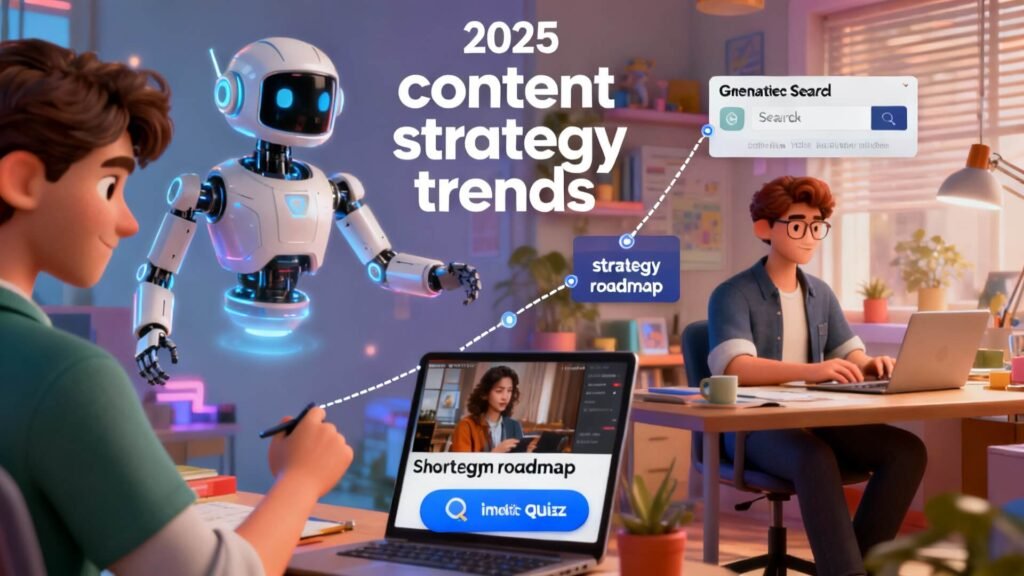
The future of content strategy is being shaped by two macro forces: rapid advances in artificial intelligence and changing consumer behaviour. Understanding these trends helps brands and agencies future‑proof their strategies.
The adoption of AI tools in marketing has skyrocketed. Typeface reports that over 80 % of marketers globally use AI in their digital marketing strategies [www.typeface.ai]. About 43 % use AI specifically for content creation and 74.2 % of new webpages include AI‑generated content. These tools streamline idea generation, keyword research, outline creation and even first draft production, saving time and cost. More than 86 % of marketers say AI saves them over an hour each day, but the majority still edit AI output to ensure it reflects brand voice and quality standards.
AI doesn’t just speed up writing – it unlocks new capabilities. Predictive analytics surfaces high‑value topics based on search trends, while natural language generation can produce personalised email sequences. Machine‑learning models summarise long reports into social posts and adapt content for multilingual audiences. However, success requires human oversight; about 70.6 % of marketers believe AI can outperform humans in certain tasks, but they emphasise that the best results come from human‑AI collaboration.
Search is transforming from a list of links to an interactive conversation. Google’s AI overviews, Microsoft’s Copilot and emerging platforms like Perplexity and Claude summarise information from multiple sources, answer questions directly and cite their references. Omnius’ AI search industry report reveals that AI overviews are reducing click‑through rates by about one‑third. These overviews appeared in 6.49 % of queries in January 2025, rising to 13.14 % by March and continue to expand. This means traditional SEO metrics like position and CTR provide an incomplete picture of visibility.
To thrive in a generative search landscape, content must be highly authoritative, well‑structured and richly cited. Agencies are investing in Generative Engine Optimisation (GEO) and retrieval‑augmented generation to ensure AI models surface their clients’ content as a trusted source. Tactics include providing clear answers to popular questions, adding schema markup (FAQ, HowTo, Product) and refreshing pages regularly with updated facts. Because AI models prioritise consensus and authority, investing in research‑driven, expert content is more important than ever.
Audiences consume content across multiple devices and platforms. DemandSage data shows that 61 % of marketers use video, 83 % publish articles or posts, and interactive content increases engagement by 52.6 %. Brands are shifting budgets toward multimedia storytelling – short‑form videos, audio snippets, interactive quizzes and webinars. Long‑form content still matters: articles between 900 and 1 200 words attract more traffic and backlinks than shorter pieces. A combination of formats allows content to reach learners who prefer reading, watching or listening.
The proliferation of mobile and voice interactions further underscores the need for omnichannel optimisation. People increasingly use voice assistants and smart speakers to search for information, and they expect seamless transitions between devices. Agencies incorporate voice‑friendly content structures, conversational tone and audio versions of articles to capture this growing audience.
While AI accelerates production, human creativity and research remain crucial. DemandSage found that 83 % of marketers prioritise quality over quantity. High‑performing brands invest in audience research (conducted by 47 % of businesses) and thorough keyword analysis. They produce research‑driven content, quote subject‑matter experts and connect stories to the brand’s mission. Storytelling fosters emotional connections that differentiate brands in a sea of generic AI‑generated posts.
Another trend is the rise of user‑generated content (UGC) and community‑driven narratives. Encouraging customers to share experiences not only amplifies reach but provides authentic social proof. Agencies help curate and repurpose UGC across channels, ensuring it aligns with brand guidelines.
Choosing a partner is a strategic decision. The right agency becomes a long‑term collaborator, not just a vendor. Use the following criteria to evaluate potential agencies:
When interviewing agencies, request a sample strategy or pilot project to gauge their approach. Ask which metrics they prioritise and how they will adapt the strategy if results fall short of expectations.
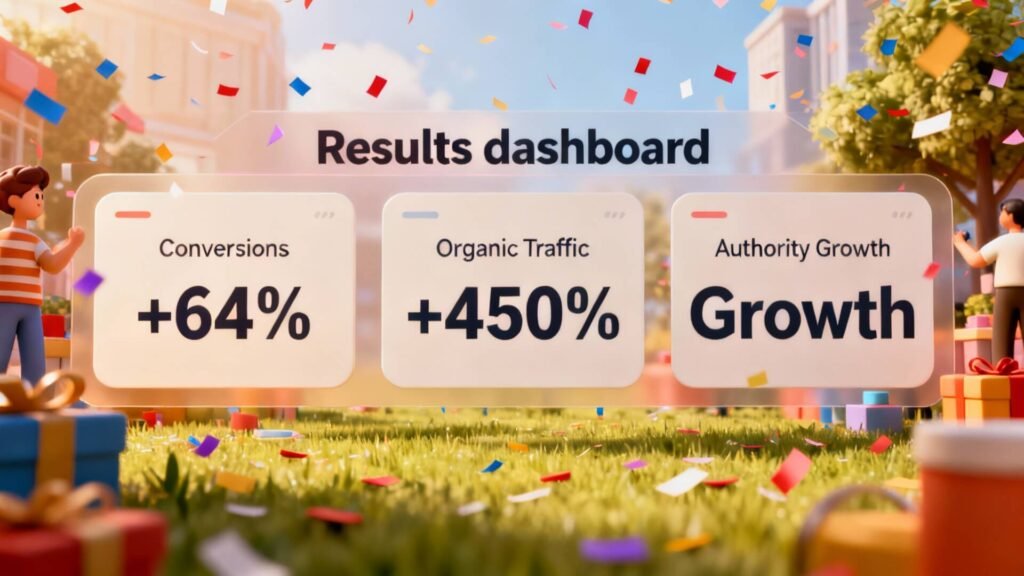
Case studies illustrate how a full‑service content strategy agency can drive tangible results. Below are a few examples:
AuthoredUp, a SaaS platform that helps individuals write better LinkedIn posts, partnered with Omnius to overhaul its website and content strategy. Omnius implemented a research‑driven plan, optimised landing pages for SEO, created helpful guides and developed a systematic content calendar. As a result, AuthoredUp saw a 64 % increase in conversions. The success underscores how targeted content and structured nurture sequences can translate audience attention into measurable business results.
A boutique retail chain invested in AI‑driven SEO performance tracking to identify keyword opportunities and optimise product pages. By integrating AI tools for rank tracking and content recommendations, the company achieved a 450 % increase in organic search traffic and significant improvements in rankings for competitive terms. This case demonstrates how modern agencies leverage machine‑learning technology to scale SEO and content initiatives across thousands of SKUs.
A B2B SaaS platform sought to establish itself as an authority in its niche. The agency conducted extensive industry research, interviewed subject‑matter experts and produced long‑form thought‑leadership articles supported by data. These articles were syndicated to industry publications and promoted via social media. As a result, the platform not only increased its organic traffic and inbound leads but also secured speaking invitations and partnerships. This example shows that investing in high‑quality, research‑driven content pays dividends beyond immediate website metrics.
Successfully partnering with a content strategy agency requires alignment and ongoing collaboration. Consider these best practices:
The content landscape will continue to evolve rapidly, presenting both challenges and opportunities for brands and agencies. Here are some predictions for the coming years:
In an age where customers demand personalised, useful content across every touchpoint, brands can no longer afford a piecemeal approach. A full‑service content strategy agency offers the strategic insight, creative execution and performance analysis necessary to stand out amid the noise. By partnering with seasoned experts, growing brands gain immediate access to specialised skills, emerging technologies and proven processes without the overhead of building a large in‑house team.
As you evaluate your own content efforts, remember that success hinges on quality, consistency and adaptability. The statistics underscore the value of investing in content: more indexed pages, higher brand awareness, stronger lead nurturing and improved ROI. Yet the landscape is shifting fast – AI adoption, generative search and changing consumer behaviours demand continuous learning. A trusted agency partner not only delivers content but also guides you through these changes, ensuring your brand remains visible and relevant.
Whether you’re planning to launch a blog, scale to new markets or prepare for the AI‑powered search era, a full‑service content strategy agency can be your catalyst for sustainable growth. The time to invest is now.