
Expanding your business beyond domestic borders represents the single most significant growth opportunity for many companies today. Yet, simply translating your website and hoping for the best is a recipe for wasted budget and missed connections. True global growth requires a strategic, technical, and culturally nuanced approach to search visibility across multiple countries and languages. This is where specialized international SEO services become your indispensable partner. Unlike standard SEO, international SEO is a multifaceted discipline that systematically adapts your website’s technical infrastructure, content, and link profile to rank for relevant searches in specific international territories. It answers the core question of search intent for businesses looking to scale: “How do I make my website visible and compelling to customers in different countries?” This process involves critical decisions on website structure (like country-specific domains or subdirectories), precise language and regional targeting, local keyword research, and building authority with local signals. Without this foundation, your global digital storefront remains closed to the vast majority of your potential international audience.

Effective international SEO is built upon three interdependent pillars: technical infrastructure, content and localization, and off-site authority. Neglecting any one of these will undermine your entire global strategy. The technical pillar is the bedrock; it’s about clearly signaling to search engines like Google which country and language your content is intended for. This is primarily achieved through a combination of URL structure, hreflang annotations, and geo-targeting settings in tools like Google Search Console. A common mistake is using generic top-level domains (.com) without clear geo-signals, leaving search engines to guess your target market. The choice between using country-code top-level domains (ccTLDs like .co.uk or .de), subdirectories (yoursite.com/de/), or subdomains (de.yoursite.com) has profound implications for SEO equity, maintenance, and user perception. For most businesses pursuing an international strategy, a well-implemented subdirectory structure paired with robust hreflang tags offers the best balance of SEO power and operational simplicity.
The content pillar moves beyond mere translation to true localization. This means adapting your message to local cultural nuances, search habits, and colloquialisms. A keyword that drives high-volume traffic in the United States may have a completely different, lower-volume counterpart in Australia or Canada. Tools like Google Ads Keyword Planner can provide initial geo-specific data, but true insight often comes from engaging with local marketing experts. Furthermore, content must address local regulations, currency, units of measurement, and societal values. For instance, an e-commerce site must display prices in local currency including appropriate taxes, and blog content should reference local events or holidays. This depth of localization builds trust and relevance, which are key ranking factors in their own right.
The off-site authority pillar focuses on earning backlinks and engagement signals from reputable websites within your target country. A .com domain with millions of links from US-based sites will struggle to rank in Japan without also earning links from Japanese domains. This requires a dedicated link building and digital PR strategy for each target region. Engaging with local influencers, securing mentions in local media, and listing your business in relevant country-specific directories are all crucial. Additionally, ensuring your business has verified local listings (like Google Business Profile for physical locations) and appears on relevant local review sites provides critical geo-signals to search engines and builds credibility with local consumers.
The technical execution of an international SEO campaign is non-negotiable. Errors here can cause search engines to serve the wrong language or country version of your site, cannibalizing your own traffic and frustrating users. The most critical element is the implementation of hreflang tags. These HTML or HTTP tags tell Google the relationship between pages that are in different languages or targeted at different regions. For example, they specify that the Spanish-language page for Mexico (es-mx) is the correct version for searchers in Mexico, while the Spanish page for Spain (es-es) is for searchers in Spain. Incorrect or missing hreflang can lead to a tangled web of duplicate content issues and poor rankings. It’s a complex but solvable puzzle, best managed with a clear annotation strategy and regular auditing using crawling tools like Screaming Frog.
Your site structure decision—ccTLD, subdirectory, or subdomain—must be made early, as it affects everything from link equity flow to server location. ccTLDs (.fr, .jp) provide the strongest geo-signal to search engines and often enjoy higher trust from local users, but they can be more expensive and complex to maintain as separate sites. Subdirectories (site.com/fr/) are easier to maintain and consolidate domain authority, but require impeccable hreflang and geo-targeting signals. Subdomains (fr.site.com) are generally the least recommended for pure international SEO purposes, as search engines can treat them as separate entities, splitting your site’s authority. Once your structure is chosen, you must geo-target each section in Google Search Console, explicitly telling Google which country a specific subdirectory or subdomain is intended for. This provides a powerful, direct signal to supplement your other technical efforts.
Localization is the soul of your international SEO strategy. It’s the process of adapting your product, service, and content to meet the cultural, functional, and linguistic expectations of a specific locale. A literal translation of your English website into German will fail if it doesn’t account for the formal “Sie” versus informal “Du” address, local payment method preferences (like widespread invoice payments in Germany), or different legal requirements for product descriptions. Professional international SEO services always involve native-speaking copywriters and cultural consultants who understand the subtleties of the target market. They conduct in-region keyword research to uncover the specific phrases and questions local audiences use. For example, a UK user might search for “holiday rentals,” while a US user searches for “vacation rentals.” Missing these nuances means missing the traffic.
Localization also extends to user experience (UX) and design. Imagery, colors, and layout should resonate with local aesthetics and norms. A successful mini case study involves a major US fashion retailer that launched in Japan. Initially, they used their American models and marketing imagery, which resulted in poor engagement. After consulting with a local agency, they reshoot campaigns with Japanese models in locally familiar settings and adjusted their site layout to be more information-dense, aligning with Japanese consumer preferences. The result was a 150% increase in conversion rate from the Japanese market within six months. This demonstrates that localization is not a cost center but a revenue driver, and a core component of sophisticated international search engine optimization.
Choosing the right URL structure is a strategic decision with long-term SEO and business implications. The table below outlines the core pros and cons of each major approach, providing a clear framework for decision-making.

| Structure Type | Example | Primary SEO Advantage | Primary Challenge | Best For |
|---|---|---|---|---|
| Country-Code Top-Level Domain (ccTLD) | yoursite.de, yoursite.co.jp | Strongest geo-signal; high local user trust. | Highest maintenance; can split domain authority; may require local legal presence. | Businesses with dedicated country-specific teams and budgets, or legal requirements for a local entity. |
| Subdirectory | yoursite.com/de/, yoursite.com/jp/ | Consolidates domain authority; easier to manage technically and with analytics. | Requires perfect hreflang/geo-targeting; slightly weaker initial geo-signal than ccTLD. | Most businesses expanding internationally; offers the best balance of signal and equity. |
| Subdomain | de.yoursite.com, jp.yoursite.com | Allows for very distinct technical setups (e.g., different hosting). | Often treated as a separate site by search engines, splitting authority; weakest common geo-signal. | Specific cases where a completely separate site infrastructure is technically necessary. |
My two decades of experience consistently show that for the vast majority of companies, a subdirectory structure managed with precision is the most effective path. It allows the authority from your primary domain and any international link-building efforts to benefit all sections of your site. However, if you are a large brand with fully autonomous country offices, the clear geo-signal of a ccTLD can be worth the added complexity. Whichever path you choose, consistency is key. Mixing structures (e.g., using a ccTLD for France but a subdirectory for Germany) creates a confusing ecosystem that is difficult for both users and search engines to navigate, diluting the impact of your international SEO services.
You cannot rank for searches you don’t understand. International keyword research is a foundational step that informs content creation, site structure, and even product offerings. It begins with identifying the core semantic themes of your business in each target language, not just translating your English keywords. Tools like Keyword Tool can provide initial ideas, but the gold standard is using the local version of Google Ads Keyword Planner with a proxy or local expert to see true search volume. Beyond volume, you must analyze search intent. Is the commercial intent the same? A search for “buy laptop” in English is highly transactional, while the equivalent phrase in another language might be more informational. You also need to map keyword difficulty across markets; a term that is highly competitive in the US might be a wide-open opportunity in a developing market.
Comprehensive market research goes hand-in-hand with keyword analysis. You must understand local competitors, not just your domestic rivals. Who is ranking on page one of Google.co.uk or Google.fr for your target terms? Analyze their site structure, content approach, and backlink profile. Use tools like Similarweb to estimate their traffic and audience demographics. Furthermore, consider cultural and logistical factors: preferred social media platforms, dominant mobile devices, average internet speeds, and seasonal shopping trends (like Singles’ Day in China versus Black Friday in the US). This research forms the blueprint for your entire localized strategy, ensuring your investment in international search engine optimization is directed toward real, profitable opportunities.
Your website’s authority in the eyes of a local search engine is largely determined by the links pointing to it from other sites within that same country or language sphere. A .com domain with a magnificent link profile from American .edu and .gov sites will still be seen as a foreign entity when trying to rank on Google.de. Therefore, a parallel link-building campaign must be executed for each target region. This involves techniques like guest posting on reputable local industry blogs, earning media coverage from local news outlets, building partnerships with local businesses for mutual linking, and creating shareable, locally relevant content assets. The anchor text used in these links should naturally incorporate your localized keywords.
For businesses with a physical presence (offices, stores, or agents), local citation and listing management is paramount. This starts with claiming and optimizing your Google Business Profile listing for each location, ensuring NAP (Name, Address, Phone Number) consistency across the web. You must then identify the key local directories, review sites, and industry-specific platforms in each country—think Yelp in the US, TripAdvisor for travel globally, or Das Örtliche in Germany. Inconsistent NAP information across these platforms confuses both users and search engines, damaging local rankings. Services like BrightLocal can help manage this process at scale. These local signals are a direct ranking factor for local search and provide crucial trust signals for broader organic rankings in that country.
You cannot manage what you cannot measure. Tracking the performance of an international SEO campaign requires a sophisticated analytics setup that segments data by country and language. The first step is ensuring your Google Analytics 4 property is configured with data filters and custom dimensions to cleanly separate traffic by region. Crucially, you must track conversions and revenue by market to understand true ROI, not just vanity metrics like traffic. Look at performance indicators like organic traffic growth from specific countries, keyword rankings in local search engines, conversion rates by locale, and engagement metrics (time on page, bounce rate) segmented by international audience. A high bounce rate from a particular country could indicate a poor translation, slow page speed for that region, or a mismatch between content and local intent.
Regular technical audits are also part of performance analysis. Use crawlers to check for hreflang errors, broken redirects, or incorrect geo-targeting settings. Monitor your site’s performance using tools like PageSpeed Insights from servers located in your target countries, as page load time is a critical ranking and user experience factor. Furthermore, track your visibility in local search features like rich snippets, local packs, and knowledge panels. This granular, multi-faceted analysis allows you to pivot your strategy, doubling down on what works in France while troubleshooting what’s failing in Brazil. It transforms your international SEO services from a static project into a dynamic, data-driven growth engine.
Even with the best intentions, companies frequently stumble over predictable hurdles. One of the most common is the “default to English” or “default to home country” error, where a site without proper hreflang or geo-IP redirects serves the wrong version to international users, leading to immediate bounces. Another is auto-translating content using basic plugins, which produces awkward, inaccurate text that erodes trust and fails to rank. Duplicate content issues also arise when the same product or service is described in similar ways across multiple language versions without proper canonicalization or hreflang tags to define the relationship. Search engines may then choose which version to rank, often unpredictably.

Other pitfalls include neglecting local page speed (hosting your site on a server far from your target audience), forgetting to localize meta data (title tags and meta descriptions are critical for click-through rates), and failing to adapt to local legal requirements like GDPR in Europe or data privacy laws in other regions. Perhaps the most strategic error is attempting to enter too many markets simultaneously without the resources to properly localize and promote in each. It is far more effective to dominate one or two key international markets with a full, culturally-attuned presence than to have a shallow, poorly optimized footprint in a dozen. A phased, strategic rollout managed by expert international SEO services mitigates these risks and ensures sustainable growth.
Unlocking global markets is no longer a luxury reserved for multinational corporations; it is a viable and necessary growth strategy for ambitious businesses of all sizes. However, this expansion demands far more than a multilingual website. It requires a deliberate, expert-led approach to international SEO that harmonizes complex technical implementation, deep cultural localization, and the strategic cultivation of local authority. From the critical decision of site structure and the precision of hreflang tags to the art of local keyword research and link building, each component must be executed with an understanding of both search engine algorithms and human behavior across cultures. The journey is intricate, but the reward—a diversified revenue stream, enhanced brand prestige, and access to millions of new customers—is transformative. If you are ready to move beyond borders and build a truly global digital presence, the investment in specialized, experienced international SEO services is not just advisable; it is the essential first step on the path to worldwide success.
E‑commerce is booming. By 2025 there will be an estimated 2.77 billion online shoppers worldwide and global e‑commerce sales are projected to reach $7.4 trillion. In the United States alone, retail e‑commerce sales hit $289.2 billion in the first quarter of 2024 (an 8.6% year‑over‑year increase) [goftx.com]. The opportunity is enormous—but so is the competition. More than 30.7 million e‑commerce stores vie for customer attention, and modern shoppers expect flawless experiences across devices. Mobile commerce now accounts for 44.2 % of U.S. e‑commerce sales; 73 % of shoppers use smartphones to make purchases and 65 % compare prices on their phones while shopping in stores. Poor mobile experiences erode trust—52 % of customers lose confidence in brands with inadequate mobile sites.
The way people discover products is also changing. AI‑powered search platforms like Google’s Search Generative Experience and ChatGPT deliver summarized answers instead of lists of links. Already, 39 % of shoppers report using an AI chatbot during their buying journey, and AI‑driven recommendations are projected to influence $260 billion in global sales. Generative search draws information from your product feeds, reviews, and third‑party signals to generate direct answers [www.salesforce.com]. Voice and visual search are exploding—by 2025 more than 50 % of all online searches are expected to be voice‑based, while visual search could drive 30 % of all e‑commerce revenue. AI now handles 80 % of B2C e‑commerce interactions [www.enfuse-solutions.com]. To remain visible and competitive, retailers must adapt their SEO strategies to these new paradigms.
This article explains what enterprise SEO for e‑commerce entails, why it matters, and how to implement it. We’ll cover technical optimisation at scale, answer engine optimisation (AEO), voice and visual search, international SEO, and AI‑driven analytics. We’ll also explore real‑world case studies of enterprise SEO success and provide actionable tips you can apply today.
Enterprise SEO refers to search‑engine optimisation strategies designed for large and complex websites, often with thousands or millions of pages, multiple subdomains or brands, and international audiences. E‑commerce enterprises face unique challenges: dynamic product catalogues, faceted navigation, stock changes, user‑generated content, and the need to optimise thousands of product and category pages across languages and regions. Managing crawl budget, avoiding duplicate content, and ensuring every page is indexable and optimised requires sophisticated processes and tools. Unlike small‑business SEO, enterprise e‑commerce SEO involves collaboration among marketing, engineering, merchandising, legal, and customer‑experience teams. It also demands robust analytics, automation, and governance to maintain quality at scale.
Organic search remains a primary acquisition channel for e‑commerce. With 99 % of American shoppers reading reviews before making a purchase and more than 34 % of U.S. consumers aged 18–34 making purchases through social media each week, brands need to be discoverable across search engines and emerging shopping platforms. Paid advertising costs continue to rise and can’t sustain profitability alone. Meanwhile AI overviews and answer engines are reducing click‑through rates on traditional search results—studies show that AI overviews cause a 34.5 % drop in position‑1 click‑through rate, with a 37–40 % reduction overall [www.omnius.so]. For e‑commerce brands, the key to sustaining organic traffic is to ensure products are included in AI‑generated answers and remain visible on search engine results pages (SERPs) for high‑intent queries.
Enterprise SEO also drives conversion and customer loyalty. AI tools like personalised recommendations and predictive search rely on clean data and semantic structure. According to an EnFuse Solutions report, global e‑commerce sales will reach $4.3 trillion in 2025 and mobile commerce will contribute over 80 % of that volume. With the rise of voice search, visual discovery and AI‑driven experiences, enterprise SEO helps retailers adapt content to conversational, visual and contextual queries, creating seamless experiences that drive conversions across channels.

Generative engine optimisation (GEO) is the practice of optimising content for AI‑powered search results. As BigCommerce notes, generative AI shifts traffic away from traditional links towards in‑search content; businesses must optimise product data and metadata for inclusion in these AI‑driven summaries [www.bigcommerce.com]. AI systems now synthesise facts from product feeds, reviews, and community sentiment to present condensed buying guides. To be cited, retailers need structured product data, fresh inventory feeds and consistent signals across marketplaces, reviews, forums and answer‑style content.AI overviews are growing quickly—triggered for 6.49 % of queries in January 2025, rising to 13.14 % by March (a 72 % monthly increase). Brands that optimise early will capture new visibility channels as generative search becomes mainstream.
Voice search usage is skyrocketing: by 2025 more than 50 % of all online searches are expected to be voice‑based. Smart speakers, mobile assistants and wearables drive this trend, and brands must adapt. Key voice‑search strategies include focusing on long‑tail conversational keywords, creating FAQ content that answers common questions, leveraging schema markup for rich results, and ensuring pages load quickly and are mobile‑responsive. Voice search queries often signal high intent—customers ask “Where can I buy eco‑friendly yoga mats under ₹1000?”—so answering these questions clearly can lead directly to conversions.
Visual search is transforming how consumers discover products. Google Lens processes over 20 billion searches each month and Pinterest Lens usage has grown 140 % year‑over‑year. Reports predict visual search will drive 30 % of all e‑commerce revenue by 2025. To capitalise on this trend, retailers must provide high‑quality, descriptive images, implement image SEO (alt text, captions and structured data), tag products with recognisable metadata and create image sitemaps. Visual search is especially important for fashion, home décor and beauty categories, where aesthetics drive purchase decisions.
Mobile commerce is now a major force in U.S. e‑commerce. It accounts for 44.2 % of online sales, and 73 % of shoppers use smartphones to shop. Consumers compare prices on their smartphones while in stores (65 %) and expect fast shipping and personalised experiences. Poor mobile UX drives cart abandonment; 25 % of customers abandon carts when forced to create an account or when confronted with slow or confusing pages. To compete, enterprise e‑commerce sites must prioritise mobile-first design, fast load times, frictionless checkout and consistent experiences across apps, marketplaces and social platforms.
Social commerce is exploding. More than 34 % of U.S. consumers aged 18–34 purchase through social media weekly. Platforms like Instagram, TikTok and Pinterest now integrate shopping tabs, live streams, and micro‑influencer campaigns. Brands must integrate SEO with social strategies—ensuring that product data (titles, prices, reviews) is consistent across social feeds and landing pages. Conversational AI, from chatbots on product pages to customer service agents, also influences discovery and conversion. With 39 % of shoppers using AI chatbots during their buying journey, retailers should ensure chatbots deliver accurate product information and direct users to relevant pages.
As AI answer engines rely on structured data, retailers must treat product feeds as a core marketing asset. The Salesforce article on AI search emphasises that AI‑generated recommendations assemble answers from structured product data, merchant feeds, reviews and third‑party sources. The article recommends including schema.org markup for product attributes (brand, model, GTIN, price, availability), offers, aggregate ratings and FAQ pages. Without clean markup and consistent data across channels, products may be invisible to AI engines. Retailers should automate inventory updates and review data to ensure accuracy and avoid being excluded from AI-driven recommendations.
The rise of AI overviews on search engines presents both opportunities and challenges. Studies aggregated by Omnius show that AI overviews reduce click‑through rates (CTR) for top results by 34.5 %, with a 37–40 % drop when AI snippets appear. However, impressions have increased as AI features drive more queries. AI overviews are being triggered for a growing share of queries (from 6.49 % in January 2025 to 13.14 % by March). To adapt, brands must optimise for answer engine inclusion—providing concise, authoritative content, structured data, and clear answers to common queries. Appearing in AI citations can offset declines in CTR by capturing new visibility channels.

Large e‑commerce sites often have complex architectures with numerous categories, product pages, filters and pagination. Optimising crawl efficiency and indexation is paramount. Key strategies include:
noindex and canonical tags to consolidate duplicate content.Each product page should be optimised for relevant keywords and user intent. Important tactics include:
Faceted navigation allows users to filter products by color, size, price and other attributes. However, these filters can create thousands of URL combinations that waste crawl budget and generate duplicate content. To manage this:
rel="canonical" tags pointing faceted pages back to the main category page.Answer engines like Google’s AI Overview, Microsoft Copilot and ChatGPT rely on structured data to compile product recommendations. To increase inclusion:
Optimising for voice search means understanding conversational language and user intent. Recommended actions:
<h3> headings and structured data to identify question and answer pairs.With visual search driving up to 30 % of revenue, retailers must prepare their assets:
Scaling into new markets requires localisation and international SEO strategy. Consider the following:
hreflang annotations to specify language and regional versions of each page. This prevents search engines from serving the wrong language in different markets.example.com/es/) maintain domain authority, while ccTLDs (example.es) send strong geo signals.Enterprise e‑commerce brands must build authority across the web. Off‑page tactics include:
Measuring success at enterprise scale requires sophisticated analytics. AI SEO tools analyse billions of data points to identify ranking factors, predict trends and automate reporting. According to Single Grain’s analysis, the SEO software market reached $84.94 billion in 2025 and 82 % of enterprise SEO specialists plan to invest more in AI‑driven tools. These tools can improve on‑page performance (52 % of professionals reported improved results with AI) and help brands monitor AI visibility metrics, SERP features, and answer engine placements. When a boutique retail chain adopted an AI rank‑tracking platform, it saw a 450 % increase in organic search traffic; Levi’s used an AI technical SEO suite to increase the number of URLs crawled by 36 % and drive a 16 % revenue increase [www.singlegrain.com]. These results highlight the ROI potential of AI‑powered enterprise SEO.
Key measurement strategies include:
Enterprise SEO succeeds only when teams work together. Marketing, product, engineering, merchandising, analytics and customer service must share ownership of SEO outcomes. Establish a cross‑functional steering committee to prioritise initiatives, align KPIs and share insights. Encourage regular communication between SEO specialists and developers to address technical issues quickly. Provide training for copywriters and merchandisers on keyword research, structured data and on‑page best practices. Empower customer service teams to gather feedback and surface user queries that can inform new content.
Many organisations partner with specialised agencies or platforms to supplement internal capabilities. When evaluating providers:
Boutique retail chain: A regional apparel retailer faced declining organic traffic due to product stockouts and duplicate content. After implementing an AI rank‑tracking platform and restructuring its site architecture, the chain achieved a 450 % increase in organic search traffic, improved product indexation and regained top rankings for head terms. The retailer also integrated schema markup for products and FAQs, earning rich snippets and answer‑set inclusion.
Levi’s: The iconic apparel brand used Botify’s AI technical SEO suite to optimise its e‑commerce site. By improving crawl efficiency and resolving technical issues, Levi’s increased the number of URLs crawled by 36 % and generated a 16 % revenue uplift. The company adopted structured data at scale, enabling AI engines to cite product information in generative answers.
Global consumer electronics retailer: A multinational electronics brand needed to expand into Latin America and Asia. It partnered with an enterprise SEO agency to implement localized keywords, hreflang annotations and transcreation of product descriptions. Within a year, organic traffic from Latin America grew 180 % and conversion rates improved by 25 %. The project also included voice‑search optimisation for local dialects, resulting in increased visibility on smart speakers and voice assistants.
Home goods marketplace: A marketplace with millions of SKUs struggled with crawl inefficiency and duplicate content from filters. The team used dynamic rendering and canonical tags to consolidate faceted URLs, updated sitemaps to prioritise high‑value pages, and implemented a robust internal linking strategy. As a result, crawl budget was reallocated to critical pages, and organic revenue grew by 40 % year‑over‑year.
Ready to put these insights into practice? Use the following steps as a roadmap:
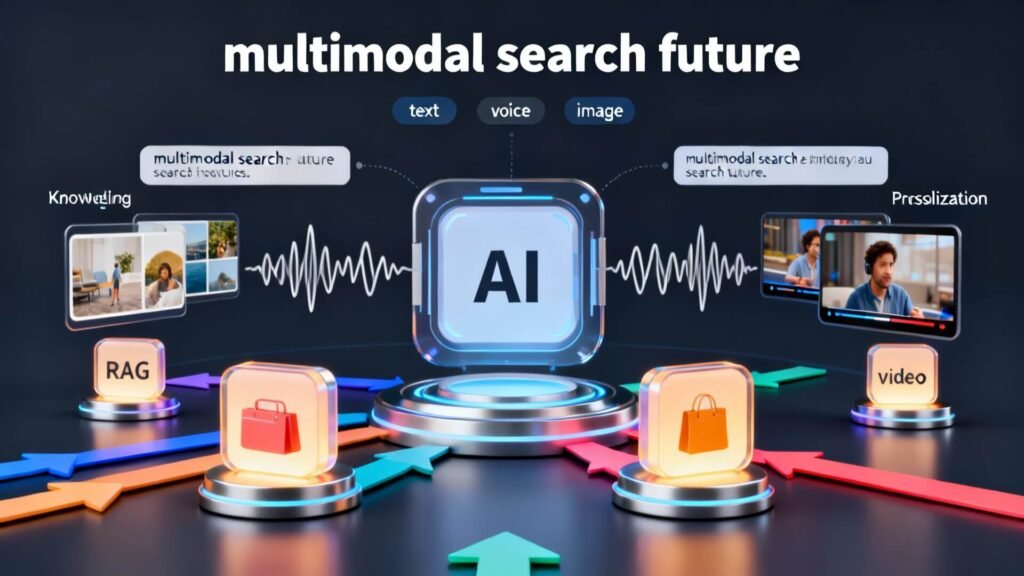
The search landscape will continue to evolve rapidly. Generative and multimodal search will become the norm, combining text, voice, image and video queries. AI overviews will expand across more query types, forcing brands to optimise for answer inclusion or risk traffic loss. Voice assistants and smart devices will integrate shopping functions, turning conversational queries into transactions. Retrieval‑augmented generation (RAG) will power enterprise search platforms, enabling internal knowledge bases and on‑device assistants. Personalisation will deepen, with AI predicting user needs and serving products proactively.
In this future, enterprise SEO will converge with broader digital strategy. Success will require collaboration across marketing, data science, engineering and customer experience. Brands will need to invest in AI‑driven tools, structured data, content that answers questions comprehensively, and experiences that delight users across devices and channels. Privacy regulations and ethical AI considerations will become more important. Ultimately, enterprise SEO services is not just about ranking on SERPs—it’s about being present and trusted wherever and whenever consumers search.
The e‑commerce landscape is more competitive and complex than ever. With billions of shoppers and trillions of dollars at stake, brands must embrace enterprise SEO to stand out. The rise of AI search, voice and visual queries, and global commerce demands sophisticated strategies that integrate technical excellence, content quality, structured data and user experience. By implementing the tactics outlined in this article—from optimizing technical architecture to embracing answer engine optimisation and AI analytics—retailers can boost visibility, increase conversions and expand internationally.
Remember: enterprise SEO is not a one‑time project but an ongoing commitment. Keep testing, learning and adapting as search behaviours and technologies evolve. Invest in cross‑functional collaboration and partnerships that bring specialised skills and tools to your team. When executed correctly, enterprise SEO will become a powerful growth engine, driving sustainable revenue and customer loyalty in an AI‑driven world.