

In today’s digital-first marketplace, your website is your most critical asset. It’s your 24/7 storefront, your most persuasive salesperson, and the foundation of your brand’s credibility. For a small business, a well-executed website design is not a luxury; it’s the essential blueprint for growth, customer acquisition, and long-term success. Yet, too many entrepreneurs treat their online presence as an afterthought, leading to missed opportunities and frustrated potential customers. This guide cuts through the noise to provide a strategic, actionable framework for small business website design. We’ll move beyond aesthetics to focus on the core principles that convert visitors into clients, building a site that not only looks professional but actively works to achieve your business goals. Whether you’re building from scratch or overhauling an existing site, the insights here will equip you with the expert knowledge needed to make informed decisions and invest wisely in your digital future.
Think of your website as a key employee who never sleeps, takes no vacations, and can simultaneously greet visitors, showcase your products, answer common questions, and close sales. The return on investment for a strategically designed site dwarfs almost any other business expenditure. A study by Small Business Trends consistently shows that over 80% of consumers research a business online before making a purchase or visiting a physical location. Your site is often the first, and sometimes the only, impression you make. A cluttered, slow, or confusing site tells a visitor you’re outdated or unprofessional, instantly eroding trust. Conversely, a clean, fast, and intuitive small business website design signals competence, establishes authority, and guides the user seamlessly toward taking action. It’s a perpetual marketing engine, capable of generating leads through contact forms, driving foot traffic with clear directions, and building a community via integrated blogs or newsletters. In essence, your website is the central hub that unifies all your other marketing efforts, from social media to email campaigns.
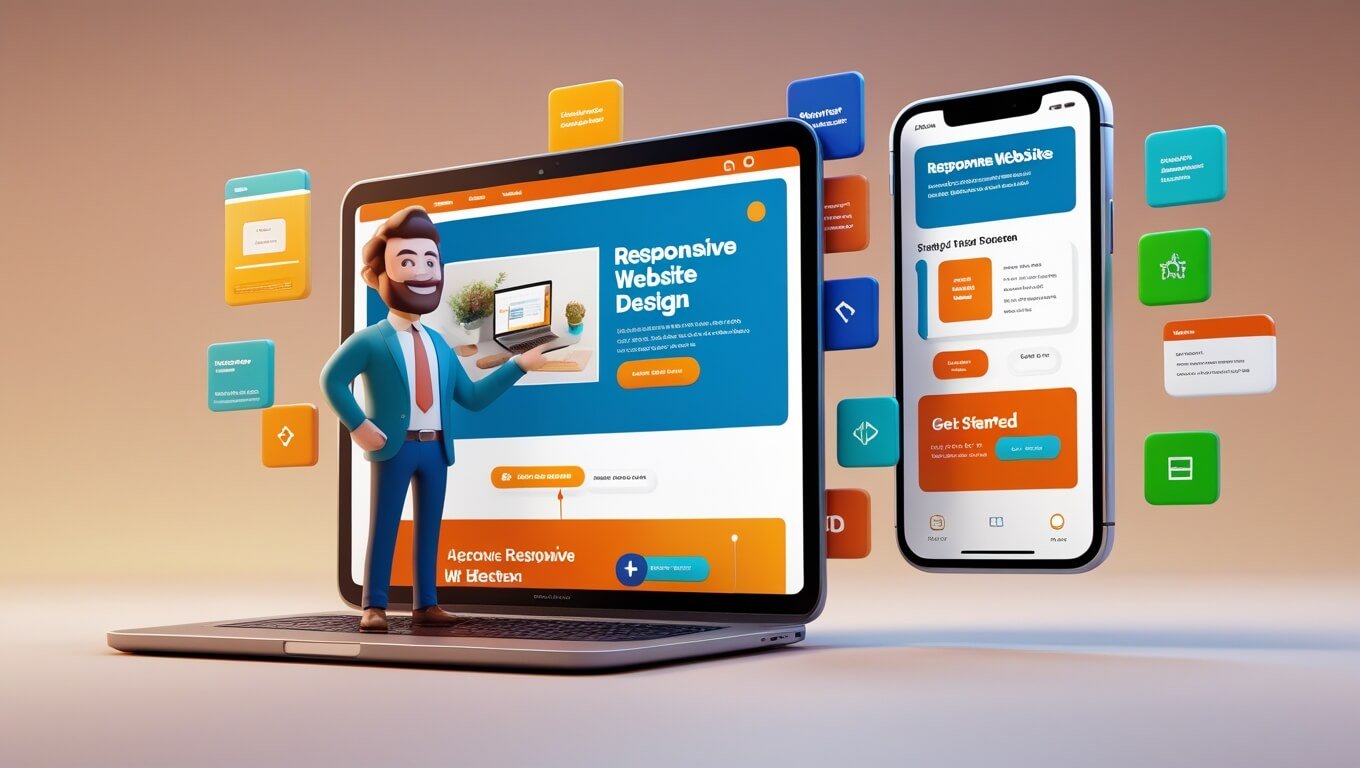
Effective design is far more than choosing pretty colors. It’s a deliberate architecture built on foundational pillars that work in concert. Ignoring any one of these can undermine your entire online presence.
UX is the silent guide of your website. It encompasses every interaction a visitor has, with the goal of making their journey effortless and intuitive. For a local service business, this might mean a prominent “Book a Service” button on every page. For an e-commerce shop, it’s a frictionless checkout process. Navigation must be logical and consistent; users should never have to guess how to find essential information like your contact details, service pages, or pricing. A common mistake is getting creative with menu labels—stick to clear, standard terminology. Breadcrumb trails, a robust search function, and a simple, sticky header menu are non-negotiable elements of professional small business website design. Remember, if a user gets frustrated, they will leave, often for a competitor’s more straightforward site.
This is no longer a recommendation; it’s a mandate. Over half of all global web traffic comes from mobile devices, and Google uses mobile-first indexing. A “mobile-first” approach means designing the mobile experience *first*, then scaling up to desktop, ensuring core content and functionality are paramount on smaller screens. Responsive design is the technical execution, where the site’s layout fluidly adapts to any screen size. Buttons must be easily tappable, text must be readable without zooming, and images must load quickly on cellular data. A site that breaks on a smartphone actively repels customers and will be penalized in search rankings.
Speed is a currency of trust online. Research from Google indicates that as page load time goes from one second to ten seconds, the probability of a mobile user bouncing increases by 123%. Speed impacts user satisfaction, conversion rates, and your SEO. Key factors include image optimization (using modern formats like WebP), leveraging browser caching, minimizing redirects, and choosing a quality hosting provider. A common pitfall for small businesses is using a cheap, shared hosting plan that bogs down during traffic spikes. Investing in solid hosting, like managed WordPress hosting or a reputable cloud provider, is a critical component of your website’s performance and security.
Your content must speak directly to your target customer’s needs and pain points. Avoid generic industry jargon. Instead, use the language your customers use. Explain *how* you solve their problem and the specific benefits they’ll receive. Every page should have a primary goal and a corresponding CTA. A CTA is not just a “Contact Us” link; it’s a persuasive command tied to a value proposition: “Get Your Free Consultation,” “Download the Guide,” “View Our Portfolio.” Use contrasting colors for CTA buttons and place them strategically in the natural flow of content. Vague content and hidden CTAs are the death knell of conversion in small business website design.
While creativity is encouraged, certain pages form the non-negotiable skeleton of an effective business site. Each serves a distinct purpose in the customer’s journey.
Homepage: This is your virtual foyer. Within seconds, it must communicate who you are, what you do, who you serve, and why you’re the best choice. Use a powerful headline, supporting sub-headline, key social proof, and direct pathways to your most important content.
Services / Products Page: Detail what you offer with clarity. For services, explain the process, outcomes, and potential investment. For products, use high-quality images, detailed descriptions, and specifications. This is where you translate features into tangible customer benefits.
About Page: This is your chance to build human connection and trust. Share your story, your mission, and the faces behind the business. Highlight your expertise and what drives you. A strong “About” page can be a surprisingly effective conversion tool, as explained by Copyblogger.
Contact Page: Make it incredibly easy to get in touch. Include a clear contact form, your physical address (with an embedded Google Map), phone number, and email. Listing business hours and expected response times manages customer expectations.

Testimonials / Case Studies Page: Social proof is critical. Showcase reviews, client logos, and detailed case studies that demonstrate successful outcomes. This page provides the external validation needed to tip a prospect from consideration to decision.
Selecting the right platform is a foundational decision. The landscape is dominated by user-friendly builders and powerful Content Management Systems (CMS).
| Platform | Best For | Key Considerations |
|---|---|---|
| WordPress (Self-Hosted) | Businesses needing full control, scalability, and advanced functionality. | Vast ecosystem of themes & plugins. Requires more technical management (hosting, updates, security). |
| Squarespace | Design-focused businesses (creatives, restaurants) prioritizing beautiful templates. | All-in-one hosting. Less flexibility than WordPress but very user-friendly and design-led. |
| Wix | Beginners who want drag-and-drop simplicity and an all-in-one solution. | Ease of use is high, but template switching is difficult. Can become limiting for complex growth. |
| Shopify | Businesses whose primary goal is e-commerce and online sales. | Dedicated, powerful e-commerce features. Transaction fees apply unless using Shopify Payments. |
The build process itself should be methodical. Start with strategy and planning: define goals, audience, and sitemap. Next, create wireframes to layout structure without design elements. Then, develop the visual design (look and feel) and source or create all content—copy, images, videos. Finally, move to development, building the site on your chosen platform, followed by rigorous testing on multiple devices and browsers before launch. A post-launch checklist should include setting up analytics (like Google Analytics 4), submitting the site to search engines, and implementing basic SEO.
Search Engine Optimization cannot be an afterthought. It must be woven into the fabric of your small business website design. This begins with technical SEO: ensuring your site is crawlable, has a clean site structure (using a logical hierarchy of headers), and features a fast, secure (HTTPS) environment. On-page SEO involves optimizing individual pages with target keywords in strategic places like titles, headers, and meta descriptions, while ensuring content is comprehensive and valuable. Local SEO is especially vital for small businesses serving a geographic area. This means claiming and optimizing your Google Business Profile, ensuring your Name, Address, and Phone Number (NAP) are consistent across the web, and garnering genuine customer reviews. Building a few quality backlinks from local directories or industry partners also signals authority to search engines.
Understanding costs prevents sticker shock and ensures you allocate resources effectively. A professional small business website design project is an investment with several components.
DIY with a Website Builder: This is the lowest-cost entry point, typically involving monthly platform fees ($20-$50/month) and possibly premium template costs. The trade-off is significant time investment and limited customization.
Hiring a Freelance Designer: Costs vary wildly by skill and location, but a baseline for a 5-7 page custom site can range from $3,000 to $8,000. This gets you expertise and a tailored solution but requires clear communication and a well-defined project scope.
Working with a Digital Agency: Agency projects often start at $10,000+ and can scale significantly. You pay for a team (strategist, designer, developer, copywriter) and a more robust process, ideal for complex needs or businesses with less time to manage the project.
Ongoing Costs: Every website has recurring expenses: domain registration ($15/year), hosting ($25-$100/month), SSL certificate, premium plugins/themes, and potential maintenance retainers for updates and security (often $50-$200/month). Plan for these from the outset.

Two decades in this field reveal consistent mistakes that hinder small business sites. First is ambiguous messaging. Visitors should understand what you do within three seconds. Avoid clever but unclear taglines. Second is neglecting the content. Beautiful design with thin, generic copy fails to engage or convert. Invest in professional copywriting or dedicate serious time to crafting your message. Third is designing for yourself, not your customer. Your personal aesthetic preferences are secondary to what resonates with your target audience and facilitates their goals. Fourth is launching and forgetting. A website is a living asset. Regular updates, fresh blog content (which supports SEO), and performance reviews are essential. Tools like Google Search Console are invaluable for monitoring health. Finally, ignoring accessibility. Designing for users with disabilities (using proper contrast, alt text for images, keyboard navigation) is a legal and ethical imperative that also improves the experience for all users.
Launch is the beginning, not the end. To know if your website is working, you must measure key performance indicators (KPIs). Traffic volume is a start, but engagement metrics are more telling: Bounce Rate (the percentage of visitors who leave after one page), Average Session Duration, and Pages per Session indicate content relevance. Ultimately, you must track conversions—form submissions, phone calls, booked appointments, or sales. Setting up goals in Google Analytics is crucial. Use this data to iterate. If a service page has a high bounce rate, test rewriting the headline or adding a video. If a CTA isn’t converting, try changing its color or text. This cycle of measure, analyze, and optimize is what transforms a static site into a dynamic growth engine. Consider integrating a tool like Hotjar for heatmaps and session recordings to see how users actually interact with your pages.
Crafting a successful online presence for your small business is a deliberate strategic endeavor, not a box-ticking exercise. It requires a deep understanding of your audience, a commitment to user-centric design, and the integration of performance and SEO fundamentals from the very first wireframe. Your website is the cornerstone of your digital identity—a versatile tool for building trust, demonstrating expertise, and driving measurable business outcomes. By viewing small business website design as a critical investment and following the comprehensive blueprint outlined here, you empower your business to compete effectively, connect authentically with customers, and build a scalable platform for future growth. Remember, a great website is never truly finished; it evolves alongside your business, informed by data and driven by a commitment to serving your customers better. The digital door is open. It’s time to build a welcome mat that invites the world in.