
A brand’s reputation used to travel by word of mouth; now it travels by search results. One negative article, one outdated directory listing, or one page-two complaint can quietly become the “first impression” that customers, partners, candidates, and journalists encounter before they ever speak to you. Online reputation management (ORM) exists to reshape that first impression—not by pretending criticism doesn’t exist, but by ensuring the most accurate, credible, and current representation of your brand is what people find first.
Speed becomes a strategic factor the moment reputational risk is time-sensitive. When you publish a clarification page, secure a positive third-party mention, or update outdated information, waiting weeks for search engines to discover and index those URLs can feel like watching the narrative drift without you. That’s where a rapid URL indexer can appear attractive: it promises faster discovery and indexing so your best assets can enter the search ecosystem sooner.
This article explains how to use online reputation management with rapid URL indexer responsibly and effectively. You’ll learn what rapid indexing can and cannot do, how to build the content “asset layer” that actually pushes down negative results, how to avoid tactics that backfire, and how to measure progress in a way that turns ORM into an ongoing system rather than a one-off crisis response.
Online reputation management is the coordinated practice of monitoring what appears about a brand online, improving the accuracy and prominence of trustworthy information, and reducing the visibility and impact of misleading, outdated, or unfair content. The practical target is not “the internet” in general; it’s the specific surfaces where perception forms most quickly—branded search results, review platforms, social profiles, knowledge panels, and high-authority third-party sites.
A rapid URL indexer, in this context, is any method or tool designed to accelerate the discovery and indexing of URLs by search engines. Some approaches are legitimate and platform-aligned (for example, submitting sitemaps, using Search Console features where available, improving internal linking, and ensuring fast crawlable pages). Other approaches operate in murkier territory, sometimes relying on spam-like signals, questionable networks, or low-quality “ping” tactics that may not produce sustainable benefits and can create reputational or SEO risk.
The first expectation to set is a vital one: indexing is not ranking. A page can be indexed quickly and still remain invisible in meaningful search results if it does not deserve prominence for the query. ORM success depends on building assets that are credible, useful, and clearly tied to the brand entity. Rapid indexing only helps when it reduces the time it takes those assets to enter the competitive field.
The second expectation is equally important: ORM is not synonymous with “suppression.” Responsible ORM does not attempt to erase legitimate criticism. Instead, it works to ensure that search results reflect reality with appropriate context. In many cases, the best reputational outcome is achieved not by attacking negative content, but by strengthening the presence of accurate information, transparent explanations, customer proof, and third-party validation that allows decision-makers to see the full picture.
The third expectation is about timelines. You can accelerate discovery, but authority and trust compound over time. If you’re trying to outrank an entrenched negative result from a high-authority publication, you will likely need a multi-asset approach, careful on-page optimization, and earned credibility. Rapid indexing can shorten the “time to enter,” but not the “time to win” on competitive SERPs.
With those guardrails in place, rapid URL indexing becomes a tactical accelerator inside a broader ORM system—not a silver bullet, and not a substitute for strong content and credibility.

Search engines move through three related stages: crawling, indexing, and ranking. Crawling is discovery—finding URLs via links, sitemaps, feeds, and other signals. Indexing is interpretation—processing content, understanding entities, and deciding whether a URL should be stored and eligible to appear in results. Ranking is selection—choosing which indexed pages best satisfy a query, given relevance, authority, and user experience signals.
ORM problems often feel urgent because the “ranking” surface is what the public sees, yet your immediate control is frequently on the “indexing” surface. You can publish a response, fix a misleading page, or release a new brand story, but none of that matters until the content is discoverable and indexed. That is the window where rapid indexing has real practical value: it narrows the gap between publishing and eligibility.
Still, the role of speed is easy to misunderstand. Speed matters most in situations like these: a crisis where your clarification page must be discoverable quickly; a product recall or policy update where outdated information is dangerous; a brand name change where old identities must be replaced; a PR placement or thought leadership piece where timeliness affects distribution; or a campaign that depends on search visibility during a short window.
Speed matters less when the bottleneck is authority. If negative results dominate because they come from powerful domains and your brand has weak third-party footprint, getting your new pages indexed faster won’t change the underlying balance of credibility. In those cases, speed is still helpful, but the priority must shift to building a stronger asset portfolio and earning signals that search engines interpret as trustworthy.
Another overlooked factor is “quality gating.” Search engines can delay indexing, de-prioritize crawling, or even exclude pages that look thin, duplicative, or low value. In ORM, that can happen when people publish rushed “reputation repair” pages that read like marketing fluff, or when they create multiple near-identical pages targeting the brand name without unique value. In other words, speed tactics can fail simply because the assets are not index-worthy in the first place.
Rapid indexing works best when it amplifies a strong foundation: technically accessible pages, clear entity signals (brand name, organization info, consistent profile references), useful content that answers real questions, and internal linking that gives crawlers a clear map. When those fundamentals are in place, indexing acceleration can meaningfully shorten your time-to-impact.
Finally, remember that search results are not the only surface where reputation forms. Social profiles, review platforms, and professional directories often rank because their domains are strong and their pages are entity-centric. A smart ORM program uses those ecosystems as reputation anchors rather than trying to force everything onto a single website. Rapid indexing is part of the search layer; it should be paired with credibility across the broader web.

Reputation management becomes far easier when you think in “assets” rather than “posts.” Assets are pages that can rank for branded or semi-branded queries and that convey credibility quickly. A single blog post with generic advice is rarely an asset. A strong About page, a leadership bio with verified credentials, a clear policy page, a press page that aggregates credible mentions, and authoritative third-party profiles are assets.
The asset layer does two jobs at once. First, it makes your brand easier to understand, which improves search engines’ confidence in your entity. Second, it increases the number of high-quality pages that can occupy branded SERP real estate, which reduces the probability that negative or irrelevant pages dominate the first page.
Owned assets on your website should be designed for clarity, not for hype. When someone searches your brand name, they are typically looking for basic truth: who you are, what you do, where you operate, how to contact you, whether you’re legitimate, and what others say about you. Pages that answer those questions explicitly tend to perform better than pages that sound like polished advertisements.
Earned and shared assets are equally important because third-party credibility is a reputational accelerant. Search engines often trust established publications, industry directories, and reputable review ecosystems faster than a brand’s own pages, especially for query spaces that imply risk. A balanced ORM plan therefore builds a distributed presence across: trusted directories, professional networks, review platforms relevant to your industry, reputable media mentions, partner pages, and community references.
Consistency is the quiet advantage that many brands miss. When your brand name, address, phone number, leadership names, and category descriptors are consistent across authoritative profiles, search engines can connect entity signals more confidently. When your identity is inconsistent—different spellings, old logos, conflicting contact info, multiple “official” pages—search engines become less certain, and results become more chaotic. ORM often improves dramatically simply by making identity signals coherent.
A well-designed asset layer also anticipates the questions that appear in “People also ask,” related searches, and review content. If negative content exists, it often thrives because it answers a question your brand hasn’t answered. When you publish thoughtful, transparent answers—supported by policies, documentation, and proof—you reduce the informational gap that misinformation exploits.
Importantly, asset building is not the same as flooding the internet with fluff. Search engines and humans both respond poorly to thin, repetitive pages. The goal is fewer, stronger assets that each serve a distinct purpose: clarity, proof, transparency, education, or conversion. That distinction keeps the ORM program ethical and effective.
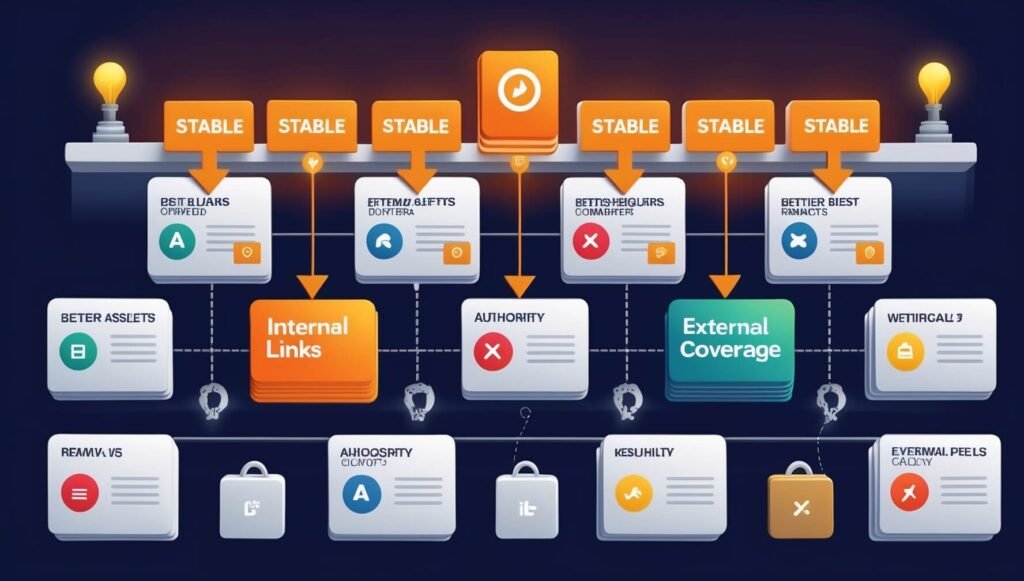
Execution is where ORM either becomes a repeatable system or a panic-driven scramble. The most reliable workflow starts with a disciplined assessment of the search landscape, then builds or strengthens assets, and only then uses rapid indexing tactics to accelerate discovery. The order matters because indexing a weak page faster simply makes a weak page eligible faster; it does not make it competitive.
The steps below are designed to be applied in real teams—marketing, comms, founders, and sometimes legal—without requiring a massive budget. This is one of the main sections where numbering is helpful because ORM works best as a sequence.
Notice the theme: rapid URL indexing is positioned as an accelerator for valuable assets, not as a substitute for value. That distinction is what keeps your ORM work both effective and defensible over the long term.
Negative content is not a single category; it’s a set of situations that require different responses. An incorrect directory listing is not the same as a viral complaint. A policy-violating post is not the same as a legitimate critical review. Treating every negative result as an SEO suppression problem is how ORM budgets get wasted and how reputations become more fragile.
When removal is possible, it is often the cleanest path. Policy violations, defamation, impersonation, privacy breaches, and copyright violations can sometimes be resolved through platform processes or legal channels. That said, removal decisions can carry legal complexity, jurisdiction issues, and unintended consequences. If you are considering legal escalation, consult qualified counsel and document everything. ORM is about reducing harm, not creating a new controversy through aggressive overreach.
Suppression (sometimes called dilution) is often the appropriate approach when negative content is legitimate or will remain online. The objective becomes reducing its visibility for key branded queries by increasing the share of credible, relevant results that provide more complete context. This is where the asset layer and indexing acceleration tactics matter: you’re not trying to “game” the system; you’re trying to ensure the system has better options to show.
A few mistakes consistently backfire in reputation management. One of the most common is publishing thin “reputation cleanup” content that reads as defensive marketing. Search engines and humans both recognize empty reassurance. Another is launching multiple near-identical pages targeting the brand name, which can create keyword cannibalization and dilute authority rather than concentrate it. A third is ignoring reviews and community conversations, then expecting SEO alone to repair trust. If the public sees unanswered complaints, even strong SEO assets may feel like a cover-up rather than a correction.
Professional ORM also avoids the “Streisand effect,” where attempts to hide or attack negative content attract more attention to it. Sometimes the best move is measured transparency: acknowledge the issue, clarify what changed, and provide proof. Search results can evolve in your favor when the market sees maturity and accountability, especially if you pair transparency with improved customer experience and credible third-party signals.
Rapid URL indexing can play a role here, but only in the right way. If you publish a clear response page, a policy update, or a third-party clarification, accelerating indexation can help your corrective narrative become discoverable before misinformation spreads further. The goal is not to outrank by force; the goal is to ensure accurate content becomes available quickly enough to matter.
Reputation rarely collapses overnight; it usually erodes through neglect. A stale profile, an unanswered review pattern, a broken contact pathway, or an outdated policy page can quietly accumulate doubt until one event triggers scrutiny. The most resilient brands treat ORM as maintenance: small, regular actions that keep the public narrative accurate and stable.
Monitoring should be designed around the places where perception forms. Branded search is one layer, but review platforms, social comments, community threads, and business directories can influence search results and decision-making even if they don’t rank first. A practical monitoring system tracks branded queries weekly, review volume and sentiment trends, and new mentions on high-authority platforms relevant to your category.
Maintenance is where indexing strategy becomes an advantage. When you update a high-credibility page—such as a policy page, pricing explainer, or press page—ensuring that updates are discoverable and indexed promptly helps prevent outdated information from lingering as the “official” story. Indexing acceleration methods are most valuable here because they reduce drift between what’s true now and what search results imply.
Another maintenance lever is controlled content refresh. If you have reputation assets that rank, keep them current. Update dates where appropriate, add new proof points, refresh screenshots, improve FAQs based on real user questions, and strengthen internal linking as your site grows. This is not manipulation; it’s stewardship. Search engines and users both reward accurate, maintained information because it reduces uncertainty.
Operationally, make someone accountable for ORM. Without ownership, monitoring alerts get ignored and response times slip. With ownership, you can build a predictable cadence: weekly SERP scan, monthly profile audit, quarterly content refresh, and a clear escalation protocol for spikes in negative attention. That cadence turns ORM from a reactive scramble into a managed risk function.
When ORM is treated as a system, a rapid URL indexer becomes a small but useful part of the toolkit. It speeds up the moments where speed matters, while the rest of your program builds the credibility that determines long-term rankings. That combination—speed plus substance—is what produces durable reputation outcomes.