
There’s a quiet moment in almost every hiring process for social roles when the conversation stops being about “posting” and starts being about proof. A hiring manager leans back, scans your work, and asks some version of: “How did this move the business?” That question is not a trap—it’s an invitation. It’s the doorway to better roles, bigger budgets, and the kind of career momentum that doesn’t depend on trends.
The good news is that you do not need to be a data scientist to answer it. You need a clean strategy, a reliable workflow, and a measurement story you can repeat with confidence. Social media can absolutely drive awareness, trust, leads, and sales. But in social media marketing jobs, the people who rise fastest are the ones who can translate content into outcomes that executives recognize: demand, pipeline, revenue efficiency, customer retention, and brand strength that reduces acquisition friction.
This article shows you how to build that translation layer. You’ll learn what measurable business results really look like in social media, how to connect creative to KPIs without killing creativity, how to present your work in a way that gets funded and hired, and how to build systems that keep performance steady even when algorithms shift. If you want your next role to pay you for impact instead of output, this is your playbook.
Social media used to be evaluated like a brand bulletin board: consistency, aesthetics, and a steady stream of updates. Today, social is evaluated more like a growth channel and a customer experience layer at the same time. That’s why the job market has shifted. Employers still care about strong creative and brand voice, but they increasingly prioritize people who can answer three operational questions:
First, can you create content that earns attention without paying for every impression? Second, can you turn that attention into a next step—email signups, site visits, leads, trials, purchases, or qualified conversations? Third, can you learn from performance and iterate quickly without losing brand integrity?
This shift isn’t happening because companies suddenly became “analytics obsessed.” It’s happening because social platforms have matured and competition has intensified. In crowded feeds, content must be designed to compete. And because budgets are scrutinized, teams need clarity on whether social is contributing meaningfully or simply consuming time.
In practical terms, this means the modern social role is closer to a hybrid: strategist + creative producer + performance analyst + community operator. You don’t have to master everything on day one, but you do need to understand how each piece connects. The strongest candidates aren’t the ones who can do every task; they’re the ones who can explain what matters most, why it matters, and how to prove it with evidence.
If you’re early in your career, this is encouraging, not intimidating. It means you can differentiate quickly. Many applicants can write captions. Fewer can set a measurable objective, design content that supports it, and report outcomes in a way that leadership trusts. That gap is where opportunity lives.

“Measurable business results” does not mean every post must be a direct-sale machine. Social works across the buyer journey, and the right measurement approach respects that reality. The goal is to connect the type of content you publish to the stage of decision-making it influences—and to select metrics that credibly reflect that influence.
Start by thinking in outcomes rather than vanity metrics. Likes and views can be helpful signals, but they are rarely sufficient as the “business result.” A business result is a change that improves the company’s position: more qualified demand, more revenue efficiency, stronger conversion rates, higher retention, lower support cost, or greater brand trust that reduces friction elsewhere.
Here are the most common categories of social-driven results—each with a measurement mindset that makes the result defendable in a meeting:
Awareness becomes a business result when it increases the size of the qualified audience that can be converted later. In practice, this looks like reach and video views that are concentrated among the right people, plus evidence that people are remembering you: profile visits, brand-search lift, direct traffic increases, and rising follower quality (not just follower count). The strongest social marketers don’t just “get views”—they build a predictable stream of discovery that feeds retargeting pools and nurtures future buyers.
Engagement becomes meaningful when it indicates belief and intent. Saves, shares, thoughtful comments, and DMs often signal deeper value than surface reactions. For service businesses and high-consideration products, these signals are especially important because they show people are using the content as a reference. That’s a form of trust—an early indicator that social is shaping decisions.
Clicks and visits can be business results when they represent the right type of visitor arriving on the right page. If social traffic bounces instantly, it’s not “bad traffic,” it’s misaligned messaging or weak landing experience. High-quality social traffic tends to land on pages that match the promise of the post: a resource, a product page, a case study, a lead magnet, or a clear consultation pathway. When social content and landing pages align, conversion rates rise and social becomes a reliable funnel input.
Direct conversions can absolutely happen through social—especially when content is designed around objections, proof, and a clear offer. The key is attribution discipline. If you want social to be funded like a growth channel, you need tracking that leadership can trust: consistent UTMs, dedicated landing pages where appropriate, and a reporting narrative that connects content themes to conversion outcomes. Even when last-click attribution understates social’s influence, credible direct attribution strengthens your case and helps you argue for more budget.
Social doesn’t stop at acquisition. Educational content reduces churn by helping customers use the product better. Community content increases stickiness by making customers feel seen. Support content reduces tickets by answering common questions publicly. When you measure this, you start to show leadership that social reduces costs and increases lifetime value—two outcomes that matter deeply to mature businesses.
The practical takeaway is simple: social media marketing jobs increasingly reward people who can match the content type to the outcome type. Not every post needs to sell. Every post does need a purpose you can explain—and a metric you can defend.

When social performance feels unpredictable, it’s usually because the system is missing. The easiest way to become “measurable” is not to obsess over individual posts—it’s to run campaigns as structured sequences where each piece of content has a job. The framework below is designed to help you plan, execute, and report in a way that leadership understands, without turning your work into spreadsheets-only marketing.
This framework is encouraging because it’s controllable. You can’t control algorithms. You can control objectives, audience clarity, persuasion angle, sequencing, instrumentation, and reporting. Those controls are enough to build a measurable social program—and enough to stand out in interviews and performance reviews.

One of the biggest confidence blockers in social media marketing jobs is the feeling that you can’t “prove ROI” unless you own the full funnel. In reality, hiring managers don’t expect you to control everything. They do expect you to demonstrate that you understand how social contributes—and that you can measure what you can control responsibly.
Think of your portfolio as a set of case stories, not a gallery of posts. A case story is persuasive when it shows: the objective, the audience context, the creative strategy, the execution, the measurable outcomes, and what you learned. This structure works whether you’re applying for an entry-level role or a leadership role. The difference is the complexity of the system, not the logic.
Start with one or two campaigns where you can tell a clean “before and after.” For example: “We had high reach but low clicks; we redesigned our hooks and aligned landing pages; click-through improved and leads increased.” Or: “Our content was scattered; we implemented a weekly content system with consistent themes; engagement quality improved and DM inquiries became more frequent.” The numbers don’t need to be massive. They need to be credible and connected to a decision you made.
Also include evidence of process. In social roles, process is often the hidden differentiator. Show a content calendar snapshot, a creative brief, a community response framework, and a simple reporting dashboard. When hiring managers see process, they see reliability. Reliability is what gets you trusted with budgets.
If you’re missing direct conversion tracking, you can still provide powerful proof by focusing on measurable signals that correlate with business outcomes: high-intent DMs, link clicks to a specific offer, saves and shares on educational content, profile actions, and repeat engagement from the same users over time. Combine those with qualitative evidence: screenshots of comments that reveal intent, anonymized DM excerpts that show buying questions, and examples of users quoting your content language back to you. These are trust signals. They’re not “soft” when they clearly show purchase intent or decision progress.
Finally, include one “learning story.” Hiring managers respect candidates who can admit what didn’t work and explain how they adapted. Social media is dynamic. A professional social marketer is not someone who never fails—it’s someone who learns faster than the feed changes.
Measurable results require consistency, and consistency requires a workflow that protects your time and your creative energy. Burnout is common in social roles because the work can feel endless: content, community, trends, reporting, stakeholder requests, and last-minute promos. The way out is not working harder; it’s building a system that makes output predictable and learning continuous.
A strong workflow begins with a content operating model. That means you decide in advance how content gets requested, created, reviewed, and published. You establish who approves what, what the turnaround times are, and what “good” looks like. Without this model, social becomes a service desk for the entire company, and your ability to run strategic campaigns collapses.
Tooling should serve the workflow, not replace it. Scheduling tools help you execute consistently, but they don’t solve unclear strategy. Analytics tools help you report, but they don’t solve weak creative. The most valuable tools are the ones that reduce friction: templates for briefs, repeatable captions structures, asset libraries, and a standardized dashboard that turns performance into decisions.
Community management deserves special attention because it’s often underestimated. Community is where social becomes a customer experience channel. If your response system is slow or inconsistent, you lose trust and opportunities. Build response guidelines: tone, escalation paths, FAQ responses, and how to handle negativity. This creates speed and protects the brand voice, while also protecting you from emotional fatigue.
And don’t ignore alignment with other teams. Social performs better when it’s connected to offers, landing pages, and email follow-ups. Even small alignment—like ensuring the landing page matches the post’s promise—can dramatically improve conversion rates. When you build these connections, your content starts producing measurable outcomes more consistently, and your job becomes less reactive and more strategic.
Here is the encouraging truth: you do not need a perfect background to build a strong social career. You need a clear story of how you think, how you execute, and how you learn. Most hiring decisions are driven by confidence—confidence that you can produce reliable work, adapt when performance shifts, and communicate results without drama.
In interviews, aim to speak in “outcome language.” Instead of describing tasks (“I posted daily”), describe intent and impact (“I ran a weekly sequence focused on demonstration and objection handling, and it increased qualified inquiries”). Outcome language signals maturity. It tells the hiring manager you’re not just a poster; you’re a marketer.
Be ready to explain your measurement philosophy. You don’t need to pretend social is purely last-click. You do need to show that you can track what you can track, and that you understand how social supports conversion across the funnel. A simple explanation—primary KPI, supporting KPI, and how you learn—can instantly set you apart from candidates who only talk about aesthetics.
Also, protect your long-term career by protecting your energy. The best social marketers stay curious, not exhausted. Systems, boundaries, and clear priorities are not “nice to have”—they’re what allow you to keep improving. Social rewards people who show up consistently, learn continuously, and keep their creative confidence intact.
If you want a practical next step after reading this: choose one campaign idea, apply the Content-to-Results Framework for two weeks, and document everything. Even a small experiment can become a portfolio case study. Those case studies, stacked over time, turn into a career. Measurable results aren’t reserved for big brands—they’re built by people who run disciplined experiments and learn like professionals.
Organic search is often described as “free traffic,” yet that shorthand hides the real dynamic: search visibility is earned through accumulated evidence. Search engines continuously estimate which pages deserve to be discovered, trusted, and recommended—based on how accessible the site is, how precisely a page satisfies intent, and how credible the publisher appears. In that environment, organic SEO services are not a single deliverable or a one-time “optimization.” They are a structured program that aligns technical foundations, editorial systems, and trust signals so that growth compounds rather than resets every time algorithms or competitors shift.
This article takes an academic stance on what organic SEO services include, why modern ranking systems reward helpfulness and credibility, and how content can be developed into a durable knowledge asset. It then examines the technical substrate that enables crawling and indexing, the content architecture that operationalizes topical authority, and the off-page signals that contribute to trust. Finally, it consolidates these ideas into a practical governance model for measurement and iteration—so organic performance becomes a repeatable process rather than a sequence of isolated tactics.
In precise terms, organic SEO services are a set of professional activities designed to improve a site’s performance in unpaid search results by aligning three domains: (1) search engines’ technical requirements for discovery and understanding, (2) users’ informational and commercial intent, and (3) the site’s ability to demonstrate expertise and trust. The emphasis on “services” matters because SEO is not a single artifact. A standalone audit may identify problems, but it does not fix them. A batch of content may publish, but it may not rank if the site’s architecture and authority signals are weak. Sustainable gains emerge when SEO is managed as an ongoing system.
Most mature engagements cluster into four workstreams that operate in parallel. Importantly, each workstream has its own success criteria and failure modes; treating them as interchangeable is one reason SEO programs become broad but shallow.
Viewed academically, organic SEO services are an applied information science discipline. Search engines do not “read” like humans; they sample and classify documents, infer entity relationships, and allocate visibility based on proxies for relevance, utility, and trust. SEO services aim to reduce friction in that system. The technical layer removes mechanical obstacles. The content layer reduces conceptual obstacles by making intent fulfillment explicit. The trust layer reduces social obstacles by showing accountable expertise and recognition. When these layers are aligned, rankings become less fragile because performance is anchored to fundamentals rather than transient tactics.
Organic SEO services also differ from paid media management in planning horizon. Paid media can accelerate demand capture immediately, but results typically pause when spending pauses. Organic SEO tends to compound: strong pages continue to attract qualified users long after publication, especially when updated and supported with internal links. Because of this compounding behavior, mature SEO programs are best evaluated by longitudinal signals—growth in qualified impressions, stability of rankings across topic clusters, and improvements in non-branded discovery—rather than short-lived spikes.

Modern ranking systems are best understood as usefulness estimators operating under uncertainty. They do not know whether a page is “true,” and they cannot assess the lived value of every piece of content directly. Instead, they evaluate patterns: topical coverage, semantic clarity, structural signals, and proxies for user satisfaction. This helps explain why superficial content—pages produced to “target keywords” without resolving intent—often underperforms even if it appears technically optimized. Contemporary search is increasingly intolerant of pages that repeat generic advice, inflate word counts without analytic depth, or obscure answers beneath irrelevant preamble.
An academically useful model is to frame ranking as alignment between query intent and document intent. Query intent reflects what the user is trying to do: learn a concept, compare options, solve a problem, or complete a transaction. Document intent reflects what the page is designed to accomplish: inform, persuade, qualify leads, or provide instructions. Organic SEO services tighten this alignment by designing pages that make their purpose obvious within seconds, then deliver depth in a structured way for users who need it.
To operationalize that alignment, SEO practitioners often classify intent into categories. The classification itself is not an end; it is a tool for choosing the correct page format and content depth. A page can fail despite “good writing” if it is the wrong type of page for the query.
Credibility signals also play a central role in the contemporary environment. Search systems favor content that appears to be produced by accountable entities with demonstrable experience. This is why trust cues—clear authorship, transparent editorial standards, accurate external references, and up-to-date maintenance—matter. These cues function as “risk reduction” mechanisms: they reduce the chance that users will bounce back to results and select a competitor, and they reduce the likelihood that search systems recommend content that fails user needs.
User experience is another axis of evaluation. It is simplistic to claim that “UX equals ranking,” but it is accurate to say that search systems avoid consistently recommending pages that frustrate users. Slow load times, unstable layouts, intrusive overlays, and poor mobile readability increase friction and weaken satisfaction proxies. Organic SEO services incorporate UX considerations not as aesthetic preferences but as comprehension engineering: the easier a page is to consume, the more likely users are to complete their task, engage with the site, and return.
Finally, search increasingly evaluates sites holistically. A strong page can struggle if it exists inside a broader ecosystem of thin, duplicative, or inconsistent content. Conversely, a site with clear topical coherence can help new pages rank faster because search expects credibility. Organic SEO services address this by building topic clusters—interconnected content sets that demonstrate coverage, coherence, and depth—so rankings are supported by a credible corpus rather than isolated documents.
Technical SEO is sometimes dismissed as “backend hygiene,” but it is more accurately understood as the substrate that determines whether content can compete at all. Search engines operate under resource constraints; they cannot crawl everything continuously at infinite depth. They allocate crawl attention selectively, influenced by site health, internal linking, server responses, and perceived importance of URLs. When technical foundations are weak, even high-quality content can remain invisible, delayed, or misinterpreted. Organic SEO services begin with technical controls because technical deficiencies can distort every other investment.
Technical SEO can be studied as a set of constraints. These constraints are not abstract; they determine the probability that a page will be discovered, rendered, and indexed, and the speed at which changes are recognized. In practice, a strong technical program tends to focus on a limited set of high-leverage areas rather than chasing every micro-optimization.
From an academic viewpoint, technical SEO is the engineering discipline that ensures a site’s information is available, interpretable, and stable. Without that engineering, content quality and authority signals may produce inconsistent results because the system that transmits value—the website—is unreliable. Organic SEO services treat technical improvements as compounding assets: each resolved constraint increases the probability that future content will be discovered faster and understood more accurately.

In organic SEO, content is more productively treated as an information system than as a writing pipeline. Each page functions as a node in a network of concepts, intents, and user pathways. Organic SEO services translate search demand into content architecture through structured research: identifying topic clusters, mapping intent classes, and specifying the role each page plays in the journey from discovery to decision. This is why high-performing SEO programs invest heavily in planning rather than publishing volume.
The research phase typically begins with a query landscape analysis. Instead of selecting a single keyword and drafting a generic post, organic SEO services examine how the topic decomposes into subtopics and how users phrase questions at different stages of sophistication. A novice query often seeks definitions and basic steps; an advanced query seeks decision frameworks, edge cases, and operational constraints. The resulting content plan resembles a curriculum: foundational pages establish concepts, intermediate pages address methods and trade-offs, and advanced pages explore measurement and troubleshooting. This approach reduces cannibalization and strengthens topical authority because the site demonstrates coherent coverage rather than scattered commentary.
Within each page, intent satisfaction requires disciplined composition. Academic clarity favors explicit definitions, clear distinctions, and logically sequenced arguments. In SEO terms, that means delivering the answer early, then expanding with depth that remains relevant. The goal is not simply to “keep users on the page,” but to provide the fastest path to comprehension without sacrificing rigor. When a page satisfies intent cleanly, users are less likely to return to search results, which is a practical indicator of success.
Organic SEO services also emphasize semantic design. Search engines evaluate meaning beyond exact-match phrases; they expect coverage of related concepts that naturally accompany a topic. For example, a page about organic SEO services should naturally address technical health, intent mapping, internal linking, topical authority, and measurement. When these concepts appear in a coherent structure, search systems are more likely to interpret the page as comprehensive. When they are missing, a page can appear thin—even if the prose is polished.
Because content performance is uneven across a site, mature SEO programs do not rely only on net-new publishing. Many of the highest ROI gains come from improving existing pages that already earn impressions. Organic SEO services typically segment pages into performance patterns and choose interventions accordingly:
Content also includes assets that are frequently neglected: category pages, service pages, product pages, FAQs, comparison pages, and glossary pages. These often carry strong commercial intent and can drive high-value conversions if written with the same discipline as informational content. Organic SEO services optimize these pages by clarifying value propositions, aligning language to intent, and reducing ambiguity about what is offered, for whom, and under what conditions. In academic terms, this reduces semantic distance between query and document, allowing users to recognize relevance immediately.
Finally, content maintenance is essential. Search systems reward accuracy and freshness when topics evolve. Maintenance is not merely changing dates; it is revisiting assumptions, refreshing examples, consolidating duplicative pages, and integrating new internal links as the site grows. Organic SEO services often formalize a review cadence for high-impact pages, treating content as a living asset. Over time, this turns a website into a knowledge base that becomes increasingly competitive because its accuracy and coherence are systematically defended.
Authority is often reduced to “backlinks,” but a more academically accurate view is that authority is the outcome of recognition within a broader information ecosystem. Backlinks are one measurable form of recognition, yet trust is also conveyed through brand mentions, citations, partnerships, reviews, and consistent identity signals across platforms. Organic SEO services approach authority building as a quality-control problem: the question is not how many links can be acquired, but what the overall pattern of recognition says about legitimacy, topical relevance, and reputation.
High-quality backlinks tend to emerge through mechanisms that reflect real-world credibility rather than artificial placement. Organic SEO services prioritize methods that can be sustained without creating risk, because low-quality link acquisition can lead to devaluation or penalties that erase progress.
Authority signals should also be topically consistent. A backlink from a relevant industry publication carries more interpretive value than one from an unrelated directory because it indicates that credible entities in the same domain recognize the site. Search systems increasingly interpret link patterns as semantic signals, contributing to what a site is “about.” Organic SEO services therefore prioritize relevance and editorial integrity over volume, because incoherent patterns can be discounted and can introduce risk.
Trust also depends on identity clarity. Sites that obscure authorship, provide vague business information, or fail to disclose editorial standards can appear less credible, particularly when queries relate to money, safety, or wellbeing. Organic SEO services often implement trust architecture: author bios that demonstrate qualifications, editorial policies that explain how content is produced, transparent contact information, and consistent branding across channels. These elements help both users and search systems interpret the site as an accountable entity rather than an anonymous publisher.
Another often overlooked dimension is corpus consistency. If a site publishes a few excellent articles but leaves most pages thin or outdated, the overall impression can degrade. Organic SEO services therefore strengthen entire topic clusters and consolidate weak pages so that quality becomes predictable. In academic terms, this increases coherence and reduces uncertainty. The practical effect is that the site becomes easier for search systems to classify and easier for users to trust.

Organic SEO is measurable, but measurement must be correctly specified. A common failure mode is optimizing for a single metric—traffic volume, keyword counts, or ranking screenshots—without connecting those metrics to business outcomes. Organic SEO services should define a measurement model that distinguishes between leading indicators (visibility and relevance signals) and lagging indicators (qualified conversions and revenue contribution). Leading indicators include impressions, ranking distribution, and click-through rates segmented by intent. Lagging indicators include conversions, assisted conversions, pipeline contribution, and changes in acquisition costs over time.
An academically rigorous reporting model begins with segmentation. Not all organic traffic is equal, and growth is not automatically good if it is misaligned with business objectives. Organic SEO services often structure reporting around clusters and intent to answer a more meaningful question: “Which organic assets are improving qualified discovery?” rather than “Did traffic go up?”
Iteration is the mechanism that turns SEO from a project into a system. In practice, iteration means diagnosing why a page underperforms and selecting an intervention that matches the failure mode. If a page has impressions but low clicks, the intervention is often message-level (titles, snippet clarity, intent alignment). If it receives clicks but has poor engagement, the intervention is usually structure-level (faster answers, better headings, stronger examples). If engagement is strong but rankings stall, the intervention may be authority-level (internal linking, topical expansion, relevant external citations). Organic SEO services should be explicit about this diagnosis-to-intervention logic, because it is the hallmark of disciplined optimization.
When evaluating providers, the question is not whether they can “do SEO,” but whether they can operate an evidence-based process across technical, content, and authority domains. A credible provider will explain how they conduct audits, how they map intent, how they prioritize fixes, how they structure content production, and how they measure outcomes beyond vanity metrics. They will also clarify what they avoid—especially risky practices such as low-quality link schemes or publishing at scale without editorial oversight.
From a governance perspective, organic SEO services work best when the client organization can implement recommendations. SEO intersects with engineering, design, content, and leadership. If fixes cannot be deployed, insights remain theoretical. Mature engagements establish a workflow: a prioritized backlog, a cadence for technical releases, an editorial calendar informed by demand, and scheduled reviews to recalibrate strategy based on results. This governance model often separates stable growth from intermittent spikes.
In conclusion, organic SEO services are essential because modern marketing success increasingly depends on discoverability, trust, and compounding digital assets. Paid media can accelerate reach, but organic performance creates a durable foundation that continues to attract qualified users even when budgets fluctuate. The organizations that win in organic search are not those that publish the most content, but those that treat SEO as an applied discipline: engineering sites for accessibility, engineering content for intent fulfillment, and engineering trust through credible recognition. When those systems align, search visibility becomes an asset rather than a gamble.
Have you ever invested time and money into a blog post or landing page only to see it languish on the second or third page of Google? You’re not alone. Many businesses produce attractive content that fails to attract the right audience, while others cram keywords into pages that read like a robot wrote them. SEO copywriting services aim to solve both problems by fusing the art of persuasive storytelling with the science of search‑engine optimization (SEO). The result is content that ranks, resonates and converts.
This article takes a focused look at why that balance matters more than ever in 2025. It explains what SEO copywriting is, why it’s essential for modern businesses, the core components of a people‑first strategy, how to harmonize creativity with algorithmic precision and when it makes sense to hire professionals. To help you put theory into practice, it concludes with a detailed roadmap for creating your own SEO‑friendly copy.
At its core, SEO copywriting is about producing digital content that appeals to both human readers and search engines. It combines classic copywriting techniques—clarity, persuasion, a compelling narrative arc—with modern SEO best practices such as keyword targeting, user intent matching, structural optimization and accessibility. The goal isn’t to “game” Google but to create high‑quality pages that deserve to rank because they genuinely help readers.
Unlike generic web copy, SEO copywriting requires balancing several factors simultaneously. You need to place keywords naturally without disrupting the flow of your sentences. You must match search intent by understanding what a user is really looking for when they type a phrase into Google. You must structure your copy with descriptive headings, short paragraphs and multimedia so it’s easy to skim. And you have to encourage conversions with calls‑to‑action (CTAs) that guide readers to the next step. When done well, SEO copywriting delivers value at every stage of the user journey: it draws visitors in, answers their questions and invites them to engage further.
Because Google’s algorithms have matured, they reward pages that demonstrate Experience, Expertise, Authoritativeness and Trustworthiness (E‑E‑A‑T). High‑performing content clearly shows who wrote it, why they’re qualified to cover the topic and how the information was produced. It is transparent about any AI assistance and cites reputable sources. Understanding these principles sets the foundation for everything that follows.

In late 2024 Google incorporated its Helpful Content Update into the core search algorithm. This update prioritizes pages written for people rather than those created purely to chase rankings. It encourages publishers to ask three questions about every piece of content: Who created it? How was it produced? Why does it exist? Pages with clear authorship, transparent creation methods and a genuine intention to help readers align with E‑E‑A‑T and perform better. On the flip side, sites that rely on keyword stuffing or shallow, derivative articles risk being downgraded.
Despite the growth of paid ads and social media channels, organic search remains the primary traffic source for most websites. Recent data from 2024 show that about 53 % of all website traffic comes from organic search, whereas paid search contributes only around 5 %. Organic visitors also tend to be more sustainable and cost‑efficient than paid clicks because they arrive by choice rather than via an ad impression. Investing in content that ranks is therefore one of the most cost‑effective ways to grow your business over time.
High‑quality educational content doesn’t just attract visitors—it converts them into customers. A study by Conductor found that consumers are 131 % more likely to buy from a brand after consuming early‑stage educational content, and even a week later they remain 48 % more likely to purchase from the brand that educated them. When your articles genuinely help readers solve their problems, you build trust and authority. People remember who taught them something valuable and are more willing to engage further, whether that means signing up for a newsletter, requesting a quote or making a purchase.
Search engines now employ advanced models like BERT and MUM that understand context, tone and intent. Simply sprinkling keywords throughout your copy isn’t enough to rank. Modern algorithms reward clarity, depth and relevance. At the same time, users expect concise answers, engaging narratives and a clear value proposition. They don’t want to read through fluff or feel like they’re being sold to at every turn. Balancing these demands requires deliberate, thoughtful writing—exactly what SEO copywriting services offer.
Great SEO copywriting isn’t just about adding keywords; it’s about building content around real people and their needs. The following components form the backbone of a people‑first strategy. Each element works together to ensure your copy is both engaging and optimized.
Before you open a keyword tool, spend time clarifying who you are writing for and what they need. Talk to your customers, read forums and analyze support tickets to understand their pain points and desires. Conduct surveys or short interviews to find out what motivates them and where they get stuck. This qualitative research provides the context you need to create copy that resonates. When you know your audience, you can identify topics and questions that mirror their real‑world concerns rather than guessing what might be interesting.
Once you have a handle on your audience’s language, use tools like Google’s Keyword Planner, SEMrush or Ahrefs to validate search volume, difficulty and related terms. Identify a primary keyword that reflects the core topic of your page and a handful of secondary keywords that add depth and context. Keyword mapping—assigning specific keywords to individual pages—prevents cannibalization and allows you to build a logical site structure.
Equally important is matching search intent. Every keyword carries an intent—informational, navigational, transactional or commercial. Your content must align with this intent to satisfy the user. For example, someone searching “best noise‑cancelling headphones 2025” wants a comparison article, whereas “how to clean noise‑cancelling headphones” calls for a how‑to guide. If you provide the wrong format, readers will bounce, which signals to Google that your page isn’t helpful.
The heart of SEO copywriting is writing as if search engines didn’t exist. Focus on clear, conversational language that addresses your audience’s questions and pain points. Use narrative hooks, analogies and real‑world examples to make complex topics relatable and to evoke emotion. Instead of repeating a phrase like “best affordable yoga mats cheap yoga mats online buy now,” you might write, “Looking for an affordable yoga mat that supports your flow and your budget? We’ve got you covered.”
Once your story flows naturally, layer in optimization. Place your primary keyword in the title, the first 100 words and at least one subheading. Sprinkle related terms throughout the text where they make sense. Use descriptive alt text for images and include internal and external links that add value. Keep paragraphs short (two to four sentences), break up sections with subheadings and use bullet lists for clarity. Structured content not only helps readers skim but also improves your chances of earning featured snippets.
Technical details can make or break your content’s performance. Craft a unique, descriptive title tag under 60 characters and a concise meta description around 155–160 characters. Use header tags (H2–H3) to guide readers and search engines through your content. For images, write alt attributes that describe the picture and, where appropriate, contain keywords to improve accessibility. Keep your URL slug short and descriptive. Lastly, link to your own relevant pages and to high‑quality external sources to strengthen topical authority and help readers explore deeper.
People skim content—especially on mobile devices—so structure is vital. Use white space, short sentences and varied formatting (bold text, italics, blockquotes) to draw attention to key points. Incorporate storytelling to create an emotional connection. Share personal anecdotes, customer success stories or before‑and‑after scenarios to make your advice tangible. Always disclose who wrote the content, highlight credentials or certifications, and be transparent about how the information was gathered. Demonstrating your experience, expertise, authority and trustworthiness through E‑E‑A‑T signals not only helps with rankings but also builds confidence with your readers.

Successful SEO copywriting lives at the intersection of right‑brain creativity and left‑brain logic. On one hand, you need imaginative storytelling to captivate readers. On the other, you must satisfy algorithms with clear structure, relevant keywords and technical optimization. This balancing act is what differentiates outstanding copy from generic “SEO content.”
Search Engine Land likens the process to a symphony: the creative elements (tone, voice, narrative arc) must work in harmony with the technical instruments (metadata, internal links, schema markup). Overemphasize one side and the other suffers. For example, focusing solely on keywords can lead to stilted, robotic copy that turns readers off. Conversely, ignoring SEO best practices can mean your beautifully written article never reaches its intended audience.
What about AI? Machine‑learning tools can certainly help streamline research and draft basic outlines, but they often produce generic or inaccurate suggestions. A 2025 industry report noted that AI‑generated marketing advice was incomplete or misleading nearly half the time. That’s why human oversight is essential. Use AI tools to assist with brainstorming and data collection, but rely on your own expertise to craft the narrative and verify facts. The future of SEO copywriting will likely involve humans and AI collaborating—each doing what they do best.
Outsourcing SEO copywriting can be a smart investment for several reasons. First, it saves time. Creating comprehensive, optimized content requires research, planning, writing, editing and formatting. Professional copywriters handle these tasks so your team can focus on core business activities. Second, professionals bring a blend of creativity and technical know‑how. They understand keyword research, user intent, on‑page optimization and how to integrate CTAs without sounding pushy. Third, agencies provide consistency and scalability. They ensure your brand voice is unified across all content and can ramp up production as your needs grow. Finally, quality copy drives return on investment: high‑ranking, trustworthy pages generate sustainable organic traffic and increase conversions.
Not all SEO copywriting services are created equal. To find the right partner, start by evaluating their methodology. Ask how they conduct keyword research, analyze competitors and align content with user intent. Look for a people‑first approach rather than a reliance on automated tools. Next, review samples and case studies. Quality providers will showcase work that demonstrates improved rankings, engagement metrics and conversions. Pay attention to the clarity, depth and originality of their writing.
Brand alignment matters too. Your content should sound like you, not a template. Communicate your tone and audience profile up front and assess whether the agency can adapt. Ensure they adhere to E‑E‑A‑T: do they provide author bios? Do they cite authoritative sources? Are they transparent about how content is produced? Finally, evaluate communication and reporting. A good service should offer regular updates, provide performance reports and be open to feedback. Clear communication is essential for long‑term success.

This final section synthesizes everything you’ve learned into a practical roadmap. Each step is explained in depth so you can follow it yourself or use it to evaluate potential partners.
Start by identifying who you are writing for. Gather demographic information, but go deeper—what are your readers’ frustrations, goals and motivations? Use surveys, social‑media listening and direct customer interviews to collect insights. Create reader personas that capture these details. When you sit down to write, imagine explaining a concept to one of these personas. This personal approach will make your copy more authentic and persuasive.
Once you know your audience, clarify the intent behind the keywords they use. Is the searcher looking for information, a specific product, a comparison or instructions on how to do something? For each target keyword, write down the question or need the reader has. This exercise will guide your content format. For instance, informational keywords call for detailed guides; transactional keywords require reviews or product pages. Aligning content with intent reduces bounce rates and increases conversions.
Use tools to find a primary keyword that encapsulates your topic and related secondary phrases that add nuance. Analyze search volume to ensure there’s demand, assess keyword difficulty to gauge competition and evaluate search features (like featured snippets) that might influence format. Map each keyword to a specific page on your site. This prevents multiple pages from competing for the same term and helps you organize content into logical silos.
Plan your article before you start drafting. Create an outline with descriptive headings and subheadings every 200–300 words. This structure keeps your writing focused and makes it easier for readers to skim. When drafting, use clear, conversational language. Open with a hook that addresses a problem or question your reader has. Develop your points in a logical order, using transitions to connect ideas. Include storytelling elements—anecdotes, case studies, analogies—to make the material memorable. Keep paragraphs short and use lists or tables to break up dense text.
After your draft flows naturally, layer in SEO. Include your primary keyword in the title tag, first paragraph and at least one subheading. Use secondary keywords where they fit contextually; avoid awkward phrasing. Write a concise meta description (155–160 characters) that summarizes the page’s value and includes the primary keyword. Choose a short, descriptive URL slug. For images, write alt text that describes the picture and, when appropriate, incorporates keywords. Add internal links to related pages on your site and external links to reputable sources to support your claims.
Visuals break up long stretches of text and help explain complex ideas. Incorporate infographics, charts, screenshots or diagrams where appropriate. Each visual should have a descriptive file name and alt text for accessibility and SEO. At the end of each major section, include a call‑to‑action that guides readers to the next step, such as subscribing to a newsletter, downloading a resource or booking a consultation. Make sure CTAs are relevant to the content and provide clear value.
Before publishing, review your article for E‑E‑A‑T criteria. Ensure author credentials are visible, sources are cited and any AI assistance is disclosed. Check your article on mobile devices to confirm that text is easy to read, buttons are tappable and images scale properly. After publication, monitor analytics for traffic, dwell time and conversions. Use these insights to update your content periodically. Search algorithms favor fresh, accurate information, so regular updates can maintain or improve your rankings.
Content is everywhere – blog posts, short‑form videos, podcasts, infographics, live streams and interactive experiences flood our feeds. For a growing brand, standing out requires more than occasional posts and a few social updates. It demands a long‑term, data‑driven approach that aligns every piece of communication with your brand’s values and business objectives. Yet many organisations struggle to build and maintain such a cohesive program. Research shows that 82 % of companies use content marketing as part of their growth strategy and 67 % of small business owners and marketers already leverage AI for content and SEO [www.demandsage.com]. At the same time, 57 % of content creators cite creating the right content as a major challenge. These numbers illustrate a paradox: brands recognise content’s value but often lack the internal resources, expertise and bandwidth to implement a comprehensive strategy. This article explores why partnering with a full‑service content strategy agency is the solution, how such agencies operate and what trends will shape content strategies in 2025 and beyond.
Through eight sections, you’ll learn what services a full‑service content strategy agency provides, the measurable benefits of outsourcing content strategy, emerging trends such as AI‑powered content and answer‑engine optimisation, tips for selecting the right partner, and real‑world case studies. Each section includes actionable insights and prompts for visual assets to enrich your blog or landing page. At the end, you’ll find a concise summary and a set of tags ready to paste into WordPress.
A full‑service content strategy agency is more than a writing shop. It acts as an extension of your marketing team, combining strategic planning, creative production and performance analysis under one roof. Unlike narrow content studios that only write blog posts, a comprehensive agency:
Think of a full‑service content strategy agency as a hub that orchestrates every aspect of your brand’s narrative. Agencies often employ strategists, SEO specialists, data analysts, copywriters, designers, videographers and channel experts who collaborate to deliver integrated campaigns. According to Omnius, partnering with a content marketing agency can improve your search engine ranking, establish your business as an industry authority and boost conversion rates by guiding customers through each stage of the funnel [www.omnius.so]. This holistic approach ensures that content is not created in a vacuum but anchored in data and aligned with revenue goals.
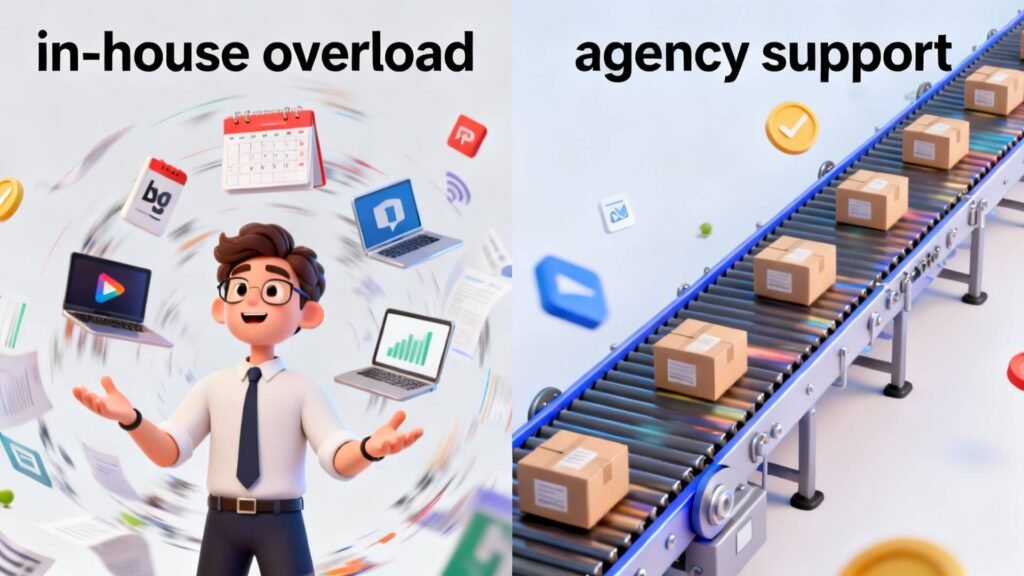
Why can’t most brands simply build a content team in‑house? The answer lies in the scale and complexity of modern content programs. A single blog writer cannot conduct audience research, plan an editorial calendar, produce multi‑format content and track analytics while staying on top of algorithm updates. Hiring specialists for each function is expensive and time‑consuming. A full‑service agency offers immediate access to seasoned experts and proven processes at a predictable cost.
Cost efficiency and ROI: Content marketing generates more leads at lower cost than traditional advertising. Websites with blogs have 434 % more indexed pages than those without, increasing visibility and organic traffic. Moreover, 81 % of marketers report that content marketing helps build brand awareness, 63 % say it nurtures leads and 50 % say it builds loyalty. When you invest in content, you own a compounding asset that continues to attract customers. A full‑service agency ensures that investment pays off through professional execution and measurement.
Expertise and specialisation: Content strategy agencies employ specialists in SEO, UX writing, visual design, video production, audio editing, distribution and analytics. For example, Omnius notes that many businesses partner with agencies for tasks like writing blog posts, creating content calendars and curating articles. This collaboration frees internal teams to focus on product development or sales while the agency manages content creation, distribution and optimisation. Because agencies work across industries, they bring cross‑sector insights and a library of best practices.
Keeping pace with AI and new search paradigms: Technology is reshaping how content is created, discovered and consumed. DemandSage reports that 67 % of small business owners and marketers use AI for content marketing and SEO and 68 % of businesses see higher ROI due to AI adoption. As generative search engines like Google’s AI overviews and Microsoft’s Copilot summarise information directly on the results page, traditional click‑through metrics decline. An AI search industry report found that AI overviews reduce click‑through rates by roughly 34.5 % and are appearing in a growing share of queries [www.omnius.so]. Full‑service agencies stay ahead of these shifts by optimising content for answer engines and implementing strategies such as retrieval‑augmented generation (RAG) that help brands remain visible even when users don’t click through to the source page.
Consistency across channels: A cohesive brand voice builds trust. With more than 90 % of marketers using social media and 79 % running blogs, disjointed messaging can confuse audiences. Agencies centralise messaging and ensure that each blog post, Instagram reel, newsletter and podcast episode reinforces the same narrative. They also tailor content to platform norms and audience behaviour, so your voice resonates whether a prospect reads a white paper or scrolls TikTok.
Scalability and flexibility: Full‑service agencies provide resources on demand, scaling up during product launches or campaigns and scaling down when priorities shift. This flexibility is critical in volatile markets where trends and algorithms change quickly. Rather than hiring and training staff whose skills may become obsolete, you gain instant access to new capabilities.
A robust agency offering covers the entire content lifecycle from ideation to analysis. Here are the core services you can expect:
The future of content strategy is being shaped by two macro forces: rapid advances in artificial intelligence and changing consumer behaviour. Understanding these trends helps brands and agencies future‑proof their strategies.
The adoption of AI tools in marketing has skyrocketed. Typeface reports that over 80 % of marketers globally use AI in their digital marketing strategies [www.typeface.ai]. About 43 % use AI specifically for content creation and 74.2 % of new webpages include AI‑generated content. These tools streamline idea generation, keyword research, outline creation and even first draft production, saving time and cost. More than 86 % of marketers say AI saves them over an hour each day, but the majority still edit AI output to ensure it reflects brand voice and quality standards.
AI doesn’t just speed up writing – it unlocks new capabilities. Predictive analytics surfaces high‑value topics based on search trends, while natural language generation can produce personalised email sequences. Machine‑learning models summarise long reports into social posts and adapt content for multilingual audiences. However, success requires human oversight; about 70.6 % of marketers believe AI can outperform humans in certain tasks, but they emphasise that the best results come from human‑AI collaboration.
Search is transforming from a list of links to an interactive conversation. Google’s AI overviews, Microsoft’s Copilot and emerging platforms like Perplexity and Claude summarise information from multiple sources, answer questions directly and cite their references. Omnius’ AI search industry report reveals that AI overviews are reducing click‑through rates by about one‑third. These overviews appeared in 6.49 % of queries in January 2025, rising to 13.14 % by March and continue to expand. This means traditional SEO metrics like position and CTR provide an incomplete picture of visibility.
To thrive in a generative search landscape, content must be highly authoritative, well‑structured and richly cited. Agencies are investing in Generative Engine Optimisation (GEO) and retrieval‑augmented generation to ensure AI models surface their clients’ content as a trusted source. Tactics include providing clear answers to popular questions, adding schema markup (FAQ, HowTo, Product) and refreshing pages regularly with updated facts. Because AI models prioritise consensus and authority, investing in research‑driven, expert content is more important than ever.
Audiences consume content across multiple devices and platforms. DemandSage data shows that 61 % of marketers use video, 83 % publish articles or posts, and interactive content increases engagement by 52.6 %. Brands are shifting budgets toward multimedia storytelling – short‑form videos, audio snippets, interactive quizzes and webinars. Long‑form content still matters: articles between 900 and 1 200 words attract more traffic and backlinks than shorter pieces. A combination of formats allows content to reach learners who prefer reading, watching or listening.
The proliferation of mobile and voice interactions further underscores the need for omnichannel optimisation. People increasingly use voice assistants and smart speakers to search for information, and they expect seamless transitions between devices. Agencies incorporate voice‑friendly content structures, conversational tone and audio versions of articles to capture this growing audience.
While AI accelerates production, human creativity and research remain crucial. DemandSage found that 83 % of marketers prioritise quality over quantity. High‑performing brands invest in audience research (conducted by 47 % of businesses) and thorough keyword analysis. They produce research‑driven content, quote subject‑matter experts and connect stories to the brand’s mission. Storytelling fosters emotional connections that differentiate brands in a sea of generic AI‑generated posts.
Another trend is the rise of user‑generated content (UGC) and community‑driven narratives. Encouraging customers to share experiences not only amplifies reach but provides authentic social proof. Agencies help curate and repurpose UGC across channels, ensuring it aligns with brand guidelines.
Choosing a partner is a strategic decision. The right agency becomes a long‑term collaborator, not just a vendor. Use the following criteria to evaluate potential agencies:
When interviewing agencies, request a sample strategy or pilot project to gauge their approach. Ask which metrics they prioritise and how they will adapt the strategy if results fall short of expectations.
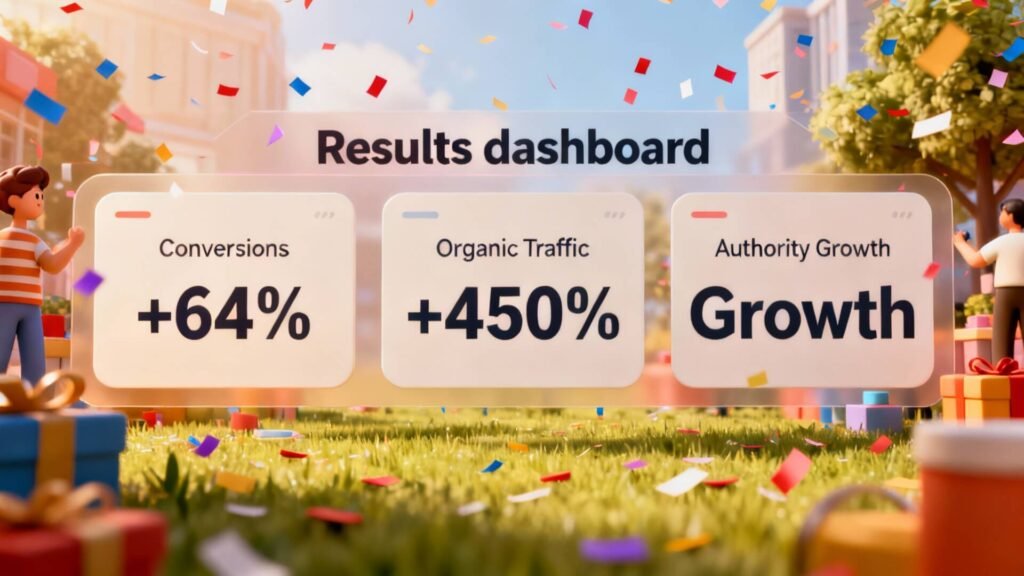
Case studies illustrate how a full‑service content strategy agency can drive tangible results. Below are a few examples:
AuthoredUp, a SaaS platform that helps individuals write better LinkedIn posts, partnered with Omnius to overhaul its website and content strategy. Omnius implemented a research‑driven plan, optimised landing pages for SEO, created helpful guides and developed a systematic content calendar. As a result, AuthoredUp saw a 64 % increase in conversions. The success underscores how targeted content and structured nurture sequences can translate audience attention into measurable business results.
A boutique retail chain invested in AI‑driven SEO performance tracking to identify keyword opportunities and optimise product pages. By integrating AI tools for rank tracking and content recommendations, the company achieved a 450 % increase in organic search traffic and significant improvements in rankings for competitive terms. This case demonstrates how modern agencies leverage machine‑learning technology to scale SEO and content initiatives across thousands of SKUs.
A B2B SaaS platform sought to establish itself as an authority in its niche. The agency conducted extensive industry research, interviewed subject‑matter experts and produced long‑form thought‑leadership articles supported by data. These articles were syndicated to industry publications and promoted via social media. As a result, the platform not only increased its organic traffic and inbound leads but also secured speaking invitations and partnerships. This example shows that investing in high‑quality, research‑driven content pays dividends beyond immediate website metrics.
Successfully partnering with a content strategy agency requires alignment and ongoing collaboration. Consider these best practices:
The content landscape will continue to evolve rapidly, presenting both challenges and opportunities for brands and agencies. Here are some predictions for the coming years:
In an age where customers demand personalised, useful content across every touchpoint, brands can no longer afford a piecemeal approach. A full‑service content strategy agency offers the strategic insight, creative execution and performance analysis necessary to stand out amid the noise. By partnering with seasoned experts, growing brands gain immediate access to specialised skills, emerging technologies and proven processes without the overhead of building a large in‑house team.
As you evaluate your own content efforts, remember that success hinges on quality, consistency and adaptability. The statistics underscore the value of investing in content: more indexed pages, higher brand awareness, stronger lead nurturing and improved ROI. Yet the landscape is shifting fast – AI adoption, generative search and changing consumer behaviours demand continuous learning. A trusted agency partner not only delivers content but also guides you through these changes, ensuring your brand remains visible and relevant.
Whether you’re planning to launch a blog, scale to new markets or prepare for the AI‑powered search era, a full‑service content strategy agency can be your catalyst for sustainable growth. The time to invest is now.