
In today’s digital-first marketplace, your website is your most critical asset. It’s your 24/7 storefront, your most persuasive salesperson, and the foundation of your brand’s credibility. For a small business, a well-executed website design is not a luxury; it’s the essential blueprint for growth, customer acquisition, and long-term success. Yet, too many entrepreneurs treat their online presence as an afterthought, leading to missed opportunities and frustrated potential customers. This guide cuts through the noise to provide a strategic, actionable framework for small business website design. We’ll move beyond aesthetics to focus on the core principles that convert visitors into clients, building a site that not only looks professional but actively works to achieve your business goals. Whether you’re building from scratch or overhauling an existing site, the insights here will equip you with the expert knowledge needed to make informed decisions and invest wisely in your digital future.
Think of your website as a key employee who never sleeps, takes no vacations, and can simultaneously greet visitors, showcase your products, answer common questions, and close sales. The return on investment for a strategically designed site dwarfs almost any other business expenditure. A study by Small Business Trends consistently shows that over 80% of consumers research a business online before making a purchase or visiting a physical location. Your site is often the first, and sometimes the only, impression you make. A cluttered, slow, or confusing site tells a visitor you’re outdated or unprofessional, instantly eroding trust. Conversely, a clean, fast, and intuitive small business website design signals competence, establishes authority, and guides the user seamlessly toward taking action. It’s a perpetual marketing engine, capable of generating leads through contact forms, driving foot traffic with clear directions, and building a community via integrated blogs or newsletters. In essence, your website is the central hub that unifies all your other marketing efforts, from social media to email campaigns.
Effective design is far more than choosing pretty colors. It’s a deliberate architecture built on foundational pillars that work in concert. Ignoring any one of these can undermine your entire online presence.
UX is the silent guide of your website. It encompasses every interaction a visitor has, with the goal of making their journey effortless and intuitive. For a local service business, this might mean a prominent “Book a Service” button on every page. For an e-commerce shop, it’s a frictionless checkout process. Navigation must be logical and consistent; users should never have to guess how to find essential information like your contact details, service pages, or pricing. A common mistake is getting creative with menu labels—stick to clear, standard terminology. Breadcrumb trails, a robust search function, and a simple, sticky header menu are non-negotiable elements of professional small business website design. Remember, if a user gets frustrated, they will leave, often for a competitor’s more straightforward site.
This is no longer a recommendation; it’s a mandate. Over half of all global web traffic comes from mobile devices, and Google uses mobile-first indexing. A “mobile-first” approach means designing the mobile experience *first*, then scaling up to desktop, ensuring core content and functionality are paramount on smaller screens. Responsive design is the technical execution, where the site’s layout fluidly adapts to any screen size. Buttons must be easily tappable, text must be readable without zooming, and images must load quickly on cellular data. A site that breaks on a smartphone actively repels customers and will be penalized in search rankings.
Speed is a currency of trust online. Research from Google indicates that as page load time goes from one second to ten seconds, the probability of a mobile user bouncing increases by 123%. Speed impacts user satisfaction, conversion rates, and your SEO. Key factors include image optimization (using modern formats like WebP), leveraging browser caching, minimizing redirects, and choosing a quality hosting provider. A common pitfall for small businesses is using a cheap, shared hosting plan that bogs down during traffic spikes. Investing in solid hosting, like managed WordPress hosting or a reputable cloud provider, is a critical component of your website’s performance and security.
Your content must speak directly to your target customer’s needs and pain points. Avoid generic industry jargon. Instead, use the language your customers use. Explain *how* you solve their problem and the specific benefits they’ll receive. Every page should have a primary goal and a corresponding CTA. A CTA is not just a “Contact Us” link; it’s a persuasive command tied to a value proposition: “Get Your Free Consultation,” “Download the Guide,” “View Our Portfolio.” Use contrasting colors for CTA buttons and place them strategically in the natural flow of content. Vague content and hidden CTAs are the death knell of conversion in small business website design.
While creativity is encouraged, certain pages form the non-negotiable skeleton of an effective business site. Each serves a distinct purpose in the customer’s journey.
Homepage: This is your virtual foyer. Within seconds, it must communicate who you are, what you do, who you serve, and why you’re the best choice. Use a powerful headline, supporting sub-headline, key social proof, and direct pathways to your most important content.
Services / Products Page: Detail what you offer with clarity. For services, explain the process, outcomes, and potential investment. For products, use high-quality images, detailed descriptions, and specifications. This is where you translate features into tangible customer benefits.
About Page: This is your chance to build human connection and trust. Share your story, your mission, and the faces behind the business. Highlight your expertise and what drives you. A strong “About” page can be a surprisingly effective conversion tool, as explained by Copyblogger.
Contact Page: Make it incredibly easy to get in touch. Include a clear contact form, your physical address (with an embedded Google Map), phone number, and email. Listing business hours and expected response times manages customer expectations.
Testimonials / Case Studies Page: Social proof is critical. Showcase reviews, client logos, and detailed case studies that demonstrate successful outcomes. This page provides the external validation needed to tip a prospect from consideration to decision.
Selecting the right platform is a foundational decision. The landscape is dominated by user-friendly builders and powerful Content Management Systems (CMS).
| Platform | Best For | Key Considerations |
|---|---|---|
| WordPress (Self-Hosted) | Businesses needing full control, scalability, and advanced functionality. | Vast ecosystem of themes & plugins. Requires more technical management (hosting, updates, security). |
| Squarespace | Design-focused businesses (creatives, restaurants) prioritizing beautiful templates. | All-in-one hosting. Less flexibility than WordPress but very user-friendly and design-led. |
| Wix | Beginners who want drag-and-drop simplicity and an all-in-one solution. | Ease of use is high, but template switching is difficult. Can become limiting for complex growth. |
| Shopify | Businesses whose primary goal is e-commerce and online sales. | Dedicated, powerful e-commerce features. Transaction fees apply unless using Shopify Payments. |
The build process itself should be methodical. Start with strategy and planning: define goals, audience, and sitemap. Next, create wireframes to layout structure without design elements. Then, develop the visual design (look and feel) and source or create all content—copy, images, videos. Finally, move to development, building the site on your chosen platform, followed by rigorous testing on multiple devices and browsers before launch. A post-launch checklist should include setting up analytics (like Google Analytics 4), submitting the site to search engines, and implementing basic SEO.
Search Engine Optimization cannot be an afterthought. It must be woven into the fabric of your small business website design. This begins with technical SEO: ensuring your site is crawlable, has a clean site structure (using a logical hierarchy of headers), and features a fast, secure (HTTPS) environment. On-page SEO involves optimizing individual pages with target keywords in strategic places like titles, headers, and meta descriptions, while ensuring content is comprehensive and valuable. Local SEO is especially vital for small businesses serving a geographic area. This means claiming and optimizing your Google Business Profile, ensuring your Name, Address, and Phone Number (NAP) are consistent across the web, and garnering genuine customer reviews. Building a few quality backlinks from local directories or industry partners also signals authority to search engines.
Understanding costs prevents sticker shock and ensures you allocate resources effectively. A professional small business website design project is an investment with several components.
DIY with a Website Builder: This is the lowest-cost entry point, typically involving monthly platform fees ($20-$50/month) and possibly premium template costs. The trade-off is significant time investment and limited customization.
Hiring a Freelance Designer: Costs vary wildly by skill and location, but a baseline for a 5-7 page custom site can range from $3,000 to $8,000. This gets you expertise and a tailored solution but requires clear communication and a well-defined project scope.
Working with a Digital Agency: Agency projects often start at $10,000+ and can scale significantly. You pay for a team (strategist, designer, developer, copywriter) and a more robust process, ideal for complex needs or businesses with less time to manage the project.
Ongoing Costs: Every website has recurring expenses: domain registration ($15/year), hosting ($25-$100/month), SSL certificate, premium plugins/themes, and potential maintenance retainers for updates and security (often $50-$200/month). Plan for these from the outset.
Two decades in this field reveal consistent mistakes that hinder small business sites. First is ambiguous messaging. Visitors should understand what you do within three seconds. Avoid clever but unclear taglines. Second is neglecting the content. Beautiful design with thin, generic copy fails to engage or convert. Invest in professional copywriting or dedicate serious time to crafting your message. Third is designing for yourself, not your customer. Your personal aesthetic preferences are secondary to what resonates with your target audience and facilitates their goals. Fourth is launching and forgetting. A website is a living asset. Regular updates, fresh blog content (which supports SEO), and performance reviews are essential. Tools like Google Search Console are invaluable for monitoring health. Finally, ignoring accessibility. Designing for users with disabilities (using proper contrast, alt text for images, keyboard navigation) is a legal and ethical imperative that also improves the experience for all users.
Launch is the beginning, not the end. To know if your website is working, you must measure key performance indicators (KPIs). Traffic volume is a start, but engagement metrics are more telling: Bounce Rate (the percentage of visitors who leave after one page), Average Session Duration, and Pages per Session indicate content relevance. Ultimately, you must track conversions—form submissions, phone calls, booked appointments, or sales. Setting up goals in Google Analytics is crucial. Use this data to iterate. If a service page has a high bounce rate, test rewriting the headline or adding a video. If a CTA isn’t converting, try changing its color or text. This cycle of measure, analyze, and optimize is what transforms a static site into a dynamic growth engine. Consider integrating a tool like Hotjar for heatmaps and session recordings to see how users actually interact with your pages.
Crafting a successful online presence for your small business is a deliberate strategic endeavor, not a box-ticking exercise. It requires a deep understanding of your audience, a commitment to user-centric design, and the integration of performance and SEO fundamentals from the very first wireframe. Your website is the cornerstone of your digital identity—a versatile tool for building trust, demonstrating expertise, and driving measurable business outcomes. By viewing small business website design as a critical investment and following the comprehensive blueprint outlined here, you empower your business to compete effectively, connect authentically with customers, and build a scalable platform for future growth. Remember, a great website is never truly finished; it evolves alongside your business, informed by data and driven by a commitment to serving your customers better. The digital door is open. It’s time to build a welcome mat that invites the world in.
Creating a compelling digital product isn’t just about making it look pretty. It’s about crafting experiences that feel natural to users and amplify a brand’s story while delivering measurable business outcomes. UI UX design services bridge strategy and creativity to meet these goals. They blend research, psychology, aesthetics and technology to produce digital interfaces that are not only beautiful but also intuitive, accessible and aligned with the client’s brand identity. This article digs deep into how professional UI UX design services work, why investing in them pays off, and what trends are shaping the industry in the coming years.
UI, or User Interface, refers to the visual and interactive elements a person uses to interact with a digital product — think buttons, menus, typography, colors, spacing, animations and responsive behaviours. UX, or User Experience, encompasses the overall journey a user takes while interacting with the product. It looks at how easy it is to accomplish tasks, how intuitive the navigation feels, and how satisfied users feel when they complete an action. In practice, UI and UX are inseparable: a beautiful interface will fail if it’s confusing to navigate, and a logical flow can be hindered by poor visuals or inaccessible color contrasts.
Professional UI UX design services bring these disciplines together with a strategic lens. They typically start with extensive research, learning about user personas, market positioning and business goals. From there, designers craft information architectures and wireframes that map the user journey from start to finish. Visual designers then translate these flows into pixel‑perfect interfaces while adhering to brand guidelines. Throughout the process, usability testing and iterations ensure that the design isn’t just aesthetically pleasing but also solves real user pain points.
Investing in professional UI/UX services is not a cosmetic choice; it’s a strategic business decision. Research highlights that a well‑designed user interface can boost conversion rates by up to 200 percent, and a comprehensive user experience strategy can increase them by up to 400 percent. That means a simple sign‑up flow that previously converted one customer for every 100 visitors could attract three or four customers after a redesign. The return on investment can be dramatic — studies show that every dollar invested in UX design can yield around $100 in return, making the financial uplift significant. Integrating design thinking early also saves costs down the line by avoiding expensive rework and development waste [www.wearetenet.com].
Besides boosting conversion rates, good UI/UX design reduces churn. A one‑second delay in page load can reduce conversions significantly, and poor mobile optimisation can cause a majority of users to abandon a website. Mobile and cross‑device optimisation are no longer optional. A 10 second increase in mobile page load time can result in a 123 percent higher bounce probability [www.designrush.com]. When users find an interface slow or confusing, they leave, harming revenue and brand perception; a single negative experience can drive away large portions of your audience. Professional services mitigate these risks through performance optimisation, responsive design and accessible layouts.
Strategically designed products also strengthen brand loyalty. Consistency across digital touchpoints builds trust and recognition, ensuring that visitors immediately recognise a brand’s voice, tone and visual identity. Research shows that customer experience plays a decisive role in most B2B purchase decisions. In an era where trust and usability drive engagement, investing in a cohesive and delightful user journey is no longer optional — it’s essential.

Great UI/UX design services don’t simply design screens; they translate business objectives into intuitive journeys. That’s why integration with strategy is crucial. Designers begin by aligning with the client’s mission, target audience and competitive landscape. Stakeholder interviews, workshops and market analysis help uncover pain points and opportunities. This strategic phase ensures the design solves real problems rather than providing superficial aesthetics.
Personas and user journey maps play a central role. Personas represent archetypal users, capturing demographics, motivations, behaviours and goals. Journey maps illustrate the steps a user takes while interacting with a product, from awareness through conversion and post‑purchase. By visualising these journeys, designers identify friction points and moments of delight. The goal is to streamline tasks, minimise cognitive load and create a seamless narrative that aligns with business metrics.
Brand identity is equally important. UI/UX services translate a brand’s personality into typography choices, color palettes, iconography and micro‑interactions. According to branding experts, aligning design with brand values increases customer loyalty and revenue [digitaldefynd.com]. A consistent, well‑structured design system ensures that every screen communicates the same story and emotion, whether users are on a landing page, a mobile app or an email newsletter. This coherence improves recognition and trust.
Discovery and research: The first step involves deep discovery. Designers and strategists study the target audience, competitors and industry trends. They examine analytics data, conduct surveys, and run stakeholder interviews. By understanding user behaviour and pain points, the team can set KPIs and prioritize features. This phase often includes a content audit to evaluate existing pages for clarity, accessibility and SEO alignment.
Information architecture & wireframing: Based on research, designers create an information architecture that organises content into logical structures. Wireframes, which are low‑fidelity sketches of page layouts, focus on hierarchy and flow rather than aesthetics. Wireframes allow for quick testing and feedback before investing time in high‑fidelity visuals.
Visual design & prototyping: Once the structure is validated, designers develop a style guide and UI elements consistent with the brand identity. High‑fidelity mockups show colors, typography, images, icons and animations. Prototypes simulate user interactions; they can be interactive Figma files or clickable HTML builds. Stakeholders and users can test and provide feedback.
Usability testing & iteration: Good designs aren’t shipped without testing. Usability sessions reveal friction points and opportunities for improvement. Research suggests that testing with just five users can uncover the majority of usability issues. After testing, teams iterate on designs, refining micro‑copy, layout and interactions until metrics are met. This iterative loop may continue through multiple rounds of feedback.
Implementation & support: Collaboration with developers ensures that the design vision comes to life as intended. Developers build the front end using responsive frameworks, optimize images and implement accessibility features like ARIA labels and keyboard navigation. After launch, designers monitor analytics and user feedback to identify new improvements and support ongoing product evolution.
Higher conversion and revenue: A well‑designed UI/UX doesn’t just look good — it drives business outcomes. Services align the interface with conversion funnels, guiding users effortlessly toward purchase or sign‑up. Studies indicate that companies investing in UX can see return ratios approaching 9 900 percent, meaning each dollar invested may return around $100 in revenue [bricxlabs.com]. This financial uplift often outweighs the upfront cost of hiring a design agency or in‑house team.
Reduced development waste and maintenance costs: Early research and testing save both time and money. Industry analyses show that targeted UI/UX efforts can reduce development waste by as much as 50 percent. By validating assumptions and prototypes before coding, teams avoid costly rewrites. Well‑structured design systems also streamline maintenance: components are reusable and consistent, making updates more efficient.
Improved customer retention and loyalty: Customer loyalty hinges on trust, value and comfort. A small increase in customer retention — even just five percentage points — can significantly boost profits, sometimes by 25 percent or more. By removing friction and adding delightful interactions, UI/UX design services create experiences that users love to return to. Micro‑interactions, helpful onboarding flows and personalized recommendations all contribute to increased satisfaction [www.cisin.com].
Enhanced accessibility and inclusivity: Professional design firms prioritise accessibility from the outset. They ensure sufficient color contrast, alt tags for images, resizable text and keyboard navigation, making the product usable for people with disabilities. Accessibility is not just ethically important; it’s also a ranking factor in search results and expands your user base.
Better decision‑making through data: Modern design is data‑driven. Heatmaps, session recordings and analytics reveal how users navigate the product. By combining quantitative data with qualitative insights (like user interviews), design services make informed decisions. After launch, A/B tests and user surveys help refine experiences, ensuring designs evolve with changing user needs.
Choosing the right design partner can be daunting. Here are key factors to consider:

The UI/UX landscape is evolving rapidly. Here are some trends influencing design services in 2025 and beyond:
AI‑driven personalization: Artificial intelligence and machine learning personalise user experiences by predicting preferences and behaviours. Designers incorporate algorithms that adjust content, product recommendations and layouts in real time. AI‑generated design suggestions also accelerate iteration, while human designers ensure the final output aligns with brand values and ethical guidelines.
Voice and multimodal interfaces: Smart speakers and voice assistants have changed how users interact with technology. Designing intuitive voice user interfaces (VUI) requires understanding conversational flows, error handling and context awareness. Multimodal interactions combine voice, touch, gesture and even eye tracking to create seamless experiences across devices.
Augmented reality (AR) and virtual reality (VR): AR and VR experiences demand unique UI considerations, such as 3D positioning, depth cues and field‑of‑view limitations. Retailers use AR for virtual try‑ons, while educators employ VR for immersive learning. UI/UX services with AR/VR expertise will become increasingly valuable as these technologies mainstream.
Micro‑interactions and motion design: Thoughtful animations and micro‑interactions communicate state changes, provide feedback and delight users. For example, a subtle hover effect can indicate interactivity, while a smooth progress bar reduces anxiety during loading. Motion design reinforces hierarchy and guides attention when used intentionally.
Dark mode and energy efficiency: Dark mode has become a standard feature across apps and websites. Beyond aesthetics, dark mode can reduce eye strain and save battery life on OLED screens. Designing effective dark modes means adjusting color contrast, shadow layers and ensuring readability.
Sustainability and ethical design: Eco‑conscious users are demanding sustainable digital products. Design services can reduce energy consumption by optimizing asset sizes, minimising requests and promoting longevity in design systems. Ethical considerations also include data privacy and avoiding manipulative dark patterns.
Inclusive design and accessibility: Regulations and ethical standards have increased the focus on accessibility. Designers are adopting inclusive practices from the beginning, considering screen readers, keyboard navigation, color blindness and neurodivergent needs. Inclusive design not only expands your audience but also demonstrates social responsibility.
To complement the concepts discussed in this article, consider creating the following illustration‑style images using AI image generators. These prompts are designed to enhance engagement and visual appeal:

Integrating strategy and design through professional UI/UX services is no longer a luxury — it’s a strategic imperative. In an increasingly competitive and user‑centric marketplace, experiences that delight, guide and convert users are the ones that stand out. By understanding users, aligning design with business goals, and adopting a holistic, iterative process, you can unlock exceptional returns on investment and strengthen your brand. Modern UI/UX design services offer the tools and expertise to make that vision a reality, ensuring your digital product is not only beautiful but purposeful, accessible and future‑ready.
When you choose a UI/UX design partner, look for those who prioritise research, collaboration and transparency. Embrace emerging trends like AI personalisation, voice interfaces and inclusive design to stay ahead. And always remember: the true measure of success is not how impressive your interface looks on a designer’s screen but how easily real people can accomplish their goals and connect with your brand.
The agency-brand relationship is more than ever before complicated in modern hyperconnected marketing environment. Brands are under unprecedented pressure to stand out and stay true to themselves, and agencies need to deliver innovative campaigns fast. Yet many agency brand partnerships fail because the creative work they produce is not aligned with the core values of the brand. When brand values and creativity are not in balance, campaigns are not authentic, consumers become disinterested, and collaborations break down.
According to the World Federation of Advertisers (WFA), 80% of brands have had at least some of their remuneration internally, and 86% are satisfied with the results they have achieved [newdigitalage.co]. Partly because brands want more control over how creative work represents their ethos, brands are bringing more work in-house. Meanwhile, pressure is increasing on agencies to change from execution to strategic advisory roles in an AI-first world. In order to thrive in this changing environment, agencies and brands require a cohesive vision that brings creativity to the brand values.
As part of this guide to the world, we are going to discuss why agency creativity should be aligned with brand values, look at the trends that are transforming agency-brand relationships and also present practical strategies, examples and tips that can assist agencies and brands to collaborate in ways that are more effective. Being an agency head, a brand marketer, or even a creative expert, this article will demonstrate how to establish a partnership based on mutual values that leads to eventual growth.
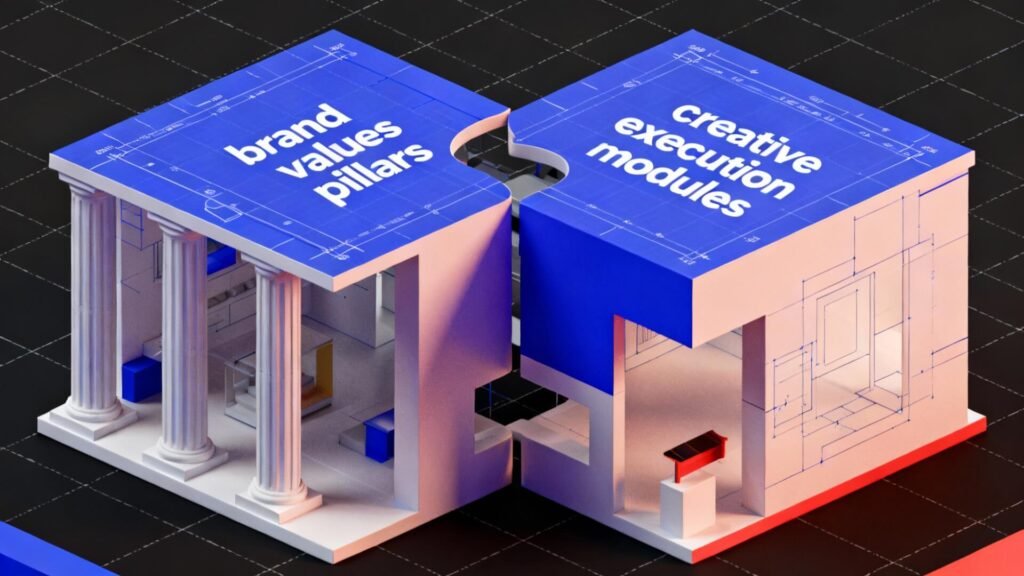
Agency creativity is the creations of ideas, strategies and executions that are developed by agencies to solve marketing problems. It constitutes the areas of developing a campaign theme to visuals, text, and interactivity. Agencies are innovators and if anything they take risks and break through the noise. Their role is to transform the goals of the brand into interesting stories that attract and engage people into action.
Brand values refer to the beliefs and principles that inform the behavior of a brand, decision making and identity. Redia helps answer the question: what is this brand about? Examples of these values include sustainability, inclusivity, innovation, authenticity, customer-centricity, and community. Good brand values guide everything in terms of product development and customer service, marketing tone and alliances. When agencies get these values and respect them, their innovative efforts will be authentic among target audiences and enhance brand equity.
Agency creativity playing out on brand values is more than a feel-good exercise. It has a direct influence on the business results. According to research conducted by Renascence and Forrester CX Index 2026, companies that increase emotional resonance with customers increase their revenue by 3.5 times faster than companies that increase functional satisfaction. Brand storytelling and value marketing tend to be based on authenticity and resonate emotionally. By integrating creativity and brand values, the agencies assist brands to create more emotional bonds that can be translated into customer loyalty and development.
Conversely, uncoordinated campaigns will hurt trust. Consumers today are quick to chastise inauthentic or tone-deaf marketing on social media. One wrong step and the brand equity is lost overnight with backlash. Brands and agencies should therefore work hand in hand to ensure creative ideas align with the brand’s values, tone and pledges.
The agency-brand relationships are not fixed. They are dynamic to technology, consumption behaviors and economic forces. The following are the major trends that will bring about change in 2025 and beyond.
Among the greatest changes in recent years is that of in-housing or right-housing-brands developing internal capacity to conduct marketing operations, which were previously assigned to agencies. The WFA states that 80% of the brands have in-housed part of the agency responsibility and 86% are happy with the performance. This does not point to the end of the agencies, but an equalization. Strategic functions remain in-house to provide the agility of the brands whereas external partners are needed to provide the ability of a company to offer masters skills, new views, and scalability. Agencies have to change and concentrate on high value advisory work instead of commodity work.
Right‑housing is being driven by several forces:
The lesson to the agencies: in order to be indispensable, the agencies must think strategically, be specialized, and train the internal teams of the clients. Be relied upon consultants who can guide brands to gain value out of technology and manage convoluted marketing environment.
Regardless of the necessity of collaboration, a lot of brands doubt that agencies can make it in a future dominated by AI, where platforms are central. A single out of ten big multinational brands think that the existing model of brand-agency is suitable in the future, and fewer than a quarter of these agencies are believed to possess the appropriate talent and expertise. This lack of trust is caused by the perceived mismatched incentives, absence of transparency and media buying commodification. The restoration of trust requires that agencies should align their creative operations with the values of the brands, provide openness in measurements and pricing, as well as show strong knowledge of their industries and who the clients are.
The new battlefield is experience innovation. Customers demand the ability of the brands to deliver emotionally engaging, memorable experiences in all touchpoints. In its Renascence analysis, it is observed that the rate of revenue growth in companies which enhance emotional resonance increases 3.5 times compared to those which only enhance their systems in terms of functionality [www.renascence.io]. Brands such as Msheireb Properties, the leaders in the market, have transformed spaces in the city into emotional experiences that have pushed visitor satisfaction to 94%. It is thus the responsibility of the agencies to create experiences that are appealing to the emotions, values and behaviors of the consumers beyond mere creation of campaigns. This demands interdisciplinary teams that possess expertise in behavioral science, CX design, story telling and data analytics.
AI is not only automating the media buying: it is forming creativity. Generative AI can compose texts, create images and personalised content in large quantities. This casts doubt on authenticity: Is it possible to express the values of a brand through AI-generated work? Yes, yes, yes–assuming man keeps in the loop. Creativity that is agile and value-driven can be achieved using agencies that are rich in both AI efficiency and human insights. An example is that AI has the ability to process customer information to discover trending themes in line with the values of a brand when human beings create narratives to remain nuanced and brand tone. It is also possible to measure the emotional reaction to the content using AI and optimize it in real-time.
The process of alignment does not occur by chance, it is the outcome of planned actions and constant communication. The following are some of the best practices that agencies and brands can employ to keep their creative outputs consistent with core values.
The agency and the client team must be well aware of the brand values before any creative cooperation takes place. The instructions of communicating brand values provided by Zigpoll suggests organizing internal workshops during which major values should be defined and perfected, creating a list of the guiding principles in a form of a comprehensive document, and transferring values into everyday practices [www.zigpoll.com]. This is carried out to make sure that everybody, including the top management to the junior creatives, has the same definition of what the brand is all about. A brand values document itself serves as a point of reference of creative briefs, decision-making and feedback.
An outdated brand policy is insufficient in such a dynamic time. Construct a living brand guide- a flexible toolkit that specifies visual identity, tone of voice, storytelling examples, market positioning and differentiating the brands. This toolkit is supposed to contain real life case studies on how brand values have an impact on the success of the marketing. The guide will be frequently updated and made available to agency and brand teams, so everyone will be on track even though campaigns change.
Creative briefs come in between strategy and execution. Brands are to co-produce briefs with its partners rather than submitting a brief to the agency in complete isolation. This involves reaching a consensus on the aim of campaigns, determining the linkage of each value to key performance indicators, as well as explaining the desirable emotions and behaviour. According to Zigpoll, it is recommended to conduct interactive workshops where the members of the agency teams are immersed in the brand values and connected to the campaign KPIs. Making briefs together leads to ownership and helps avoid misunderstanding.
Assign brand champions (people who would protect brand values) both on the client and agency teams. These champions are present in every important meeting, scrutinize creative work on the brand values checklist and voice concerns whenever ideas become wayward of the guidelines. They are accountability partners and also they are the ones who make sure that the decisions are made with regard to the brand ethos, rather than creative flair or immediate sales numbers.
Misunderstandings between the brand teams and the agency teams are usually due to the fact that the former uses the abstract value terms of communication whereas the latter considers the creative tactics. The guide by Zigpoll suggests to translate the values into terms with which the owners of agencies can relate. Indicatively, the word authenticity could be turned into genuine storytelling and open communication and the word innovation could be turned into creative differentiation and first-mover advantage. This translation helps to speed up buy-in by showing the way in which values have a direct effect on creative execution and business performance.
Values cannot exist in the vacuum; they must be measurable. Assign each of them a certain amount of KPIs to measure it, including engagement rates, sentiment averages, brand lift, or social shares. As an example, in case inclusivity is a brand value, monitor the diversity of your campaign imagery and the feeling of underrepresented groups. Relating values to metrics allows agencies to show the real-life usefulness of values-based creativity, and brands to explain the use of purpose-driven marketing.
Alignment is not a single-time activity. It demands constant communication, frequent check-ins and continuous amendments. Monitor tasks and feedback using project management tools, such as Asana, Monday.com, or Trello. Frequent local meetings (once a week, once a fortnight, etc.) during which agency and brand teams update on the progress made in relation to values-based KPIs, discuss issues, and develop creative ideas. The ongoing feedback will ensure that misalignment does not continue to develop to become a bigger problem in the future of the campaign.
When creatives are emotionally attached to the brand, they usually tend to give their best. Bring agency teams to company events, client interaction, and be-behind-the-scenes workshops which reflect brand personality. Disseminate customer reviews, internal newsletters and day in the life experiences with cross-functional teams. Immersiveness builds empathy and helps the agency convert the immeasurable values to the real creative expression.
Develop a checklist to be used by the agencies during brainstorming and going over the ideas. Questions such as: Does the idea represent our core values? should be asked. Does it align with the brand voice? Do messages reach and represent well? Is it responsive to sustainability and ethical issues?. This tool is a kind of guardrail of the creative adventure, which promotes innovation within a certain framework.
Agencies work better when they get to know the greater business picture. Do not keep them down to tactical briefs- ask them to quarterly review the brand, product roadmap meetings, leadership session. Timely engagement also creates a mutual awareness of the future issues and prospects that allow the agency to design campaigns in line with forthcoming brand activities and value-based pivots.
Conventional buyer personas are frequently demographic in nature and pain-driven. To align with the values, you have to map the intersection between the customer beliefs and motivations and your brand values. According to Zigpoll, it is better to develop value-based personas, which demonstrate the impact of values on the purchase decisions and brand loyalty. These characters assist agencies in developing messaging that resonates with particular target groups as well as makes the creative output reflect common beliefs.
Agencies need not be afraid to think big, but they need to be aware of limits they cannot cross. Raising awareness about what content, images, or collaborations are not allowed because of the brand safety (e.g., ethics, inclusivity, sustainability). To promote innovative experimentation within these guardrails, fresh provocative ideas may be welcome, yet safeguard the image of the brand.
Aligning creative work with brand values isn’t just about external campaigns; it begins within the brand’s own culture. Employees are the first ambassadors of the brand, and their understanding of values directly impacts customer experience.
The British branding agency Mobas argues that brand success hinges on aligning a company’s external proposition (the story told to customers) with its internal engagement (how employees live that story). The article suggests starting with a clear purpose and ensuring that employees are included in the brand narrative [www.mobas.com]. Transparent and consistent messaging across departments fosters a shared sense of mission. This unified approach empowers employees to deliver on brand promises, which in turn reinforces the authenticity of agency‑led campaigns.
Mobas notes that employee recognition and inclusion are essential for sustaining brand alignment. Recognize individuals who embody brand values in their daily work, and create feedback channels where employees can share insights on how the values translate to customer interactions. Training and development programs should reinforce values, update staff on brand initiatives, and provide tools for applying values in customer-facing situations. When agencies partner with brands that have a strong internal culture, creative collaboration becomes smoother because everyone understands and champions the same principles.
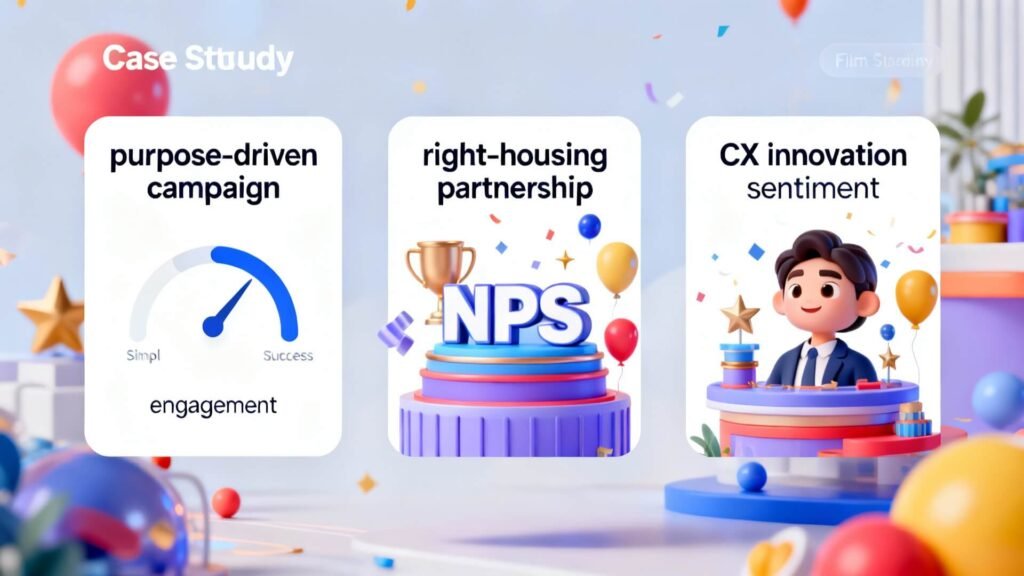
To illustrate the impact of aligning agency creativity with brand values, consider these examples:
A leading outdoor apparel brand wanted to highlight its commitment to sustainability and inclusivity. Its agency collaborated closely with internal teams to create a campaign focused on diversity in outdoor adventures. They co‑developed briefs, defined metrics such as sentiment analysis among underrepresented groups, and ensured that every visual and narrative reflected the brand’s values. The campaign achieved record engagement, and social sentiment analysis showed an increase in positive mentions about the brand’s inclusivity efforts.
A national consumer goods company had previously outsourced all digital marketing but decided to in‑house content production while retaining an agency for strategy and innovation. By co‑locating agency strategists within their office and involving them in quarterly brand planning, the company achieved greater cohesion. They used a brand values checklist to vet creative concepts and mapped each value to KPIs such as net promoter score (NPS) and brand lift. The result: a 20% increase in NPS and more cohesive brand storytelling across channels.
Drawing inspiration from Renascence’s work with Msheireb Properties, another brand transformed its customer experience by embedding rituals and emotional storytelling at key touchpoints. Their agency developed narratives anchored in the brand’s core values, while internal teams executed experiential elements. Visitor satisfaction climbed by double digits, proving that aligning values, experience design, and agency creativity can turn mundane interactions into memorable stories.
Even with best practices, aligning agency creativity and brand values can be challenging. Here are common roadblocks and ways to overcome them.
Some brands haven’t articulated their values clearly, leaving agencies guessing. Conduct workshops to define values, document them, and align stakeholders around concrete examples. Use those values to inform creative briefs and set measurable objectives.
Agencies are often compensated on billable hours or campaign metrics, while brands care about long‑term brand health. To align incentives, adopt value‑based KPIs (such as sentiment or brand lift), and incorporate performance bonuses tied to values‑driven outcomes. Avoid focusing solely on short‑term conversions that may incentivize tactics misaligned with brand ethos.
Lack of communication breeds misalignment. Establish regular check‑ins, shared project management platforms, and clear escalation paths. Foster a culture where both sides feel comfortable raising concerns early.
Long‑standing processes and hierarchies can resist new collaborative methods. Start with pilot projects that demonstrate the benefits of values‑aligned creativity. Share successes and lessons learned internally to build momentum. Senior leadership should champion the shift and model open collaboration.
Agencies may fear that strict values guidelines stifle creativity. Encourage exploration within clear boundaries, and emphasize that constraints can spark innovation. Provide examples of campaigns that were both bold and values‑aligned to illustrate that creative excellence and brand safety can coexist.
Looking ahead, several forces will continue to reshape how agencies and brands collaborate:
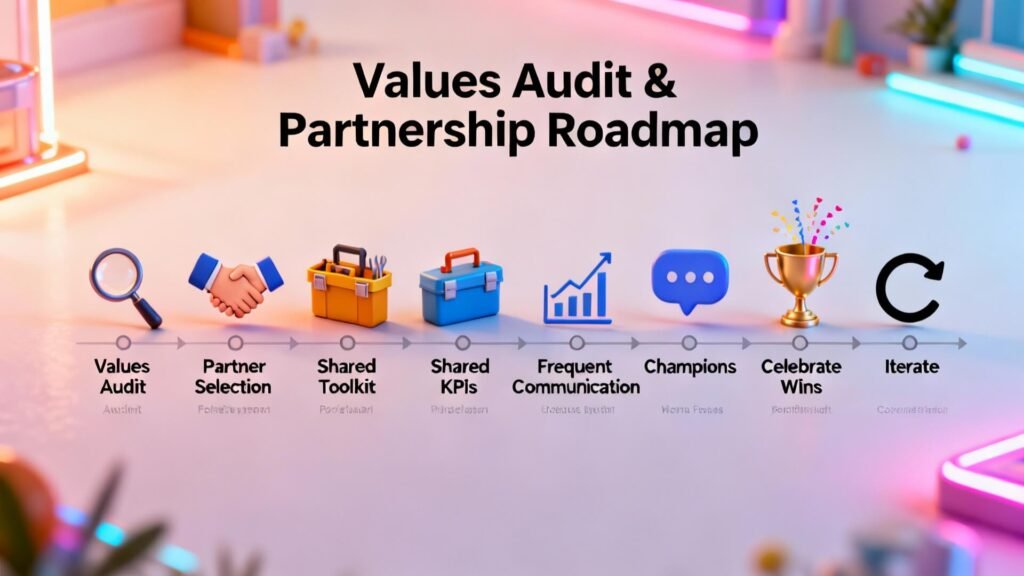
Ready to align your next campaign with your brand’s values? Start with these steps:
In an era of AI, democratized media, and shifting consumer expectations, agencies and brands cannot afford misaligned partnerships. When creativity and brand values unite, campaigns resonate, trust deepens, and growth accelerates. Brands that invest in defining and living their values build durable reputations and loyal communities. Agencies that adapt by becoming strategic advisors, embedding with client teams, and championing value‑driven creativity will remain indispensable.
By embracing the strategies outlined above—conducting audits, co‑creating briefs, translating values into actionable terms, and fostering continuous feedback—agencies and brands can create a unified vision. As our industry moves toward hybrid models, experience innovation, and AI‑powered creativity, the partnerships that thrive will be those grounded in shared values and mutual respect. Now is the time to turn alignment from a buzzword into a practice that transforms every campaign and collaboration.
If you found this guide helpful, share it with your team, leave a comment with your experience aligning values in agency partnerships, or contact us to discuss how we can help your brand build stronger agency relationships.