

A marketing automation consultant looks beyond a single channel to orchestrate a seamless experience across email, SMS, social media, push notifications, websites and even physical stores. By uniting these interactions around the customer, consultants unlock higher engagement and revenue while saving teams time and budget.
This article explores how marketing automation consultants help businesses move beyond email to build cohesive omnichannel strategies. We’ll define the consultant’s role, explain why omnichannel engagement matters in 2025, examine core responsibilities and competencies, outline strategies for delivering cross‑channel engagement and provide guidance on choosing the right consultant. You’ll leave with a deeper understanding of how a consultant can align data, technology and creativity to create customer journeys that feel personal, consistent and persuasive.
A marketing automation consultant is a specialist who helps organizations streamline and enhance their marketing processes by implementing automation tools, aligning campaigns with customer journeys and enabling personalized experiences. According to marketing advisory firm Vendasta, consultants guide businesses through strategy formulation—defining goals, selecting tools and mapping customer journeys—and then handle execution, including setting up landing pages, email templates, nurture workflows and training internal teams. They also provide ongoing support by optimizing automation sequences, incorporating advanced features such as personalization and A/B testing, and analyzing performance data to refine campaigns.
Consultants must possess a blend of technical and strategic expertise. They need to understand various marketing platforms (CRM systems, email automation, SMS gateways, social schedulers) and know how to integrate them using tools like integration platform as a service (iPaaS) solutions. They must be conversant with digital marketing fundamentals—audience segmentation, content marketing, search optimization—and have strong analytical skills to interpret customer data and campaign metrics. Equally important are project management abilities and communication skills; consultants work with multiple stakeholders to align marketing automation with business objectives, train teams, and ensure adoption.
The value proposition is clear: by leveraging expert knowledge, businesses can implement sophisticated automation faster, avoid common mistakes and free internal teams to focus on strategy rather than technical setup. Consultants also stay up‑to‑date on evolving trends such as AI‑driven personalization and data privacy regulations, helping organizations remain competitive.
Email remains a powerful marketing channel, but consumers interact with brands across many digital and physical touchpoints. An omnichannel strategy seeks to provide a seamless, hassle‑free experience across all channels relevant to the customer. Mailjet’s omnichannel marketing guide defines this approach as meeting your audience wherever they are—across devices, platforms and in‑store experiences—and ensuring interactions advance the customer journey instead of starting over each time. The article explains that omnichannel marketing is a customer‑centric approach rather than company‑centric; it requires businesses to view through their audience’s eyes and stand in their shoes.
Omnichannel engagement unlocks several benefits:
In 2025, consumers expect brands to remember their preferences and provide relevant offers wherever they interact. If you limit automation to email, you miss opportunities to engage customers on their preferred channels and risk losing them to competitors with more cohesive experiences.
What does it take to drive omnichannel engagement? A competent marketing automation consultant addresses three fundamental dimensions: strategy, execution and optimization.
Consultants begin by understanding your business goals, target audience and customer journey stages. They help define key performance indicators (KPIs) and select marketing automation platforms that fit your budget and needs. During this discovery phase, consultants also identify the channels most relevant to your audience. Belkins, an omnichannel marketing agency, stresses that successful omnichannel strategies do not attempt to use every available channel; instead, they focus on the handful of channels that matter most to your audience and industry. For example, LinkedIn might be crucial for B2B lead generation, while SMS and push notifications resonate more with younger consumers. Consultants conduct user research to understand channel preferences and craft messaging that aligns with the purpose of each touchpoint.
Once the strategy is in place, the consultant configures and integrates marketing tools. Integration is critical for omnichannel success because customer data must flow seamlessly across systems. Cazoomi’s forecast of marketing automation trends notes that integration via iPaaS platforms will become indispensable by 2025, connecting CRM systems, social media and marketing channels to unify data and deliver insights efficiently. Consultants set up data synchronization between your CRM, e‑commerce platform, social media ads manager, email service provider and SMS gateway so that all teams share the same customer profiles.
After integration, consultants implement the automation workflows—building landing pages, designing email templates, scripting SMS messages and setting up triggers based on user behaviors. They ensure that each channel plays its part in the overall sequence. For example, if a user abandons a cart, the journey might start with a reminder email, followed by a push notification or SMS if the email is ignored, and finally a retargeting ad on social media. Insider’s marketing automation guide illustrates how cross‑channel orchestration works: their journey builder, Architect, automates messages across websites, mobile apps, email, SMS, push notifications, WhatsApp and voice channels, sending reminders and follow‑ups until the desired action occurs. Consultants replicate such orchestrations using the tools you already own, ensuring timing and messaging are contextually relevant.
Automation isn’t set‑and‑forget. Consultants monitor engagement metrics, conversion rates and customer behavior to refine flows and content. They test different sequences, subject lines, call‑to‑action placements and channel mixes. AI is increasingly important here. Cazoomi predicts that AI‑powered personalization will analyze customer behavior across multiple channels to deliver hyper‑personalized experiences, making generic emails obsolete. Consultants can integrate AI features such as predictive lead scoring or product recommendation engines to deliver targeted content. They also ensure compliance with data privacy laws and maintain ethical standards when leveraging customer data.
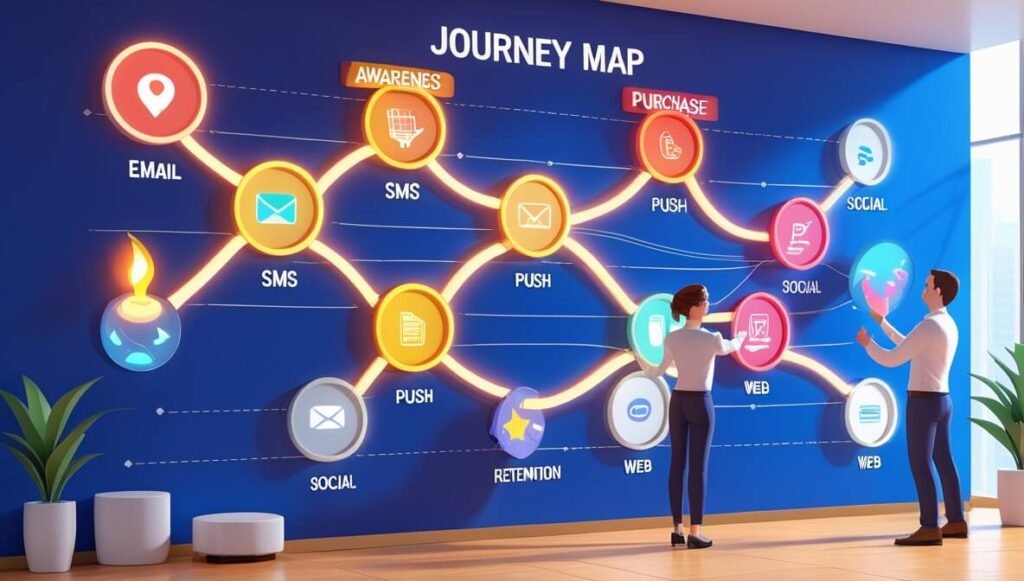
A marketing automation consultant doesn’t just set up tools; they design holistic strategies that weave together diverse channels. Here are key tactics they employ:
Omnichannel marketing requires a single source of truth for customer data. Consultants start by auditing existing data sources and establishing data hygiene practices. They use integrations to merge behavioral data (web visits, email clicks, purchase history) with demographic and transactional data from your CRM. Valtech, a digital transformation firm, explains that connected experiences arise when offline and online touchpoints are combined to enrich client profiles and drive interactions before, during and after physical experiences. In their Dolby SoHo case study, Valtech integrated offline event data with online activity to unify profiles and personalize automated communications, enabling granular segmentation and tailored messaging across the customer journey. Consultants replicate such approaches by connecting point‑of‑sale systems, loyalty programs and CRM databases.
Not every channel suits every stage of the customer journey. Consultants map the journey from awareness to retention and decide which channel best supports each step. For example:
Mapping these journeys helps consultants deliver the right content at the right time on the right channel.
Personalization increases relevance and conversion, but it requires granular segmentation based on behavior, interests and lifecycle stage. Marketing automation platforms can generate dynamic content or offers automatically. Consultants configure these features to tailor subject lines, body copy, product recommendations and send times. They also implement predictive analytics to determine which leads are most likely to convert and which channels they prefer. As Comosoft’s overview notes, integrated analytics and customer journey mapping tools allow you to track behavior, identify pain points and adapt messaging quickly.
Another dimension is regional or demographic personalization. Not all channels or content types resonate across cultures or age groups. Belkins highlights that regional preferences shape channel effectiveness—for example, email may be more popular in North America, while WhatsApp and Facebook Messenger dominate in parts of Asia. Consultants research your audience to ensure cultural relevance and compliance with local regulations.
Omnichannel strategies aren’t only digital. Many customer journeys include physical interactions—events, call centers, retail stores. Consultants incorporate these into automation flows. Valtech describes how combining offline and online touchpoints enriches the client profile and drives deeper engagement. For instance, after someone attends an event, an automated sequence might send a personalized recap email, followed by an SMS coupon valid in‑store. When the customer visits, the sales associate can access their profile to recommend relevant products. Consultants also ensure that phone calls and customer service interactions are logged in the CRM and trigger follow‑ups, closing the loop between marketing and customer service.
Data is the foundation of omnichannel marketing. Consultants set up dashboards and reporting to monitor key metrics—open and click rates, SMS response, social engagement, revenue attribution and customer lifetime value. They watch for drop‑off points in the journey and adjust channel mix or messaging accordingly. Comosoft advises prioritizing features like real‑time data synchronization and comprehensive analytics when choosing a platform; these enable quick adaptations and evidence‑based decisions. Consultants also conduct A/B tests across channels, test send times and frequency, and evaluate the incremental impact of each channel. The ultimate goal is to refine the orchestration so that customers receive just the right number of touchpoints to encourage action without fatigue.
Not all consultants are created equal. When evaluating candidates or agencies, consider the following criteria:
In a world where customers glide between devices and channels, relying on email alone is no longer sufficient. A marketing automation consultant helps organizations architect journeys that span email, SMS, social media, push notifications, voice, web and offline interactions. By understanding customer behavior, integrating data across platforms and orchestrating cross‑channel workflows, consultants deliver consistent experiences that improve engagement and conversions.
Adopting an omnichannel approach also means rethinking metrics—from open rates to lifetime value—and aligning departments around shared customer insights. With the right consultant, brands can move beyond ad‑hoc campaigns to build automated journeys that make customers feel recognized and valued at every step. This investment pays off in higher ROI, stronger loyalty and a marketing machine that continues to learn and improve.