
A brand’s reputation used to travel by word of mouth; now it travels by search results. One negative article, one outdated directory listing, or one page-two complaint can quietly become the “first impression” that customers, partners, candidates, and journalists encounter before they ever speak to you. Online reputation management (ORM) exists to reshape that first impression—not by pretending criticism doesn’t exist, but by ensuring the most accurate, credible, and current representation of your brand is what people find first.
Speed becomes a strategic factor the moment reputational risk is time-sensitive. When you publish a clarification page, secure a positive third-party mention, or update outdated information, waiting weeks for search engines to discover and index those URLs can feel like watching the narrative drift without you. That’s where a rapid URL indexer can appear attractive: it promises faster discovery and indexing so your best assets can enter the search ecosystem sooner.
This article explains how to use online reputation management with rapid URL indexer responsibly and effectively. You’ll learn what rapid indexing can and cannot do, how to build the content “asset layer” that actually pushes down negative results, how to avoid tactics that backfire, and how to measure progress in a way that turns ORM into an ongoing system rather than a one-off crisis response.
Online reputation management is the coordinated practice of monitoring what appears about a brand online, improving the accuracy and prominence of trustworthy information, and reducing the visibility and impact of misleading, outdated, or unfair content. The practical target is not “the internet” in general; it’s the specific surfaces where perception forms most quickly—branded search results, review platforms, social profiles, knowledge panels, and high-authority third-party sites.
A rapid URL indexer, in this context, is any method or tool designed to accelerate the discovery and indexing of URLs by search engines. Some approaches are legitimate and platform-aligned (for example, submitting sitemaps, using Search Console features where available, improving internal linking, and ensuring fast crawlable pages). Other approaches operate in murkier territory, sometimes relying on spam-like signals, questionable networks, or low-quality “ping” tactics that may not produce sustainable benefits and can create reputational or SEO risk.
The first expectation to set is a vital one: indexing is not ranking. A page can be indexed quickly and still remain invisible in meaningful search results if it does not deserve prominence for the query. ORM success depends on building assets that are credible, useful, and clearly tied to the brand entity. Rapid indexing only helps when it reduces the time it takes those assets to enter the competitive field.
The second expectation is equally important: ORM is not synonymous with “suppression.” Responsible ORM does not attempt to erase legitimate criticism. Instead, it works to ensure that search results reflect reality with appropriate context. In many cases, the best reputational outcome is achieved not by attacking negative content, but by strengthening the presence of accurate information, transparent explanations, customer proof, and third-party validation that allows decision-makers to see the full picture.
The third expectation is about timelines. You can accelerate discovery, but authority and trust compound over time. If you’re trying to outrank an entrenched negative result from a high-authority publication, you will likely need a multi-asset approach, careful on-page optimization, and earned credibility. Rapid indexing can shorten the “time to enter,” but not the “time to win” on competitive SERPs.
With those guardrails in place, rapid URL indexing becomes a tactical accelerator inside a broader ORM system—not a silver bullet, and not a substitute for strong content and credibility.

Search engines move through three related stages: crawling, indexing, and ranking. Crawling is discovery—finding URLs via links, sitemaps, feeds, and other signals. Indexing is interpretation—processing content, understanding entities, and deciding whether a URL should be stored and eligible to appear in results. Ranking is selection—choosing which indexed pages best satisfy a query, given relevance, authority, and user experience signals.
ORM problems often feel urgent because the “ranking” surface is what the public sees, yet your immediate control is frequently on the “indexing” surface. You can publish a response, fix a misleading page, or release a new brand story, but none of that matters until the content is discoverable and indexed. That is the window where rapid indexing has real practical value: it narrows the gap between publishing and eligibility.
Still, the role of speed is easy to misunderstand. Speed matters most in situations like these: a crisis where your clarification page must be discoverable quickly; a product recall or policy update where outdated information is dangerous; a brand name change where old identities must be replaced; a PR placement or thought leadership piece where timeliness affects distribution; or a campaign that depends on search visibility during a short window.
Speed matters less when the bottleneck is authority. If negative results dominate because they come from powerful domains and your brand has weak third-party footprint, getting your new pages indexed faster won’t change the underlying balance of credibility. In those cases, speed is still helpful, but the priority must shift to building a stronger asset portfolio and earning signals that search engines interpret as trustworthy.
Another overlooked factor is “quality gating.” Search engines can delay indexing, de-prioritize crawling, or even exclude pages that look thin, duplicative, or low value. In ORM, that can happen when people publish rushed “reputation repair” pages that read like marketing fluff, or when they create multiple near-identical pages targeting the brand name without unique value. In other words, speed tactics can fail simply because the assets are not index-worthy in the first place.
Rapid indexing works best when it amplifies a strong foundation: technically accessible pages, clear entity signals (brand name, organization info, consistent profile references), useful content that answers real questions, and internal linking that gives crawlers a clear map. When those fundamentals are in place, indexing acceleration can meaningfully shorten your time-to-impact.
Finally, remember that search results are not the only surface where reputation forms. Social profiles, review platforms, and professional directories often rank because their domains are strong and their pages are entity-centric. A smart ORM program uses those ecosystems as reputation anchors rather than trying to force everything onto a single website. Rapid indexing is part of the search layer; it should be paired with credibility across the broader web.

Reputation management becomes far easier when you think in “assets” rather than “posts.” Assets are pages that can rank for branded or semi-branded queries and that convey credibility quickly. A single blog post with generic advice is rarely an asset. A strong About page, a leadership bio with verified credentials, a clear policy page, a press page that aggregates credible mentions, and authoritative third-party profiles are assets.
The asset layer does two jobs at once. First, it makes your brand easier to understand, which improves search engines’ confidence in your entity. Second, it increases the number of high-quality pages that can occupy branded SERP real estate, which reduces the probability that negative or irrelevant pages dominate the first page.
Owned assets on your website should be designed for clarity, not for hype. When someone searches your brand name, they are typically looking for basic truth: who you are, what you do, where you operate, how to contact you, whether you’re legitimate, and what others say about you. Pages that answer those questions explicitly tend to perform better than pages that sound like polished advertisements.
Earned and shared assets are equally important because third-party credibility is a reputational accelerant. Search engines often trust established publications, industry directories, and reputable review ecosystems faster than a brand’s own pages, especially for query spaces that imply risk. A balanced ORM plan therefore builds a distributed presence across: trusted directories, professional networks, review platforms relevant to your industry, reputable media mentions, partner pages, and community references.
Consistency is the quiet advantage that many brands miss. When your brand name, address, phone number, leadership names, and category descriptors are consistent across authoritative profiles, search engines can connect entity signals more confidently. When your identity is inconsistent—different spellings, old logos, conflicting contact info, multiple “official” pages—search engines become less certain, and results become more chaotic. ORM often improves dramatically simply by making identity signals coherent.
A well-designed asset layer also anticipates the questions that appear in “People also ask,” related searches, and review content. If negative content exists, it often thrives because it answers a question your brand hasn’t answered. When you publish thoughtful, transparent answers—supported by policies, documentation, and proof—you reduce the informational gap that misinformation exploits.
Importantly, asset building is not the same as flooding the internet with fluff. Search engines and humans both respond poorly to thin, repetitive pages. The goal is fewer, stronger assets that each serve a distinct purpose: clarity, proof, transparency, education, or conversion. That distinction keeps the ORM program ethical and effective.
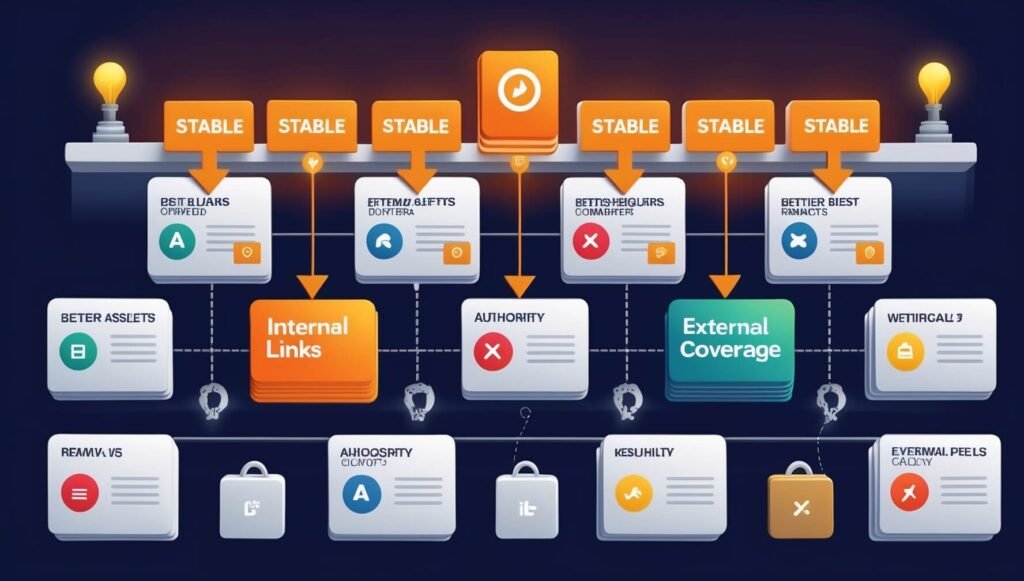
Execution is where ORM either becomes a repeatable system or a panic-driven scramble. The most reliable workflow starts with a disciplined assessment of the search landscape, then builds or strengthens assets, and only then uses rapid indexing tactics to accelerate discovery. The order matters because indexing a weak page faster simply makes a weak page eligible faster; it does not make it competitive.
The steps below are designed to be applied in real teams—marketing, comms, founders, and sometimes legal—without requiring a massive budget. This is one of the main sections where numbering is helpful because ORM works best as a sequence.
Notice the theme: rapid URL indexing is positioned as an accelerator for valuable assets, not as a substitute for value. That distinction is what keeps your ORM work both effective and defensible over the long term.
Negative content is not a single category; it’s a set of situations that require different responses. An incorrect directory listing is not the same as a viral complaint. A policy-violating post is not the same as a legitimate critical review. Treating every negative result as an SEO suppression problem is how ORM budgets get wasted and how reputations become more fragile.
When removal is possible, it is often the cleanest path. Policy violations, defamation, impersonation, privacy breaches, and copyright violations can sometimes be resolved through platform processes or legal channels. That said, removal decisions can carry legal complexity, jurisdiction issues, and unintended consequences. If you are considering legal escalation, consult qualified counsel and document everything. ORM is about reducing harm, not creating a new controversy through aggressive overreach.
Suppression (sometimes called dilution) is often the appropriate approach when negative content is legitimate or will remain online. The objective becomes reducing its visibility for key branded queries by increasing the share of credible, relevant results that provide more complete context. This is where the asset layer and indexing acceleration tactics matter: you’re not trying to “game” the system; you’re trying to ensure the system has better options to show.
A few mistakes consistently backfire in reputation management. One of the most common is publishing thin “reputation cleanup” content that reads as defensive marketing. Search engines and humans both recognize empty reassurance. Another is launching multiple near-identical pages targeting the brand name, which can create keyword cannibalization and dilute authority rather than concentrate it. A third is ignoring reviews and community conversations, then expecting SEO alone to repair trust. If the public sees unanswered complaints, even strong SEO assets may feel like a cover-up rather than a correction.
Professional ORM also avoids the “Streisand effect,” where attempts to hide or attack negative content attract more attention to it. Sometimes the best move is measured transparency: acknowledge the issue, clarify what changed, and provide proof. Search results can evolve in your favor when the market sees maturity and accountability, especially if you pair transparency with improved customer experience and credible third-party signals.
Rapid URL indexing can play a role here, but only in the right way. If you publish a clear response page, a policy update, or a third-party clarification, accelerating indexation can help your corrective narrative become discoverable before misinformation spreads further. The goal is not to outrank by force; the goal is to ensure accurate content becomes available quickly enough to matter.
Reputation rarely collapses overnight; it usually erodes through neglect. A stale profile, an unanswered review pattern, a broken contact pathway, or an outdated policy page can quietly accumulate doubt until one event triggers scrutiny. The most resilient brands treat ORM as maintenance: small, regular actions that keep the public narrative accurate and stable.
Monitoring should be designed around the places where perception forms. Branded search is one layer, but review platforms, social comments, community threads, and business directories can influence search results and decision-making even if they don’t rank first. A practical monitoring system tracks branded queries weekly, review volume and sentiment trends, and new mentions on high-authority platforms relevant to your category.
Maintenance is where indexing strategy becomes an advantage. When you update a high-credibility page—such as a policy page, pricing explainer, or press page—ensuring that updates are discoverable and indexed promptly helps prevent outdated information from lingering as the “official” story. Indexing acceleration methods are most valuable here because they reduce drift between what’s true now and what search results imply.
Another maintenance lever is controlled content refresh. If you have reputation assets that rank, keep them current. Update dates where appropriate, add new proof points, refresh screenshots, improve FAQs based on real user questions, and strengthen internal linking as your site grows. This is not manipulation; it’s stewardship. Search engines and users both reward accurate, maintained information because it reduces uncertainty.
Operationally, make someone accountable for ORM. Without ownership, monitoring alerts get ignored and response times slip. With ownership, you can build a predictable cadence: weekly SERP scan, monthly profile audit, quarterly content refresh, and a clear escalation protocol for spikes in negative attention. That cadence turns ORM from a reactive scramble into a managed risk function.
When ORM is treated as a system, a rapid URL indexer becomes a small but useful part of the toolkit. It speeds up the moments where speed matters, while the rest of your program builds the credibility that determines long-term rankings. That combination—speed plus substance—is what produces durable reputation outcomes.
Influencer marketing is one of the few channels that can look brilliant and wasteful at the same time. One brand sees a creator partnership spark demand, lift branded search, and generate content that fuels paid ads for months. Another brand spends the same budget and gets a burst of likes, a few unqualified clicks, and zero meaningful business impact. The difference is rarely “luck.” It’s usually a combination of fit, execution, and measurement discipline.
If you’re asking what are some benefits and drawbacks of influencer marketing, you’re already thinking like a serious operator: you want the upside without pretending the channel is magic. Influencer marketing can deliver trust at speed, access to niche audiences, and scalable creative production. It can also introduce fraud risk, compliance exposure, brand safety issues, and messy attribution that makes ROI hard to defend internally.
This article gives you a grounded, decision-ready view of the benefits and drawbacks of influencer marketing, plus practical guidance on when it’s a strong fit, how to reduce risk, and how to measure outcomes in a way leadership will actually trust. The goal is not to sell you on the channel. The goal is to help you run it like a disciplined marketing system.

Influencer marketing sits at the intersection of media, content, and community. It is “media” because you’re paying for attention and distribution. It is “content” because you’re buying creative that can live across multiple channels. It is “community” because creators are trusted by audiences that often treat them as peers rather than advertisers. Those three layers explain why the channel can outperform traditional ads in trust-building—and also why it can fail when brands treat it like a plug-and-play sponsorship.
The most useful way to evaluate influencer marketing is to treat its benefits and drawbacks as operating realities. Benefits are not guaranteed; they appear when the campaign is designed to reduce friction in a buyer’s decision. Drawbacks are not unavoidable; they become manageable when you plan for them early (contracts, compliance, vetting, and measurement). The sections below break down both sides in practical terms.
These benefits and drawbacks are two sides of the same coin. The trust advantage comes from creator independence, but independence creates brand safety and compliance complexity. The niche audience advantage comes from community specificity, but specificity increases the need for careful vetting and fit. The creative advantage creates assets, but those assets require rights management and governance. When you plan for these trade-offs, influencer marketing becomes less mysterious and far more controllable.
Influencer marketing has matured beyond “pay someone to post.” Modern programs are built from a mix of partnership types, content formats, and distribution methods. Understanding those building blocks helps you choose strategies that match your objective instead of defaulting to what looks popular.
Most influencer programs fall into three broad partnership models. The first is sponsored content, where the creator is paid to produce and publish specific deliverables (posts, videos, stories, livestreams). The second is affiliate or performance-based partnerships, where compensation is tied to conversions via commissions, codes, or tracked links. The third is ambassador-style relationships, where a creator works with a brand over a longer period, often with recurring content and deeper integration into the creator’s identity.
Each model solves a different problem. Sponsored content is best for controlled messaging, predictable timelines, and clear deliverables. Affiliate models can be efficient when product-market fit is strong and creators genuinely want to sell, but they require strong tracking and often a larger creator portfolio to smooth volatility. Ambassador relationships are powerful for trust-building, because audiences see repeated endorsement over time, but they require careful creator selection and sustained relationship management.
Content format also matters because it shapes how persuasion happens. Short-form video is often the strongest format for demonstration and objection handling because it can show the product in use. Stories and livestreams create immediacy and can drive real-time action, especially when paired with limited-time offers. Static posts can work for brand aesthetics and clear messaging, but they often need strong creative design to compete in modern feeds.
The distribution layer is where many brands underutilize influencer value. When a creator posts organically, you receive the creator’s audience distribution. But the best programs also consider how to extend that content’s life: repurposing across brand channels, using it in paid ads (with proper permissions), embedding it on product pages as social proof, and integrating it into email flows. This is why rights and usage clauses are not “legal fine print”; they are a performance lever.
Finally, the “value” of influencer marketing often arrives through a specific mechanism: reducing uncertainty. In high-consideration categories, people don’t just need awareness; they need confidence. Influencers provide that confidence through demonstration, comparison, personal narrative, and social validation. When your campaign is designed around the specific uncertainty your buyers feel—price risk, performance risk, identity fit, switching cost—the content becomes far more likely to convert attention into action.

Influencer marketing is not universally “good” or “bad.” It is strong in contexts where trust, demonstration, and cultural relevance drive decisions. It is weaker when the product cannot be explained quickly, when the offer is not competitive, or when the funnel cannot capture demand created by the content. The deciding factor is not the platform; it is whether your business can convert attention into outcomes.
The easiest way to assess fit is to ask a small set of strategic questions. This section uses a short numbered framework because it mirrors how decision-makers evaluate budget requests: clarity of objective, plausibility of mechanism, readiness of conversion path, and ability to measure.
Influencer marketing tends to be a weak fit when the economics don’t work (low margins, high shipping costs, expensive fulfillment), when the product experience is fragile (high refund rates, inconsistent results), or when the brand cannot tolerate reputational risk. In those situations, creators may still drive attention, but the downstream consequences can be negative: increased support load, higher refunds, or public criticism that harms trust.
Conversely, influencer marketing tends to be an excellent fit when a brand is building category trust, entering new audiences, launching a product with clear demonstration value, or strengthening social proof to improve conversion efficiency across all channels. In those scenarios, the channel can produce both immediate outcomes and longer-term compounding effects.
The difference between a “fun creator campaign” and a reliable influencer program is structure. Structure doesn’t mean rigid scripts; it means a clear objective, repeatable workflows, and guardrails that protect authenticity while preventing avoidable risk. The most consistent influencer teams behave like operators: they run tests, learn from performance, and scale what proves out.
Start with creator selection as a fit problem, not a reach problem. Fit includes audience relevance, but also creator behavior: how they communicate, how they handle sponsorships, and whether their community trusts them. Read comment sections. Look for substance. Are people asking for advice and receiving thoughtful responses? Are followers referencing past recommendations? That is a signal of credibility that matters more than surface engagement rates.
Then, invest in briefing quality. A strong brief doesn’t dictate lines; it clarifies the persuasion goal. It should explain the audience context (“skeptical because they’ve tried alternatives”), the key promise (“reduces time spent on X”), the proof points allowed (verified claims and real features), the boundaries (what cannot be claimed), and the desired next step. When you brief around intention and guardrails, creators can stay authentic while still delivering business-relevant messaging.
Contracts and rights are where many brands either lose value or create risk. You should clarify content usage rights, exclusivity expectations, approval workflows, timelines, deliverables, and disclosure requirements. If you plan to use the content in paid ads, state that explicitly and ensure the creator is comfortable. Content rights should match your plan: short rights for short usage, broader rights for longer-term paid amplification. Paying for rights you won’t use is waste. Using content without rights is risk.
Compliance should be integrated into the process rather than treated as an afterthought. Provide creators with disclosure guidance and examples. Require disclosure language in both briefs and contracts. Review content before posting when possible, but avoid turning review into creative micromanagement. The objective is clear disclosure, accurate claims, and alignment with the creator’s voice.
Finally, scale with discipline. Start with a test cohort of creators, evaluate performance against your KPIs, then expand in a structured way. Scaling should not mean “more creators.” It should mean “more of what works”: the strongest creators, the strongest content angles, the strongest formats, and the strongest distribution approach (organic plus paid amplification where appropriate). This is how you turn influencer marketing from a gamble into a system.

Influencer marketing measurement fails when teams expect one metric to do everything. Last-click conversion alone often understates the channel’s value. Views and likes alone often overstate it. A professional measurement approach combines direct response tracking with indicators of assisted influence, then tells a coherent story about how influencer content changes behavior over time.
Begin with direct tracking where possible: UTMs on creator links, unique promo codes, affiliate platforms, and dedicated landing pages for specific partnerships or campaigns. Direct tracking gives you clarity, but it has limits. Not all conversions will use the link or code, and some platforms reduce trackability. That does not make measurement impossible; it just means your program must include other evidence signals.
Next, define “influence signals” that align with your objective. If the campaign goal is education, monitor high-intent engagement (saves, shares, comments that ask “how” questions). If the goal is conversion, monitor click-to-view rates and downstream behavior on site. If the goal is demand creation, monitor branded search trends, direct traffic, and the performance of retargeting campaigns among users exposed to influencer content.
For higher-budget programs, consider incrementality methods. This can be as simple as a geo holdout test, a time-based holdout, or an audience holdout where some segments receive influencer exposure and comparable segments do not. The goal is not academic perfection; the goal is directional confidence that influencer spend is driving incremental outcomes rather than merely harvesting demand that would have converted anyway.
Reporting should be structured as a narrative, not a spreadsheet dump. Leadership needs to know: what you aimed to change, what you did, what changed, and what you learned. Include outcome metrics (sales, leads, trials), supporting metrics (engagement quality, landing page behavior), and learnings (which creators and content angles performed). Then define next steps: what you will replicate, what you will adjust, and what you will stop doing. Programs that learn get funded; programs that only “report” get questioned.
Most importantly, measurement should protect credibility. It is better to report influencer marketing as a channel that contributes reliably through both direct and assisted effects than to claim perfect attribution you can’t defend. When stakeholders trust your measurement ethics, they trust your program—and that trust is the foundation for scaling.
Choosing a mobile app partner is one of those decisions that looks deceptively simple on a spreadsheet—until a single weak architectural call multiplies your timeline, your budget, and your risk. The problem is not a lack of options; it’s the opposite. When you search for a “top rated mobile app development company,” you’ll find endless directories, badges, and listicles that blur the difference between marketing polish and delivery excellence.
This guide cuts through that noise with a practical objective: give you a vetted, high-signal shortlist of ten firms and the due-diligence framework to select the right one for your product. You’ll get a realistic definition of “top rated,” the exact criteria that actually predict outcomes, and a ranked list from 10 to 1 based on a consistent public benchmark (so you can compare like with like). Most importantly, you’ll learn how to interview and scope these teams so the contract you sign produces a shippable product—not a never-ending rescue mission.
“Top rated” should never mean “popular.” In mobile app development, popularity can be bought with advertising, inflated with shallow projects, or misunderstood through vanity metrics. A truly top-rated partner earns trust the hard way: by delivering working software, repeatedly, across multiple clients and environments, while keeping stakeholders informed and trade-offs explicit.
Real “top rated” performance shows up in a few consistent places. First, the team demonstrates repeatable delivery discipline—clear planning, sprint hygiene, transparent reporting, and the ability to ship increments without destabilizing the codebase. Second, their product thinking is mature enough to protect you from expensive mistakes, especially in the earliest phases when requirements are still forming. Third, their engineering practices are strong enough to withstand real-world conditions: unreliable networks, varying device capabilities, OS updates, security threats, and the inevitable feature expansion after launch.
In practice, that translates into a partner who can defend decisions with evidence. They can explain why a given feature belongs in V1 vs V2, why native vs cross-platform is the right call for your constraints, how they’re managing technical debt, and how they’ll instrument analytics so post-launch iteration is guided by data rather than opinion.
Finally, “top rated” should include operational honesty. The best firms are rarely the ones who promise the fastest timeline; they’re the ones who can tell you what will break if you compress the schedule, what assumptions must be validated early, and what a realistic definition of done looks like for design, QA, security, performance, and app store readiness.

Selection gets easier when you stop evaluating vendors and start evaluating outcomes. The question is not “Who has the best portfolio?” The question is “Who can reliably produce the outcome my business needs—under my constraints—without creating hidden liabilities that explode later?” A top rated mobile app development company earns that confidence by proving process clarity, engineering maturity, and stakeholder alignment.
Before you look at any ranking, lock down your non-negotiables. Define your success metrics (retention, conversion, activation, operational efficiency, revenue per user), your must-have compliance needs (privacy, payments, healthcare, finance), and your post-launch reality (who owns maintenance, how quickly you need releases, how you’ll capture feedback). Without those anchors, you can be persuaded by talent that is real but misapplied.
When you interview firms, push beyond “What tech do you use?” and “How many developers do you have?” Ask how they think when things get messy—because they always do. The best partners can describe how they handle scope uncertainty, stakeholder disagreements, shifting priorities, and the trade-off between speed and stability. They don’t just build apps; they build decision systems around apps.
The following criteria tend to separate high-performing teams from attractive-but-risky ones. Use these as your screening lens; they are also the areas where a strong firm will gladly go deep, because depth is where they win.
Once you apply these filters, rankings become useful for what they should be: a shortlist accelerator, not a decision-maker. With that context in place, you’re ready for the list itself.

This ranking is based on the top ten “Leaders” shown in Clutch’s Leaders Matrix for Mobile App Development (ratings updated December 15, 2025). That benchmark evaluates providers using focus and “ability to deliver,” incorporating verified client feedback, experience, and market presence. The list below is presented from 10 down to 1 (as requested), while maintaining the same underlying top-ten set.
Use each entry as a practical decision profile: what the firm is best suited for, what questions you should ask them, and what signals to look for in proposals. Budget minimums and hourly ranges can vary by scope and region, so treat any public rate guidance as directional rather than absolute.
Positioning: A nearshore design-and-engineering partner known for product execution, cross-platform delivery options, and collaboration models that can either run the entire build or augment an internal team. Their public messaging emphasizes a proven process and flexibility without compromising quality, which often matters when product priorities evolve mid-build.
Why they make the top-rated conversation: Cheesecake Labs presents itself as a long-term partner for building and scaling digital products, with a nearshore advantage in Latin America and an operational emphasis on agile best practices across product, design, development, and project management. For teams that need both UI/UX strength and dependable engineering, that combination can reduce handoff failures and the “design looks great but the app feels clunky” problem that often shows up in rushed builds.
What to validate in due diligence: Ask how they staff discovery, how they decide between Flutter/React Native versus native, and how they instrument analytics and crash monitoring from day one. If your roadmap includes wearables, IoT, or device connectivity, probe their experience with Bluetooth, background processing, and OS constraints—those are the details that distinguish an app that demos well from one that survives real users.
Good fit when: You want a partner comfortable with end-to-end delivery, you value nearshore collaboration, and you need a team that can maintain quality while moving quickly.
Positioning: A global development provider with strong emphasis on practical delivery across mobile, web, and eCommerce ecosystems. Emizen Tech’s profile signals versatility—useful when your “app” is not just a standalone product, but part of a broader workflow that includes back-office systems, integrations, and customer-facing web experiences.
Why they make the top-rated conversation: Their public footprint highlights multi-industry work and the ability to build mobile experiences that connect to operational realities, such as logistics, appointments, and transactional workflows. For many businesses, the hardest part is not building screens—it’s building a system that reliably synchronizes data, supports third-party services, and stays maintainable as features expand.
What to validate in due diligence: Ask for concrete examples of complex integrations (payments, identity, CRMs, ERPs, or domain-specific APIs) and how they test those integrations under failure conditions. If you’re considering an MVP, request clarity on what they consider “MVP complete” and how they prevent the common trap where MVP becomes a fragile prototype that must be rewritten before scaling.
Good fit when: Your app is tied to commerce or operational workflows, you need strong integration capability, and you want a team that can handle both mobile and supporting web systems without fragmentation.
Positioning: A custom software and mobile app development provider that emphasizes tailored solutions and access to specialized engineering talent. Empat’s messaging leans toward adaptable team composition—useful if you need to scale up quickly or add specific expertise (mobile, backend, DevOps, or QA) without rebuilding your vendor relationship from scratch.
Why they make the top-rated conversation: Their service pages explicitly reference modern mobile stacks (including iOS, Android, Flutter, and React Native) and a delivery structure that includes QA and testing. For businesses balancing time-to-market with quality, the operational rigor around testing and maintainability often matters more than any single technology choice.
What to validate in due diligence: Ask how they structure cross-platform codebases for long-term maintainability and how they handle platform-specific edge cases without turning the project into a patchwork of exceptions. Also push on communication cadence: top performance is often less about raw talent and more about how quickly a team can surface risks, negotiate trade-offs, and keep stakeholders aligned.
Good fit when: You want flexible resourcing, modern cross-platform capability, and a partner that can cover full-stack needs while keeping mobile quality high.
Positioning: A product-team model designed specifically for founder trust and delivery transparency, particularly for non-technical founders or teams recovering from previous development disappointments. Designli’s positioning is unusually explicit about the pain points that derail projects—ghosting, slipping roadmaps, and unclear ownership—and the operational structure they use to prevent them.
Why they make the top-rated conversation: Their approach emphasizes dedicated, multidisciplinary teams assigned full-time, aiming to eliminate the “shared-resources” problem where your project competes with multiple clients for attention. They also highlight cross-platform development (including React Native) as a way to deliver iOS and Android efficiently while maintaining a cohesive user experience—an advantage when you need to launch both platforms without doubling cost.
What to validate in due diligence: Ask how their product owner function works in practice: who writes requirements, how decisions are documented, and how scope changes are handled without chaos. Also investigate their QA approach and release management; for founder-led products, the first few releases often define reputation, and a smooth release process is an underrated retention lever.
Good fit when: You value transparency, you want a dedicated “cofounding-style” delivery team without giving up equity, and you need a process that keeps non-technical stakeholders confidently informed.
Positioning: A long-running agency offering mobile app development across iOS, Android, and cross-platform solutions, with additional capability in wearables and prototyping. Their public narrative emphasizes breadth across web technologies and mobile platforms, which can be useful when your product roadmap spans multiple surfaces (mobile app, web portal, admin dashboard, or companion wearable experiences).
Why they make the top-rated conversation: Two practical advantages stand out in their messaging: sustained longevity (a signal of operational stability) and the explicit inclusion of prototyping and strategy services. When a firm can help you visualize and validate workflows early—before engineering commits to a structure—you reduce the risk of building the wrong thing efficiently.
What to validate in due diligence: Ask for examples where they built wearable or device-adjacent experiences (if relevant), and how they approached performance and battery constraints. Also request a walkthrough of their handoff from prototype to production build; the transition between “what we designed” and “what we built” is where weak process creates rework.
Good fit when: You need a partner with broad platform coverage, you want a clear prototype-to-build pathway, and your roadmap may include wearable or multi-surface experiences.
Positioning: A digital product and application development provider that explicitly frames itself around innovation and enterprise-grade delivery, including AI/ML, cloud platforms, and mobile apps with advanced features. For products that must integrate with larger ecosystems—data pipelines, enterprise systems, security constraints—this breadth can be a meaningful differentiator.
Why they make the top-rated conversation: TechAhead positions its work around scalable platforms and award-winning mobile execution, highlighting a mix of technical depth (AI, cloud, analytics) and mobile delivery. If you are building more than a UI layer—especially if you require personalization, recommendations, automation, or complex data handling—an AI-capable partner can reduce the friction of coordinating multiple vendors.
What to validate in due diligence: Ask for architecture examples that show how they separate concerns between mobile client, backend services, and analytics. Also dig into their approach for privacy and compliance if you deal with sensitive data; top-rated outcomes are often defined by what doesn’t happen (breaches, downtime, rework), not just what does.
Good fit when: You’re building an app tied to cloud infrastructure, AI-driven functionality, or enterprise integrations, and you need a partner comfortable delivering across that full scope.
Positioning: A startup-focused MVP and app development provider that emphasizes moving from idea to launch with structured stages. Their public content leans heavily into startup realities—validation, MVP scope discipline, and iterative scaling—which can be valuable when speed matters but you cannot afford to build the wrong product.
Why they make the top-rated conversation: Their service framework explicitly breaks work into phases such as idea validation, prototyping/UI-UX, MVP development, and scaling. This stage-based approach is particularly useful if your product is still crystallizing; it makes scope discussions more grounded, because each phase has a purpose beyond “just build.” They also publicly detail a technology stack across iOS, Android, web, and backend, signaling an ability to support a full product rather than a single app artifact.
What to validate in due diligence: Ask how they define MVP in measurable terms: what user behaviors the MVP must prove, what metrics matter, and what would cause them to recommend cutting or postponing features. Also ask how they plan A/B testing and post-launch iteration; a true MVP partner should think about learning velocity, not simply first release velocity.
Good fit when: You’re a startup or innovation team seeking a structured path from concept to MVP to scale, with a partner who understands validation and iterative delivery as core—not optional.
Positioning: A custom software development firm with strong emphasis on high-quality engineering, including mobile apps, cross-platform delivery, and connected device experiences. Atomic Object’s public content highlights security, polish, and robustness—traits that matter most when your app is part of a mission-critical workflow or a connected product ecosystem.
Why they make the top-rated conversation: Atomic explicitly addresses the real-world constraints of mobile: Android device diversity, iOS/Android release parity, and the strategic trade-offs of cross-platform frameworks like React Native. They also speak directly to device connectivity and IoT patterns, including protocols and real integration realities. That is an important signal: teams that have lived through connected-product complexity tend to plan better, test deeper, and document decisions more rigorously.
What to validate in due diligence: Ask how they handle performance profiling, security considerations, and long-term maintainability, especially if your app must integrate with hardware or sensitive data. Also request a clear explanation of their collaboration model with internal teams; high-maturity firms are often excellent at enabling in-house developers after launch, which can be a major strategic advantage.
Good fit when: Your app must be secure, resilient, and engineered for complex real-world conditions (connected devices, IoT, or operationally critical workflows), and you’re willing to invest for craftsmanship and technical rigor.
Positioning: A mobile app solutions provider that emphasizes ideation-to-launch support across platforms, with notable focus on AI app development and blockchain/Web3 capabilities. This kind of focus matters when your differentiator is not the UI alone, but an underlying capability such as AI automation, intelligent workflows, or decentralized infrastructure components.
Why they make the top-rated conversation: Their public content frames mobile delivery as part of an advanced-technology portfolio that includes AI solutions and blockchain development. For products where AI features must be built responsibly—clear data pathways, model monitoring, privacy safeguards—working with a team that already understands these layers can prevent expensive rework and reduce the “bolt-on AI” trap that often disappoints users.
What to validate in due diligence: Ask for clear case examples where AI or blockchain was not just mentioned, but meaningfully integrated into a mobile product. Probe how they handle data quality, security, and scalability, and insist on measurable acceptance criteria for AI features (accuracy thresholds, latency expectations, failure states). A top-rated partner will welcome this precision because it protects outcomes.
Good fit when: Your roadmap includes AI-enabled features, Web3/blockchain components, or advanced automation, and you want a team that can deliver mobile experience and the technical engine behind it as one coherent system.
Positioning: An app development and software agency that prominently positions itself as a leader in mobile app development in Australia, with a track record measured in years and shipped products. Their messaging emphasizes broad industry experience and the ability to turn app ideas into reality with professional design and evidence-based engineering solutions.
Why they make the top-rated conversation: EB Pearls highlights over 15 years of mobile app development experience and a portfolio volume that signals operational repetition—an important predictor of reliability. They also communicate a multi-location footprint and a quality-driven orientation, which can matter when you need both strategic product thinking and dependable execution across design and engineering.
What to validate in due diligence: Ask how they structure discovery and how they manage cross-functional alignment between product, design, and engineering. If you’re building a multi-release roadmap, request examples of apps they’ve maintained through several iterations and OS cycles; the ability to stay stable over time is a core trait of a top rated mobile app development company, and it’s often visible in how they handle post-launch support and technical debt management.
Good fit when: You want a seasoned partner with a strong mobile track record, a structured approach to moving from idea to build, and a delivery model that supports long-term iteration rather than one-off launches.
A ranking gives you names; a scoping process gives you certainty. If you want to identify the best match among top-rated firms, structure your evaluation so vendors must show their thinking, not just their sales language. The simplest way to do that is to ask each team to explain decisions—architecture, UX trade-offs, timeline logic, and risk management—using your project context.
Start by preparing a short “product brief” that is specific enough to anchor proposals but not so detailed it turns into a premature specification. Include your target users, primary workflows, success metrics, known constraints (integrations, compliance, existing systems), and a realistic first-release scope. The goal is not to define every screen; it is to define what success looks like and what must be true for the product to work in the real world.
Then, force clarity in proposals by asking for the same deliverables from each firm: a discovery plan, a high-level technical approach, a timeline with assumptions, a testing strategy, and a post-launch plan. When vendors respond to the same prompts, differences become obvious. The strongest teams will ask hard questions, challenge weak assumptions, and propose trade-offs that improve outcomes—even if it means telling you “no” in a way that protects your business.
Finally, treat the first working sessions as a sample of the relationship, not a formality. If communication is vague, if ownership is fuzzy, or if timelines are promised without assumptions, you are seeing the future. Top-rated teams are not perfect, but they are predictable—and predictability is the foundation of delivery trust.
 w to Compare Apples to Apples
Cost comparison fails when the scope is ambiguous, and scope is almost always ambiguous early. That is why the best development partners tend to recommend a phased approach: discovery first, then build, then iterate. Discovery makes cost conversations honest because it turns assumptions into validated decisions—what features matter, what workflows are required, what integrations are truly necessary, and what performance or compliance constraints change engineering effort.
Fixed-price projects can work when scope is stable and acceptance criteria are clear, but they can become adversarial if your product evolves while the contract punishes change. Time-and-materials (or dedicated team) models often provide better flexibility for products that must adapt based on user feedback, stakeholder learning, or market changes. The key is not which model you choose; it’s whether the model matches the reality of your product stage.
When reviewing budgets, look for transparency. Strong proposals show how effort is distributed across discovery, design, engineering, QA, DevOps, and project management. Weak proposals lump everything into “development,” which hides risk until it shows up as missed deadlines, quality compromises, or surprise change orders. If you want a top rated mobile app development company experience, demand a budget narrative that explains what you’re buying—not just a number.
Strong firms can still be the wrong fit, and weak firms can look convincing for a few meetings. The fastest way to protect yourself is to know which signals predict pain. Watch closely for promises that ignore constraints, especially timelines that appear aggressive without acknowledging integrations, testing complexity, compliance requirements, or app store review realities.
Equally concerning is vague ownership. If you can’t identify who owns product decisions, who owns architecture, who owns QA, and who owns release management, you are likely to discover those gaps during your first crisis—which is the most expensive time to learn. A credible team can show you the operating model: how decisions are made, how changes are approved, and how quality is measured.
Finally, distrust any process that treats launch as the finish line. Mature partners plan for life after V1: monitoring, analytics, crash resolution, OS updates, performance tuning, and iterative releases. If post-launch is framed as “optional,” your product may ship, but your business will pay for that shortcut repeatedly.
When you use the list above as a shortlist—and the evaluation framework as your filter—you move from “finding a vendor” to building a delivery partnership. That’s where top-rated outcomes are created: in clear expectations, disciplined execution, and continuous learning from real users.
Survey data can be deceptively persuasive. A bar chart of “brand preference” or “purchase intent” looks like an answer, but without careful design and inference it is often just a snapshot of whoever happened to respond, interpreted with more confidence than the data can support. The difference between a report that informs and a report that misleads is rarely the dataset itself; it is the method: how the survey was constructed, how responses were cleaned and coded, how uncertainty was quantified, and how results were translated into business decisions without overstating what the evidence can prove.
This is where marketing analytics using Stata becomes unusually powerful. Stata excels at transparent, reproducible statistical workflows: you can declare survey design properly, generate design-correct standard errors, model attitudes and behaviors with appropriate estimators, and produce decision-ready outputs that can be audited and repeated. If your goal is to turn survey results into strategy that survives executive scrutiny, Stata gives you a disciplined path from “responses” to “reliable inference.”
In this article, you’ll learn how to structure a survey-to-strategy workflow in Stata: how to design surveys so the data you collect can answer the questions you care about; how to prepare and document survey data so analysis remains trustworthy; how to use survey settings (weights, clustering, stratification) to avoid misleading certainty; how to build and validate scales (for perceptions, attitudes, and satisfaction); and how to communicate results in a way that drives action while respecting uncertainty. The tone here is intentionally academic—because rigorous marketing decisions require the same seriousness we apply to any other form of evidence.
Marketing surveys sit at an intersection of measurement and persuasion. They measure beliefs (awareness, preference, trust), experiences (satisfaction, pain points), and intentions (purchase likelihood, referral likelihood). At the same time, they are often used to persuade internal stakeholders: to fund a positioning shift, approve a feature roadmap, adjust pricing, or double down on a channel. That dual role is exactly why survey analytics must be methodologically careful. If the survey is weak, the strategy built on it becomes fragile.
A reliable workflow treats survey analysis as a pipeline with explicit checkpoints. Each checkpoint answers a question that matters to inference. Was the survey designed to measure a construct reliably, or did it collect loosely related opinions? Is the sample representative of the target population, and if not, what weighting strategy corrects the most important distortions? Are estimates accompanied by uncertainty so decision-makers understand what is stable versus what is noise? Are models interpreted in terms of effect sizes and trade-offs rather than statistical significance alone?
Stata supports this workflow because it encourages a do-file culture: the analysis exists as a readable script, not a one-time point-and-click artifact. That matters in marketing analytics because surveys recur. Tracking brand health monthly or measuring campaign lift quarterly only becomes strategically valuable if the analysis is consistent over time. A reproducible Stata workflow allows you to improve the method while preserving comparability, which is the difference between trend intelligence and a series of disconnected dashboards.
At a high level, the survey-to-strategy workflow in Stata looks like this: (1) define the decision the survey must support and the construct you need to measure, (2) design the questionnaire and sampling plan to reduce bias, (3) ingest and clean data with disciplined coding and documentation, (4) declare the survey design in Stata (weights, clusters, strata) to obtain correct standard errors, (5) build and validate scales when using multi-item constructs, (6) model outcomes with estimators that match the measurement scale, (7) translate results into strategic choices with clear uncertainty, and (8) report findings as a decision narrative rather than a metric dump.
Two principles keep this workflow honest. First, treat descriptive statistics as “what this sample says,” and inference as “what we can generalize.” Second, treat statistical significance as a diagnostic tool, not the endpoint; decision-making requires effect sizes, practical thresholds, and scenario-based interpretation. The rest of this article expands these principles into concrete steps you can apply immediately.

Most survey analytics problems are born before the first response arrives. If a survey’s wording is ambiguous, if scales are inconsistent, if the sampling frame excludes a critical segment, or if the survey is launched without a plan for weighting and nonresponse, the analysis becomes an exercise in explaining limitations rather than generating reliable guidance. This is why an academic approach to survey design is not “overkill”; it is the cost of decision-grade evidence.
Survey design for marketing analytics has three goals. The first is measurement validity: ensuring questions measure what you think they measure. The second is bias management: minimizing systematic distortions that push results in a predictable direction. The third is analytic readiness: ensuring the data can support the models you plan to run (including subgroups, time trends, and driver analysis). These goals are achievable without making the survey long or complex; they simply require intentionality.
The most helpful way to design a survey is to work backward from the decision. If your decision is “choose one positioning angle,” your survey should measure perception dimensions that map to that decision (clarity, relevance, differentiation, credibility), not just general satisfaction. If your decision is “allocate budget across channels,” your survey should measure how customers discovered you, what influenced them, and how confidence formed, not just brand awareness.
The following design decisions have outsized influence on whether your survey analytics will be reliable. This is one of the few sections where a bullet list is useful, because these decisions function as a checklist; each item includes the reasoning that makes it worth doing.
Bias deserves special attention in marketing surveys because it often looks like “insight.” Social desirability bias can inflate reported satisfaction. Acquiescence bias can inflate agreement. Recall bias can distort channel attribution. Nonresponse bias can make your brand look stronger (or weaker) than it is. The goal is not to eliminate bias completely; it is to recognize likely bias sources, design to reduce them, and report results with appropriate humility.
When your survey is intended to represent a population (rather than a convenience sample), disclosure and documentation are part of quality. Professional standards in survey research emphasize transparency about sample construction, weighting, mode, and question wording. In a marketing context, this transparency also reduces internal conflict because stakeholders can see what the survey can and cannot claim without debating it emotionally.
Survey datasets are rarely analysis-ready. They arrive with inconsistent missing values, text-coded responses, multi-select items spread across columns, and scale questions that must be reverse-scored or standardized. A disciplined Stata preparation workflow is not about perfectionism; it is about preventing small data inconsistencies from turning into major analytic contradictions later. In marketing, those contradictions often appear as “why did the driver model change?” when the real issue is “we coded the scale differently this time.”
Stata shines here because it supports a clean separation between raw data and analytic data. You can import the raw file, run a preparation do-file that labels and recodes variables, create derived scales and indices, and save an analysis dataset that becomes the stable foundation for modeling and reporting. This is the difference between a repeatable analytics practice and a one-off project.
In many marketing environments, survey data comes from platforms like Qualtrics, SurveyMonkey, Typeform, or panel providers. These exports often include metadata columns, timing variables, and embedded data fields. The objective is to retain what supports analysis (sample source, weights, segments, attention checks) and drop what creates noise.
The following numbered workflow is intentionally practical. It is also intentionally documented, because in survey analytics the “why” behind coding decisions is as important as the code itself.
Below is a compact Stata-style skeleton to illustrate how preparation is commonly structured. It is not meant to be copy-pasted verbatim; it is meant to show the “shape” of a reproducible workflow.
* 01_import_and_prep.do
clear all
set more off

* Import
import delimited "survey_export.csv", varnames(1) clear

* Preserve raw copy
save "survey_raw.dta", replace

* Label example
label variable q1 "Brand awareness: have you heard of Brand X?"
label define yn 0 "No" 1 "Yes"
label values q1 yn

* Normalize missing (example)
replace q5 = . if q5 == 99   // 99 used as missing in export
label variable q5 "Purchase intent (1-5)"

* Reverse-score an item (example: 1-5 scale)
gen q7_r = 6 - q7
label variable q7_r "Trust item (reverse-scored)"

* Build a scale (average of items)
egen trust_index = rowmean(q6 q7_r q8)
label variable trust_index "Trust index (mean of 3 items)"

* Save analysis-ready dataset
save "survey_analysis.dta", replace
Preparation is not glamorous, but it is where credibility is won. A marketing team can forgive a model that needs refinement. It rarely forgives a report that contradicts itself because of inconsistent coding. Data preparation is how you prevent that outcome.

Marketing decisions often assume that survey percentages behave like precise facts. “62% prefer our concept” can sound definitive, yet if the survey used a complex design (panel recruitment, stratified sampling, clustered sampling, or weighting), the uncertainty around that estimate may be larger than stakeholders expect. Ignoring design features often produces standard errors that are too small, confidence intervals that are too narrow, and significance tests that are too optimistic. The result is overconfident strategy.
Stata’s survey framework exists to prevent this. The core idea is simple: you declare the survey design once with svyset, then prefix estimation commands with svy: so Stata uses design-correct variance estimation. Conceptually, this is an application of design-based inference: uncertainty is driven by the sampling process, not just by the observed sample size.
To apply this correctly, you need to understand three ingredients: weights, clustering, and stratification. Weights adjust estimates to represent a target population (often to correct for unequal selection probabilities or nonresponse). Clustering arises when respondents are sampled in groups (for example, by region, panel, or household), which reduces effective sample independence. Stratification occurs when the sample is constructed within strata (like age bands or regions) to ensure coverage, which can reduce or increase variance depending on the design.
In marketing practice, you may receive weights from a panel provider or you may construct poststratification weights yourself. Either way, weights affect both point estimates and variance. They can reduce bias while increasing variance, and the trade-off must be acknowledged. Similarly, clustered designs often inflate variance relative to simple random samples; this is why “effective sample size” can be meaningfully smaller than raw sample size. In decision terms, this means that small differences between segments might not be stable enough to justify big strategic pivots.
At a minimum, declare weights and primary sampling units when applicable. If you also have strata, declare those as well. Stata will then calculate appropriate standard errors for means, proportions, regressions, and many other estimators under the survey framework.
* Example survey declaration (names are illustrative)
svyset psu_var [pweight=wt_var], strata(strata_var) vce(linearized)
The choice of variance estimation method depends on design and requirements. Linearized (Taylor series) methods are common; replication methods (bootstrap, jackknife, BRR) are sometimes used depending on the design and what your data provider supports. The critical point is not which method is “best” in the abstract; it is that your method is appropriate, consistent, and documented.
Marketing teams often begin with descriptive results: awareness rates, preference shares, satisfaction averages. With svy: you can produce these estimates with correct standard errors and confidence intervals, which is essential when reporting differences across segments or tracking changes over time.
* Proportion / mean examples
svy: mean satisfaction_score
svy: proportion aware_brand

* Cross-tab style summaries (examples)
svy: tabulate segment aware_brand, column percent
In reporting, the key is to pair estimates with uncertainty. Executives do not need a statistics lecture; they need to know whether a difference is stable enough to act on. Confidence intervals and design-correct tests help you answer that question without relying on gut feel.
Descriptive statistics tell you what is true in aggregate; regression helps you understand what is associated with outcomes while controlling for other factors. In marketing, regression is commonly used for driver analysis: what predicts purchase intent, trust, willingness to recommend, or likelihood to switch. When survey design is ignored, driver analysis often appears more “certain” than it is, leading to overconfident decisions about which levers matter most.
* Example: survey-correct logistic regression for a binary outcome
svy: logistic purchased i.segment trust_index price_value_index

* Example: linear regression for a continuous index outcome
svy: regress nps_score trust_index ease_index i.channel
Interpreting these models requires restraint. Survey-based regression estimates associations, not necessarily causation, unless the design includes randomized components or strong causal assumptions. However, even associational driver analysis can be strategically valuable if it is treated as directional evidence and triangulated with experiments or behavioral data.
A frequent error in survey analysis is subsetting the dataset to a subgroup and then running survey analysis as if the subgroup were the full design. In many survey settings, the correct approach is to use Stata’s subpopulation options so the design structure is respected while estimating within the subgroup. This is especially relevant in marketing when you compare customer tiers, regions, or personas.
* Example: subpopulation estimation (syntax may vary by command)
svy, subpop(if segment==2): mean satisfaction_score
Getting this right matters because leadership often makes decisions based on subgroup comparisons: which segment is most likely to churn, which audience finds the message most credible, which cohort has the highest willingness to pay. If subgroup inference is wrong, the segmentation strategy that follows can be wrong as well.

Survey-based marketing strategy often depends on constructs that are not directly observable. Trust, perceived value, ease of use, brand affinity, and perceived differentiation are latent concepts. Surveys measure them through multiple items, and then analysts collapse those items into an index or scale. When done carefully, this approach improves measurement reliability and yields models that are more stable than single-question metrics. When done carelessly, it creates indices that are noisy, inconsistent, or conceptually incoherent.
Stata provides a solid toolkit for this layer of marketing analytics: reliability assessment (e.g., Cronbach’s alpha), exploratory factor logic, and modeling frameworks that match common survey outcomes (binary conversion, ordered Likert outcomes, continuous indices, and multinomial choices). The key is not to run every technique available; the key is to choose methods that match your measurement and your decision.
When you compute a scale, you are making a claim: that the items measure the same underlying construct and can be combined meaningfully. Reliability metrics such as Cronbach’s alpha help evaluate internal consistency. However, alpha is not a magic stamp of quality; it is sensitive to the number of items and to the structure of the construct. Academic discipline here means using reliability as a diagnostic, not as a vanity score.
* Example: reliability assessment of a multi-item scale
alpha q6 q7_r q8, std
If reliability is weak, do not automatically “drop items until alpha improves.” Instead, ask whether the construct is multidimensional, whether items are poorly worded, or whether reverse-coded items are confusing respondents. Sometimes the right decision is to split a scale into subscales (e.g., “competence trust” vs “integrity trust”) rather than forcing a single index.
For marketing strategy, explainability matters as much as reliability. A scale that is statistically consistent but conceptually opaque is hard to act on. If you build a “brand trust index,” you should be able to describe it in plain language: what kinds of statements it reflects, what a one-point increase means, and how it maps to behaviors like purchase or referral.
Exploratory factor analysis can help assess whether items align to expected constructs. In marketing terms, it answers a practical question: are respondents distinguishing between “value” and “quality,” or are they treating them as one blurred perception? That distinction matters because strategy depends on levers; if perceptions are fused, messaging changes may shift both simultaneously, while product changes might be needed to separate them.
Factor logic should be used thoughtfully. It requires sufficient sample size, careful handling of ordinal items, and interpretive restraint. The goal is not to produce a complicated model for its own sake; the goal is to validate whether your measurement model matches how respondents mentally organize the category.
Driver analysis is where marketing teams often overreach. A regression output can look authoritative, yet without careful interpretation it can lead to false certainty. An academic approach keeps driver analysis grounded in effect sizes and scenario logic: how much does purchase intent change when trust increases by a meaningful amount, holding other factors constant? Which lever has the largest practical influence, not just the smallest p-value?
Postestimation tools help translate coefficients into understandable changes. Marginal effects (and predicted probabilities for logistic models) are usually more decision-friendly than raw log-odds or coefficients. When you present effects as changes in probability or expected scores, stakeholders can compare levers more intuitively.
Driver analysis also benefits from explicit segmentation. A lever that matters for one segment may not matter for another. For example, price value might drive purchase intent in price-sensitive segments, while credibility might drive intent in high-risk segments. Modeling interactions or running segment-specific models can reveal these differences, but the results should be reported cautiously to avoid overfitting.
Marketing surveys often produce outcomes that do not fit a single modeling approach. Purchase intent may be ordinal (Likert), conversion may be binary, brand choice may be multinomial, and satisfaction indices may be continuous. Selecting an estimator that respects measurement scale improves interpretability and reduces model mismatch.
For example, an ordered outcome can be modeled with ordered logit/probit when appropriate. A binary outcome fits logistic regression. A multi-category brand choice can fit multinomial models or conditional logit in choice experiments. The modeling choice is not just technical; it shapes the story you tell. A model that matches the data’s structure produces outputs that are easier to defend and less likely to be challenged.
The last step is where many analytics efforts fail—not statistically, but organizationally. The analysis is correct, yet the decision does not change because stakeholders cannot connect results to action, or they distrust the findings because uncertainty was not communicated clearly. Turning survey analytics into strategy requires two skills: translation and governance.
Translation means expressing results in terms of choices. A strategy meeting is rarely about whether a coefficient is significant; it is about whether to change messaging, adjust pricing, shift channel budgets, redesign onboarding, or prioritize a feature. Your job is to map evidence to those choices, with clarity about confidence and limits.
Governance means making the work repeatable and defensible. When survey insights are used to justify major decisions, stakeholders will revisit them. They will ask what changed, why it changed, and whether the method remained consistent. A Stata workflow is an advantage here because you can show the do-files that produced results and the assumptions embedded in cleaning and weighting.
This section uses a modest bullet list to provide a strategy translation checklist. Each item is intentionally expanded, because in marketing analytics “the checklist” only becomes useful when you explain how to apply it.
Because you’re working with survey data, be especially careful about causal language. If the survey is observational, frame results as associations: “higher trust is associated with higher intent,” not “trust causes intent.” If you included randomized concept exposure, you can make stronger claims about concept effects. This precision protects credibility and prevents stakeholder pushback from technical reviewers.
Also consider how you package results. A good reporting structure is often: executive summary (one page), methods appendix (one page), key findings (3–5 slides), and a technical appendix for analysts. This layered structure makes the work accessible while preserving rigor. It also lets different stakeholders engage at the depth they require.
Finally, remember that marketing decisions are not made in a statistical vacuum. Even a strong survey result competes with constraints: budget, creative capacity, product timelines, and brand risk tolerance. The role of analytics is not to replace judgment; it is to improve judgment by tightening the range of plausible choices and clarifying the trade-offs.
Marketing surveys often run on a cadence: monthly brand tracking, quarterly product feedback, post-campaign lift studies, or annual segmentation work. The value of these programs emerges over time, but only if the method is stable. If question wording shifts without documentation, if coding changes quietly, or if weighting rules change across waves, apparent “trends” may simply be artifacts. This is why operational discipline matters as much as statistical technique.
Stata’s greatest advantage in this context is that it makes reproducibility normal. A well-structured repository of do-files becomes the institutional memory of your survey analytics: how items were coded, how scales were built, how weights were applied, and how outputs were generated. When stakeholders ask, “Why is this quarter different?” you can answer with method, not speculation.
A practical operational model for Stata-based survey analytics includes four layers. The first is a standardized data pipeline: import, clean, label, scale-build, and save. The second is a standardized analysis pipeline: descriptives, subgroup comparisons, driver models, and postestimation. The third is a standardized output pipeline: tables or slide-ready summaries that are consistent across waves. The fourth is a QA layer: checks that catch errors early (scale direction, missingness shifts, unusual distributions, weight ranges).
QA does not have to be heavy. Small checks can prevent major misinterpretations. For example, if a satisfaction index typically ranges from 2.5 to 4.3 and suddenly shifts to 0.2 to 0.9, you likely have a coding error. If a segment’s sample size collapses unexpectedly, the sampling frame may have changed. If weights become extreme, variance may inflate and estimates may become unstable. These are not purely technical concerns; they determine whether leadership should trust the reported movement.
Longitudinal consistency also benefits from a clear rule about when you are allowed to change questions. If you track a KPI over time, treat the wording and scale as part of the KPI definition. If you must change it, consider parallel-run approaches: field old and new items together for one wave to create a bridge. This is a research technique that respects comparability and prevents artificial trend breaks.
Finally, consider how to combine survey insights with other data sources. Surveys explain “why” and “how people perceive,” while behavioral data explains “what people did.” The strongest marketing analytics practices triangulate. If survey-based trust predicts conversion, look for behavioral proxies that align: higher time on pricing pages, higher return visits, higher demo completion rates. This triangulation strengthens your strategic confidence without pretending that a single dataset can answer everything.
In closing, marketing analytics using Stata is most valuable when it is treated as a craft of inference, not a collection of commands. Surveys can guide strategy responsibly when you design for validity, prepare data with discipline, declare design structures correctly, model constructs carefully, and communicate results with clarity about uncertainty. When those pieces are in place, your survey program stops being a periodic report and becomes a strategic instrument—one that helps leaders make decisions with more confidence and fewer expensive assumptions.
If you’re building a survey analytics practice now, consider sharing (internally or with peers) the part you find most challenging: weighting, scale construction, subpopulation inference, or stakeholder communication. Those are the four places where teams most often lose reliability—and also where disciplined improvements deliver the largest strategic payoff.
WordPress makes it easy to publish. Ranking is the part that stays stubborn. You can have beautiful pages, thoughtful writing, and a decent plugin setup—and still watch Google treat your site like it’s “fine” but not quite worthy of consistent first-page visibility. That’s not a personal insult from the algorithm. It’s usually a signal that your site’s foundations (speed and crawlability), structure (how your content is organized), and strategy (what you publish and why) aren’t working together as one system.
That’s what strong WordPress SEO services are really about: building a repeatable, maintainable SEO system inside WordPress that improves how search engines discover your site and how humans experience it once they arrive. It’s not a one-time “optimize everything” project. It’s a disciplined approach to fixing the constraints that quietly hold you back, then turning your content into an asset that compounds month after month.
In this guide, we’ll focus on three levers that move WordPress sites faster than anything else: performance (because slow sites bleed rankings and conversions), structure (because messy architecture creates thin pages and keyword cannibalization), and strategy (because publishing without intent is the fastest way to create more pages that don’t rank). You’ll also get a practical audit roadmap you can use to evaluate any SEO provider—or your own internal work—without getting lost in jargon.
One of the most frustrating things about WordPress SEO is that “doing the basics” can still produce mediocre results. You install an SEO plugin, add titles and meta descriptions, submit a sitemap, and publish posts consistently—yet growth stays flat. When that happens, it’s rarely because you missed a magic checkbox. It’s usually because the site is carrying hidden friction that stops Google from confidently understanding and rewarding your pages.
WordPress sites commonly stall for three reasons. First, performance is frequently underestimated. Themes, page builders, plugins, oversized images, and multiple tracking scripts can combine into a slow, unstable page experience—especially on mobile. Search engines don’t “punish” you for being a little slow, but speed affects crawl efficiency and user behavior. When users bounce quickly because pages feel heavy or jittery, your content gets fewer chances to prove its value.
Second, WordPress makes it easy to create more URLs than you think. Tags, categories, author archives, date archives, attachment pages, pagination, and parameter variations can quietly expand into hundreds or thousands of low-value URLs. The result is a “diluted” site where crawlers spend time on pages that shouldn’t exist, while important pages compete with near-duplicates. This is a classic reason WordPress sites feel like they’re working hard but not getting traction.
Third, content strategy often becomes volume-first instead of intent-first. Publishing more posts isn’t automatically better. If those posts overlap in topic, target the same keyword cluster, or fail to satisfy search intent deeply, you create internal competition and thin topical authority. You can end up with ten posts that each rank on page two instead of one page that earns page one. That’s not because writing is “bad.” It’s because your content system isn’t designed around how search engines cluster and rank topics.
Strong WordPress SEO services diagnose these constraints in the right order. They don’t start by rewriting everything. They start by removing friction, clarifying structure, and then building strategy on top of a site that can actually compete.

Speed isn’t just a technical vanity metric—it’s an SEO and revenue multiplier. A faster site typically sees better engagement, higher conversions, and cleaner crawl behavior. For WordPress, performance work often delivers “silent wins” because it reduces the number of reasons people leave before they even read your best content.
Here’s the important mindset shift: performance is not one fix. It’s a stack. WordPress performance problems come from how the site is built (theme and builder choices), what it loads (plugins, scripts, fonts), and how it serves assets (hosting, caching, image delivery). Good SEO services look at the whole stack, because optimizing one layer while ignoring the others produces partial gains and recurring regressions.
Theme and builder bloat is a common culprit. Some builders generate heavy markup and load large CSS/JS bundles on every page—even when you only use a fraction of their components. That weight adds up quickly, especially on mobile connections. A performance-focused SEO engagement usually starts with measurement: identifying what’s slowing down rendering (largest elements, script execution time, layout shifts) and then reducing the page’s workload.
Plugin overload is the next common issue. WordPress sites often accumulate plugins over time: analytics tools, sliders, popups, security, forms, optimizers, and multiple marketing pixels. Each plugin may be “small,” but collectively they can create a site that feels sluggish and unpredictable. A proper SEO service doesn’t randomly delete plugins; it audits what is essential, what can be consolidated, and what can be replaced with lighter alternatives. The outcome is stability: fewer moving parts that break performance every time something updates.
Images remain the most fixable performance win. Many WordPress sites upload images straight from a phone or design tool, then rely on the browser to do the hard work. That’s a recipe for slow pages. Performance-driven SEO services implement a clear image workflow: right dimensions, modern formats when appropriate, compression, lazy loading for below-the-fold images, and consistent alt text for accessibility. This improves both speed and content clarity.
Hosting and caching are also foundational. Even the best on-page optimization can’t offset a slow server response. Quality WordPress SEO services evaluate server performance, caching configuration, and how content is delivered globally. If your audience is international, content delivery and caching matter more than you might think because latency becomes part of the user experience.
Finally, speed work should be treated as ongoing hygiene, not a one-time “boost.” WordPress changes: plugins update, pages get added, scripts get installed for campaigns. A good SEO service builds guardrails so performance doesn’t slowly degrade again. That’s how speed becomes a competitive advantage instead of a recurring maintenance problem.
If speed is about removing friction, structure is about removing confusion—both for search engines and for humans. WordPress can accidentally produce confusing structure because content types and archives multiply quickly. A messy structure leads to two predictable outcomes: (1) important pages don’t receive enough internal authority, and (2) multiple pages compete for the same topic without a clear “winner.”
Keyword cannibalization is a common symptom. You publish “SEO tips,” “SEO checklist,” “SEO strategy,” and “SEO best practices,” all targeting similar intent. Google sees several pages that look like they’re trying to answer the same query and rotates them, keeping them all from ranking as strongly as one consolidated resource could. A structured WordPress SEO approach identifies these overlaps and resolves them by consolidating, differentiating, or re-targeting pages based on intent.
Category and tag strategy is another underleveraged lever. Many sites treat categories and tags as a free-for-all. The result is dozens of thin archive pages that offer little unique value. Instead, structure should be intentional. Categories should represent primary topic pillars, and tag usage should be disciplined or minimized depending on your site model. The goal is to reduce low-value URLs while strengthening the pages that deserve to rank.
Internal linking is where structure becomes powerful. WordPress SEO services that actually move the needle build internal link pathways that reinforce topical clusters. That means your best pages receive links from relevant supporting content, using natural anchors that clarify relationships. Internal linking isn’t about stuffing links into every paragraph—it’s about designing discovery paths: “If you read this, the next most logical page is that.” This helps users and search engines understand the hierarchy of your site.
URL hygiene also matters more than most people think. WordPress can create URL variations through parameters, pagination, and duplicates (like attachment pages). A structured SEO approach reduces these variants and clarifies canonical URLs so search engines consolidate signals instead of scattering them across multiple versions of “the same page.”
When structure is strong, your content starts to compound. New posts don’t just “exist”; they feed authority into pillar pages. Pillar pages don’t just “rank”; they support supporting pages and keep users moving deeper into your site. That compounding effect is what makes SEO feel stable instead of fragile.

Audit work is only valuable if it produces clear priorities. Many audits fail because they hand you a long list of “issues” without telling you what to fix first, what to ignore, and what will move results fastest. A strong WordPress SEO audit is a decision tool: it tells you what’s blocking growth and what sequence of fixes creates the biggest lift.
Here is a practical audit roadmap you can use to evaluate WordPress SEO services. This is one of the only places in this article where we’ll use a numbered list—because this is a sequence, and sequence matters.
This sequence matters because it prevents common mistakes. If you rewrite content before fixing index bloat, you may be improving pages that shouldn’t be indexed. If you build internal links without clear pillars, you may distribute authority randomly. If you chase “more keywords” without resolving cannibalization, you may keep suppressing your own best pages. A roadmap keeps the work honest.

If you want WordPress SEO to feel like momentum instead of constant struggle, content must be planned as a system. Publishing without a system is how sites end up with dozens of posts that get occasional traffic but never become a dependable acquisition channel. A compounding strategy is simpler than it sounds: choose a set of topics you want to be known for, build a small number of deeply helpful pillar pages, and surround those pillars with supporting content that answers specific questions and links back to the pillar.
The reason this works is straightforward. Search engines reward clarity: clarity about what your site covers, clarity about which pages are authoritative, and clarity about how pages relate. When your content is structured as clusters, you reduce the odds that Google views your site as scattered. You also reduce the odds that your own pages compete with each other. That’s how you turn publishing into authority.
A practical way to start is by identifying “money pages” and “trust pages.” Money pages are the ones that drive direct business outcomes—service pages, product pages, booking pages, key landing pages. Trust pages are the ones that build conviction—guides, comparisons, problem-solving content, and educational resources. A strong WordPress SEO strategy connects them. Trust pages attract the right people and answer their questions. Internal links and clear calls to action guide those people toward money pages without feeling pushy.
Another compounding lever is content maintenance. WordPress makes updating easy, which is an SEO advantage if you use it. Updating is not just “changing dates.” It’s reviewing whether the page still satisfies intent, refreshing examples, expanding sections where competitors provide better detail, improving internal links to newer content, and tightening language so the page delivers value faster. Often, the easiest SEO win is improving a page that already has impressions rather than publishing a new one from scratch.
Finally, content strategy needs boundaries. Not every keyword deserves a post. Not every trend deserves a page. Compounding happens when your site becomes the best answer for a defined set of topics, not when it tries to be everything for everyone. Strong WordPress SEO services help you say “no” to content that looks busy but doesn’t build authority—and “yes” to content that strengthens your core clusters.
WordPress SEO services vary wildly because “SEO” can mean anything from basic plugin configuration to deep technical remediation and content strategy leadership. The goal isn’t to find a provider that promises the most. It’s to find a provider that can diagnose, prioritize, implement, and measure—without turning your site into a fragile experiment.
This is the second (and last) place we’ll use bullets in this article, because selection is about signals. Use these signals to evaluate providers quickly.
WordPress SEO is not about doing more; it’s about doing the right things in the right order. The best services feel calm and methodical. They fix friction, clarify structure, and build strategy so your site becomes easier to crawl, easier to understand, and easier to choose. When that happens, rankings become less of a mystery—and more of a predictable outcome of good systems.
If you want a simple way to judge whether your SEO is “working,” ask one question: is your site becoming more understandable over time—to search engines and to humans? Speed improvements make experience smoother. Structure improvements make content relationships clearer. Strategy improvements make your site more authoritative in a defined set of topics. Those are compounding gains. That’s what WordPress SEO services should deliver.
There’s a quiet moment in almost every hiring process for social roles when the conversation stops being about “posting” and starts being about proof. A hiring manager leans back, scans your work, and asks some version of: “How did this move the business?” That question is not a trap—it’s an invitation. It’s the doorway to better roles, bigger budgets, and the kind of career momentum that doesn’t depend on trends.
The good news is that you do not need to be a data scientist to answer it. You need a clean strategy, a reliable workflow, and a measurement story you can repeat with confidence. Social media can absolutely drive awareness, trust, leads, and sales. But in social media marketing jobs, the people who rise fastest are the ones who can translate content into outcomes that executives recognize: demand, pipeline, revenue efficiency, customer retention, and brand strength that reduces acquisition friction.
This article shows you how to build that translation layer. You’ll learn what measurable business results really look like in social media, how to connect creative to KPIs without killing creativity, how to present your work in a way that gets funded and hired, and how to build systems that keep performance steady even when algorithms shift. If you want your next role to pay you for impact instead of output, this is your playbook.
Social media used to be evaluated like a brand bulletin board: consistency, aesthetics, and a steady stream of updates. Today, social is evaluated more like a growth channel and a customer experience layer at the same time. That’s why the job market has shifted. Employers still care about strong creative and brand voice, but they increasingly prioritize people who can answer three operational questions:
First, can you create content that earns attention without paying for every impression? Second, can you turn that attention into a next step—email signups, site visits, leads, trials, purchases, or qualified conversations? Third, can you learn from performance and iterate quickly without losing brand integrity?
This shift isn’t happening because companies suddenly became “analytics obsessed.” It’s happening because social platforms have matured and competition has intensified. In crowded feeds, content must be designed to compete. And because budgets are scrutinized, teams need clarity on whether social is contributing meaningfully or simply consuming time.
In practical terms, this means the modern social role is closer to a hybrid: strategist + creative producer + performance analyst + community operator. You don’t have to master everything on day one, but you do need to understand how each piece connects. The strongest candidates aren’t the ones who can do every task; they’re the ones who can explain what matters most, why it matters, and how to prove it with evidence.
If you’re early in your career, this is encouraging, not intimidating. It means you can differentiate quickly. Many applicants can write captions. Fewer can set a measurable objective, design content that supports it, and report outcomes in a way that leadership trusts. That gap is where opportunity lives.

“Measurable business results” does not mean every post must be a direct-sale machine. Social works across the buyer journey, and the right measurement approach respects that reality. The goal is to connect the type of content you publish to the stage of decision-making it influences—and to select metrics that credibly reflect that influence.
Start by thinking in outcomes rather than vanity metrics. Likes and views can be helpful signals, but they are rarely sufficient as the “business result.” A business result is a change that improves the company’s position: more qualified demand, more revenue efficiency, stronger conversion rates, higher retention, lower support cost, or greater brand trust that reduces friction elsewhere.
Here are the most common categories of social-driven results—each with a measurement mindset that makes the result defendable in a meeting:
Awareness becomes a business result when it increases the size of the qualified audience that can be converted later. In practice, this looks like reach and video views that are concentrated among the right people, plus evidence that people are remembering you: profile visits, brand-search lift, direct traffic increases, and rising follower quality (not just follower count). The strongest social marketers don’t just “get views”—they build a predictable stream of discovery that feeds retargeting pools and nurtures future buyers.
Engagement becomes meaningful when it indicates belief and intent. Saves, shares, thoughtful comments, and DMs often signal deeper value than surface reactions. For service businesses and high-consideration products, these signals are especially important because they show people are using the content as a reference. That’s a form of trust—an early indicator that social is shaping decisions.
Clicks and visits can be business results when they represent the right type of visitor arriving on the right page. If social traffic bounces instantly, it’s not “bad traffic,” it’s misaligned messaging or weak landing experience. High-quality social traffic tends to land on pages that match the promise of the post: a resource, a product page, a case study, a lead magnet, or a clear consultation pathway. When social content and landing pages align, conversion rates rise and social becomes a reliable funnel input.
Direct conversions can absolutely happen through social—especially when content is designed around objections, proof, and a clear offer. The key is attribution discipline. If you want social to be funded like a growth channel, you need tracking that leadership can trust: consistent UTMs, dedicated landing pages where appropriate, and a reporting narrative that connects content themes to conversion outcomes. Even when last-click attribution understates social’s influence, credible direct attribution strengthens your case and helps you argue for more budget.
Social doesn’t stop at acquisition. Educational content reduces churn by helping customers use the product better. Community content increases stickiness by making customers feel seen. Support content reduces tickets by answering common questions publicly. When you measure this, you start to show leadership that social reduces costs and increases lifetime value—two outcomes that matter deeply to mature businesses.
The practical takeaway is simple: social media marketing jobs increasingly reward people who can match the content type to the outcome type. Not every post needs to sell. Every post does need a purpose you can explain—and a metric you can defend.

When social performance feels unpredictable, it’s usually because the system is missing. The easiest way to become “measurable” is not to obsess over individual posts—it’s to run campaigns as structured sequences where each piece of content has a job. The framework below is designed to help you plan, execute, and report in a way that leadership understands, without turning your work into spreadsheets-only marketing.
This framework is encouraging because it’s controllable. You can’t control algorithms. You can control objectives, audience clarity, persuasion angle, sequencing, instrumentation, and reporting. Those controls are enough to build a measurable social program—and enough to stand out in interviews and performance reviews.

One of the biggest confidence blockers in social media marketing jobs is the feeling that you can’t “prove ROI” unless you own the full funnel. In reality, hiring managers don’t expect you to control everything. They do expect you to demonstrate that you understand how social contributes—and that you can measure what you can control responsibly.
Think of your portfolio as a set of case stories, not a gallery of posts. A case story is persuasive when it shows: the objective, the audience context, the creative strategy, the execution, the measurable outcomes, and what you learned. This structure works whether you’re applying for an entry-level role or a leadership role. The difference is the complexity of the system, not the logic.
Start with one or two campaigns where you can tell a clean “before and after.” For example: “We had high reach but low clicks; we redesigned our hooks and aligned landing pages; click-through improved and leads increased.” Or: “Our content was scattered; we implemented a weekly content system with consistent themes; engagement quality improved and DM inquiries became more frequent.” The numbers don’t need to be massive. They need to be credible and connected to a decision you made.
Also include evidence of process. In social roles, process is often the hidden differentiator. Show a content calendar snapshot, a creative brief, a community response framework, and a simple reporting dashboard. When hiring managers see process, they see reliability. Reliability is what gets you trusted with budgets.
If you’re missing direct conversion tracking, you can still provide powerful proof by focusing on measurable signals that correlate with business outcomes: high-intent DMs, link clicks to a specific offer, saves and shares on educational content, profile actions, and repeat engagement from the same users over time. Combine those with qualitative evidence: screenshots of comments that reveal intent, anonymized DM excerpts that show buying questions, and examples of users quoting your content language back to you. These are trust signals. They’re not “soft” when they clearly show purchase intent or decision progress.
Finally, include one “learning story.” Hiring managers respect candidates who can admit what didn’t work and explain how they adapted. Social media is dynamic. A professional social marketer is not someone who never fails—it’s someone who learns faster than the feed changes.
Measurable results require consistency, and consistency requires a workflow that protects your time and your creative energy. Burnout is common in social roles because the work can feel endless: content, community, trends, reporting, stakeholder requests, and last-minute promos. The way out is not working harder; it’s building a system that makes output predictable and learning continuous.
A strong workflow begins with a content operating model. That means you decide in advance how content gets requested, created, reviewed, and published. You establish who approves what, what the turnaround times are, and what “good” looks like. Without this model, social becomes a service desk for the entire company, and your ability to run strategic campaigns collapses.
Tooling should serve the workflow, not replace it. Scheduling tools help you execute consistently, but they don’t solve unclear strategy. Analytics tools help you report, but they don’t solve weak creative. The most valuable tools are the ones that reduce friction: templates for briefs, repeatable captions structures, asset libraries, and a standardized dashboard that turns performance into decisions.
Community management deserves special attention because it’s often underestimated. Community is where social becomes a customer experience channel. If your response system is slow or inconsistent, you lose trust and opportunities. Build response guidelines: tone, escalation paths, FAQ responses, and how to handle negativity. This creates speed and protects the brand voice, while also protecting you from emotional fatigue.
And don’t ignore alignment with other teams. Social performs better when it’s connected to offers, landing pages, and email follow-ups. Even small alignment—like ensuring the landing page matches the post’s promise—can dramatically improve conversion rates. When you build these connections, your content starts producing measurable outcomes more consistently, and your job becomes less reactive and more strategic.
Here is the encouraging truth: you do not need a perfect background to build a strong social career. You need a clear story of how you think, how you execute, and how you learn. Most hiring decisions are driven by confidence—confidence that you can produce reliable work, adapt when performance shifts, and communicate results without drama.
In interviews, aim to speak in “outcome language.” Instead of describing tasks (“I posted daily”), describe intent and impact (“I ran a weekly sequence focused on demonstration and objection handling, and it increased qualified inquiries”). Outcome language signals maturity. It tells the hiring manager you’re not just a poster; you’re a marketer.
Be ready to explain your measurement philosophy. You don’t need to pretend social is purely last-click. You do need to show that you can track what you can track, and that you understand how social supports conversion across the funnel. A simple explanation—primary KPI, supporting KPI, and how you learn—can instantly set you apart from candidates who only talk about aesthetics.
Also, protect your long-term career by protecting your energy. The best social marketers stay curious, not exhausted. Systems, boundaries, and clear priorities are not “nice to have”—they’re what allow you to keep improving. Social rewards people who show up consistently, learn continuously, and keep their creative confidence intact.
If you want a practical next step after reading this: choose one campaign idea, apply the Content-to-Results Framework for two weeks, and document everything. Even a small experiment can become a portfolio case study. Those case studies, stacked over time, turn into a career. Measurable results aren’t reserved for big brands—they’re built by people who run disciplined experiments and learn like professionals.
Growth rarely collapses because an app lacks features; it collapses because the experience makes people work too hard to get value. Mobile users don’t “try again later” when an interface feels confusing, slow, or uncertain—they abandon, uninstall, or quietly switch to something that feels effortless. That’s why user-centered design (UCD) has become a practical growth discipline in mobile app development, not a decorative phase you squeeze in after engineering.
Product teams often assume that better UX is “nice to have,” while acquisition, virality, and monetization are “growth levers.” In reality, user-centered design turns UX into growth by improving retention, increasing feature adoption, reducing support costs, and raising conversion rates across onboarding, subscription, and checkout flows. Done properly, UCD becomes the engine that makes every marketing dollar work harder because the app delivers on the promise users were sold.
This article explains what user-centered design means in the context of mobile apps, why it has a measurable impact on growth, and how teams can operationalize it without slowing down delivery. You’ll also see where UCD most often fails in mobile app development—usually not from lack of talent, but from unclear decision-making and weak evidence—and how to correct course with a system that scales.

User-centered design is a method of building products around real user needs, real behaviors, and real constraints. In mobile app development, that definition becomes sharper because “constraints” are everywhere: small screens, inconsistent network conditions, interruptions, one-handed use, limited attention, and high expectations for speed. UCD matters because it treats those constraints as design inputs, not inconveniences.
At its core, UCD forces teams to answer a simple question before they build: “What job is the user trying to accomplish, and what would make it feel safe and easy on a phone?” That question is not philosophical—it’s operational. It shapes information architecture, navigation, copy tone, error handling, visual hierarchy, and the order in which features are released.
Mobile apps compete on friction. When two apps offer similar functionality, the one that feels clearer, faster, and more trustworthy usually wins. User-centered design increases the likelihood that users understand what to do next without thinking, that they experience success quickly, and that they feel in control rather than manipulated. Those outcomes translate directly into metrics that growth teams care about: lower drop-off during onboarding, higher activation, stronger repeat use, and fewer negative reviews.
Importantly, UCD isn’t “design by opinion.” It’s a decision framework that uses evidence (research and analytics) to decide what to build and how to present it. That evidence can be lightweight—five user interviews, a usability test on a prototype, a review analysis of one-star complaints—yet it can still prevent costly rework and protect a release cycle from shipping avoidable confusion.
When UCD is ignored, teams tend to overbuild. They add features to compensate for unclear flows, pile on prompts to compensate for weak onboarding, and add more settings to compensate for confusing defaults. The app becomes heavier, not better. UCD reverses that pattern by identifying the smallest set of experience improvements that produce the largest reduction in friction.

Mobile growth looks dramatic at the top of the funnel—installs surge, campaigns scale, influencer mentions spike—yet profitability is usually determined by what happens after the install. The most expensive growth mistake is buying acquisition into an experience that leaks users. User-centered design matters because it reduces leakage at the moments where users decide whether the app is worth keeping.
Retention is often described as “habit,” but habit doesn’t form in the presence of confusion. Habit forms when users reliably reach their desired outcome with minimal effort and minimal uncertainty. If a user has to re-learn the interface every time, or if they repeatedly encounter unexpected friction (slow load, missing feedback, unclear buttons, errors without guidance), they’ll treat the app as a one-time tool instead of a recurring solution. UCD prevents this by optimizing for consistency, clarity, and progress cues—signals that reassure users they are on the right path.
Conversion is another economic lever that UCD directly influences. Many apps monetize through subscriptions, in-app purchases, lead submission, or marketplace transactions. In each model, value must be experienced before value is requested. UCD designs that value-first path: early success, visible benefits, and transparent choices. When the app feels honest, users are more willing to pay. When the app feels coercive or confusing, users hesitate, abandon, or refund—outcomes that degrade both revenue and reputation.
Support costs also reveal the economics of poor UX. When an app generates “How do I…?” tickets at scale, it’s rarely a user problem; it’s a design signal. Every support interaction costs time, harms satisfaction, and often indicates that a flow is too mentally expensive. UCD reduces support load by designing for self-service: language that matches user terms, predictable navigation, and helpful error messages that explain what happened and what to do next.
Finally, user-centered design increases the efficiency of every other growth channel. Paid ads, SEO, email, and social all promise something. If the app fails to deliver on that promise quickly, the marketing investment is wasted. UCD acts like a multiplier by ensuring the product experience matches what users were led to expect—so acquisition doesn’t just create installs, it creates retained users and repeat customers.
Research becomes valuable when it changes decisions. Too many teams “do research” by collecting insights that never reach the backlog, or by validating a solution after it’s already been coded. User-centered design treats research as a steering mechanism: it identifies real user obstacles, ranks them by impact, and turns them into design and engineering work that can be shipped.
In mobile app development, the goal isn’t to run academic studies for their own sake. The goal is to reduce uncertainty in the highest-risk parts of the experience—onboarding, core tasks, payments, permissions, and anything that could cause a user to churn. When research is focused on risk, it becomes faster and more actionable.
One practical way to do this is to treat research as a rhythm rather than a rare event. Lightweight, repeated research sessions can outperform a single large study because they keep teams close to real user behavior. A short interview, a rapid prototype test, or a targeted survey can clarify what to build next and what to stop building.
Below is a compact set of research approaches that reliably influence mobile app roadmaps. The purpose is not to run all of them—it’s to choose the smallest method that answers the question you actually have.
For research to influence the roadmap, it must be translated into decisions. That translation works best when teams define clear “evidence thresholds.” For example: “If three out of five users fail this task, we revise the flow,” or “If a permission prompt causes a 40% drop, we redesign the timing and explanation.” When evidence thresholds are explicit, research stops being interpretive debate and becomes decision fuel.
Another roadmapping advantage of UCD is prioritization by user impact. Instead of prioritizing based on stakeholder loudness or internal preferences, teams can prioritize based on what prevents users from reaching value. That approach creates a roadmap that feels more coherent to users because it fixes core friction before adding complexity.

Mobile UX is often treated as a collection of screens; users experience it as a journey. User-centered design focuses on how that journey feels: whether users understand what is happening, whether they feel confident making choices, and whether the app communicates progress without forcing users to guess. Trust is built or broken through small details—clarity of language, predictability of navigation, and respectful timing of requests.
Onboarding is the first trust test. Many apps overload onboarding with explanations, hoping users will absorb everything at once. In practice, users learn by doing. UCD onboarding is designed around “first success”: getting users to a meaningful outcome quickly. Rather than explaining every feature, strong onboarding helps users complete one core task and then reveals deeper value gradually. This approach reduces cognitive load and increases the chance that users feel immediate payoff.
Permissions are another trust moment. When an app asks for access to location, contacts, photos, or notifications, users perform a risk assessment: “Why does this app need this?” A user-centered permission strategy makes the purpose obvious, requests permissions only when needed, and provides an alternative path for users who decline. The aim isn’t to force compliance; it’s to maintain trust while offering value.
Navigation should feel like a promise: the app will always help users find what they came for. UCD favors predictable patterns, clear labels, and consistent placement of key actions. When navigation shifts unexpectedly between screens, users lose orientation. When labels are based on internal jargon rather than user language, users hesitate. These hesitations may seem small, yet at scale they become measurable drop-offs in adoption and retention.
Error handling is often where user-centered design shows its maturity. An error message that says “Something went wrong” is a missed opportunity to preserve momentum. A user-centered error message explains what happened in plain language, reassures the user when appropriate, and provides the next best action. For example, if a payment fails, users need clear guidance: whether they were charged, what to try next, and how to contact support. That clarity reduces anxiety and prevents churn.
Micro-interactions—loading states, confirmations, and subtle feedback—also shape trust. Users need to know that the app heard them. When a tap produces no response, users tap again, create duplicate actions, or assume the app is broken. When a process takes time, users need a calm indicator that progress is underway. These details are not cosmetic; they prevent confusion and reduce perceived effort.
Finally, ethical UX is part of user-centered design. Dark patterns may increase short-term conversion, but they damage long-term trust and can trigger backlash in reviews, social media, and retention metrics. A growth-oriented UCD approach prioritizes honest value exchange: clear pricing, transparent subscription terms, respectful prompts, and easy cancellation flows. The result is a user base that stays because they want to, not because they feel trapped.

One of the most persistent myths is that user-centered design slows down shipping. In reality, UCD often speeds delivery by preventing rework. The time-consuming part of app development is not designing a screen; it’s rebuilding a flow after users reject it. UCD reduces that risk by validating the direction early, before engineering effort becomes sunk cost.
Operationally, UCD works best when it is treated as a parallel track that runs slightly ahead of development. Design and research should not be months ahead, but they should be ahead enough to de-risk the next sprint. When the team has clarity on what to build and why, development becomes more efficient because debates are resolved through evidence rather than opinion.
To keep UCD practical, teams can define a “minimum research and design standard” for high-impact changes. For example, new onboarding flows, subscription changes, or major navigation updates should require a prototype test and a clear success metric. Lower-risk UI updates may only require heuristic review and QA. This tiered approach protects speed while ensuring that the most expensive mistakes are less likely to occur.
Cross-functional collaboration is another requirement for UCD to scale. Designers should have direct access to product context and engineering constraints. Engineers should understand the user problem, not just the UI specification. Product managers should treat design evidence as part of prioritization, not as a separate artifact. When these roles align, the team stops shipping features and starts shipping outcomes.
Measurement should be built into delivery from the start. If you want to prove that user-centered design drives growth, you need instrumentation that reflects the user journey: activation events, task completion rates, time-to-value, permission acceptance patterns, and drop-offs at critical steps. Without instrumentation, UCD improvements can’t be validated, and the program becomes vulnerable to opinion-based criticism.
When teams commit to a user-centered operating model, they often notice a second-order benefit: internal clarity. Decisions become easier because they are grounded in user evidence, success criteria, and a shared definition of value. That clarity reduces organizational drag and increases the speed at which teams can iterate responsibly.
In practical terms, user-centered design matters in mobile app development because it turns uncertainty into evidence, friction into flow, and attention into retained behavior. The most successful apps aren’t merely functional—they feel intuitive, respectful, and reliable. That experience becomes a growth asset that compounds over time, because satisfied users return, recommend, and convert more readily. When UCD becomes your default method rather than an occasional exercise, UX stops being a cost center and becomes one of the most reliable sources of scalable growth.
Budget is rarely denied because a brand “doesn’t like influencers.” Budget is denied because the strategy sounds optional, the measurement feels squishy, or the operational plan looks risky. In other words, many influencer programs lose funding long before creative is ever reviewed—often at the moment a stakeholder asks, “What business problem does this solve, and how will we prove it?” If you want to excel in influencer marketing jobs, your competitive advantage is not being “good with creators.” It’s being the person who can translate creator partnerships into a defendable, scalable, finance-friendly growth plan.
What follows is a strategy-first blueprint you can use whether you’re a coordinator trying to move up, a manager trying to secure a larger quarterly budget, or a senior lead building a repeatable playbook across multiple product lines. You’ll learn how to frame influencer marketing as a disciplined channel, how to build a campaign narrative that survives scrutiny, and how to measure outcomes in a way that makes the next budget conversation easier than the last.
Scrutiny is not the enemy; ambiguity is. The most common reason influencer programs get trimmed is that stakeholders can’t see how the program connects to revenue, pipeline, retention, or brand demand in a way that’s comparable to other channels. Paid search can be evaluated in spreadsheets. Email can be tied to attributable conversions. Influencer marketing is sometimes described as “awareness,” which sounds like a soft benefit—even when the program is actually doing hard work (demand creation, conversion assistance, and social proof that improves purchase confidence).
Winning budgets starts by treating influencer marketing as a system of controllable levers rather than a creative experiment. Stakeholders want to know what you can control, what you can predict, and what you will do when performance deviates. That requires you to speak in operational terms: audience definition, offer mechanics, content angles, timing, distribution, conversion path, compliance, and measurement plan. The more you can show that your program behaves like a managed channel, the less it gets treated as a discretionary spend.
There’s another dynamic in play: influencer marketing competes with other budget requests inside the same organization. Your request is evaluated against “more spend on Meta,” “more spend on Google,” “a new CRM tool,” “a new landing page,” or “a product promo.” When you frame influencer marketing as “content with creators,” you invite comparison to brand content budgets. When you frame it as “a performance-supported trust engine that reduces CAC and increases conversion efficiency across channels,” you invite comparison to growth budgets—and that is a better room to be in.
Influencer strategy also wins when it reduces risk for other stakeholders. Product teams worry about misrepresentation. Legal worries about disclosure. Customer support worries about surge volume. Brand teams worry about tone. Finance worries about unclear ROI. A budget-winning strategy doesn’t dismiss these fears; it answers them with process. The most valuable professionals in influencer marketing jobs are the ones who can show, calmly and concretely, how the program will stay on brand, stay compliant, stay measurable, and stay adaptable.

Strategy is not a deck; it’s a set of decisions. When leaders approve influencer budget, they are approving a specific theory of growth: who you will influence, why those people should care, what belief or behavior you aim to change, and how you will validate that change with evidence. This is why “we’ll partner with creators in our niche” is not a strategy. It describes a tactic without clarifying the causal path from spend to business result.
Strong influencer strategy usually contains five “DNA strands” that make it credible to decision-makers. First, it is anchored to a business objective that already matters to the company, not a new metric invented for convenience. Second, it defines an audience with enough specificity that creative and distribution can be designed intelligently. Third, it clarifies the mechanism of persuasion—the reason the audience’s behavior should change—rather than assuming exposure equals outcome. Fourth, it specifies a conversion pathway that makes the audience’s next step frictionless. Fifth, it includes measurement that can stand next to other channels, even if it uses a mix of direct and assisted attribution.
Notice what’s missing: an obsession with “finding the perfect influencer.” Creator selection matters, but it’s downstream of strategy. In a budget conversation, executives are not voting on a creator; they are voting on the plan. If the plan is weak, even a famous creator cannot save it. If the plan is strong, you can build a roster with a mix of micro, mid-tier, and category leaders and still deliver results.
In day-to-day influencer marketing jobs, the strategy-first mindset changes how you work. You stop measuring success by how many creators posted, and start measuring success by whether the campaign moved the chosen business KPI. You stop chasing “viral” and start designing repeatable. You stop improvising and start building a system that can be staffed, documented, and scaled. That is how you become the person leaders trust with bigger budgets and more complex programs.
This framework is designed for the reality of internal approvals: you need to make the campaign legible, defensible, and measurable without turning it into a bureaucratic monster. Use it as a repeatable template, not a one-off effort. The most persuasive strategies are the ones you can run more than once—with improving efficiency each cycle.
Used together, these steps create a strategy that is hard to dismiss. It is goal-driven, audience-specific, mechanism-based, operationally controlled, and measurable. That is the combination that turns influencer marketing from “nice to have” into “approved and expanded.”

Strategy wins budgets; operations keep them. Even a brilliant plan can fail if execution is inconsistent, timelines slip, or creators deliver content that doesn’t align with the persuasion mechanism. Operational excellence is what separates influencer programs that scale from programs that remain one-off experiments. In influencer marketing jobs, this is also the layer that signals seniority: leaders trust the people who can run systems, not just projects.
Instead of selecting creators based on follower count, select based on fit with your persuasion mechanism and audience behavior. If your mechanism is demonstration, prioritize creators who naturally teach and show processes. If your mechanism is relatability, prioritize creators whose identity and daily life matches the audience’s lived context. If your mechanism is authority, prioritize credibility signals such as professional background, niche focus, and consistent educational content.
Fit also includes audience quality. A creator whose comments reveal genuine questions and peer-to-peer discussion can outperform a creator with passive engagement. Look for signs of trust: followers asking for advice, sharing outcomes, and returning to comment across multiple posts. Those behaviors indicate that the creator can shift belief—not just generate impressions.
A weak brief either suffocates creators with script-like constraints or gives so little guidance that messaging drifts. A strong brief does something more nuanced: it protects the creator’s voice while ensuring the campaign narrative remains coherent. The brief should include the persuasion mechanism, the audience state (“skeptical but curious,” “ready to compare,” “needs proof”), the key claims allowed, the claims prohibited, the required disclosure language, and the single most important CTA.
Creators should still be free to tell the story in their own way. Your job is to make sure the story solves the business problem. When briefs are built around mechanism and intent rather than rigid wording, creators deliver content that feels native to their feed while still serving the campaign’s goals.
Influencer execution becomes expensive when it turns into back-and-forth edits, rushed approvals, and last-minute fixes. A dependable workflow typically includes: a pre-brief call for alignment, a concept approval stage (before filming), a first-cut review stage (for compliance and major issues), and a final approval stage (for accuracy and CTA alignment). The more you can catch misalignment at the concept stage, the less you will waste time “fixing” finished content.
Operational maturity also includes timelines that respect creators. Creators are not vendors in the traditional sense; they are publishers with their own calendars, brand constraints, and audience expectations. When you build timelines that acknowledge this—while still maintaining internal controls—you get better content and better relationships, which improves performance over time.
Compliance is often treated as legal overhead, but it’s also a credibility amplifier. Clear disclosures protect audiences and reduce reputational risk. They also signal confidence: brands that are transparent look more trustworthy. Your job is to ensure disclosures are consistent across formats and platforms, and that creators understand what is required. Make disclosure expectations visible in the brief and confirm them early.
Brand safety, similarly, is about preventing avoidable damage. Establish boundaries around prohibited topics, unacceptable language, and content contexts that conflict with brand values. Then create an escalation plan for what happens if a creator becomes controversial mid-campaign. Budget holders relax when they know you have controls. That relaxation often turns into permission to scale.

Metrics are not just numbers; they are the story of whether your strategy was correct. The mistake many influencer teams make is reporting a long list of platform metrics without linking them to the business objective. Stakeholders don’t fund “views.” They fund outcomes. Your reporting should therefore behave like an argument: it should show what you tried to change, what changed, and why the evidence supports scaling.
In practice, your measurement model should be simple enough to explain quickly yet robust enough to survive scrutiny. To do that, separate performance into three layers: outcome metrics (the KPI that matters), mechanism metrics (signals that the persuasion mechanism worked), and efficiency metrics (how the program compares to alternatives). When you report these layers consistently, you create trust and reduce the feeling that influencer marketing is “unmeasurable.”
Once you have the metrics, the most underrated skill is the presentation. A budget-winning report is structured like a short narrative: objective → hypothesis (mechanism) → execution summary → results → learnings → next-cycle changes. That final element—changes—is crucial. Stakeholders fund programs that learn. If you can show that you will iterate based on evidence (creative angles that performed, creators whose audiences converted, landing improvements that reduced friction), you shift the conversation from “Did it work?” to “How fast can we scale responsibly?”
Finally, be careful with overclaiming. Influencer marketing often contributes across the funnel. You do not need to claim it drove 100% of outcomes to justify budget. You need to show it reliably contributes in a way that is valuable and efficient. Credible reporting is persuasive reporting. When stakeholders trust your measurement ethics, they trust your budget requests.
Influencer marketing jobs are becoming more competitive because the channel has matured. Many candidates can coordinate creators, track deliverables, and post recaps. Fewer candidates can build strategy that earns budget, run operations that protect the brand, and measure outcomes in a way finance respects. If you can do the latter, you are not just employable—you are promotable.
The simplest way to signal seniority is to describe your work in “strategy language” rather than “task language.” Instead of saying you “managed creators,” describe how you defined the audience behavior, chose the persuasion mechanism, built the conversion path, and designed the measurement model. Hiring managers listen for causal thinking: can you explain why you made decisions, what trade-offs you considered, and what you learned from results? That is the difference between someone who executes and someone who leads.
Another powerful lever is to demonstrate repeatability. Anyone can have a lucky campaign. Leaders look for systems: templates, briefs, workflows, governance, and reporting structures that can be reused. When you present your experience as a playbook rather than a highlight reel, you appear safer to hire because you can perform under constraints and scale across teams.
It also helps to show cross-functional competence. Influencer programs touch legal, brand, product, creative, paid media, and analytics. If you can speak to how you coordinated approvals, protected compliance, and aligned influencer content with paid amplification and landing page performance, you look like someone who can operate at the center of growth. Organizations budget for that kind of competence.
Ultimately, the strategy that wins budgets is the same strategy that wins careers: clear objectives, thoughtful mechanisms, controlled execution, and credible measurement. When you build influencer programs with that discipline, you become the person stakeholders trust—whether the question is “Can we fund this?” or “Can we promote you?”
Organic search is often described as “free traffic,” yet that shorthand hides the real dynamic: search visibility is earned through accumulated evidence. Search engines continuously estimate which pages deserve to be discovered, trusted, and recommended—based on how accessible the site is, how precisely a page satisfies intent, and how credible the publisher appears. In that environment, organic SEO services are not a single deliverable or a one-time “optimization.” They are a structured program that aligns technical foundations, editorial systems, and trust signals so that growth compounds rather than resets every time algorithms or competitors shift.
This article takes an academic stance on what organic SEO services include, why modern ranking systems reward helpfulness and credibility, and how content can be developed into a durable knowledge asset. It then examines the technical substrate that enables crawling and indexing, the content architecture that operationalizes topical authority, and the off-page signals that contribute to trust. Finally, it consolidates these ideas into a practical governance model for measurement and iteration—so organic performance becomes a repeatable process rather than a sequence of isolated tactics.
In precise terms, organic SEO services are a set of professional activities designed to improve a site’s performance in unpaid search results by aligning three domains: (1) search engines’ technical requirements for discovery and understanding, (2) users’ informational and commercial intent, and (3) the site’s ability to demonstrate expertise and trust. The emphasis on “services” matters because SEO is not a single artifact. A standalone audit may identify problems, but it does not fix them. A batch of content may publish, but it may not rank if the site’s architecture and authority signals are weak. Sustainable gains emerge when SEO is managed as an ongoing system.
Most mature engagements cluster into four workstreams that operate in parallel. Importantly, each workstream has its own success criteria and failure modes; treating them as interchangeable is one reason SEO programs become broad but shallow.
Viewed academically, organic SEO services are an applied information science discipline. Search engines do not “read” like humans; they sample and classify documents, infer entity relationships, and allocate visibility based on proxies for relevance, utility, and trust. SEO services aim to reduce friction in that system. The technical layer removes mechanical obstacles. The content layer reduces conceptual obstacles by making intent fulfillment explicit. The trust layer reduces social obstacles by showing accountable expertise and recognition. When these layers are aligned, rankings become less fragile because performance is anchored to fundamentals rather than transient tactics.
Organic SEO services also differ from paid media management in planning horizon. Paid media can accelerate demand capture immediately, but results typically pause when spending pauses. Organic SEO tends to compound: strong pages continue to attract qualified users long after publication, especially when updated and supported with internal links. Because of this compounding behavior, mature SEO programs are best evaluated by longitudinal signals—growth in qualified impressions, stability of rankings across topic clusters, and improvements in non-branded discovery—rather than short-lived spikes.

Modern ranking systems are best understood as usefulness estimators operating under uncertainty. They do not know whether a page is “true,” and they cannot assess the lived value of every piece of content directly. Instead, they evaluate patterns: topical coverage, semantic clarity, structural signals, and proxies for user satisfaction. This helps explain why superficial content—pages produced to “target keywords” without resolving intent—often underperforms even if it appears technically optimized. Contemporary search is increasingly intolerant of pages that repeat generic advice, inflate word counts without analytic depth, or obscure answers beneath irrelevant preamble.
An academically useful model is to frame ranking as alignment between query intent and document intent. Query intent reflects what the user is trying to do: learn a concept, compare options, solve a problem, or complete a transaction. Document intent reflects what the page is designed to accomplish: inform, persuade, qualify leads, or provide instructions. Organic SEO services tighten this alignment by designing pages that make their purpose obvious within seconds, then deliver depth in a structured way for users who need it.
To operationalize that alignment, SEO practitioners often classify intent into categories. The classification itself is not an end; it is a tool for choosing the correct page format and content depth. A page can fail despite “good writing” if it is the wrong type of page for the query.
Credibility signals also play a central role in the contemporary environment. Search systems favor content that appears to be produced by accountable entities with demonstrable experience. This is why trust cues—clear authorship, transparent editorial standards, accurate external references, and up-to-date maintenance—matter. These cues function as “risk reduction” mechanisms: they reduce the chance that users will bounce back to results and select a competitor, and they reduce the likelihood that search systems recommend content that fails user needs.
User experience is another axis of evaluation. It is simplistic to claim that “UX equals ranking,” but it is accurate to say that search systems avoid consistently recommending pages that frustrate users. Slow load times, unstable layouts, intrusive overlays, and poor mobile readability increase friction and weaken satisfaction proxies. Organic SEO services incorporate UX considerations not as aesthetic preferences but as comprehension engineering: the easier a page is to consume, the more likely users are to complete their task, engage with the site, and return.
Finally, search increasingly evaluates sites holistically. A strong page can struggle if it exists inside a broader ecosystem of thin, duplicative, or inconsistent content. Conversely, a site with clear topical coherence can help new pages rank faster because search expects credibility. Organic SEO services address this by building topic clusters—interconnected content sets that demonstrate coverage, coherence, and depth—so rankings are supported by a credible corpus rather than isolated documents.
Technical SEO is sometimes dismissed as “backend hygiene,” but it is more accurately understood as the substrate that determines whether content can compete at all. Search engines operate under resource constraints; they cannot crawl everything continuously at infinite depth. They allocate crawl attention selectively, influenced by site health, internal linking, server responses, and perceived importance of URLs. When technical foundations are weak, even high-quality content can remain invisible, delayed, or misinterpreted. Organic SEO services begin with technical controls because technical deficiencies can distort every other investment.
Technical SEO can be studied as a set of constraints. These constraints are not abstract; they determine the probability that a page will be discovered, rendered, and indexed, and the speed at which changes are recognized. In practice, a strong technical program tends to focus on a limited set of high-leverage areas rather than chasing every micro-optimization.
From an academic viewpoint, technical SEO is the engineering discipline that ensures a site’s information is available, interpretable, and stable. Without that engineering, content quality and authority signals may produce inconsistent results because the system that transmits value—the website—is unreliable. Organic SEO services treat technical improvements as compounding assets: each resolved constraint increases the probability that future content will be discovered faster and understood more accurately.

In organic SEO, content is more productively treated as an information system than as a writing pipeline. Each page functions as a node in a network of concepts, intents, and user pathways. Organic SEO services translate search demand into content architecture through structured research: identifying topic clusters, mapping intent classes, and specifying the role each page plays in the journey from discovery to decision. This is why high-performing SEO programs invest heavily in planning rather than publishing volume.
The research phase typically begins with a query landscape analysis. Instead of selecting a single keyword and drafting a generic post, organic SEO services examine how the topic decomposes into subtopics and how users phrase questions at different stages of sophistication. A novice query often seeks definitions and basic steps; an advanced query seeks decision frameworks, edge cases, and operational constraints. The resulting content plan resembles a curriculum: foundational pages establish concepts, intermediate pages address methods and trade-offs, and advanced pages explore measurement and troubleshooting. This approach reduces cannibalization and strengthens topical authority because the site demonstrates coherent coverage rather than scattered commentary.
Within each page, intent satisfaction requires disciplined composition. Academic clarity favors explicit definitions, clear distinctions, and logically sequenced arguments. In SEO terms, that means delivering the answer early, then expanding with depth that remains relevant. The goal is not simply to “keep users on the page,” but to provide the fastest path to comprehension without sacrificing rigor. When a page satisfies intent cleanly, users are less likely to return to search results, which is a practical indicator of success.
Organic SEO services also emphasize semantic design. Search engines evaluate meaning beyond exact-match phrases; they expect coverage of related concepts that naturally accompany a topic. For example, a page about organic SEO services should naturally address technical health, intent mapping, internal linking, topical authority, and measurement. When these concepts appear in a coherent structure, search systems are more likely to interpret the page as comprehensive. When they are missing, a page can appear thin—even if the prose is polished.
Because content performance is uneven across a site, mature SEO programs do not rely only on net-new publishing. Many of the highest ROI gains come from improving existing pages that already earn impressions. Organic SEO services typically segment pages into performance patterns and choose interventions accordingly:
Content also includes assets that are frequently neglected: category pages, service pages, product pages, FAQs, comparison pages, and glossary pages. These often carry strong commercial intent and can drive high-value conversions if written with the same discipline as informational content. Organic SEO services optimize these pages by clarifying value propositions, aligning language to intent, and reducing ambiguity about what is offered, for whom, and under what conditions. In academic terms, this reduces semantic distance between query and document, allowing users to recognize relevance immediately.
Finally, content maintenance is essential. Search systems reward accuracy and freshness when topics evolve. Maintenance is not merely changing dates; it is revisiting assumptions, refreshing examples, consolidating duplicative pages, and integrating new internal links as the site grows. Organic SEO services often formalize a review cadence for high-impact pages, treating content as a living asset. Over time, this turns a website into a knowledge base that becomes increasingly competitive because its accuracy and coherence are systematically defended.
Authority is often reduced to “backlinks,” but a more academically accurate view is that authority is the outcome of recognition within a broader information ecosystem. Backlinks are one measurable form of recognition, yet trust is also conveyed through brand mentions, citations, partnerships, reviews, and consistent identity signals across platforms. Organic SEO services approach authority building as a quality-control problem: the question is not how many links can be acquired, but what the overall pattern of recognition says about legitimacy, topical relevance, and reputation.
High-quality backlinks tend to emerge through mechanisms that reflect real-world credibility rather than artificial placement. Organic SEO services prioritize methods that can be sustained without creating risk, because low-quality link acquisition can lead to devaluation or penalties that erase progress.
Authority signals should also be topically consistent. A backlink from a relevant industry publication carries more interpretive value than one from an unrelated directory because it indicates that credible entities in the same domain recognize the site. Search systems increasingly interpret link patterns as semantic signals, contributing to what a site is “about.” Organic SEO services therefore prioritize relevance and editorial integrity over volume, because incoherent patterns can be discounted and can introduce risk.
Trust also depends on identity clarity. Sites that obscure authorship, provide vague business information, or fail to disclose editorial standards can appear less credible, particularly when queries relate to money, safety, or wellbeing. Organic SEO services often implement trust architecture: author bios that demonstrate qualifications, editorial policies that explain how content is produced, transparent contact information, and consistent branding across channels. These elements help both users and search systems interpret the site as an accountable entity rather than an anonymous publisher.
Another often overlooked dimension is corpus consistency. If a site publishes a few excellent articles but leaves most pages thin or outdated, the overall impression can degrade. Organic SEO services therefore strengthen entire topic clusters and consolidate weak pages so that quality becomes predictable. In academic terms, this increases coherence and reduces uncertainty. The practical effect is that the site becomes easier for search systems to classify and easier for users to trust.

Organic SEO is measurable, but measurement must be correctly specified. A common failure mode is optimizing for a single metric—traffic volume, keyword counts, or ranking screenshots—without connecting those metrics to business outcomes. Organic SEO services should define a measurement model that distinguishes between leading indicators (visibility and relevance signals) and lagging indicators (qualified conversions and revenue contribution). Leading indicators include impressions, ranking distribution, and click-through rates segmented by intent. Lagging indicators include conversions, assisted conversions, pipeline contribution, and changes in acquisition costs over time.
An academically rigorous reporting model begins with segmentation. Not all organic traffic is equal, and growth is not automatically good if it is misaligned with business objectives. Organic SEO services often structure reporting around clusters and intent to answer a more meaningful question: “Which organic assets are improving qualified discovery?” rather than “Did traffic go up?”
Iteration is the mechanism that turns SEO from a project into a system. In practice, iteration means diagnosing why a page underperforms and selecting an intervention that matches the failure mode. If a page has impressions but low clicks, the intervention is often message-level (titles, snippet clarity, intent alignment). If it receives clicks but has poor engagement, the intervention is usually structure-level (faster answers, better headings, stronger examples). If engagement is strong but rankings stall, the intervention may be authority-level (internal linking, topical expansion, relevant external citations). Organic SEO services should be explicit about this diagnosis-to-intervention logic, because it is the hallmark of disciplined optimization.
When evaluating providers, the question is not whether they can “do SEO,” but whether they can operate an evidence-based process across technical, content, and authority domains. A credible provider will explain how they conduct audits, how they map intent, how they prioritize fixes, how they structure content production, and how they measure outcomes beyond vanity metrics. They will also clarify what they avoid—especially risky practices such as low-quality link schemes or publishing at scale without editorial oversight.
From a governance perspective, organic SEO services work best when the client organization can implement recommendations. SEO intersects with engineering, design, content, and leadership. If fixes cannot be deployed, insights remain theoretical. Mature engagements establish a workflow: a prioritized backlog, a cadence for technical releases, an editorial calendar informed by demand, and scheduled reviews to recalibrate strategy based on results. This governance model often separates stable growth from intermittent spikes.
In conclusion, organic SEO services are essential because modern marketing success increasingly depends on discoverability, trust, and compounding digital assets. Paid media can accelerate reach, but organic performance creates a durable foundation that continues to attract qualified users even when budgets fluctuate. The organizations that win in organic search are not those that publish the most content, but those that treat SEO as an applied discipline: engineering sites for accessibility, engineering content for intent fulfillment, and engineering trust through credible recognition. When those systems align, search visibility becomes an asset rather than a gamble.