
Visual advertising isn’t new, yet it’s continually reinvented by technology. In today’s crowded digital landscape, people encounter thousands of visual cues daily across websites, apps, social media and connected TV. To stand out, brands rely on strategic, data-driven approaches rather than random banner placements. This is where display advertising services become indispensable. These services blend creativity, advanced targeting and programmatic technology to deliver ads that capture attention, drive engagement and support broader marketing goals. This article explains why professional display advertising services are crucial for modern marketers, explores the ecosystem and formats, outlines the benefits and best practices, and highlights emerging trends and challenges.
Display advertising refers to visual ads placed on websites, mobile apps, social media platforms and other digital properties. At a basic level, the ecosystem consists of three key players: advertisers who create ads, publishers who provide real estate for ads, and intermediaries (ad networks and supply-side platforms) that connect the two. Modern display advertising relies heavily on programmatic technology—automated buying and selling of ad inventory using real-time bidding (RTB). In milliseconds, algorithms evaluate available impressions, user data and advertiser bids to determine which ad appears on a specific page or app. This process makes display advertising scalable and efficient, allowing brands to reach massive audiences while targeting specific demographics, interests or behaviors.
To appreciate the power of display advertising services, it’s helpful to understand the range of ad formats and technologies available. The most familiar format is the banner ad: static or animated images in standard sizes such as 300×250 pixels (medium rectangle) or 728×90 pixels (leaderboard). Though simple, banners can be effective when paired with compelling copy and targeted placements. Rich media ads go further by including interactivity—expandable panels, video players or mini-games. These ads invite users to engage directly without leaving the page. Video ads have exploded in popularity thanks to high-speed internet and streaming platforms; they appear before, during or after video content (in-stream) or within content feeds (out-stream). Native ads blend seamlessly with the surrounding content, matching the platform’s look and feel to reduce ad fatigue. Finally, responsive ads automatically adjust size and format across devices, ensuring consistent user experiences on desktops, tablets and smartphones.
Display advertising services help brands navigate this complexity. Professionals advise on the best mix of formats based on campaign objectives, audience demographics and budget. For example, a consumer goods brand seeking widespread awareness might use a combination of large-format banners, video ads and rich media across premium news sites and lifestyle blogs. A B2B brand targeting decision-makers could focus on native ads in industry publications and retargeting banners to nurture leads. Agencies also manage the technical aspects of programmatic buying, from setting bid strategies and frequency caps to controlling brand safety and fraud prevention.

Display ads deliver unique advantages that complement other digital marketing channels. First, they build brand awareness at scale. Unlike search ads that rely on user intent, display ads can introduce your brand to potential customers while they read articles or check email. This top-of-funnel exposure is critical for new product launches or brand repositioning. High-impact formats like rich media and video capture attention and convey brand personality through visuals, sound and interactivity. Human brains process images faster than text, so visual storytelling leaves a lasting impression.
Second, display advertising allows for precise targeting. Through programmatic platforms, advertisers can target audiences based on demographics (age, gender, location), interests (sports, fashion, technology), behaviors (online shopping, travel booking, job searching) and contextual signals (content topics, website categories). Retargeting lets you show ads to people who visited your site or used your app, reminding them of products they viewed or left in their cart. Combining first-party data (collected through your own website) with third-party segments amplifies reach while maintaining relevance.
Third, display ads are cost-effective, especially compared to TV or print. Cost-per-thousand (CPM) pricing allows advertisers to control spend by setting maximum bids and daily budgets. You can also pay for performance (cost-per-click or cost-per-action) when campaigns aim to drive conversions. Programmatic technology continually optimizes bids, targeting and creative rotation to maximize results within your budget. Because inventory is auctioned in real time, marketers avoid overpaying for impressions that may not convert.
Fourth, display advertising supports the entire funnel, not just awareness. With careful segmentation and messaging, ads nurture prospects through consideration and conversion stages. For example, educational whitepaper ads may target mid-funnel leads, while discount banners and time-limited offers prompt final purchase decisions. Display ads also drive traffic to webinars, product demos and in-store events, fostering engagement beyond the click.
Fifth, display advertising complements other channels, enhancing cross-channel performance. When users see ads across multiple touchpoints—web, mobile, social media and email—the brand stays top-of-mind. Studies show that multi-channel campaigns can boost engagement significantly compared to single-channel efforts. Display ads can amplify search and social campaigns by generating new intent; for instance, a user who sees your banner may later search for your brand or click an organic social post.
Finally, professional services provide measurability and transparency. Advanced analytics tools track impressions, clicks, conversions, viewability (how many users actually saw the ad), and time spent interacting. Attribution models help you understand how display ads contribute to outcomes like sales or leads, even when users convert through other channels. Clear reporting is essential for optimizing creative, placements and bidding strategies. Agencies help interpret these metrics and provide actionable insights to refine campaigns over time.
A well-structured display campaign begins with clear objectives. Are you aiming to increase brand awareness, drive website traffic, generate leads or boost sales? Next, identify your target audience using demographic and behavioral data. Develop customer personas that capture motivations, pain points and media consumption habits. These personas help refine targeting and creative messaging.
Professional display advertising services excel at selecting the right platforms and ad networks for your goals. They evaluate inventory quality, audience reach, targeting capabilities and cost efficiencies across supply-side platforms (SSPs) and demand-side platforms (DSPs). Some campaigns may focus on premium publishers like news sites and niche blogs; others may prioritize broad networks that maximize reach at low CPMs. Social platforms (Facebook Audience Network, Instagram, LinkedIn) offer powerful targeting based on interests and professional roles, while Google Display Network provides access to millions of websites and apps.
Creative development is the next critical stage. Design ads that align with your brand identity and speak directly to your audience. Use strong headlines, clear value propositions and compelling calls to action. High-resolution images or video snippets convey your message quickly and evoke emotion. At the same time, ensure the design adapts to multiple screen sizes and meets platform specifications. Interactive elements (swipe, click, expand) can increase time spent with the ad, but they should not distract from the core message.
Setting budgets and bidding strategies requires balancing exposure with efficiency. Display advertising often runs on CPM, but you can also bid on clicks or conversions. Professional services analyze historical data, forecast performance and recommend budget allocations across platforms and formats. They set frequency caps to avoid overexposing users and causing ad fatigue. Geographic, device and daypart targeting refine delivery further: for example, serving ads to urban millennial women on mobile devices after work hours.
Once campaigns launch, continuous monitoring and optimization are essential. Agencies track real-time performance and adjust bids, creative rotation and targeting based on what works best. A/B testing compares different versions of headlines, images, CTAs and landing pages to determine which combinations drive higher engagement and conversions. Viewability metrics ensure ads are seen (not hidden below the fold), and brand safety filters protect your brand from appearing on inappropriate websites.
Integrating display ads into broader marketing efforts multiplies their impact. Retargeting sequences can follow email campaigns or search ads to reinforce messaging. Display ads can also build lookalike audiences for social media campaigns, attracting new prospects who resemble your best customers. When combined with CRM data, display ads can deliver personalized offers to existing customers, fostering loyalty and repeat purchases.
Effective display advertising strikes a balance between creative flair and contextual relevance. The most beautiful design won’t perform if it appears to the wrong audience or at the wrong time. Likewise, perfectly targeted ads need fresh creative to avoid blending into the digital noise. Professional services ensure your creative resonates with the environment in which it appears. For example, a humorous, colorful ad might thrive on an entertainment website but feel out of place on a serious news site. Native ads require subtlety; they must match the publisher’s tone and layout while still conveying your message.
Storytelling remains crucial across formats. Display ads are often the first encounter someone has with your brand, so they should hint at a broader story and invite users to learn more. A simple headline—“Ready for Your Next Adventure?”—paired with an image of a hiker evokes curiosity and aligns with an outdoor retailer’s narrative. Rich media and video ads allow you to tell more complex stories: a 15-second clip can introduce characters, set a mood and highlight key benefits. Sequential messaging, where ads reveal different parts of a story over multiple interactions, keeps audiences engaged and moves them along the funnel.
Accessibility and inclusivity are increasingly important. Ensure colors, fonts and contrast meet accessibility standards so that all users can read and interact with your ads. Provide alt text for images and transcripts for video to accommodate users with visual or hearing impairments. Thoughtful design choices not only broaden reach but also reflect brand values and social responsibility.
Another aspect of context is device optimization. Users consume content differently on desktops, tablets and smartphones. A large-format leaderboard may look striking on a desktop but become tiny and illegible on a phone. Responsive ads adjust layout, text size and image cropping to ensure legibility across devices. Mobile-first design prioritizes short copy, vertical videos and easy-to-tap buttons. Meanwhile, interactive mobile formats such as swipe cards or haptic feedback can enhance engagement if implemented tastefully.
Finally, creative burnout is real. Even the best ads lose effectiveness when shown repeatedly. Rotate fresh creative, adapt to seasonal themes and incorporate user-generated content to keep campaigns vibrant. Services monitor performance metrics to detect declining click-through rates or rising costs, signaling when it’s time to refresh assets.

The display landscape is evolving rapidly. Here are key trends to watch:
Despite its benefits, display advertising faces several challenges:
Each challenge also presents an opportunity to innovate. Instead of fighting ad blockers, some brands experiment with ad-light experiences—subscriptions or loyalty programs where users voluntarily allow ads in exchange for exclusive content or discounts. For measurement, new technologies like incrementality testing measure the lift attributed to display campaigns by comparing audiences exposed to ads with control groups who are not. Moreover, new data partnerships enable privacy-preserving cross-channel attribution, giving marketers a holistic view of the customer journey.

Display advertising doesn’t exist in a silo. Its value multiplies when integrated with other channels. Here are strategies to harmonize display with your broader marketing efforts:
Professional services facilitate these integrations by sharing data across platforms, coordinating creative and ensuring compliance with privacy regulations. They often recommend full-funnel attribution models that allocate credit across top-, mid- and bottom-of-funnel activities. This approach highlights how display ads contribute to brand awareness, lead nurturing and conversions, helping you justify investment and optimize budgets.
Display advertising remains one of the most versatile and impactful tools in digital marketing. When executed thoughtfully—using data-driven targeting, compelling creative and cross-channel integration—it provides unmatched opportunities to build awareness, nurture relationships and drive sales. However, the complexity of the ecosystem, the rise of privacy regulations and the proliferation of ad formats call for professional expertise. Display advertising services offer guidance on platform selection, bid strategies, creative design, fraud prevention, measurement and optimization. They help brands stay ahead of emerging trends such as AI personalization, cookieless targeting, immersive formats and programmatic TV.
Investing in display advertising services is not just about buying media; it’s about creating meaningful connections with your audience. By balancing art and science, your brand can cut through the noise, deliver personalized experiences and build loyalty in an ever-changing digital environment. As marketing continues to evolve, display ads will remain a vital piece of the puzzle—especially when supported by experts who understand the nuances of modern media and consumer behavior.
Reducing churn and increasing retention isn’t about blasting more emails; it’s about crafting thoughtful, data‑driven experiences that respect how customers behave and what they value. This guide explores how Klaviyo’s email marketing platform enables brands to shift from generic campaigns to targeted flows that keep customers engaged for the long haul. Drawing on research about customer lifetime value, predictive analytics and retention flows, we’ll look at how to harness Klaviyo’s tools to nurture loyalty, win back at‑risk buyers and build lasting relationships.
Acquisition costs are rising and consumer attention is splintered across countless brands, channels and devices. Industry data suggests that marketing focus is shifting from acquisition to retention because new customers are increasingly expensive to acquire while existing customers already trust you. A 2025 analysis noted that saturated markets and rising digital advertising costs mean merchants “rent” customers at high cost unless they invest in retention strategies. The same report highlighted that increasing customer retention by just 5 percent can raise profits by 25 percent to 95 percent, since loyal customers buy more over time and are more likely to refer others. Retention marketing thus offers a cheaper and more sustainable path to growth, focusing on reducing churn, improving customer experience, increasing repeat purchases and keeping customers engaged across channels.
Klaviyo’s focus on retention is rooted in the belief that knowing your customer is the key to long‑term success. The company’s retention marketing framework highlights that effective retention requires understanding customer behavior, purchase patterns and moments in the relationship when engagement matters most. By leveraging your own first‑party data and thoughtful automation, you can identify who is likely to churn and intervene at the right time to turn one‑time buyers into loyal advocates.
Churn risk is one of Klaviyo’s more powerful predictive tools. Rather than a vague label, Klaviyo assigns each customer a probability (0 to 1) that they will not return to your store. Ecommerce Intelligence explains that this score reflects the likelihood of a customer never coming back. The model is personalised; it benchmarks purchase frequency and the time between purchases for your store and uses those averages to determine whether someone is a low, medium or high churn risk. A lower number means a lower chance of churn, while higher values signal that proactive engagement is needed.
Signals used to calculate churn risk include email engagement (open and click rates), order habits, site activity and other behaviors captured by your ecommerce integration. A high churn risk score means the predicted date of a customer’s next order has passed; they may be disengaging. By contrast, a low score indicates recent activity or a high probability of a future purchase. Using this predictive insight enables you to intervene before churn happens, an approach far more efficient than waiting until customers become completely inactive.

On its own, churn risk is useful but limited. Klaviyo recommends combining churn scores with RFM (Recency, Frequency, Monetary) segmentation to better understand where customers are in their lifecycle. Titan Marketing Agency’s overview of Klaviyo’s churn risk feature notes that mixing churn risk with RFM helps identify segments such as “At‑Risk Champions” (high lifetime value but slipping engagement) or “Sleeping VIPs” (recent purchasers who haven’t engaged recently). These segments allow you to tailor win‑back strategies instead of treating all customers the same.
Ecommerce Intelligence adds that churn risk is most powerful when used alongside the Expected Next Order Date metric. This machine‑predicted date estimates when a customer is likely to purchase again. Instead of sending fixed‑interval messages (e.g., 30 days after purchase), you can set up flows triggered when the expected date passes without a repeat purchase. This approach ensures win‑back campaigns reach customers when they are most likely to be receptive rather than bombarding them prematurely.
Ask Phill’s retention playbook stresses that Klaviyo’s automation should replace manual “batch‑and‑blast” emails with flows triggered by real‑time behaviors. For example, flows can trigger when customers browse products, add items to their cart, complete a purchase or return for repeat buys. Each event initiates a different series: a browse abandonment email might recommend complementary products; a post‑purchase flow can encourage reviews or highlight related items; a re‑engagement sequence invites dormant customers back with an incentive. The key is to make these interactions feel natural and personal rather than mechanical.
Automation also allows you to tailor content. Instead of generic abandoned cart reminders, Klaviyo flows can include social proof (customer reviews), customised suggestions based on browsing behavior and urgency messages like low‑stock alerts. Dynamic product blocks update in real time, showing items a customer recently viewed or best‑sellers trending that day. By pulling data from your catalog and the customer’s activities, dynamic blocks keep emails fresh and relevant. Finally, comprehensive A/B testing helps refine what resonates: test send times against purchase behavior, compare percentage versus fixed discounts and examine different subject line formats to improve open and conversion rates.

Creating retention flows based on churn and RFM segments isn’t complicated. Klaviyo’s help documentation provides a step‑by‑step guide to building such flows. Start by generating an RFM report from at least 500 customers with purchase history, ensuring you have enough data for accurate segmentation. Then create a segment of your “At Risk” and “Needs Attention” customers:
This systematic approach ensures you target customers right when their risk score changes, offering relevant messages that entice them to return. The process also empowers you to reuse and tweak flows: for example, create separate win‑back flows for VIPs, one‑time purchasers and seasonal shoppers. Using tags and segment names in your flow builder helps track which flows drive the best retention outcomes.

Retention marketing works best when it’s personal. According to Ask Phill, 69 percent of consumers abandon mailing lists if personalisation is missing. Klaviyo’s tools make personalisation scalable: you can insert a customer’s name and purchase history in subject lines, build dynamic product recommendations and tailor entire flows based on segment membership. Use your preference center to gather data on product interests and contact frequency, and reward engaged subscribers with exclusive offers or early product access. This data, along with predictive analytics, helps you send fewer but more meaningful messages.
Good design influences retention. Ask Phill notes that design is often an afterthought, leading to cluttered emails that get ignored. Your header should be simple, with clear branding and concise “eyebrow copy” (a small line of text above the main headline) to set context. Use descriptive imagery or GIFs to draw attention, but keep the body copy clear and focused on one action. Low‑maintenance CTAs like “buy now” or “learn more” guide readers to the next step without distraction. Standout design helps your message cut through crowded inboxes and reinforces your brand identity.
Not every subscriber wants to stay. Sunset policies—removing persistently inactive contacts—protect your sender reputation and keep your metrics honest. Ask Phill suggests politely parting ways with subscribers who haven’t engaged after multiple reactivation attempts. Combining sunset policies with a preference center allows subscribers to reduce frequency instead of unsubscribing entirely. Keeping your list healthy improves deliverability and ensures that retention efforts target those most likely to return.
Predictive metrics help you prioritise marketing spend. Customers labelled as low churn risk might benefit from loyalty programmes or cross‑sell recommendations, while high‑risk customers need timely win‑back messages and incentives. RFM segmentation allows you to focus on high‑value “Champions” while still nurturing at‑risk groups with relevant content. The Titan article emphasises that retaining existing customers costs far less than acquiring new ones; using predictive analytics ensures your retention budget is directed where it matters most.
Retention is not static. Use Klaviyo’s robust A/B testing tools to compare subject lines, email content, send times and offers. Ask Phill recommends testing “big levers” such as percentage discounts versus fixed pricing and comparing different segmentation strategies. Evaluate metrics beyond open rates—examine revenue per recipient and segment‑level performance. Successful tests reveal insights about your audience’s preferences, which you can apply to refine your flows and future campaigns.
Customer retention is more than a metric—it’s a mindset. By focusing on existing relationships, you invest in people who already know and value your brand. Klaviyo’s tools provide the predictive analytics, segmentation and automation necessary to deliver timely, personalised messages that encourage repeat purchases and reduce churn. Start by understanding why retention matters and decode your churn risk. Combine that knowledge with RFM segmentation to create targeted flows triggered by real behaviour. Use dynamic content, personalised design and a healthy list to keep messages relevant. Finally, test, measure and iterate on your strategies; retention is an ongoing process, not a one‑off campaign. When executed thoughtfully, Klaviyo email marketing doesn’t just reduce churn—it turns customers into loyal advocates who fuel your brand’s growth.
A marketing automation consultant looks beyond a single channel to orchestrate a seamless experience across email, SMS, social media, push notifications, websites and even physical stores. By uniting these interactions around the customer, consultants unlock higher engagement and revenue while saving teams time and budget.
This article explores how marketing automation consultants help businesses move beyond email to build cohesive omnichannel strategies. We’ll define the consultant’s role, explain why omnichannel engagement matters in 2025, examine core responsibilities and competencies, outline strategies for delivering cross‑channel engagement and provide guidance on choosing the right consultant. You’ll leave with a deeper understanding of how a consultant can align data, technology and creativity to create customer journeys that feel personal, consistent and persuasive.
A marketing automation consultant is a specialist who helps organizations streamline and enhance their marketing processes by implementing automation tools, aligning campaigns with customer journeys and enabling personalized experiences. According to marketing advisory firm Vendasta, consultants guide businesses through strategy formulation—defining goals, selecting tools and mapping customer journeys—and then handle execution, including setting up landing pages, email templates, nurture workflows and training internal teams. They also provide ongoing support by optimizing automation sequences, incorporating advanced features such as personalization and A/B testing, and analyzing performance data to refine campaigns.
Consultants must possess a blend of technical and strategic expertise. They need to understand various marketing platforms (CRM systems, email automation, SMS gateways, social schedulers) and know how to integrate them using tools like integration platform as a service (iPaaS) solutions. They must be conversant with digital marketing fundamentals—audience segmentation, content marketing, search optimization—and have strong analytical skills to interpret customer data and campaign metrics. Equally important are project management abilities and communication skills; consultants work with multiple stakeholders to align marketing automation with business objectives, train teams, and ensure adoption.
The value proposition is clear: by leveraging expert knowledge, businesses can implement sophisticated automation faster, avoid common mistakes and free internal teams to focus on strategy rather than technical setup. Consultants also stay up‑to‑date on evolving trends such as AI‑driven personalization and data privacy regulations, helping organizations remain competitive.

Email remains a powerful marketing channel, but consumers interact with brands across many digital and physical touchpoints. An omnichannel strategy seeks to provide a seamless, hassle‑free experience across all channels relevant to the customer. Mailjet’s omnichannel marketing guide defines this approach as meeting your audience wherever they are—across devices, platforms and in‑store experiences—and ensuring interactions advance the customer journey instead of starting over each time. The article explains that omnichannel marketing is a customer‑centric approach rather than company‑centric; it requires businesses to view through their audience’s eyes and stand in their shoes.
Omnichannel engagement unlocks several benefits:
In 2025, consumers expect brands to remember their preferences and provide relevant offers wherever they interact. If you limit automation to email, you miss opportunities to engage customers on their preferred channels and risk losing them to competitors with more cohesive experiences.
What does it take to drive omnichannel engagement? A competent marketing automation consultant addresses three fundamental dimensions: strategy, execution and optimization.
Consultants begin by understanding your business goals, target audience and customer journey stages. They help define key performance indicators (KPIs) and select marketing automation platforms that fit your budget and needs. During this discovery phase, consultants also identify the channels most relevant to your audience. Belkins, an omnichannel marketing agency, stresses that successful omnichannel strategies do not attempt to use every available channel; instead, they focus on the handful of channels that matter most to your audience and industry. For example, LinkedIn might be crucial for B2B lead generation, while SMS and push notifications resonate more with younger consumers. Consultants conduct user research to understand channel preferences and craft messaging that aligns with the purpose of each touchpoint.
Once the strategy is in place, the consultant configures and integrates marketing tools. Integration is critical for omnichannel success because customer data must flow seamlessly across systems. Cazoomi’s forecast of marketing automation trends notes that integration via iPaaS platforms will become indispensable by 2025, connecting CRM systems, social media and marketing channels to unify data and deliver insights efficiently. Consultants set up data synchronization between your CRM, e‑commerce platform, social media ads manager, email service provider and SMS gateway so that all teams share the same customer profiles.
After integration, consultants implement the automation workflows—building landing pages, designing email templates, scripting SMS messages and setting up triggers based on user behaviors. They ensure that each channel plays its part in the overall sequence. For example, if a user abandons a cart, the journey might start with a reminder email, followed by a push notification or SMS if the email is ignored, and finally a retargeting ad on social media. Insider’s marketing automation guide illustrates how cross‑channel orchestration works: their journey builder, Architect, automates messages across websites, mobile apps, email, SMS, push notifications, WhatsApp and voice channels, sending reminders and follow‑ups until the desired action occurs. Consultants replicate such orchestrations using the tools you already own, ensuring timing and messaging are contextually relevant.
Automation isn’t set‑and‑forget. Consultants monitor engagement metrics, conversion rates and customer behavior to refine flows and content. They test different sequences, subject lines, call‑to‑action placements and channel mixes. AI is increasingly important here. Cazoomi predicts that AI‑powered personalization will analyze customer behavior across multiple channels to deliver hyper‑personalized experiences, making generic emails obsolete. Consultants can integrate AI features such as predictive lead scoring or product recommendation engines to deliver targeted content. They also ensure compliance with data privacy laws and maintain ethical standards when leveraging customer data.
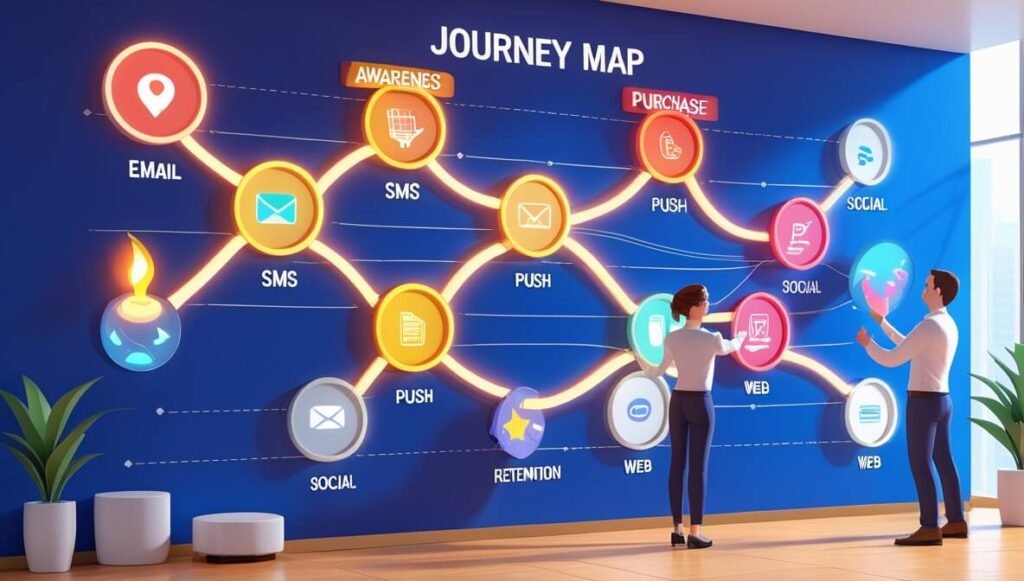
A marketing automation consultant doesn’t just set up tools; they design holistic strategies that weave together diverse channels. Here are key tactics they employ:
Omnichannel marketing requires a single source of truth for customer data. Consultants start by auditing existing data sources and establishing data hygiene practices. They use integrations to merge behavioral data (web visits, email clicks, purchase history) with demographic and transactional data from your CRM. Valtech, a digital transformation firm, explains that connected experiences arise when offline and online touchpoints are combined to enrich client profiles and drive interactions before, during and after physical experiences. In their Dolby SoHo case study, Valtech integrated offline event data with online activity to unify profiles and personalize automated communications, enabling granular segmentation and tailored messaging across the customer journey. Consultants replicate such approaches by connecting point‑of‑sale systems, loyalty programs and CRM databases.
Not every channel suits every stage of the customer journey. Consultants map the journey from awareness to retention and decide which channel best supports each step. For example:
Mapping these journeys helps consultants deliver the right content at the right time on the right channel.
Personalization increases relevance and conversion, but it requires granular segmentation based on behavior, interests and lifecycle stage. Marketing automation platforms can generate dynamic content or offers automatically. Consultants configure these features to tailor subject lines, body copy, product recommendations and send times. They also implement predictive analytics to determine which leads are most likely to convert and which channels they prefer. As Comosoft’s overview notes, integrated analytics and customer journey mapping tools allow you to track behavior, identify pain points and adapt messaging quickly.
Another dimension is regional or demographic personalization. Not all channels or content types resonate across cultures or age groups. Belkins highlights that regional preferences shape channel effectiveness—for example, email may be more popular in North America, while WhatsApp and Facebook Messenger dominate in parts of Asia. Consultants research your audience to ensure cultural relevance and compliance with local regulations.
Omnichannel strategies aren’t only digital. Many customer journeys include physical interactions—events, call centers, retail stores. Consultants incorporate these into automation flows. Valtech describes how combining offline and online touchpoints enriches the client profile and drives deeper engagement. For instance, after someone attends an event, an automated sequence might send a personalized recap email, followed by an SMS coupon valid in‑store. When the customer visits, the sales associate can access their profile to recommend relevant products. Consultants also ensure that phone calls and customer service interactions are logged in the CRM and trigger follow‑ups, closing the loop between marketing and customer service.
Data is the foundation of omnichannel marketing. Consultants set up dashboards and reporting to monitor key metrics—open and click rates, SMS response, social engagement, revenue attribution and customer lifetime value. They watch for drop‑off points in the journey and adjust channel mix or messaging accordingly. Comosoft advises prioritizing features like real‑time data synchronization and comprehensive analytics when choosing a platform; these enable quick adaptations and evidence‑based decisions. Consultants also conduct A/B tests across channels, test send times and frequency, and evaluate the incremental impact of each channel. The ultimate goal is to refine the orchestration so that customers receive just the right number of touchpoints to encourage action without fatigue.

Not all consultants are created equal. When evaluating candidates or agencies, consider the following criteria:
In a world where customers glide between devices and channels, relying on email alone is no longer sufficient. A marketing automation consultant helps organizations architect journeys that span email, SMS, social media, push notifications, voice, web and offline interactions. By understanding customer behavior, integrating data across platforms and orchestrating cross‑channel workflows, consultants deliver consistent experiences that improve engagement and conversions.
Adopting an omnichannel approach also means rethinking metrics—from open rates to lifetime value—and aligning departments around shared customer insights. With the right consultant, brands can move beyond ad‑hoc campaigns to build automated journeys that make customers feel recognized and valued at every step. This investment pays off in higher ROI, stronger loyalty and a marketing machine that continues to learn and improve.
Have you ever invested time and money into a blog post or landing page only to see it languish on the second or third page of Google? You’re not alone. Many businesses produce attractive content that fails to attract the right audience, while others cram keywords into pages that read like a robot wrote them. SEO copywriting services aim to solve both problems by fusing the art of persuasive storytelling with the science of search‑engine optimization (SEO). The result is content that ranks, resonates and converts.
This article takes a focused look at why that balance matters more than ever in 2025. It explains what SEO copywriting is, why it’s essential for modern businesses, the core components of a people‑first strategy, how to harmonize creativity with algorithmic precision and when it makes sense to hire professionals. To help you put theory into practice, it concludes with a detailed roadmap for creating your own SEO‑friendly copy.
At its core, SEO copywriting is about producing digital content that appeals to both human readers and search engines. It combines classic copywriting techniques—clarity, persuasion, a compelling narrative arc—with modern SEO best practices such as keyword targeting, user intent matching, structural optimization and accessibility. The goal isn’t to “game” Google but to create high‑quality pages that deserve to rank because they genuinely help readers.
Unlike generic web copy, SEO copywriting requires balancing several factors simultaneously. You need to place keywords naturally without disrupting the flow of your sentences. You must match search intent by understanding what a user is really looking for when they type a phrase into Google. You must structure your copy with descriptive headings, short paragraphs and multimedia so it’s easy to skim. And you have to encourage conversions with calls‑to‑action (CTAs) that guide readers to the next step. When done well, SEO copywriting delivers value at every stage of the user journey: it draws visitors in, answers their questions and invites them to engage further.
Because Google’s algorithms have matured, they reward pages that demonstrate Experience, Expertise, Authoritativeness and Trustworthiness (E‑E‑A‑T). High‑performing content clearly shows who wrote it, why they’re qualified to cover the topic and how the information was produced. It is transparent about any AI assistance and cites reputable sources. Understanding these principles sets the foundation for everything that follows.

In late 2024 Google incorporated its Helpful Content Update into the core search algorithm. This update prioritizes pages written for people rather than those created purely to chase rankings. It encourages publishers to ask three questions about every piece of content: Who created it? How was it produced? Why does it exist? Pages with clear authorship, transparent creation methods and a genuine intention to help readers align with E‑E‑A‑T and perform better. On the flip side, sites that rely on keyword stuffing or shallow, derivative articles risk being downgraded.
Despite the growth of paid ads and social media channels, organic search remains the primary traffic source for most websites. Recent data from 2024 show that about 53 % of all website traffic comes from organic search, whereas paid search contributes only around 5 %. Organic visitors also tend to be more sustainable and cost‑efficient than paid clicks because they arrive by choice rather than via an ad impression. Investing in content that ranks is therefore one of the most cost‑effective ways to grow your business over time.
High‑quality educational content doesn’t just attract visitors—it converts them into customers. A study by Conductor found that consumers are 131 % more likely to buy from a brand after consuming early‑stage educational content, and even a week later they remain 48 % more likely to purchase from the brand that educated them. When your articles genuinely help readers solve their problems, you build trust and authority. People remember who taught them something valuable and are more willing to engage further, whether that means signing up for a newsletter, requesting a quote or making a purchase.
Search engines now employ advanced models like BERT and MUM that understand context, tone and intent. Simply sprinkling keywords throughout your copy isn’t enough to rank. Modern algorithms reward clarity, depth and relevance. At the same time, users expect concise answers, engaging narratives and a clear value proposition. They don’t want to read through fluff or feel like they’re being sold to at every turn. Balancing these demands requires deliberate, thoughtful writing—exactly what SEO copywriting services offer.
Great SEO copywriting isn’t just about adding keywords; it’s about building content around real people and their needs. The following components form the backbone of a people‑first strategy. Each element works together to ensure your copy is both engaging and optimized.
Before you open a keyword tool, spend time clarifying who you are writing for and what they need. Talk to your customers, read forums and analyze support tickets to understand their pain points and desires. Conduct surveys or short interviews to find out what motivates them and where they get stuck. This qualitative research provides the context you need to create copy that resonates. When you know your audience, you can identify topics and questions that mirror their real‑world concerns rather than guessing what might be interesting.
Once you have a handle on your audience’s language, use tools like Google’s Keyword Planner, SEMrush or Ahrefs to validate search volume, difficulty and related terms. Identify a primary keyword that reflects the core topic of your page and a handful of secondary keywords that add depth and context. Keyword mapping—assigning specific keywords to individual pages—prevents cannibalization and allows you to build a logical site structure.
Equally important is matching search intent. Every keyword carries an intent—informational, navigational, transactional or commercial. Your content must align with this intent to satisfy the user. For example, someone searching “best noise‑cancelling headphones 2025” wants a comparison article, whereas “how to clean noise‑cancelling headphones” calls for a how‑to guide. If you provide the wrong format, readers will bounce, which signals to Google that your page isn’t helpful.
The heart of SEO copywriting is writing as if search engines didn’t exist. Focus on clear, conversational language that addresses your audience’s questions and pain points. Use narrative hooks, analogies and real‑world examples to make complex topics relatable and to evoke emotion. Instead of repeating a phrase like “best affordable yoga mats cheap yoga mats online buy now,” you might write, “Looking for an affordable yoga mat that supports your flow and your budget? We’ve got you covered.”
Once your story flows naturally, layer in optimization. Place your primary keyword in the title, the first 100 words and at least one subheading. Sprinkle related terms throughout the text where they make sense. Use descriptive alt text for images and include internal and external links that add value. Keep paragraphs short (two to four sentences), break up sections with subheadings and use bullet lists for clarity. Structured content not only helps readers skim but also improves your chances of earning featured snippets.
Technical details can make or break your content’s performance. Craft a unique, descriptive title tag under 60 characters and a concise meta description around 155–160 characters. Use header tags (H2–H3) to guide readers and search engines through your content. For images, write alt attributes that describe the picture and, where appropriate, contain keywords to improve accessibility. Keep your URL slug short and descriptive. Lastly, link to your own relevant pages and to high‑quality external sources to strengthen topical authority and help readers explore deeper.
People skim content—especially on mobile devices—so structure is vital. Use white space, short sentences and varied formatting (bold text, italics, blockquotes) to draw attention to key points. Incorporate storytelling to create an emotional connection. Share personal anecdotes, customer success stories or before‑and‑after scenarios to make your advice tangible. Always disclose who wrote the content, highlight credentials or certifications, and be transparent about how the information was gathered. Demonstrating your experience, expertise, authority and trustworthiness through E‑E‑A‑T signals not only helps with rankings but also builds confidence with your readers.

Successful SEO copywriting lives at the intersection of right‑brain creativity and left‑brain logic. On one hand, you need imaginative storytelling to captivate readers. On the other, you must satisfy algorithms with clear structure, relevant keywords and technical optimization. This balancing act is what differentiates outstanding copy from generic “SEO content.”
Search Engine Land likens the process to a symphony: the creative elements (tone, voice, narrative arc) must work in harmony with the technical instruments (metadata, internal links, schema markup). Overemphasize one side and the other suffers. For example, focusing solely on keywords can lead to stilted, robotic copy that turns readers off. Conversely, ignoring SEO best practices can mean your beautifully written article never reaches its intended audience.
What about AI? Machine‑learning tools can certainly help streamline research and draft basic outlines, but they often produce generic or inaccurate suggestions. A 2025 industry report noted that AI‑generated marketing advice was incomplete or misleading nearly half the time. That’s why human oversight is essential. Use AI tools to assist with brainstorming and data collection, but rely on your own expertise to craft the narrative and verify facts. The future of SEO copywriting will likely involve humans and AI collaborating—each doing what they do best.
Outsourcing SEO copywriting can be a smart investment for several reasons. First, it saves time. Creating comprehensive, optimized content requires research, planning, writing, editing and formatting. Professional copywriters handle these tasks so your team can focus on core business activities. Second, professionals bring a blend of creativity and technical know‑how. They understand keyword research, user intent, on‑page optimization and how to integrate CTAs without sounding pushy. Third, agencies provide consistency and scalability. They ensure your brand voice is unified across all content and can ramp up production as your needs grow. Finally, quality copy drives return on investment: high‑ranking, trustworthy pages generate sustainable organic traffic and increase conversions.
Not all SEO copywriting services are created equal. To find the right partner, start by evaluating their methodology. Ask how they conduct keyword research, analyze competitors and align content with user intent. Look for a people‑first approach rather than a reliance on automated tools. Next, review samples and case studies. Quality providers will showcase work that demonstrates improved rankings, engagement metrics and conversions. Pay attention to the clarity, depth and originality of their writing.
Brand alignment matters too. Your content should sound like you, not a template. Communicate your tone and audience profile up front and assess whether the agency can adapt. Ensure they adhere to E‑E‑A‑T: do they provide author bios? Do they cite authoritative sources? Are they transparent about how content is produced? Finally, evaluate communication and reporting. A good service should offer regular updates, provide performance reports and be open to feedback. Clear communication is essential for long‑term success.

This final section synthesizes everything you’ve learned into a practical roadmap. Each step is explained in depth so you can follow it yourself or use it to evaluate potential partners.
Start by identifying who you are writing for. Gather demographic information, but go deeper—what are your readers’ frustrations, goals and motivations? Use surveys, social‑media listening and direct customer interviews to collect insights. Create reader personas that capture these details. When you sit down to write, imagine explaining a concept to one of these personas. This personal approach will make your copy more authentic and persuasive.
Once you know your audience, clarify the intent behind the keywords they use. Is the searcher looking for information, a specific product, a comparison or instructions on how to do something? For each target keyword, write down the question or need the reader has. This exercise will guide your content format. For instance, informational keywords call for detailed guides; transactional keywords require reviews or product pages. Aligning content with intent reduces bounce rates and increases conversions.
Use tools to find a primary keyword that encapsulates your topic and related secondary phrases that add nuance. Analyze search volume to ensure there’s demand, assess keyword difficulty to gauge competition and evaluate search features (like featured snippets) that might influence format. Map each keyword to a specific page on your site. This prevents multiple pages from competing for the same term and helps you organize content into logical silos.
Plan your article before you start drafting. Create an outline with descriptive headings and subheadings every 200–300 words. This structure keeps your writing focused and makes it easier for readers to skim. When drafting, use clear, conversational language. Open with a hook that addresses a problem or question your reader has. Develop your points in a logical order, using transitions to connect ideas. Include storytelling elements—anecdotes, case studies, analogies—to make the material memorable. Keep paragraphs short and use lists or tables to break up dense text.
After your draft flows naturally, layer in SEO. Include your primary keyword in the title tag, first paragraph and at least one subheading. Use secondary keywords where they fit contextually; avoid awkward phrasing. Write a concise meta description (155–160 characters) that summarizes the page’s value and includes the primary keyword. Choose a short, descriptive URL slug. For images, write alt text that describes the picture and, when appropriate, incorporates keywords. Add internal links to related pages on your site and external links to reputable sources to support your claims.
Visuals break up long stretches of text and help explain complex ideas. Incorporate infographics, charts, screenshots or diagrams where appropriate. Each visual should have a descriptive file name and alt text for accessibility and SEO. At the end of each major section, include a call‑to‑action that guides readers to the next step, such as subscribing to a newsletter, downloading a resource or booking a consultation. Make sure CTAs are relevant to the content and provide clear value.
Before publishing, review your article for E‑E‑A‑T criteria. Ensure author credentials are visible, sources are cited and any AI assistance is disclosed. Check your article on mobile devices to confirm that text is easy to read, buttons are tappable and images scale properly. After publication, monitor analytics for traffic, dwell time and conversions. Use these insights to update your content periodically. Search algorithms favor fresh, accurate information, so regular updates can maintain or improve your rankings.
Growing a small business in a competitive digital landscape is challenging. Even if your products or services are exceptional, customers will struggle to find you if your website doesn’t show up in search results. That’s where search‑engine optimisation (SEO) comes in. SEO helps your site rank higher on Google and other search engines, making it easier for local customers and nationwide audiences to discover what you offer. But what if you don’t have a large marketing budget? This article explains how affordable SEO services can deliver meaningful results without breaking the bank. We’ll explore typical pricing, the services included in cost‑effective packages, how to evaluate providers and practical tips for making the most of every dollar you spend.
Before diving into costs, it’s important to understand why SEO is worth investing in at all. Organic search drives a large portion of website traffic, especially for local businesses. Nearly half of all Google queries have local intent and more than three‑quarters of people who search for something nearby on their smartphone visit a related business within a day ( hookagency.com ). When your site appears near the top of results for keywords related to your products or services, you’re more likely to attract qualified leads who are actively looking for what you sell. SEO also builds credibility — people tend to trust businesses that rank well because search engines reward high‑quality, relevant content. Over time, this visibility translates into foot traffic, phone calls, online purchases and recurring revenue.
In addition to generating more traffic, SEO delivers impressive returns. Studies show that many email marketing campaigns generate between $36 and $40 for every dollar spent, but SEO can provide even greater long‑term ROI because the improvements compound over time. When you invest in optimising your website, the content and technical fixes you make continue to work for you long after the initial investment. This makes SEO one of the most cost‑effective marketing channels available to small businesses.

“Affordable” doesn’t necessarily mean cheap. Legitimate SEO involves a significant amount of research, technical work and content development. Pricing depends on factors like your industry’s competitiveness, the size of your website and the geographic scope of your target audience. Affordable SEO services are packages designed to give small businesses the most important optimisation tasks at a price that fits limited budgets.
An affordable package usually includes a mix of the following:
These components ensure you’re covering the fundamentals without paying for unnecessary extras.
SEO pricing can feel like a minefield. Some agencies advertise $99 per month packages, while others quote thousands of dollars. To help you set realistic expectations, consider these benchmark ranges from industry sources:
• Monthly retainers: Many small businesses invest between $500 and $1,500 per month in SEO. For example, digital marketing guides report that small companies often pay $300–$1,500 monthly for local SEO, Google Business Profile optimisation and basic link building packages ( wedowebapps.com ). Mid‑sized businesses spend $2,000–$6,000 per month, and larger enterprises may invest $10,000–$30,000 or more.
• Hourly rates: Some consultants charge by the hour. Research from industry surveys shows that SEO professionals typically bill between $75 and $150 per hour, with national agencies on the higher end. Affordable local SEO providers might charge closer to $100 per hour, and rates under $150 are generally considered reasonable for basic optimisation ( 6smarketers.com ).
• Project‑based pricing: One‑time projects like technical audits or website migrations can cost anywhere from $700 to $2,000 depending on the complexity. Detailed technical audits that include robots.txt and sitemap validation, canonical tag checks, indexing issues and core web vitals typically range from $700 to $1,000 per audit ( seoprofy.com ). Creating a high‑quality 1,000‑word landing page may cost $160 to $220 in content fees, while local SEO implementation per location often runs $500 to $650.
• Package tiers: Some agencies bundle services into tiers. One entry‑level package might cost $300–$500 per month for tasks you can partially handle yourself. A mid‑range package ($500–$1,500 per month) could include ongoing content creation, on‑page optimisation and basic link outreach. A full‑service “lite” campaign might cost $1,000–$1,500 per month and include strategy development, technical improvements, monthly reporting and more. More comprehensive plans may start around $1,500 and go up from there depending on your goals.
When comparing quotes, remember that extremely low prices often indicate generic reports, automated tactics or risky practices. While you don’t need to spend a fortune, you should expect to pay enough for professional expertise and time. As one pricing guide warns, packages costing less than $150 per month often deliver little more than a templated PDF and can involve black‑hat methods that harm your site ( foxxr.com ).
So what exactly are you getting for $500, $1,500 or $3,000 per month? Here’s a closer look at common line items in affordable SEO packages:
An audit is the foundation of any campaign. It identifies the technical, on‑page and off‑page issues holding your site back. Affordable providers may run automated scans, but professional audits go deeper, checking robots.txt and sitemap files, ensuring pages are properly indexed, verifying canonical and hreflang tags, measuring core web vitals (page speed, interactivity and visual stability) and finding gaps in structured data. Expect to pay $700 to $1,000 for a comprehensive audit, although some agencies include a basic review in their monthly retainer.
Keyword research ensures you’re targeting the phrases your customers actually use. An affordable package should include a list of primary and secondary keywords, plus suggestions for new content based on search intent. On‑page optimisation covers writing unique title tags and meta descriptions, structuring headers for readability, adding internal links and creating clean URLs. Agencies may charge $50 per page for on‑page optimisation work, so packages that include dozens of pages will cost more.
Technical SEO addresses the infrastructure that search engines crawl. This might involve fixing 4xx/5xx errors, creating redirects to avoid broken links, implementing HTTPS, improving server response times, compressing images, enabling browser caching and installing security certificates. Packages may also include custom firewall rules and content delivery network (CDN) integration. A batch of technical fixes often costs $300 to $800, although some agencies include it in a monthly retainer.
For service businesses that rely on customers in a specific city or region, local SEO is vital. This includes claiming and optimising your Google Business Profile, ensuring consistent NAP citations across directories, integrating Google Maps on your site, collecting and responding to customer reviews and publishing locally focused content. Full local SEO packages can cost $500–$650 per location ( seoprofy.com ). Done right, local optimisation helps your business appear in the “map pack” at the top of search results, which receives most of the clicks.
Search engines reward fresh, helpful content. Blog posts, tutorials, case studies and FAQs attract visitors and establish your expertise. Professional copywriters typically charge $100–$250 per page or $160–$220 per 1,000‑word landing page. An affordable package should include at least one new or refreshed piece of content per month. If your budget is tight, consider writing some posts yourself and using your SEO provider to optimise them.
Earning reputable backlinks can be time‑consuming, but it’s essential for improving authority. Basic link‑building strategies include submitting your business to local directories, collaborating with complementary businesses for cross‑promotions, writing guest posts on industry blogs and reclaiming mentions of your brand. Agencies often charge $80–$100 per hour for link outreach, so affordable packages may focus on a handful of high‑quality opportunities rather than dozens of random links.
SEO isn’t a set‑and‑forget activity. Search engines update algorithms regularly, competitors launch new content and user behaviour shifts over time. A cost‑effective SEO provider should offer monthly reports that track keyword rankings, traffic, conversions and ROI. These reports enable you to see which tactics are working and where to adjust your strategy. Transparency is key; avoid agencies that won’t share data or explain their methods.

Why do some businesses pay $300 per month while others pay $3,000? Pricing varies based on:
Understanding these factors helps you choose a package that aligns with your needs. Transparent agencies will ask about your business goals and audit your existing site before quoting a price
Selecting an SEO partner is one of the most important decisions you’ll make. The right agency can boost your online visibility and sales; the wrong one can waste your money or even get your site penalised. Use this checklist when evaluating providers:
You can also mix and match. Some businesses retain a consultant for strategy and periodic audits while handling content creation internally. Others choose full‑service agencies to free up their time. Evaluate your own strengths and workload before committing.
Even with a modest budget, there are ways to amplify your SEO returns. Consider these strategies:
Unfortunately, the SEO industry has its share of questionable operators. Low‑quality providers often lure small businesses with ultra‑low prices and grand promises. To protect yourself, watch out for:
Do your research, read reviews and ask questions. It’s better to invest a little more in a reputable provider than to waste time and money on ineffective or harmful tactics.
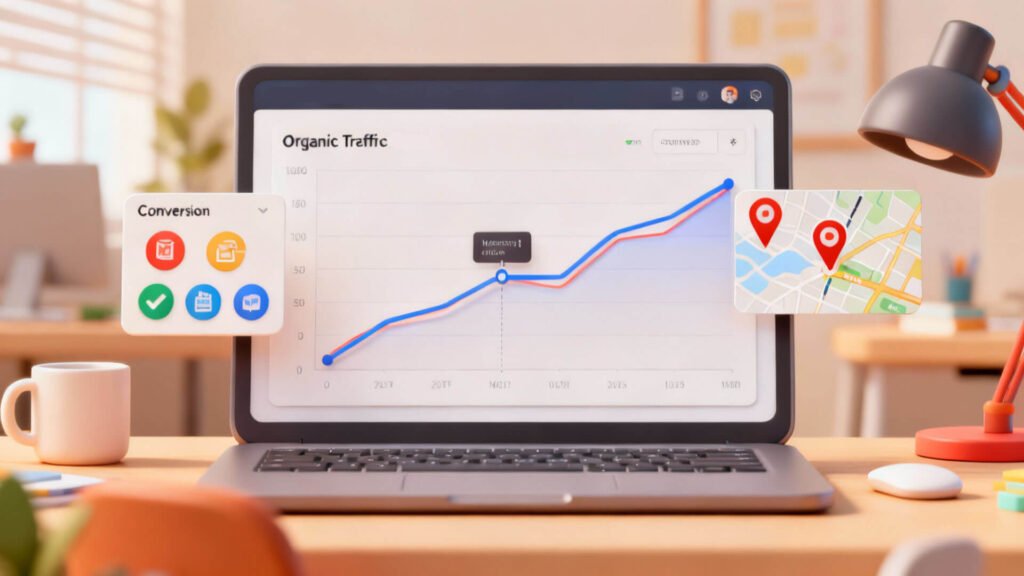
Affordable SEO isn’t just about saving money; it’s about allocating your budget wisely. When done right, even modest campaigns can yield impressive returns. For example, local SEO campaigns often deliver ROI of 500% or more because local searchers tend to convert at very high rates ( searchatlas.com ). When 28% of local searches result in a purchase and 76% of smartphone users who search for something nearby visit a business within a day ( seodesignchicago.com ), a small investment in optimising your local presence can yield immediate dividends. Over time, your organic rankings compound the effect as you accumulate authority and trust.
Measuring ROI requires tracking metrics beyond rankings. Monitor organic traffic, conversion rates, cost per acquisition, lifetime customer value and revenue growth. Compare these numbers to your SEO spend over a three‑ to six‑month period. Keep in mind that results often accelerate after the first few months as search engines index your updates and backlinks mature. Patience and consistency are your allies.
Affordable SEO services enable small businesses to compete with larger players by improving visibility, driving targeted traffic and building credibility. Typical packages range from $500 to $1,500 per month, depending on your needs and market. With a focus on essential tasks — such as audits, on‑page optimisation, technical fixes, content creation and local SEO — you can build a strong foundation without overspending. Remember to evaluate providers carefully, prioritise high‑impact activities, avoid unrealistic promises and track your return on investment over time.
SEO is not a one‑time expense; it’s an ongoing investment in your business’s long‑term health. By choosing an affordable, transparent and strategic partner, you’ll set your small business up for sustainable growth and success in an increasingly digital world.