
Affiliate marketing has graduated from an obscure fringe tactic to a core driver of e‑commerce revenues. While its performance‑based model has generated billions for advertisers and publishers, sceptics still ask whether it’s a legitimate business opportunity or a clever pyramid scheme. This article cuts through the hype by examining the industry’s evolution, economics and ethical standards. We’ll explore how it works, why it’s proven to be a lawful and profitable marketing channel, and the red flags that separate a legitimate program from a scam.
At its core, affiliate marketing is a performance‑based partnership in which a company pays third parties (affiliates) a commission for driving traffic or sales. [investopedia.com] explains that digital tracking technologies like cookies and analytics have transformed this model into a multibillion‑dollar industry, spawning a variety of arrangements. Affiliates may be unattached promoters who simply advertise products on high‑traffic websites, related affiliates who blog about topics in their niche, or involved affiliates who use and endorse the products they sell. In each case, the advertiser only pays when a desired action – a sale or lead – occurs.
This structure creates a clear incentive alignment between companies and publishers. Rather than spending huge budgets on untargeted advertising, brands can reward the partners who actually deliver results. Affiliates benefit from flexible working conditions – they choose the products they promote and the content formats they use – while merchants enjoy incremental revenue and broadened reach. Performance‑driven models can encompass pay‑per‑sale, pay‑per‑lead or pay‑per‑click arrangements, each measured via sophisticated tracking software. Cookies record which affiliate referred a customer, and attribution windows ensure commissions are honoured even if the buyer returns days later. The interplay of technology and analytics is what allows a decentralised network of independent promoters to function like an extension of a brand’s sales force.
Because advertisers only pay for results, affiliate programs are attractive to both start‑ups and enterprise brands. Major companies such as Amazon, eBay and Shopify have built massive networks of independent publishers who drive incremental revenue [getresponse.com]. This wide adoption underscores the model’s legitimacy: household brands wouldn’t risk their reputations on a scam.
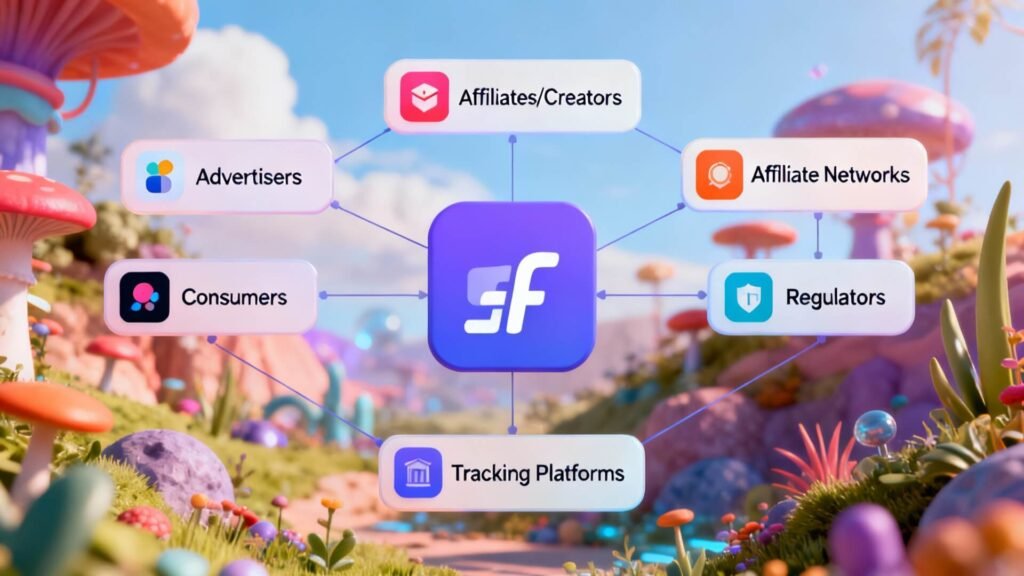
The affiliate universe includes more than just merchants and publishers. A thriving ecosystem of networks, tracking platforms, regulators and consumers forms the backbone of the business. Advertisers (often called merchants or brands) create the products, set commission rates and provide creatives such as banners and landing pages. Affiliates (publishers, creators or influencers) choose which products to promote and develop content that persuades readers to click. Affiliate networks act as marketplaces, connecting merchants with thousands of potential partners, managing tracking technology and handling payments. Networks vet programmes for quality and supply affiliates with dashboards to monitor earnings. There are also sub‑networks and aggregators that specialise in certain verticals, such as finance or gaming, offering curated offers.
Consumers form the fourth pillar: they click links and purchase products. Their trust in affiliates’ recommendations is what ultimately drives conversions. Regulators and watchdog groups – from the U.S. FTC to the UK’s Advertising Standards Authority (ASA) – play a vital role in protecting consumers. By issuing guidelines on disclosure and truth‑in‑advertising, they ensure that affiliates don’t mislead their audiences. Finally, technology vendors provide the infrastructure that makes everything work: tracking software, API integrations with e‑commerce platforms, fraud‑prevention tools and analytics dashboards. Understanding these stakeholders is essential, because legitimate programmes address the needs of all parties while shady schemes exploit the gaps.
The first modern affiliate program, Amazon Associates, launched in July 1996 and offered commissions of less than 1 % up to 20 % depending on the product [referralfactory.com]. Early schemes were plagued by fraud – cookie stuffing and unethical “get rich quick” pitches gave the industry a bad reputation. Regulation and professionalisation followed. The U.S. Federal Trade Commission (FTC) introduced disclosure rules requiring affiliates to reveal their financial relationships, and today most networks implement strict compliance standards to prevent fraud. Over time the industry matured, gaining trust from advertisers and publishers alike.
The growth figures tell a compelling story. Analysts predict global affiliate marketing spend will exceed $37.3 billion in 2025, up from about $20 billion a few years earlier [trafficguard.ai]. U.S. expenditure is forecast to reach roughly $11 billion by 2025. Independent estimates suggest compound annual growth rates of 8–15 %, with global revenues poised to surpass $48 billion by 2027 [thunderbit.com]. Such sustained expansion reflects advertisers’ confidence in the channel and the shift toward accountable marketing spend.
Several macro trends have fuelled this surge. The explosive growth of e‑commerce means more transactions happen online, providing fertile ground for referral‑driven sales. The rise of content creation – blogs, podcasts, newsletters and video channels – has given individuals inexpensive platforms to reach global audiences. Meanwhile, consumers increasingly discover products through peers and creators rather than direct ads, making affiliate recommendations more persuasive. Mobile internet access has untethered shopping from desktop computers, and social media has enabled products to go viral within minutes. Technological advances in tracking, such as server‑side tagging and cookieless solutions, have sustained accuracy despite privacy regulations. These forces, combined with the economic uncertainty of recent years, have made performance‑based partnerships attractive: brands can scale budgets up or down quickly and only pay for measurable results.
Legitimacy starts with economics. Because affiliates are only paid when they deliver conversions, most businesses earn impressive returns on investment. A study highlighted by trafficguard.ai notes that brands typically earn between $12 and $15 for every dollar spent on affiliate marketing. This ROI is comparable to or better than many paid advertising channels. Another survey summarised by thunderbit.com found that 65 % of retailers reported affiliate marketing lifts revenue by up to 20 % and that the top 10 % of affiliates generate 90 % of programme revenue. Such concentration of earnings reflects the competitive nature of the field: successful affiliates invest heavily in content and SEO to build authority.
Adoption rates underscore how deeply embedded the model has become. According to the Misstechy data roundup, 81 % of brands and 84 % of publishers now run affiliate programmes, while affiliate links drive about 16 % of online orders in the United States. The same report notes that affiliate marketing accounts for 5–25 % of revenue for many retailers and that mobile devices generate over 60 % of affiliate clicks. Top affiliates rely on search engine optimisation for roughly 70 % of their traffic. The sheer scale of participation makes it clear that this isn’t a niche hustle but a mainstream marketing channel [misstechy.com].
Beyond hard numbers, affiliate marketing strengthens brand equity and consumer trust. A well‑executed programme turns loyal customers into brand advocates: when an enthusiast shares their favourite software or kitchen gadget with friends, that recommendation carries more weight than an ad. Affiliates often create content – tutorials, comparisons, unboxing videos – that educates potential buyers and reduces pre‑purchase anxiety. This content lives on long after an ad campaign ends, generating evergreen traffic and reinforcing a brand’s authority in its niche. From a global perspective, affiliates can introduce brands into markets where they lack distribution or local marketing expertise. A French blog about eco‑friendly fashion can expose an American brand to European consumers, while a tech reviewer in India can help a SaaS company reach new geographies without opening an office. These intangible benefits are harder to quantify but contribute to the legitimacy and durability of the model.
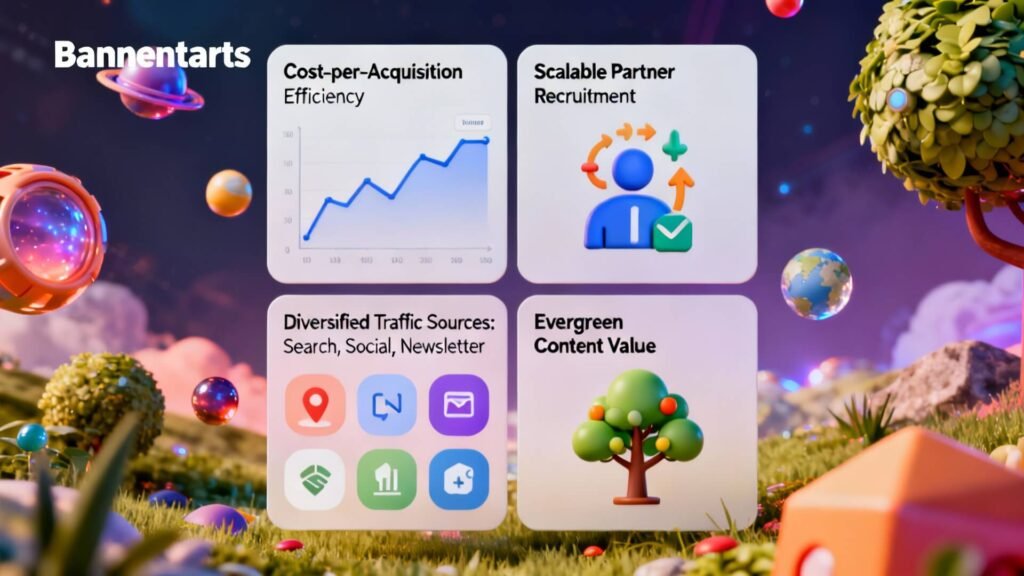
Legitimate affiliate marketing offers benefits that extend beyond raw revenue. First, it’s cost‑effective: advertisers pay for performance instead of impressions, making budget allocation predictable. Commissions range widely depending on sector, from a few per cent for commodity products to 70 % for high-ticket software subscriptions. Second, it’s scalable. There are more than 100,000 companies providing affiliate marketing services, and the barrier to entry for new publishers is low. Third, it diversifies traffic: affiliates with specialised blogs or social media followings can reach niche audiences that a company’s own marketing might miss.
Another advantage is the democratisation of marketing. Affiliate programmes enable individual creators – from stay‑at‑home parents to YouTube personalities – to monetise their content. However, success isn’t guaranteed: only about 35 % of affiliates earn more than $20,000 per year and less than 10 % exceed $50,000. This income distribution highlights the importance of skill, persistence and choosing reputable programmes.How to Spot a Legit Programme
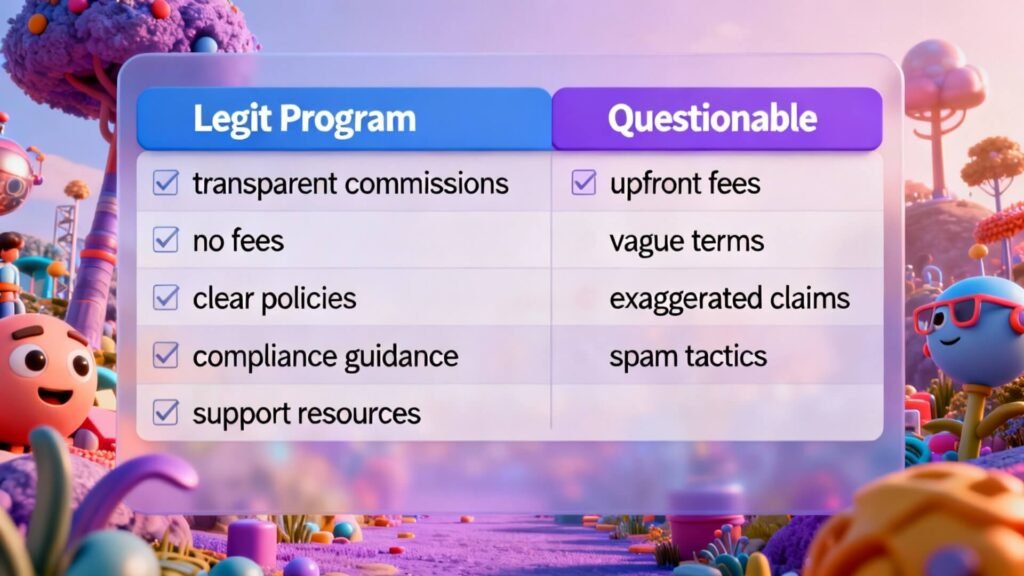
With thousands of programmes available, due diligence is essential. Here are criteria to separate legitimate opportunities from potential scams:
By following these guidelines, aspiring affiliates can filter out questionable schemes and align with brands that value long‑term partnerships over quick gains.
Due diligence means going beyond a glossy landing page. Before signing up, research the advertiser: does it have a physical address, clear contact details and an established reputation? Read the programme’s terms and conditions to understand cookie durations, payment thresholds and prohibited marketing methods. Check independent reviews on affiliate forums or Facebook groups to see what other publishers say about the network’s reliability and support. Examine the product or service itself – is it something you would genuinely recommend to friends? Legitimate programmes encourage affiliates to experience the product first. If you’re promoting a supplement or financial product, verify that it complies with local regulations and avoids unsupported claims. Also consider diversification: rely on multiple partners rather than a single programme so that you aren’t vulnerable if one network changes its rules or reduces commissions.
No discussion of affiliate marketing legitimacy is complete without acknowledging the scams. During the industry’s early days, unscrupulous operators inflated traffic with cookie stuffing and bot clicks. Similar tactics persist. Trafficguard.ai reports that global ad fraud cost marketers over $84 billion in 2023, equating to roughly 22 % of total digital ad spend. Fraudsters generate fake clicks or sign‑ups to claim commissions without creating real sales. Postback abuse – sending false conversion events to networks – is also on the rise.
Another common scam involves pay‑to‑join schemes. These programmes require affiliates to pay for “training” or membership before they can earn commissions. Legit programmes never charge fees. Similarly, multi‑level marketing (MLM) schemes sometimes masquerade as affiliate programmes but rely on recruiting more members rather than selling actual products. [hostinger.com] warns that digital ad fraud losses could climb from $35 billion to $100 billion between 2018 and 2023, stressing the need to scrutinise offers.
Finally, be wary of products that make medical or financial claims without evidence. These offers may be illegal. Affiliates can face penalties if they promote unapproved or deceptive products.
Scammers also exploit technical loopholes. Cookie stuffing places affiliate cookies on users’ devices without their knowledge, crediting the fraudster when the user later makes a legitimate purchase. Click hijacking reroutes traffic through another affiliate’s link at the last second, stealing commissions from the rightful promoter. Some black‑hat marketers deploy bots or farms of low‑quality traffic to mimic human activity. If a programme lacks anti‑fraud measures – such as IP address monitoring, conversion validation and manual audits – legitimate partners may find their earnings diluted. Newcomers should avoid programmes that encourage cloaking techniques, hidden iframes or other deceptive tactics; these may temporarily inflate earnings but inevitably result in bans and reputational damage.
The affiliate industry’s legitimacy rests on transparent practices. Since 2009, the U.S. FTC has required affiliates and influencers to disclose any financial relationships. According to [impact.com], clear disclosures protect consumers and promote trust; 57 % of shoppers say transparency is important when evaluating influencer recommendations. Failing to disclose can lead to fines for both the affiliate and the brand.
Disclosure statements should be conspicuous, written in plain language and placed near affiliate links. For example, a blog post might include a sentence such as “I may earn a commission at no additional cost to you if you purchase through my links.” On social media, hashtags like #ad or #affiliate can suffice. Different jurisdictions have similar rules, so affiliates should familiarise themselves with regional regulations.
Transparency doesn’t stop at disclosure. Affiliates should maintain honest reviews and accurate depictions of products; embellishing performance claims or cherry‑picking positive testimonials can mislead audiences and lead to complaints. Outside the United States, other regulators enforce similar standards: the UK’s Advertising Standards Authority (ASA) requires that affiliate ads be clearly labelled and prohibits misleading health or financial claims. Canada’s Competition Bureau issues guidance on influencer marketing and endorses disclosure similar to FTC requirements. In Europe, the Unfair Commercial Practices Directive and ePrivacy rules govern online endorsements. The common thread across these regimes is clarity and honesty: affiliates must never disguise commercial intent.
It helps to know the hallmarks of a reputable programme. Legitimate affiliate offers pay commission only on verified sales or leads; they don’t charge membership or training fees. They make realistic earnings claims and emphasise that success requires effort and marketing skill. Reputable programmes are transparent about commission rates, cookie durations and payment schedules, and they encourage affiliates to follow disclosure guidelines. They invest in support and compliance, providing training and enforcing FTC rules. And they promote products with genuine demand and verifiable reviews. In contrast, questionable schemes demand upfront fees, make exaggerated income promises, obscure payment terms, provide little support and often push dubious or unproven products.
Example 1 – A Niche Blog: Jane runs a blog about specialty tea. She partners with a reputable tea retailer through an affiliate network and writes detailed reviews comparing flavours. Her honest reviews and disclosure statements build reader trust. Within a year she earns a steady income that covers hosting costs and more. Jane’s success illustrates the power of targeting a niche audience and providing valuable content.
Example 2 – YouTube Channel: Roberto operates a tech review channel on YouTube. He joins programs offered by major electronics retailers and includes affiliate links in his video descriptions. Because he tests each product and clearly labels sponsored links, his audience appreciates his transparency. Affiliate commissions now fund new devices for review. Roberto’s story shows that affiliate marketing can be an ethical revenue stream when paired with authenticity.
Lesson Learned: Both cases demonstrate that authenticity and long‑term engagement are key. Success isn’t about spamming links; it’s about educating and helping your audience. Once trust is established, affiliate revenue follows.
Other success stories highlight different approaches. A well‑known travel blogger built a seven‑figure business promoting credit cards and hotel loyalty programmes by producing comprehensive guides to reward points. His secret was a deep understanding of readers’ pain points – he explained how to maximise perks without excessive fees – and he disclosed his affiliate relationships prominently. Likewise, a software comparison site grew from a side project into a 20‑person company by creating detailed, unbiased reviews of SaaS tools and monetising through affiliate partnerships. The site invests in editorial research, tests each product extensively and updates articles as features change. These examples show that legitimate affiliate marketing can evolve into a full‑fledged media business when executed professionally.
The affiliate landscape is evolving rapidly. Several trends will shape its future:
Other developments are already reshaping the channel. As search engines roll out answer‑engine snippets and AI overviews, affiliates need to optimise for conversational queries and structured data so that their content surfaces in voice and visual search. Shifts toward first‑party data and privacy‑preserving tracking mean that server‑side analytics and clean data collection are becoming critical. The rise of retail media networks – e‑commerce platforms offering internal ad programmes – creates hybrid roles for affiliates who manage both marketplace ads and off‑site content. Globally, emerging markets in Asia, Latin America and Africa are seeing rapid adoption of smartphones and e‑commerce, opening new audiences for affiliates who localise their content and adapt to different cultural contexts. Finally, collaborations between affiliates, influencers and brands are becoming more sophisticated, with joint product launches, co‑branded content and shared analytics to optimise customer journeys.
Affiliate marketing has come a long way since the Wild West days of the 1990s. Today, it’s a mainstream, performance‑driven channel that delivers impressive returns and opportunities for both businesses and individual creators. The industry’s legitimacy is underscored by its massive adoption, strong ROI and regulatory oversight. Scams and fraud certainly exist, but they can be avoided with due diligence and adherence to FTC guidelines. By choosing reputable programmes, disclosing relationships and focusing on value‑driven content, affiliates can build sustainable businesses, and advertisers can harness a cost‑efficient source of revenue.
Ready to explore affiliate marketing? Approach it as a long‑term partnership rather than a quick fix, and you’ll be well on your way to transforming a side hustle into a viable business.
B2B email marketing remains one of the most reliable channels for generating leads and nurturing relationships. Yet many organisations still treat email as a stand‑alone tactic, disconnected from the conversations and insights of their sales teams. Recent research shows that email marketing delivers a staggering return on investment of $36–$40 for every dollar spent and that over 4.48 billion people use email worldwide [demandsage.com]. Despite its ubiquity, misaligned messaging and timing can erode trust, lengthen sales cycles and leave money on the table.
This guide explains why aligning B2B email marketing with your sales process is essential for turning engagement into revenue. You’ll learn the fundamentals of modern email marketing, see how emerging technologies like AI and answer‑engine optimisation are changing the game, and get practical tips for integrating your campaigns with sales outreach. A summary table highlights key benchmarks and statistics to set realistic expectations, and prompts for visuals help you bring these concepts to life.

When marketing and sales operate in silos, opportunities slip through the cracks. Marketing may nurture prospects who aren’t sales ready, while sales may approach leads without context about their interests. Aligning email campaigns with sales activities produces tangible benefits:
Before exploring alignment tactics, it’s important to understand the state of B2B email marketing in 2025. Key statistics provide context for your strategy:
These numbers underscore the importance of delivering value—through segmentation, timely messages and clear calls‑to‑action—rather than simply increasing volume.
Beyond improved metrics, synchronising email marketing with sales processes yields strategic benefits that directly impact revenue:
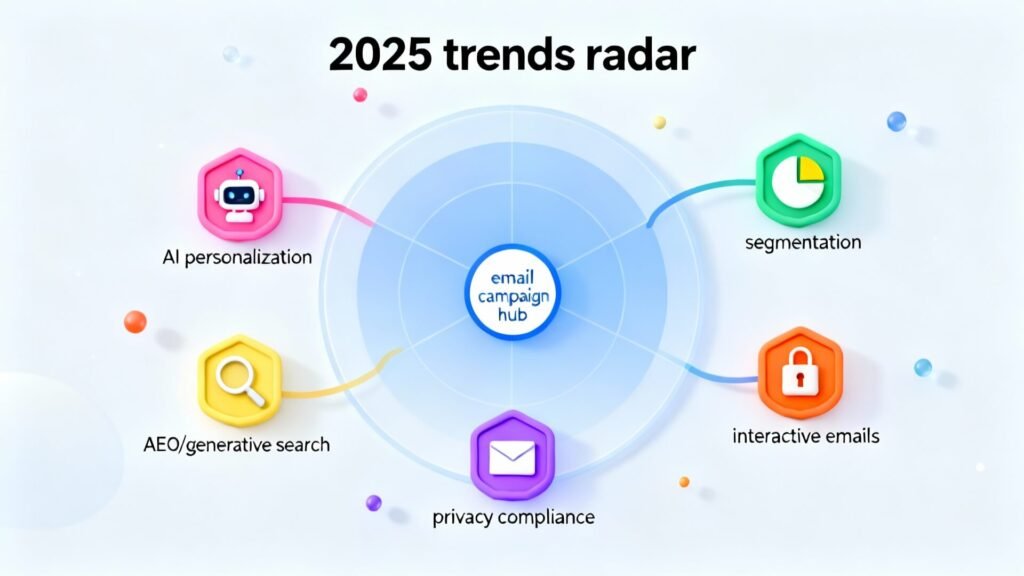
B2B email marketing is evolving alongside technology and buyer behaviour. Staying ahead requires understanding these trends and incorporating them into your alignment strategy:
Artificial intelligence continues to transform email marketing. Tools equipped with machine learning analyse data at scale, generate long‑tail keywords and personalise subject lines and copy for individual recipients. 63% of marketers now use AI tools for email marketing, and those who use AI to personalise messages report a 41% increase in revenue and 13.44% higher click‑through rates. AI also optimises send times and suggests next best actions, making it easier to align campaigns with sales cadences.
Segmentation isn’t new, but its impact is growing. According to Campaign Monitor, segmented campaigns can increase revenue by 760%, and 39% of marketers practising list segmentation see better open rates, while 24% see increased sales leads. Dynamic content blocks automatically switch sections of an email based on a recipient’s segment, ensuring that every message feels personalised without creating countless versions.
AI‑powered search engines and answer engines like ChatGPT and Google’s AI Overviews summarise and cite authoritative sources in response to queries. Email content that addresses common questions and is well structured can appear in these summaries. Aligning topics and keywords with buyer search behaviour helps your brand surface in generative results, providing extra exposure and credibility.
Interactive elements—videos, polls, accordions—boost engagement. Emails with video have been shown to increase open rates by 20% and reduce unsubscribes by 26%. Consider embedding a short explainer video or including a one‑click poll to gather data for sales follow‑up. Multimedia also helps break up long copy and keeps readers engaged.
With heightened privacy regulations like GDPR and CCPA, compliance matters more than ever. Ensure your unsubscribe links are visible, manage consent for data use and clearly explain how subscriber data will be used. Transparent policies build trust—something your sales team depends on.
Aligning B2B email marketing with sales requires collaboration, shared data and an agreed‑upon framework. Here’s how to build a unified approach:
Start by mapping the stages of your buyer journey—from awareness to decision—and list the touchpoints where both marketing and sales interact with prospects. Determine which types of emails correspond to each stage (e.g., educational newsletters at the top of the funnel, case studies and product comparison guides in the middle, and demo invitations or pricing updates for the bottom). This ensures that marketing and sales deliver complementary messages rather than duplicating efforts.
Agree on what constitutes a marketing‑qualified lead (MQL) and a sales‑qualified lead (SQL). Establish a scoring model that weights email engagement (opens, clicks, time spent), intent signals (webinar attendance, pricing page visits) and firmographic data (company size, industry). Regularly review scoring criteria to ensure alignment with real sales outcomes.
Use marketing automation and CRM platforms that synchronise data in real time. When a prospect clicks a link in an email or fills out a form, their activity should appear in your CRM, triggering tasks for the sales team. Conversely, notes and outcomes from sales calls should feed back into the marketing system to refine segmentation and content.
Plan your email schedule in tandem with sales outreach. For example, if sales are planning a call or meeting, avoid sending a generic marketing email on the same day. Use sequences that alternate between educational and promotional messages, gradually building trust and urgency. Align calls‑to‑action with sales goals—whether it’s booking a demo, signing up for a trial or scheduling a discovery call.
Set up notifications for sales reps when high‑value prospects take meaningful actions (opening a particular email, clicking on a case study link, registering for a webinar). This allows timely follow‑up that acknowledges the prospect’s interest and offers additional value.
Evaluate performance using metrics that matter to both teams. In addition to opens and clicks, track conversion rates, pipeline velocity, deal size and revenue attributed to email campaigns. Use this data to iterate on subject lines, content formats and timing.
Aligning marketing and sales can be difficult. Here are common challenges and how to address them:

The future of B2B email marketing will be shaped by technological innovation and evolving buyer expectations:
Email remains a powerhouse for B2B marketers, but its true potential is realised only when it works seamlessly with sales. By understanding current benchmarks, embracing AI‑powered personalisation and segmentation, and building shared processes and goals with your sales counterparts, you can deliver messages that resonate and drive conversions. The statistics and strategies in this guide show that when marketing and sales align, you create a cohesive buyer experience that shortens sales cycles, increases revenue and builds lasting relationships.
Begin by mapping your buyer journey and establishing shared metrics. Experiment with segmentation, automation and AI to tailor every message. Coordinate cadences so prospects never feel bombarded. And always close the loop with sales feedback to refine your content strategy. In the ever‑evolving landscape of B2B marketing, a unified email‑sales strategy is not just beneficial—it’s essential.
The agency-brand relationship is more than ever before complicated in modern hyperconnected marketing environment. Brands are under unprecedented pressure to stand out and stay true to themselves, and agencies need to deliver innovative campaigns fast. Yet many agency brand partnerships fail because the creative work they produce is not aligned with the core values of the brand. When brand values and creativity are not in balance, campaigns are not authentic, consumers become disinterested, and collaborations break down.
According to the World Federation of Advertisers (WFA), 80% of brands have had at least some of their remuneration internally, and 86% are satisfied with the results they have achieved [newdigitalage.co]. Partly because brands want more control over how creative work represents their ethos, brands are bringing more work in-house. Meanwhile, pressure is increasing on agencies to change from execution to strategic advisory roles in an AI-first world. In order to thrive in this changing environment, agencies and brands require a cohesive vision that brings creativity to the brand values.
As part of this guide to the world, we are going to discuss why agency creativity should be aligned with brand values, look at the trends that are transforming agency-brand relationships and also present practical strategies, examples and tips that can assist agencies and brands to collaborate in ways that are more effective. Being an agency head, a brand marketer, or even a creative expert, this article will demonstrate how to establish a partnership based on mutual values that leads to eventual growth.

Agency creativity is the creations of ideas, strategies and executions that are developed by agencies to solve marketing problems. It constitutes the areas of developing a campaign theme to visuals, text, and interactivity. Agencies are innovators and if anything they take risks and break through the noise. Their role is to transform the goals of the brand into interesting stories that attract and engage people into action.
Brand values refer to the beliefs and principles that inform the behavior of a brand, decision making and identity. Redia helps answer the question: what is this brand about? Examples of these values include sustainability, inclusivity, innovation, authenticity, customer-centricity, and community. Good brand values guide everything in terms of product development and customer service, marketing tone and alliances. When agencies get these values and respect them, their innovative efforts will be authentic among target audiences and enhance brand equity.
Agency creativity playing out on brand values is more than a feel-good exercise. It has a direct influence on the business results. According to research conducted by Renascence and Forrester CX Index 2026, companies that increase emotional resonance with customers increase their revenue by 3.5 times faster than companies that increase functional satisfaction. Brand storytelling and value marketing tend to be based on authenticity and resonate emotionally. By integrating creativity and brand values, the agencies assist brands to create more emotional bonds that can be translated into customer loyalty and development.
Conversely, uncoordinated campaigns will hurt trust. Consumers today are quick to chastise inauthentic or tone-deaf marketing on social media. One wrong step and the brand equity is lost overnight with backlash. Brands and agencies should therefore work hand in hand to ensure creative ideas align with the brand’s values, tone and pledges.
The agency-brand relationships are not fixed. They are dynamic to technology, consumption behaviors and economic forces. The following are the major trends that will bring about change in 2025 and beyond.
Among the greatest changes in recent years is that of in-housing or right-housing-brands developing internal capacity to conduct marketing operations, which were previously assigned to agencies. The WFA states that 80% of the brands have in-housed part of the agency responsibility and 86% are happy with the performance. This does not point to the end of the agencies, but an equalization. Strategic functions remain in-house to provide the agility of the brands whereas external partners are needed to provide the ability of a company to offer masters skills, new views, and scalability. Agencies have to change and concentrate on high value advisory work instead of commodity work.
Right‑housing is being driven by several forces:
The lesson to the agencies: in order to be indispensable, the agencies must think strategically, be specialized, and train the internal teams of the clients. Be relied upon consultants who can guide brands to gain value out of technology and manage convoluted marketing environment.
Regardless of the necessity of collaboration, a lot of brands doubt that agencies can make it in a future dominated by AI, where platforms are central. A single out of ten big multinational brands think that the existing model of brand-agency is suitable in the future, and fewer than a quarter of these agencies are believed to possess the appropriate talent and expertise. This lack of trust is caused by the perceived mismatched incentives, absence of transparency and media buying commodification. The restoration of trust requires that agencies should align their creative operations with the values of the brands, provide openness in measurements and pricing, as well as show strong knowledge of their industries and who the clients are.
The new battlefield is experience innovation. Customers demand the ability of the brands to deliver emotionally engaging, memorable experiences in all touchpoints. In its Renascence analysis, it is observed that the rate of revenue growth in companies which enhance emotional resonance increases 3.5 times compared to those which only enhance their systems in terms of functionality [www.renascence.io]. Brands such as Msheireb Properties, the leaders in the market, have transformed spaces in the city into emotional experiences that have pushed visitor satisfaction to 94%. It is thus the responsibility of the agencies to create experiences that are appealing to the emotions, values and behaviors of the consumers beyond mere creation of campaigns. This demands interdisciplinary teams that possess expertise in behavioral science, CX design, story telling and data analytics.
AI is not only automating the media buying: it is forming creativity. Generative AI can compose texts, create images and personalised content in large quantities. This casts doubt on authenticity: Is it possible to express the values of a brand through AI-generated work? Yes, yes, yes–assuming man keeps in the loop. Creativity that is agile and value-driven can be achieved using agencies that are rich in both AI efficiency and human insights. An example is that AI has the ability to process customer information to discover trending themes in line with the values of a brand when human beings create narratives to remain nuanced and brand tone. It is also possible to measure the emotional reaction to the content using AI and optimize it in real-time.
The process of alignment does not occur by chance, it is the outcome of planned actions and constant communication. The following are some of the best practices that agencies and brands can employ to keep their creative outputs consistent with core values.
The agency and the client team must be well aware of the brand values before any creative cooperation takes place. The instructions of communicating brand values provided by Zigpoll suggests organizing internal workshops during which major values should be defined and perfected, creating a list of the guiding principles in a form of a comprehensive document, and transferring values into everyday practices [www.zigpoll.com]. This is carried out to make sure that everybody, including the top management to the junior creatives, has the same definition of what the brand is all about. A brand values document itself serves as a point of reference of creative briefs, decision-making and feedback.
An outdated brand policy is insufficient in such a dynamic time. Construct a living brand guide- a flexible toolkit that specifies visual identity, tone of voice, storytelling examples, market positioning and differentiating the brands. This toolkit is supposed to contain real life case studies on how brand values have an impact on the success of the marketing. The guide will be frequently updated and made available to agency and brand teams, so everyone will be on track even though campaigns change.
Creative briefs come in between strategy and execution. Brands are to co-produce briefs with its partners rather than submitting a brief to the agency in complete isolation. This involves reaching a consensus on the aim of campaigns, determining the linkage of each value to key performance indicators, as well as explaining the desirable emotions and behaviour. According to Zigpoll, it is recommended to conduct interactive workshops where the members of the agency teams are immersed in the brand values and connected to the campaign KPIs. Making briefs together leads to ownership and helps avoid misunderstanding.
Assign brand champions (people who would protect brand values) both on the client and agency teams. These champions are present in every important meeting, scrutinize creative work on the brand values checklist and voice concerns whenever ideas become wayward of the guidelines. They are accountability partners and also they are the ones who make sure that the decisions are made with regard to the brand ethos, rather than creative flair or immediate sales numbers.
Misunderstandings between the brand teams and the agency teams are usually due to the fact that the former uses the abstract value terms of communication whereas the latter considers the creative tactics. The guide by Zigpoll suggests to translate the values into terms with which the owners of agencies can relate. Indicatively, the word authenticity could be turned into genuine storytelling and open communication and the word innovation could be turned into creative differentiation and first-mover advantage. This translation helps to speed up buy-in by showing the way in which values have a direct effect on creative execution and business performance.
Values cannot exist in the vacuum; they must be measurable. Assign each of them a certain amount of KPIs to measure it, including engagement rates, sentiment averages, brand lift, or social shares. As an example, in case inclusivity is a brand value, monitor the diversity of your campaign imagery and the feeling of underrepresented groups. Relating values to metrics allows agencies to show the real-life usefulness of values-based creativity, and brands to explain the use of purpose-driven marketing.
Alignment is not a single-time activity. It demands constant communication, frequent check-ins and continuous amendments. Monitor tasks and feedback using project management tools, such as Asana, Monday.com, or Trello. Frequent local meetings (once a week, once a fortnight, etc.) during which agency and brand teams update on the progress made in relation to values-based KPIs, discuss issues, and develop creative ideas. The ongoing feedback will ensure that misalignment does not continue to develop to become a bigger problem in the future of the campaign.
When creatives are emotionally attached to the brand, they usually tend to give their best. Bring agency teams to company events, client interaction, and be-behind-the-scenes workshops which reflect brand personality. Disseminate customer reviews, internal newsletters and day in the life experiences with cross-functional teams. Immersiveness builds empathy and helps the agency convert the immeasurable values to the real creative expression.
Develop a checklist to be used by the agencies during brainstorming and going over the ideas. Questions such as: Does the idea represent our core values? should be asked. Does it align with the brand voice? Do messages reach and represent well? Is it responsive to sustainability and ethical issues?. This tool is a kind of guardrail of the creative adventure, which promotes innovation within a certain framework.
Agencies work better when they get to know the greater business picture. Do not keep them down to tactical briefs- ask them to quarterly review the brand, product roadmap meetings, leadership session. Timely engagement also creates a mutual awareness of the future issues and prospects that allow the agency to design campaigns in line with forthcoming brand activities and value-based pivots.
Conventional buyer personas are frequently demographic in nature and pain-driven. To align with the values, you have to map the intersection between the customer beliefs and motivations and your brand values. According to Zigpoll, it is better to develop value-based personas, which demonstrate the impact of values on the purchase decisions and brand loyalty. These characters assist agencies in developing messaging that resonates with particular target groups as well as makes the creative output reflect common beliefs.
Agencies need not be afraid to think big, but they need to be aware of limits they cannot cross. Raising awareness about what content, images, or collaborations are not allowed because of the brand safety (e.g., ethics, inclusivity, sustainability). To promote innovative experimentation within these guardrails, fresh provocative ideas may be welcome, yet safeguard the image of the brand.
Aligning creative work with brand values isn’t just about external campaigns; it begins within the brand’s own culture. Employees are the first ambassadors of the brand, and their understanding of values directly impacts customer experience.
The British branding agency Mobas argues that brand success hinges on aligning a company’s external proposition (the story told to customers) with its internal engagement (how employees live that story). The article suggests starting with a clear purpose and ensuring that employees are included in the brand narrative [www.mobas.com]. Transparent and consistent messaging across departments fosters a shared sense of mission. This unified approach empowers employees to deliver on brand promises, which in turn reinforces the authenticity of agency‑led campaigns.
Mobas notes that employee recognition and inclusion are essential for sustaining brand alignment. Recognize individuals who embody brand values in their daily work, and create feedback channels where employees can share insights on how the values translate to customer interactions. Training and development programs should reinforce values, update staff on brand initiatives, and provide tools for applying values in customer-facing situations. When agencies partner with brands that have a strong internal culture, creative collaboration becomes smoother because everyone understands and champions the same principles.
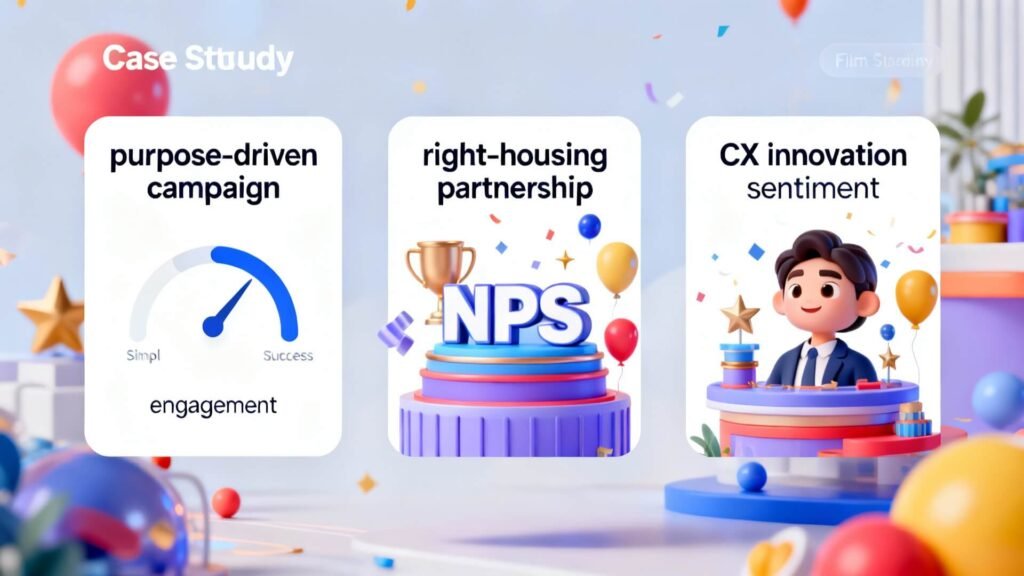
To illustrate the impact of aligning agency creativity with brand values, consider these examples:
A leading outdoor apparel brand wanted to highlight its commitment to sustainability and inclusivity. Its agency collaborated closely with internal teams to create a campaign focused on diversity in outdoor adventures. They co‑developed briefs, defined metrics such as sentiment analysis among underrepresented groups, and ensured that every visual and narrative reflected the brand’s values. The campaign achieved record engagement, and social sentiment analysis showed an increase in positive mentions about the brand’s inclusivity efforts.
A national consumer goods company had previously outsourced all digital marketing but decided to in‑house content production while retaining an agency for strategy and innovation. By co‑locating agency strategists within their office and involving them in quarterly brand planning, the company achieved greater cohesion. They used a brand values checklist to vet creative concepts and mapped each value to KPIs such as net promoter score (NPS) and brand lift. The result: a 20% increase in NPS and more cohesive brand storytelling across channels.
Drawing inspiration from Renascence’s work with Msheireb Properties, another brand transformed its customer experience by embedding rituals and emotional storytelling at key touchpoints. Their agency developed narratives anchored in the brand’s core values, while internal teams executed experiential elements. Visitor satisfaction climbed by double digits, proving that aligning values, experience design, and agency creativity can turn mundane interactions into memorable stories.
Even with best practices, aligning agency creativity and brand values can be challenging. Here are common roadblocks and ways to overcome them.
Some brands haven’t articulated their values clearly, leaving agencies guessing. Conduct workshops to define values, document them, and align stakeholders around concrete examples. Use those values to inform creative briefs and set measurable objectives.
Agencies are often compensated on billable hours or campaign metrics, while brands care about long‑term brand health. To align incentives, adopt value‑based KPIs (such as sentiment or brand lift), and incorporate performance bonuses tied to values‑driven outcomes. Avoid focusing solely on short‑term conversions that may incentivize tactics misaligned with brand ethos.
Lack of communication breeds misalignment. Establish regular check‑ins, shared project management platforms, and clear escalation paths. Foster a culture where both sides feel comfortable raising concerns early.
Long‑standing processes and hierarchies can resist new collaborative methods. Start with pilot projects that demonstrate the benefits of values‑aligned creativity. Share successes and lessons learned internally to build momentum. Senior leadership should champion the shift and model open collaboration.
Agencies may fear that strict values guidelines stifle creativity. Encourage exploration within clear boundaries, and emphasize that constraints can spark innovation. Provide examples of campaigns that were both bold and values‑aligned to illustrate that creative excellence and brand safety can coexist.
Looking ahead, several forces will continue to reshape how agencies and brands collaborate:
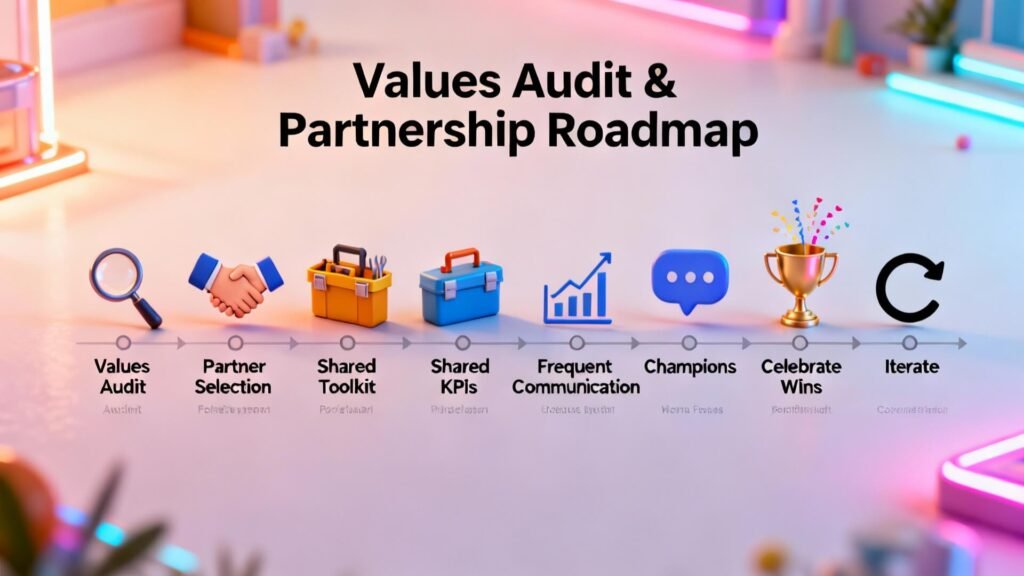
Ready to align your next campaign with your brand’s values? Start with these steps:
In an era of AI, democratized media, and shifting consumer expectations, agencies and brands cannot afford misaligned partnerships. When creativity and brand values unite, campaigns resonate, trust deepens, and growth accelerates. Brands that invest in defining and living their values build durable reputations and loyal communities. Agencies that adapt by becoming strategic advisors, embedding with client teams, and championing value‑driven creativity will remain indispensable.
By embracing the strategies outlined above—conducting audits, co‑creating briefs, translating values into actionable terms, and fostering continuous feedback—agencies and brands can create a unified vision. As our industry moves toward hybrid models, experience innovation, and AI‑powered creativity, the partnerships that thrive will be those grounded in shared values and mutual respect. Now is the time to turn alignment from a buzzword into a practice that transforms every campaign and collaboration.
If you found this guide helpful, share it with your team, leave a comment with your experience aligning values in agency partnerships, or contact us to discuss how we can help your brand build stronger agency relationships.
The dream of many boutique marketing and web‑design agencies is to grow into full‑service powerhouses. Yet the reality of scaling is far less glamorous. Hiring experienced SEO specialists can cost tens of thousands of dollars annually, and keeping up with ever‑changing algorithms and tools demands continuous training [www.elsner.com]. At the same time, visibility on Google is non‑negotiable: a study by Ahrefs found that 91 % of web pages get zero organic traffic from Google [www.ahrefs.com], while almost 62 % of consumers will disregard a business they can’t find online [www.sagapixel.com]. Digital marketing remains one of the most effective channels—three‑quarters of marketers believe SEO is the most effective digital marketing strategy [www.newsworthy.ai].
Without in‑house SEO expertise, agencies risk letting valuable leads slip away or losing clients to competitors who can deliver search‑visibility. Enter white‑label SEO services, an outsourcing model that lets you offer professional SEO under your own brand. As we’ll explore, partnering with an experienced provider gives your agency immediate access to expert talent, scalable resources and branded reporting, allowing you to focus on client relationships and sales. This article will guide you through the what, why and how of white‑label SEO, provide actionable tips and dispel myths, so your agency can transform from startup to powerhouse.
White‑label SEO—also called private‑label SEO—allows agencies to offer SEO services to their clients while outsourcing the actual fulfilment to another company [www.livechat.com]. You remain the face of the operation: your clients receive reports and deliverables branded with your logo, while a team of SEO specialists performs keyword research, link‑building, on‑page optimisation and analytics behind the scenes.This model means you can deliver comprehensive search‑engine services without investing in expensive tools or building an internal SEO department.
In practice, the workflow looks like this:
A professional white‑label SEO provider usually offers multiple service tiers to meet different client needs.Typical components include:
Using a provider who offers all of these services means your agency can become a one‑stop shop for digital marketing.
SEO is multifaceted—technical SEO, content strategy, link building and analytics each require specialised knowledge. Many small agencies lack dedicated staff who can handle these tasks at an expert level. Building an in‑house team is costly: according to Elsner’s 2025 guide, hiring a full‑time SEO team often costs $50,000 or more per year, whereas white‑label agencies provide access to specialists for an affordable monthly fee. These costs don’t include software subscriptions, training and employee benefits.
Every time you decline SEO work because you don’t have the capacity, you leave recurring revenue on the table. With 46 % of all Google searches having local intent and 50 % of smartphone users visiting a store within a day of performing a local search [www.forbes.com], demand for SEO—especially local search—has never been higher. Without outsourcing, your existing team may be stretched thin trying to keep up with both web design and SEO campaigns, leading to missed deadlines and inconsistent results. This time pressure can cause burnout and jeopardise client relationships.
A staggering 91 % of web pages get zero organic traffic from Google, primarily because they lack backlinks and proper optimisation. If your clients’ websites fall into this category, they won’t appear in search results and your agency will struggle to demonstrate value. Meanwhile, a news report notes that 75 % of marketers consider SEO the most effective digital marketing approach for driving traffic and visibility. Without SEO expertise, agencies risk becoming obsolete in the digital landscape.
Consider a three‑person web design agency in Bekasi, Indonesia. Their clients start requesting SEO to improve local search presence. The founders attempt to learn SEO through online courses but quickly realise that staying current with Google’s algorithm updates and performing effective link outreach demands full‑time effort. They decide to partner with a white‑label provider. Within six months, the agency is offering comprehensive SEO packages, retaining existing clients and attracting new ones. Their story underscores how outsourcing can transform capacity and revenue while allowing the team to focus on design and customer service.
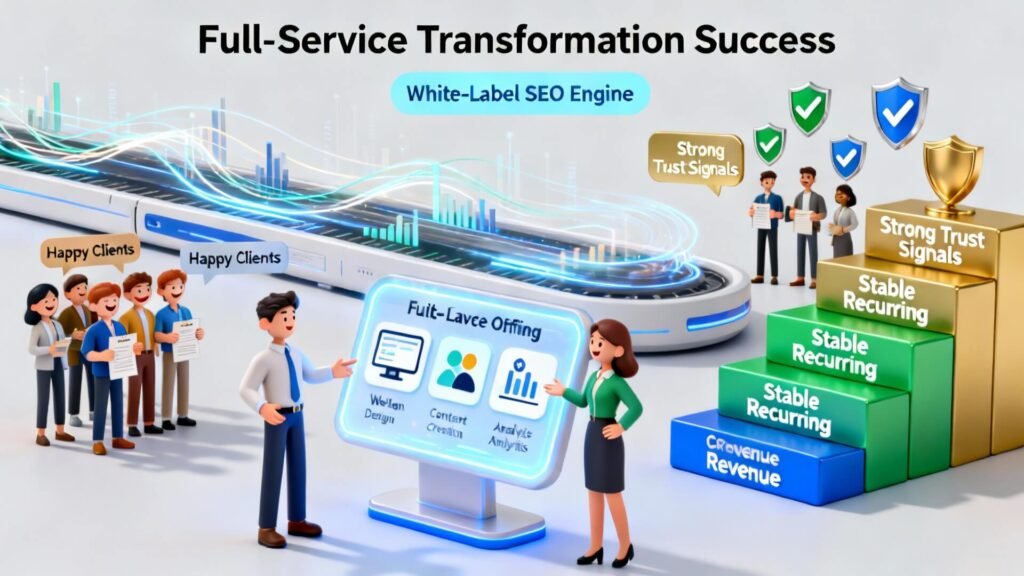
One of the greatest advantages of white‑label SEO is the ability to scale services instantly. Instead of recruiting, training and paying an in‑house team, you can leverage the resources of a partner agency. Elsner notes that white‑label SEO agencies enable you to expand your services up or down based on demand, ensuring you don’t have to scramble to hire experts when client requests surge. This scalability is crucial for small agencies that experience fluctuations in workload.
Clients rarely care about who does the work; they care about results. White‑label SEO providers supply branded reports and dashboards, meaning your agency appears to deliver in‑house expertise. This seamless client experience builds trust, increases satisfaction and enhances your reputation. In fact, agencies that add SEO to their services see a 32 % increase in client retention, because offering a full suite of digital marketing solutions makes it less likely for clients to seek another provider.
White‑label SEO packages are usually offered at wholesale rates, which you can mark up to create healthy margins. Combined with monthly retainers, this leads to predictable recurring income. A study of local SEO campaigns found that they deliver an average ROI of more than 500 % over three years [www.rankomedia.com]—a compelling argument for agencies to include SEO in their portfolio. This level of return far exceeds many other marketing investments, demonstrating why SEO remains a core driver of profitable growth.
Not all providers offer the same breadth of services. Before partnering, ensure they include the following core elements:
On‑page SEO ensures each page is optimised for target keywords and user experience. Providers should manage keyword research, title and meta description optimisation, header tags, internal linking and image alt text. They should also deliver technical SEO tasks such as creating and submitting XML sitemaps, improving site speed, ensuring mobile responsiveness and implementing schema markup.
Acquiring high‑quality backlinks remains a major ranking factor. Your partner should conduct outreach to secure guest posts, niche edits and directory citations. They may use manual outreach, press releases or relationships with bloggers to gain editorial links. Because 66 % of web pages have no backlinks, building a robust link profile is essential for climbing the search results.
SEO is incomplete without compelling content. Many white‑label providers offer copywriting and blogging services, crafting articles that answer user intent and incorporate targeted keywords. They might develop content clusters around core topics (such as “local SEO” or “white‑label marketing”) to build topical authority and interlink posts for better rankings.
For agencies serving small businesses, local SEO is critical. With 46 % of searches on Google having local intent, your partner should optimise Google Business Profiles, manage local citations across directories and help clients earn reviews. They may also implement location‑based content strategies to target “near me” searches.
White‑label SEO providers should offer comprehensive, customisable reporting. Monthly or biweekly reports should highlight keyword rankings, traffic, conversions and backlinks. Real‑time dashboards let you and your clients monitor progress [www.dashclicks.com]. Without transparent reporting, it’s impossible to demonstrate ROI or adjust strategies effectively.
Some providers expand into related areas such as pay‑per‑click (PPC) management, social media marketing or web design. Others offer AI‑driven SEO tools that automate keyword research and content optimisation [www.salesforce.com], or integrate with CRMs and project management platforms. Evaluate whether these extras align with your agency’s long‑term goals.
Selecting a provider is a critical decision that affects your reputation and client outcomes. Consider the following factors:
A reliable partner will share details about their methodologies—how they conduct keyword research, build links and handle algorithm updates. Look for case studies or references that prove they can deliver results in industries similar to your clients. Make sure they follow ethical, white‑hat SEO practices and don’t guarantee unrealistic results (such as first‑page rankings within a week).
Robust reporting is non‑negotiable. You should have access to customisable reports and dashboards that you can rebrand. High‑level summaries help clients understand progress at a glance, while detailed metrics allow you to refine strategies. Ask potential partners to provide sample reports before signing any contract.
Ensure the provider can handle multiple projects simultaneously and adapt to fluctuating workloads. They should offer different service tiers—pay‑as‑you‑go, monthly retainers or performance‑based pricing—so you can match packages to client budgets. Confirm that they have enough staff and resources to maintain quality as your client base grows.
White‑label SEO pricing structures vary:
Review contracts for minimum terms, cancellation policies and refund guarantees. Transparency about pricing helps prevent surprises and ensures profitability.
You’ll need a dedicated account manager or point of contact who can answer questions and relay information promptly. Evaluate their responsiveness during the sales process. Consider time‑zone compatibility—being in Bekasi (UTC+7), you may prefer a partner whose work hours overlap with yours.
Check reviews on third‑party sites like Clutch or G2. Look for providers with a history of successful partnerships and ethical business practices. Avoid agencies that outsource again to third parties without disclosure.
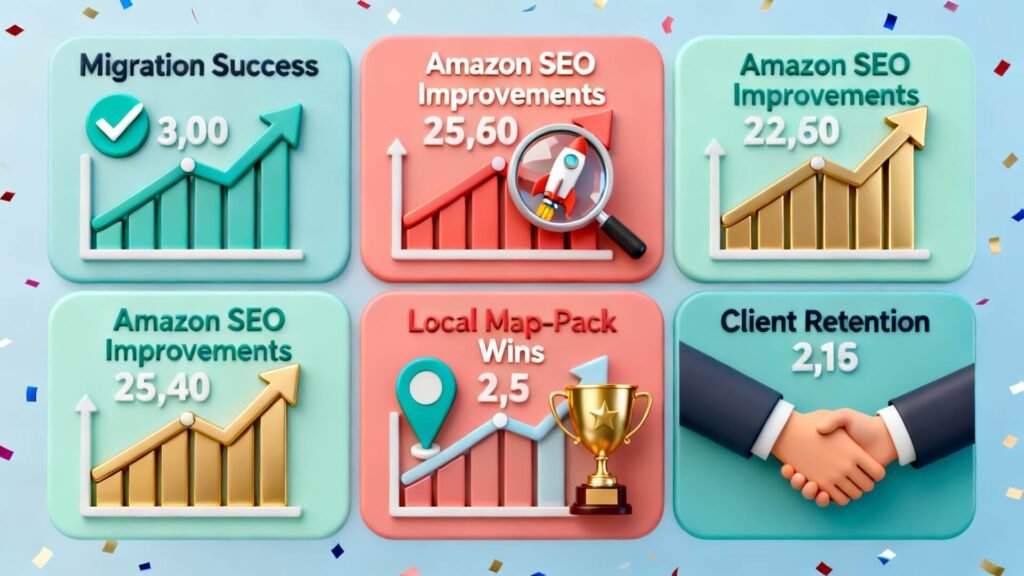
An eCommerce design and development agency in South Carolina partnered with Galileo Tech Media to deliver SEO services on a white‑label basis. The agency sought help with website migrations, keyword research and technical SEO. Galileo’s team identified technical errors that were blocking website indexing and SEO growth and planned a migration strategy. Thanks to this partnership, the agency was able to fully service its clients’ SEO and content needs without adding headcount and met complex, deadline‑specific requests due to Galileo’s ability to scale [www.galileotechmedia.com].
Several marketing agencies also partnered with Galileo to handle Amazon SEO tasks for clients’ product pages. Galileo performed Amazon audits, keyword research and SEO copywriting. The results included streamlined content creation workflows and improved product page rankings and sales. The agencies were able to focus on other projects while Galileo managed the technical aspects of Amazon optimisation.
Another case involves a small Indonesian restaurant chain that outsourced local SEO to a white‑label provider (name withheld for privacy). Within six months, the chain’s Google Business Profiles were fully optimised, resulting in the restaurant appearing in the top three map pack positions for “best nasi goreng Bekasi.” Phone calls and walk‑in traffic increased by 40 %. The agency, previously focused solely on social media management, now offers recurring SEO packages to other local businesses.
These examples highlight several key points:
Artificial intelligence is transforming SEO. According to Salesforce’s guide, AI‑powered tools can automate time‑consuming tasks such as keyword research, content optimisation and link building. Machine‑learning algorithms also provide real‑time analytics and performance metrics, enabling data‑driven decisions. As AI models like GPT‑4o and generative search features become integrated into search engines, white‑label providers that harness AI will deliver faster insights and more scalable solutions.
Some trends to watch:
A 2025 study ranking 400 white‑label SEO agencies found that white‑label SEO has become a critical growth lever for digital agencies, allowing them to deliver high‑quality SEO without expanding internal teams [www.onelittleweb.com]. As more providers enter the market, competition will drive innovation in reporting, transparency and AI integration. Agencies should evaluate partners not only on price but also on their ability to adapt to new technologies and algorithm updates.
White‑label providers are expanding beyond core SEO. Many now offer digital PR, content marketing, PPC management and AI tools. This diversification allows agencies to deliver fully integrated marketing solutions under one umbrella, increasing customer lifetime value and reducing client churn.
Scaling a small agency doesn’t have to mean endless hiring or learning every discipline under the digital sun. White‑label SEO services provide an agile, cost‑effective path to growth, empowering you to deliver expert results while focusing on what you do best—building client relationships and creative strategies. By leveraging specialised partners for on‑page optimisation, technical fixes, content, link building and analytics, agencies can offer comprehensive digital marketing packages that increase client retention and profitability.
As statistics reveal, local search intent is high, ROI on SEO can exceed 500 % and the majority of web pages currently receive no organic traffic. With demand surging and competition fierce, now is the time to harness white‑label SEO to transform your startup into a powerhouse agency. Embrace the future of AI‑driven optimisation, choose partners wisely, and don’t let limited resources hold you back. Implement these strategies, share your success stories, and engage with peers—your agency’s growth potential is unlimited.